
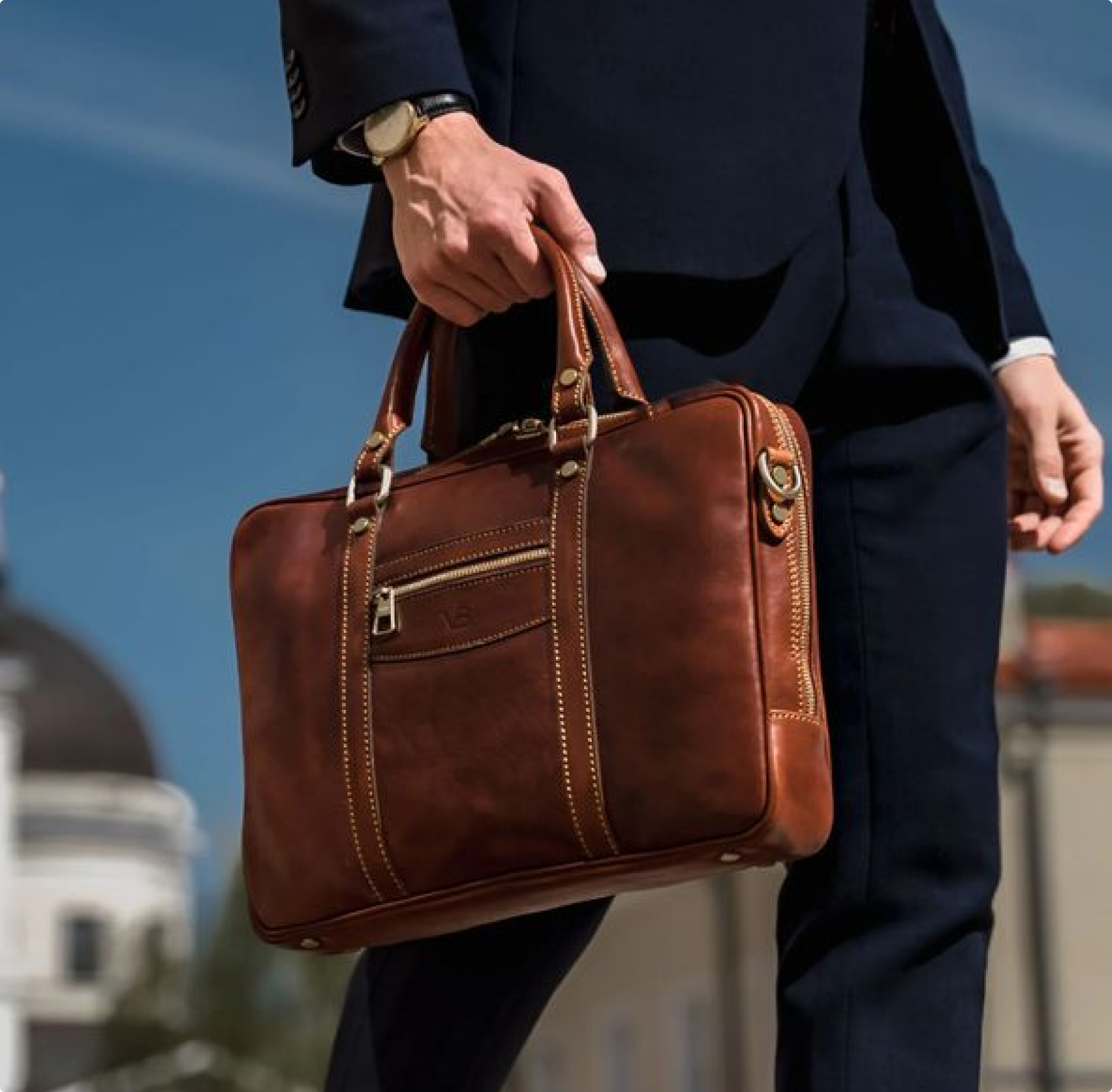


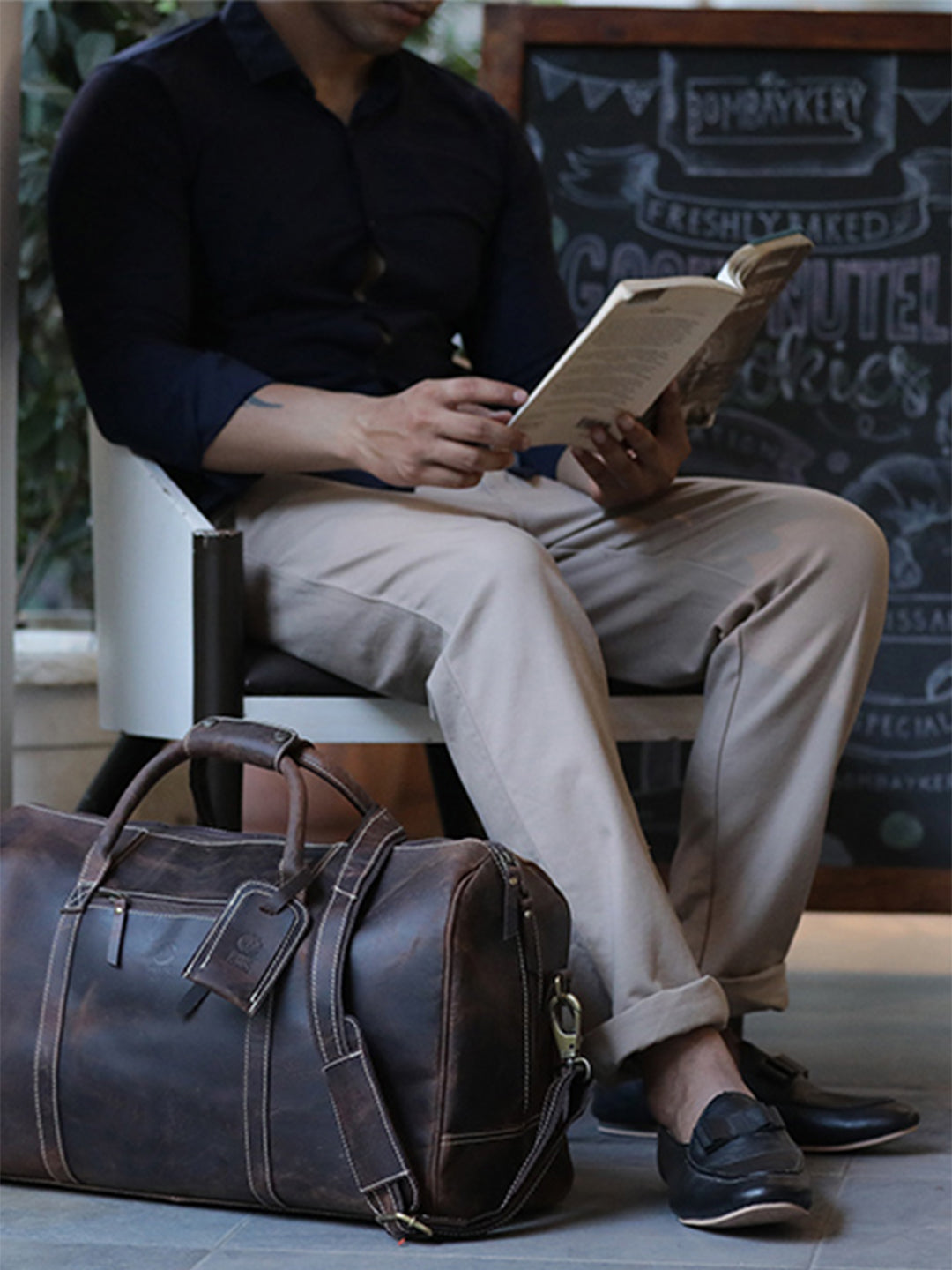

How to Choose a Leather Laptop Bag That Lasts Longer Than Your Laptop
Let's start with uncomfortable math that most leather laptop bag retailers don't want you to calculate.
The typical professional's bag buying pattern:
Year 1-2: Purchase trendy bag for $150-200 Year 3: Seams fail, zipper breaks, replace with another $150-200 bag Year 5: Second bag shows heavy wear, upgrade to $250 bag hoping better price means better quality Year 7: Third bag disappoints, try different brand at $200 Year 10: Frustrated with the cycle, finally research quality options
Total spent over 10 years: $750-850 on bags that failed Number of laptops replaced in same period: 2-3 computers
Now consider the alternative investment approach with a quality leather laptop bag:
Initial investment: $450-600 for exceptional construction Lifespan: 20-30+ years with basic maintenance Cost per year: $15-30
The inferior bags cost $75-85 per year when you factor in replacements. The premium durable laptop bag costs less than half that annually while providing superior protection and appearance throughout its lifetime. This isn't theoretical—at Rustic Town, we regularly hear from customers using leather laptop bags we crafted 15-20 years ago, still in excellent condition while they're on their fourth or fifth computer.

Understanding Leather Quality: The Foundation of Longevity
Before examining construction details, you must understand the material itself. No amount of excellent stitching saves poor-quality leather.
Full-Grain Leather: The Only Choice for Longevity
Full-grain leather retains the complete grain surface—the outermost layer of the animal hide where the strongest, most densely packed fibers exist. For a leather laptop bag meant to last decades, this isn't a luxury feature; it's a fundamental requirement.
Why full-grain matters for laptop bag construction: The intact grain layer contains natural oils and tight fiber structure that actually strengthens with age. As you use your leather work bag daily, natural oils from your hands condition the leather. The fibers compress and interlock more tightly. A 10-year-old full-grain leather laptop bag is often more durable than when it was new.
Top-Grain Leather: The Deceptive Middle Ground
Top-grain leather has been sanded to remove imperfections, then coated with pigments and protective finishes. It looks uniform and perfect initially—which is exactly the problem for longevity.
The sanding process removes the strongest fiber layer. The coating that makes it look good can't be properly conditioned and will eventually crack at stress points. For a durable laptop bag, this is a critical weakness. Those coatings typically begin failing around year 3-5 of daily use, especially at handles and corners.
Genuine Leather and Bonded Leather: Avoid Entirely
"Genuine leather" sounds legitimate but typically refers to split leather from lower hide layers—significantly weaker than top grain. Bonded leather is leather scraps mixed with polyurethane, essentially a leather-scented vinyl product.
For a leather briefcase quality purchase, these materials are false economy. They might survive 18-24 months of gentle use, but they cannot withstand the daily carrying, weight, and environmental exposure a laptop bag endures.
The Smell Test and Touch Test
Quality full-grain leather has a rich, natural leather smell—earthy and slightly sweet. Heavily processed leather smells chemical or plasticky from coatings. Touch quality full-grain leather and it feels substantial, slightly waxy or oily to the touch, with natural texture variation. Coated leather feels uniformly smooth and slightly plastic-like.

Laptop Sizing Guide: Getting Dimensions Right
The most common failure point isn't construction—it's buying a leather laptop bag that doesn't properly fit your laptop or future upgrades.
Understanding Laptop Measurements
Laptop manufacturers list diagonal screen size (13", 15", 16"), but this measurement is essentially useless for bag fitting. What matters are actual length, width, and thickness dimensions.
Common laptop actual dimensions:
13-inch MacBook Air: 11.97" x 8.46" x 0.61" 13-inch MacBook Pro: 11.97" x 8.36" x 0.61"
14-inch MacBook Pro: 12.31" x 8.71" x 0.61" 15-inch MacBook Air: 13.40" x 9.35" x 0.45" 16-inch MacBook Pro: 14.01" x 9.77" x 0.66"
13-inch Windows Ultrabooks: Typically 12" x 8.5" x 0.5-0.7" 15-inch Windows Laptops: Typically 14" x 9.5" x 0.7-0.9" 17-inch Windows Laptops: Typically 15.5" x 10.5" x 0.9-1.2"
The Critical Clearance Formula
Don't buy a leather laptop bag that "just fits" your current laptop dimensions. Apply this formula:
Minimum internal compartment size = laptop length + 1.5" x laptop width + 1" x laptop thickness + 0.5"
This clearance accounts for:
- Protective sleeve or case you might use
- Easy insertion and removal without scraping
- Future laptop upgrades (laptops trend slightly larger with each generation)
- Slight leather compression as the bag ages and softens
A laptop bag construction that requires forcing your laptop in will damage both the laptop and the bag over time. You want smooth, easy placement with room to spare.
Planning for Future Technology
Your current laptop will be obsolete in 3-5 years. Your durable laptop bag should accommodate the replacement. Laptops have gradually increased in size over the past decade as screen bezels shrink and larger displays become standard.
Safe rule: If you currently have a 13" laptop, buy a leather laptop bag designed for 14-15" laptops. If you have a 15" laptop, choose a 16" capacity bag. This future-proofs your investment without buying an oversized bag that looks awkward today.
Tablet and Multi-Device Considerations
Most professionals now carry a tablet alongside their laptop. Your leather work bag should have a separate, padded tablet compartment—not force you to stack devices in the same space.
Measure your tablet similarly: iPad Pro 12.9" is actually 11.04" x 8.46" and needs dedicated space. Stacking tablets with laptops risks screen scratches and doesn't distribute weight properly in the bag.

Compartment Design: Organization That Lasts
A leather laptop bag might have perfect leather and excellent stitching, but poor compartment design makes it frustrating to use—and frustrating bags get abandoned.
The Laptop Compartment Requirements
Suspended padding is essential for longevity—your laptop shouldn't rest directly on the bag's bottom. Look for padding that extends at least 1 inch beyond the laptop on all sides. The opening should be at least 2 inches wider than your laptop to allow smooth insertion without scraping against zippers or edges.
Fleeced or microfiber lining protects against scratches. Water-resistant liner material protects against coffee shop accidents. The laptop compartment should close independently of the main bag compartment—this prevents your laptop from sliding out if you open the bag for other items.
Essential Organization Pockets
Quality laptop bag construction includes these specific compartments:
A quick-access exterior pocket for items you need constantly—phone, keys, transit cards, earbuds. This prevents opening the main compartment repeatedly throughout the day, which accelerates zipper wear.
Internal cable management pocket with elastic loops for organizing charging cables, USB drives, adapters. Cables tangling with other items is a primary cause of internal bag damage and scratching.
Business essentials section with pen sleeves, business card holder, and document pocket. These should be lined to prevent pen ink transfer to the leather interior.
Secure internal zippered pocket for wallet, passport, or other valuables. This should be positioned to sit against your body when wearing the bag.
Water bottle pocket—critically, this should be external or have moisture-barrier lining to prevent condensation from damaging electronics or leather.
The Organization Hierarchy
Items you access most frequently should be in outermost pockets. Items you rarely need should be deepest in the bag. A durable laptop bag should let you grab your phone, keys, or pen without disturbing your laptop or having to remove other items first.
Poor organization leads to overloading specific compartments, which stresses seams and causes premature failure. Well-designed compartment spacing naturally distributes weight and prevents stress concentration.
Stitching: The Most Critical Construction Element
Beautiful leather means nothing if the stitching fails. Examine stitching more carefully than any other aspect of laptop bag construction.
Saddle Stitching vs. Machine Stitching
Saddle stitching uses two needles working from opposite sides, creating a diagonal stitch pattern. If one stitch breaks, the diagonal interlock prevents the entire seam from unraveling. Each stitch is individually locked.
Machine stitching uses a single thread in a chain stitch. If this thread breaks anywhere, the entire seam can unravel rapidly. This is acceptable for low-stress areas but unacceptable for structural seams in a leather laptop bag.
Quality indicators: Look for saddle stitching (or its machine equivalent, which mimics the diagonal pattern) on all structural seams—handle attachments, bottom seams, strap connections, and stress points. The stitch density should be 6-8 stitches per inch for optimal strength without over-perforating the leather.
Thread Quality Determines Seam Life
Premium leather briefcase quality bags use bonded nylon thread or polyester thread treated for UV and moisture resistance. These threads outlast the leather itself. Cotton thread, while traditional, degrades faster and should be avoided for daily-use bags.
Thread weight matters: The standard for leather laptop bags is #138 (Tex 135) thread for structural seams. Lighter thread saves cost but fails prematurely. Heavier thread is overkill and can over-perforate leather.
Critical Stress Point Reinforcement
Handle attachment points should have X-box stitch patterns or bar tacks for reinforcement. Strap D-ring attachment points need double or triple stitching. Bottom corners should have reinforcement stitching because these points absorb impact when you set the bag down.
Look for backstitch reinforcement at the beginning and end of each seam. This prevents seam ends from unraveling. On a quality leather work bag, every visible seam end should have this reinforcement.
The Visual Quality Test
Examine stitch lines closely. They should be perfectly straight with consistent spacing. Wavy stitch lines indicate poor tension control or leather shifting during sewing—both signs of rushed manufacturing that predicts premature failure.
Stitches should sit in slight depressions in the leather, not ride on top of the surface. This protects thread from abrasion. On full-grain leather, proper stitching slightly compresses the leather along the seam line.

Hardware Quality: The Overlooked Failure Point
More leather laptop bags fail from hardware failure than from leather failure, yet hardware barely gets mentioned in marketing copy.
Zipper Quality: The Non-Negotiable Standard
YKK zippers are the industry benchmark. Specifically, look for YKK #5 or larger on main compartments—smaller sizes can't handle the stress of daily opening with heavy loads. Metal zipper pulls last longer than plastic. Self-healing coil zippers prevent the common problem of "split zippers" where the zipper separates behind the pull.
For maximum longevity in durable laptop bag construction, double zippers on main compartments provide redundancy—if one pull fails, the second remains functional while you arrange repairs.
Lockable zippers add security and allow you to replace pulls if they break without replacing the entire zipper. Standard zipper pulls can be replaced with aftermarket options, extending the bag's life even if hardware wears out.
Buckle and Clasp Specifications
Solid brass or stainless steel buckles will outlast the leather itself. Zinc alloy buckles (which most bags use to cut costs) begin degrading within 5-7 years, showing corrosion or mechanical failure. Plated buckles are worse—the plating wears away quickly, exposing base metal that corrodes or causes skin reactions.
Test buckles physically when examining a leather laptop bag. They should have substantial weight (indicating solid metal) and operate smoothly without sticking. Magnetic closures should be neodymium magnets, which maintain strength indefinitely, not ferrite magnets which weaken over time.
Quick-release buckles should click firmly and release smoothly with deliberate pressure—not so easy they accidentally release, not so stiff they'll eventually break from stress.
D-Rings and Strap Attachments
D-rings should be welded, not cast. Cast D-rings have a visible seam where the metal was joined and can separate under stress. Welded D-rings are smooth continuous metal loops.
The attachment point to leather should be metal plates or rivets that go through the leather and spread load over a wide area. Strap attachment failures typically happen because the D-ring was stitched directly to leather without load-spreading hardware—the stitching tears through the leather over time.
For adjustable straps on a leather work bag, the slide adjuster should be metal (not plastic) with adequate friction to hold position under load but slide smoothly when adjusted. Test this repeatedly—if it slips or sticks when new, it will only get worse.
The Hardware Longevity Test
Quality hardware has substantial weight, smooth operation, and tight tolerances. Cheap hardware feels light, operates loosely or stickily, and shows rough edges or poor finishing. This isn't aesthetic preference—these qualities directly predict service life.
At Rustic Town, we've tested hardware to failure on loaded bags. Quality hardware typically survives 10,000+ cycles of opening, closing, and stress application. Budget hardware shows wear or failure within 2,000-3,000 cycles. For daily use, that's the difference between decades of service and 2-3 years before problems emerge.
Construction Techniques That Indicate Quality
Beyond materials, construction techniques reveal whether a leather laptop bag is built for longevity.
Edge Finishing
Raw cut edges absorb moisture, fray, and look unprofessional quickly. Quality edge finishing involves sanding edges smooth, applying edge paint or wax, and burnishing to a sealed finish. This process takes time and skill, so it's often skipped on budget bags.
Well-finished edges should feel smooth to the touch and have a slight sheen from burnishing. They should be slightly rounded, not sharp. Poor edge finishing is the visual giveaway of a rushed manufacturing process that likely cut corners elsewhere too.
Seam Allowances and Turn Quality
Inside the bag, examine where leather pieces meet and turn. Proper seam allowances (the distance from the stitch line to the leather edge) should be consistent and adequate—typically 3/8" to 1/2". Skimpy seam allowances indicate material cost-cutting and provide less strength.
Turned edges (where leather folds over itself) should be even without puckering or bunching. Puckering indicates the leather pieces weren't cut accurately or the turner wasn't skilled. These irregularities concentrate stress and predict eventual seam failure.
Gusset Construction
The gusset—the expandable bottom and sides of the bag—determines how a leather laptop bag carries weight and maintains shape. Single-piece gussets are stronger than multi-piece gussets but require more skill and material to construct.
Examine corner construction carefully. The leather should fold cleanly at corners without bunching, gaps, or excessive bulk. Poorly executed corners are both unsightly and mechanically weak. Quality laptop bag construction makes corners look effortless, which actually indicates significant skill.
Interior Lining Attachment
How interior fabric lining attaches to leather affects long-term durability. The lining should be sewn to leather before final assembly, not glued in afterward. Glued linings eventually separate, especially in humid conditions or with temperature fluctuations.
Piping (cord covered in leather or fabric) at the interface between lining and leather adds durability and professional appearance. It covers raw edges and provides a cushioned transition that prevents the lining from tearing at attachment points.
Leather Thickness Throughout
The bottom of a durable laptop bag should use heavier leather than the sides or top—typically 3-4 oz. weight versus 2-3 oz. for other panels. This differential provides durability where it's needed most while keeping overall bag weight reasonable.
Feel the leather thickness at various points. Uniform thickness throughout suggests cost optimization rather than engineered construction. Thoughtful variation in leather weight shows design consideration for specific use cases.
Weight Distribution and Ergonomics
A leather laptop bag that's uncomfortable gets left at home, defeating its purpose entirely. Proper construction includes ergonomic considerations.
Handle Attachment and Padding
Top handles should attach at multiple points—typically 3-4 attachment locations per handle. Single-point attachments concentrate stress and fail eventually. The handle itself should have internal reinforcement (leather-wrapped webbing is ideal) and adequate padding where you grip it.
Test the grip position—it should allow comfortable carrying with arms relaxed at your side, not forcing an awkward raised arm position. Handles attached too close together make the bag hang awkwardly and cause arm fatigue.
Shoulder Strap Design for Load
For laptop bags with shoulder straps, the strap should be at least 1.5-2 inches wide to distribute weight. Narrow straps cut into shoulders with a loaded leather work bag. Padding should be at least 0.25 inches thick and breathable—neoprene padding is comfortable but doesn't breathe; perforated padding is preferable for all-day carry.
The strap attachment points should allow the strap to pivot freely. Fixed attachment points that don't rotate cause the strap to twist under load, which is uncomfortable and concentrates stress at attachment points.
Adjustment hardware should lock positively without slipping under load. Test this with weight in the bag—many adjusters work fine empty but slip when the bag is loaded with a laptop and accessories.
Bottom Panel Design
The bottom of a leather laptop bag endures the most abuse—set on floors, sidewalks, train seats, car trunks. Quality laptop bag construction includes protective features: metal feet or studs that keep leather off dirty surfaces, double-layer leather on the bottom, or protective corner reinforcements.
The bottom should be rigid enough to maintain shape when loaded but not so stiff it makes the bag awkward to carry. Some designs include an interior support board or dense foam that provides structure while remaining flexible enough for comfortable carry.
The Break-In Period: What to Expect
Quality full-grain leather laptop bags require a break-in period—this is a feature, not a flaw. Understanding this prevents buyer's remorse.
Weeks 1-4: Stiff and Formal
Your new leather work bag will be quite stiff, holding its shape firmly even when empty. This is correct—the leather hasn't yet conformed to your usage pattern. The bag may feel slightly awkward to carry as it hasn't molded to your body or hand position yet.
Use it normally during this period. Don't try to artificially accelerate break-in by soaking or excessively conditioning the leather. Natural use is the proper break-in method. The stiffness actually provides excellent laptop protection during this phase.
Months 2-6: Beginning Conformity
The leather starts softening where you handle it most frequently—handle grips, shoulder strap contact points, areas that flex when you open the bag. You'll notice the bag beginning to conform to how you pack it. Color may darken slightly at high-contact areas as natural oils from your hands condition the leather.
This is the beginning of patina development. Don't fight it—this character development is what makes full-grain leather valuable. The bag is becoming uniquely yours.
Months 6-18: Peak Break-In
Your durable laptop bag has now molded to your specific usage pattern. It's significantly softer than when new but maintains structural integrity. Opening and closing compartments feels natural and smooth. The patina has developed noticeably, giving the bag character and visual depth.
This is often when people receive the most compliments on their leather laptop bag. It looks distinguished and well-used in the best sense—obviously quality, obviously cared for, obviously not a disposable item.
Years 2+: Mature Leather Character
A well-maintained full-grain leather laptop bag continues improving through this phase. The leather reaches a sweet spot of maximum suppleness while retaining structure. The patina is rich and complex. The bag has literally conformed to your professional life.
At this point, you've likely gone through one or two laptops, but your leather briefcase quality bag is hitting its stride and will continue serving you for many more years.
Maintenance Schedule for Maximum Lifespan
Proper maintenance dramatically extends a leather laptop bag's already substantial lifespan. Here's the precise schedule:
Weekly: Basic Cleaning
Wipe exterior surfaces with a barely damp microfiber cloth to remove dust and surface dirt. Empty all compartments and shake out debris. Check zippers and buckles for any issues developing. Inspect stitching at stress points for any loosening. This five-minute routine prevents accumulated damage.
Monthly: Deeper Inspection
Clean interior compartments with appropriate cleaner for lining material. Check leather for any scratches or scuffs that need attention. Verify all hardware operates smoothly. Apply leather balm to any areas showing dryness. This prevents small issues from becoming significant problems.
Quarterly: Conditioning Treatment
Apply quality leather conditioner to all exterior leather surfaces. Use products with natural oils—avoid silicone-based products that create surface shine but actually dry leather over time. Pay special attention to handle areas and bottom panel. Allow conditioner to absorb overnight before using the bag. This keeps leather supple and prevents cracking.
Annually: Professional Assessment
Take your leather work bag to a leather repair specialist for professional inspection, especially once it reaches the 3-5 year mark. They can identify developing issues—thread wear, hardware problems, leather stress—before they become failures. Professional conditioning treatment annually supplements your home care.
As Needed: Prompt Repairs
Address any issues immediately. A loose stitch caught early requires five minutes of repair. Ignored until the seam opens requires complete re-stitching. A sticky zipper cleaned and lubricated continues working; ignored until it fails requires zipper replacement.
Quality construction in a durable laptop bag means repairs are simple and infrequent. But longevity requires addressing small issues promptly rather than waiting for catastrophic failure.
Warning Signs of Poor Construction
When evaluating any leather laptop bag before purchase, these red flags indicate construction that won't deliver longevity:
Uneven stitching spacing suggests machine operation issues or rushed work. Longevity requires precision.
Glue visible at seams indicates the manufacturer doesn't trust their stitching. Glue dries out and fails; stitching lasts.
Thin, lightweight leather flexes excessively when you apply pressure. Your laptop deserves better protection.
Plastic hardware throughout except zippers is a cost-cutting measure that predicts failure.
Strong chemical smell suggests heavy coating or finishing products covering low-quality leather.
Perfectly uniform color and grain indicates heavy processing that removed the durable surface layer.
Seams near edges (narrow seam allowances) indicate material optimization at the expense of strength.
Misaligned panels where pieces of leather don't meet cleanly suggest careless assembly.
Liner glued rather than sewn is a shortcut that fails within a few years.
No reinforcement at stress points means the manufacturer didn't engineer for actual use.
Any of these signs should make you pause. Multiple red flags mean walk away regardless of price. You're looking for a leather laptop bag that lasts longer than your technology, not a bag that barely outlasts the return window.
Price vs. Value: Understanding the Spectrum
Price correlates with quality, but not perfectly. Understanding the spectrum helps you identify genuine value.
$50-150: Entry Level
At this price point, you're getting bonded leather or heavily corrected genuine leather with minimal construction quality. These bags might look acceptable for 12-18 months but won't survive longer. Acceptable only if you literally need something temporary and disposable.
$150-300: Mid-Market Trap
This range is dangerous because bags look substantial enough to seem like quality purchases but typically use top-grain leather with medium-quality construction. You get 3-5 years of service—better than entry level but poor value compared to the next tier up. Many buyers get stuck in this range repeatedly replacing "decent" bags.
$350-600: Quality Investment Range
This is where properly constructed full-grain leather laptop bags typically land. At Rustic Town, our bags fall in this range because that's what legitimate materials and skilled construction cost. You're getting 15-20+ years of service, making the cost per year very low. This is the sweet spot for value-conscious buyers.
$600-1,200: Premium Tier
Premium brands with significant marketing costs, exclusive leather sources, or exceptionally specialized construction. You may get marginally better materials or construction than the $350-600 range, but you're also paying for brand prestige. Not necessarily better value but appealing if specific design aesthetic or brand matters to you.
$1,200+: Luxury/Designer
At this level, you're paying primarily for brand name and exclusivity rather than construction quality. A $2,000 designer leather laptop bag isn't twice as durable as a $600 quality bag—you're paying for the label and design. Fine if that matters to you, but understand you're buying fashion, not enhanced longevity.
The Rustic Town Construction Philosophy
We founded Rustic Town after experiencing frustration with the leather laptop bag market—beautiful bags that fell apart quickly, or durable bags with no design consideration, or well-designed bags made with poor materials.
Our approach combines traditional leather craftsmanship with modern engineering. Every leather work bag we design undergoes load testing—we literally fill prototypes with weighted laptops and put them through months of simulated daily use before finalizing construction. We test stitching to failure points. We evaluate hardware through thousands of cycles. We analyze exactly where stress concentrates and engineer reinforcement accordingly.
The result is laptop bag construction that serves professionals for decades while looking distinguished throughout that lifespan. When you choose Rustic Town, you're choosing bags we've designed for ourselves—because we're professionals who depend on reliable bags too.
We use only full-grain leather we personally select, YKK zippers size #5 or larger, solid brass or stainless steel hardware, and saddle-stitch-pattern sewing throughout. Every bag includes lifetime craftsmanship warranty because that's how confident we are in the construction quality.
Making Your Final Selection
You're now equipped to evaluate any leather laptop bag for longevity. Here's your systematic approach:
Step 1: Verify Leather Quality Confirm it's full-grain leather (not top-grain or genuine). Use the smell test and touch test. Ask directly about leather type—if they can't or won't tell you, walk away.
Step 2: Check Sizing Against Your Needs Measure your current laptop plus case. Apply the clearance formula. Consider future upgrades. Verify compartment dimensions, don't trust marketing claims.
Step 3: Examine Stitching Closely Look for saddle-stitch pattern on structural seams. Count stitches per inch (should be 6-8). Check stress point reinforcement. Verify straight, even stitch lines.
Step 4: Inspect All Hardware Confirm YKK zippers size #5+. Test buckles and clasps for smooth operation and substantial weight. Verify D-rings are welded and properly attached with backing plates.
Step 5: Assess Construction Details Check edge finishing. Examine corner construction. Verify lining is sewn not glued. Feel for appropriate leather thickness variation.
Step 6: Test Ergonomics Try the bag loaded with weight. Verify comfortable handle position and shoulder strap comfort. Ensure organizational compartments match your needs.
Step 7: Calculate True Value Determine realistic lifespan based on construction quality. Calculate cost per year. Compare against cheaper options' true replacement costs over the same period.
The Bottom Line: Choosing Longevity
Your technology will upgrade every few years. Your durable laptop bag shouldn't need replacement more than once in your career. This requires choosing based on construction quality, not marketing claims or attractive styling alone.
Full-grain leather provides the material foundation for longevity. Proper stitching with quality thread ensures structural integrity over decades. Quality hardware prevents the most common failure points. Thoughtful design with appropriate compartments and ergonomics ensures you'll actually want to use the bag daily for years.
The price difference between a leather laptop bag that lasts 3-5 years and one that lasts 20+ years is significant upfront but minimal annually. More importantly, the frustration and environmental cost of repeatedly replacing bags makes the quality investment clearly worthwhile.
Your leather work bag will accompany you through career growth, important meetings, business travel, and daily professional life. Choose something worthy of that relationship—something built so well that it becomes better with age rather than worse, something you'll eventually consider passing down rather than throwing away.
A leather laptop bag built for longevity isn't just a smarter purchase—it's a statement about valuing quality, craftsmanship, and sustainability over disposable convenience.
Ready to invest in a leather laptop bag built to outlast your technology? Explore the Rustic Town collection of full-grain leather bags, each constructed with lifetime durability as the primary design principle.