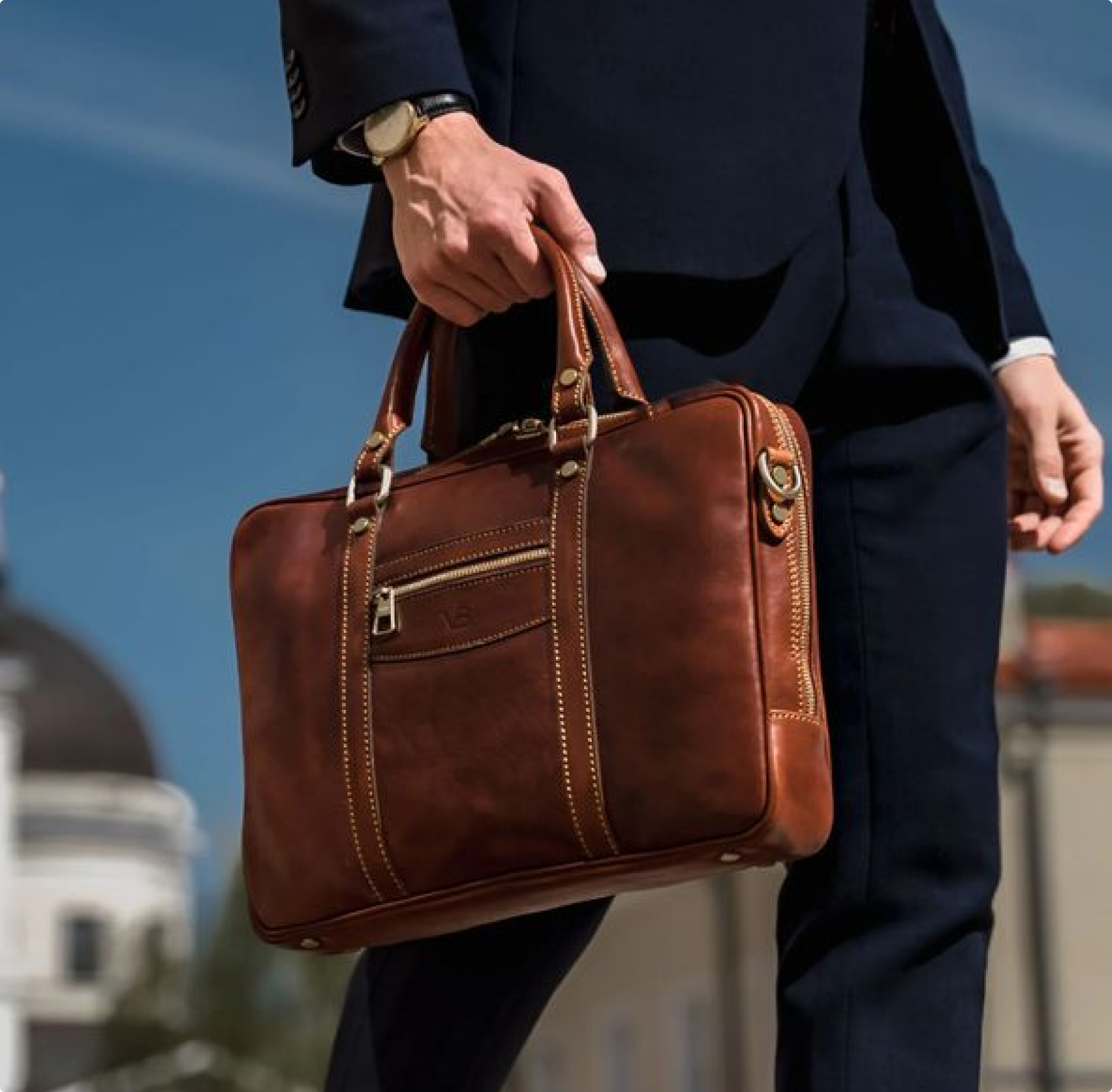
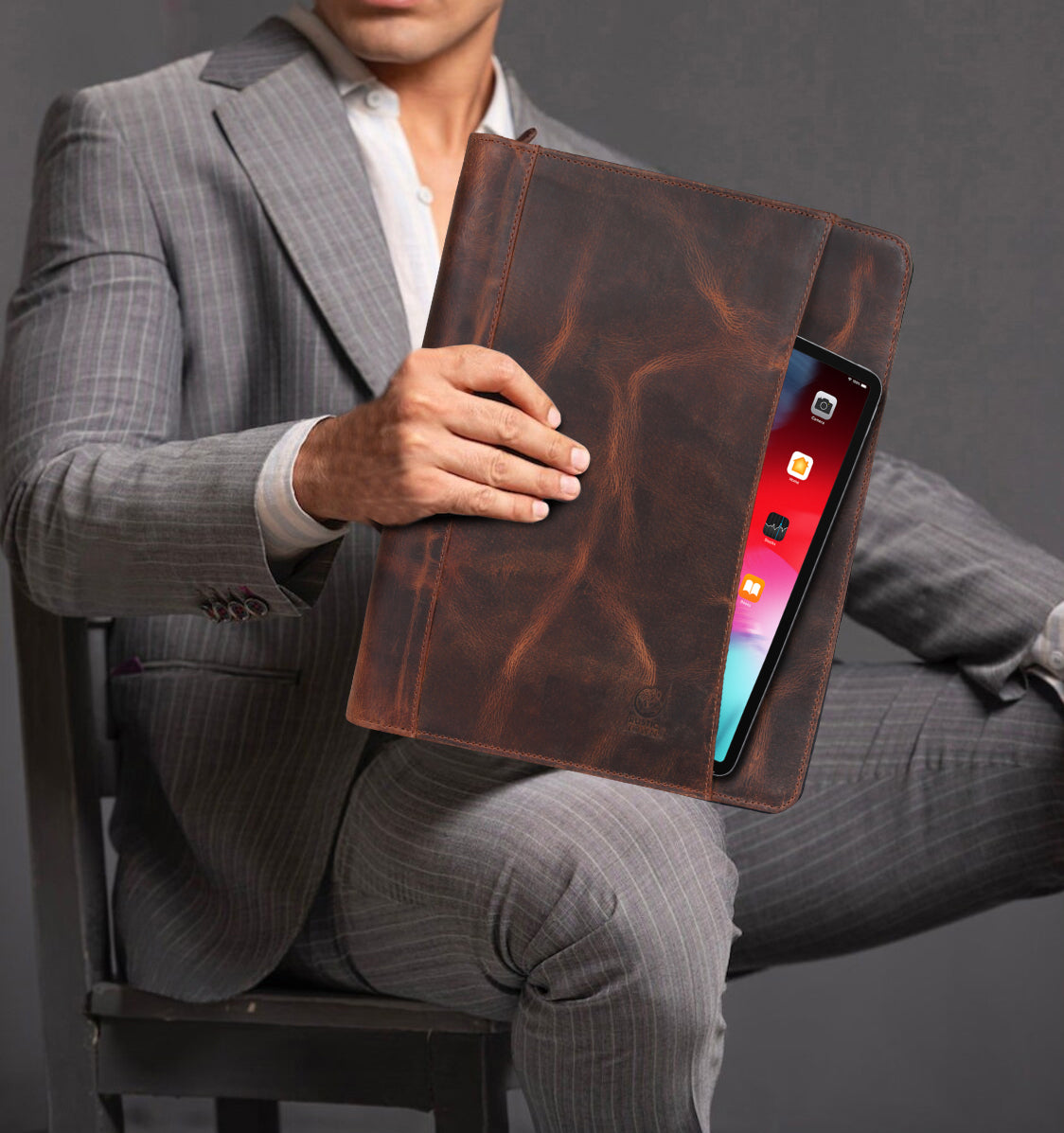
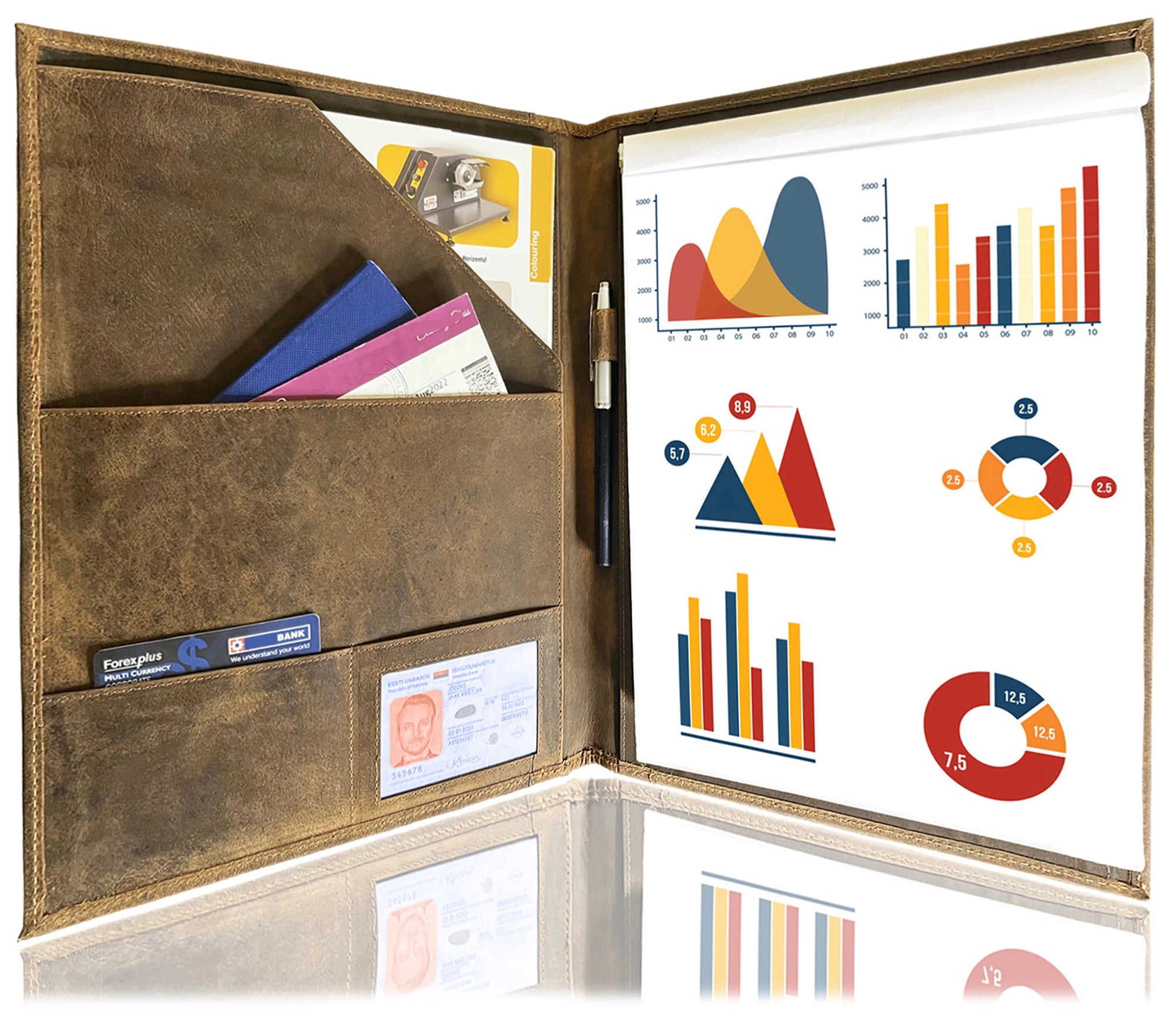
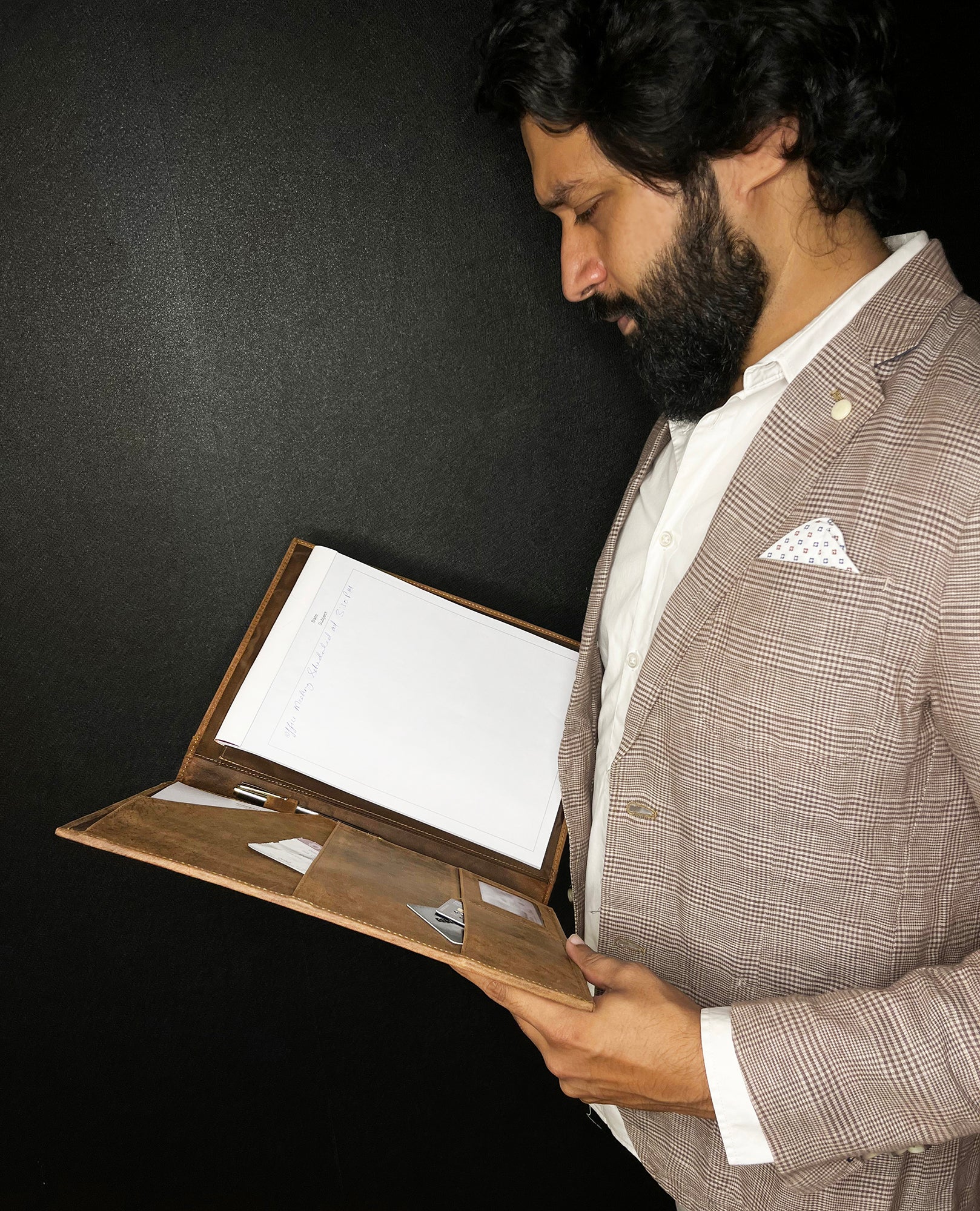
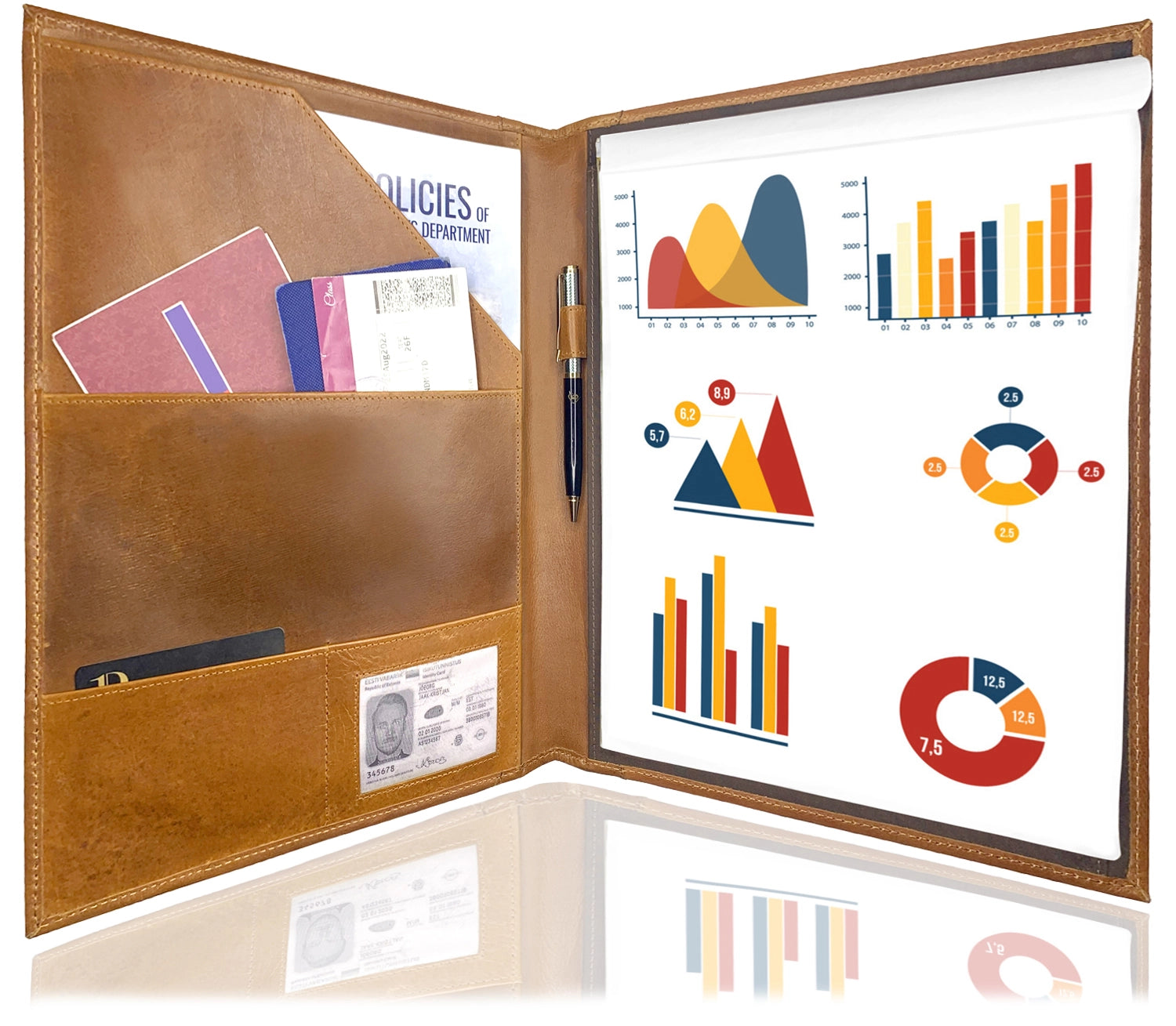
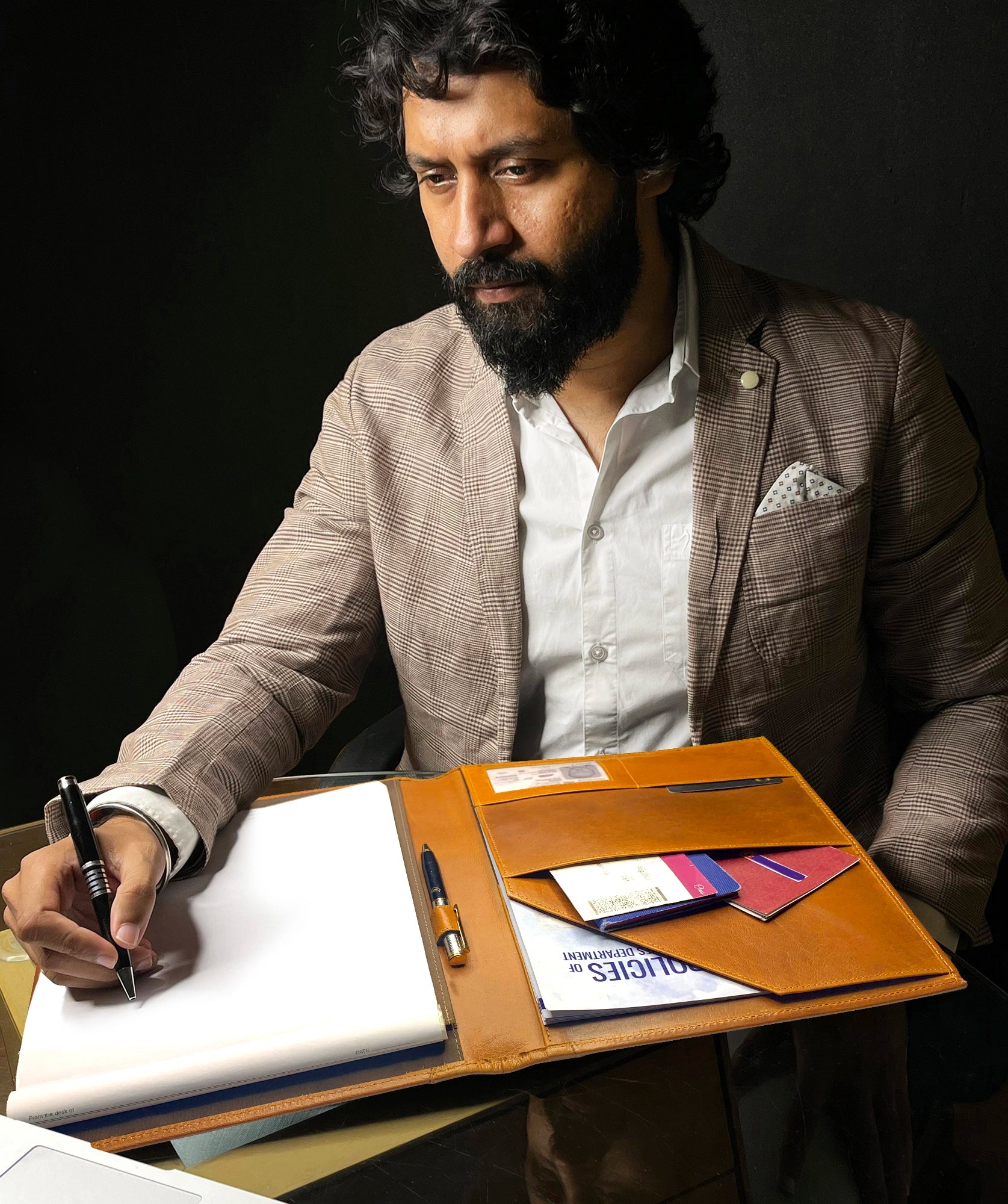
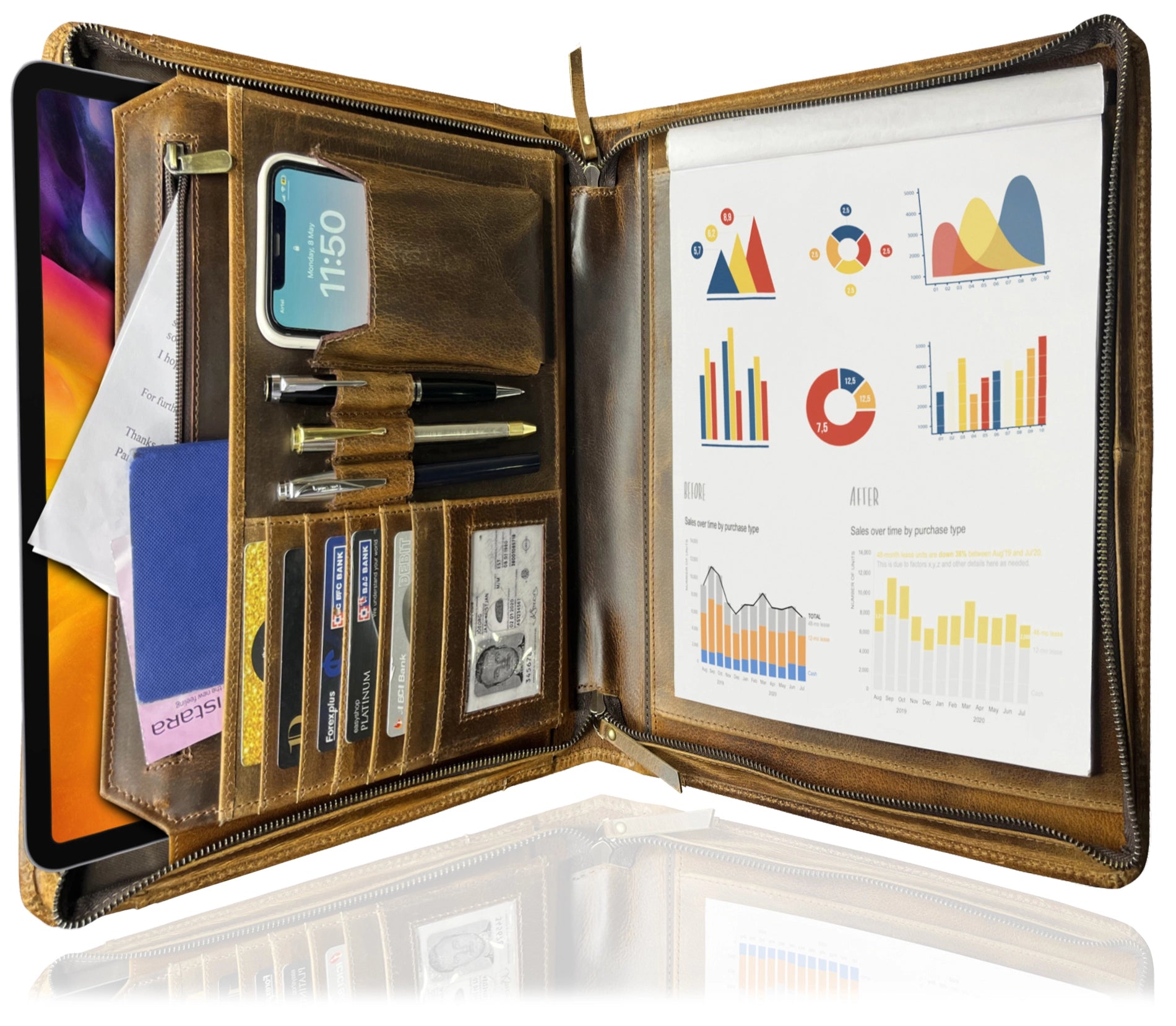
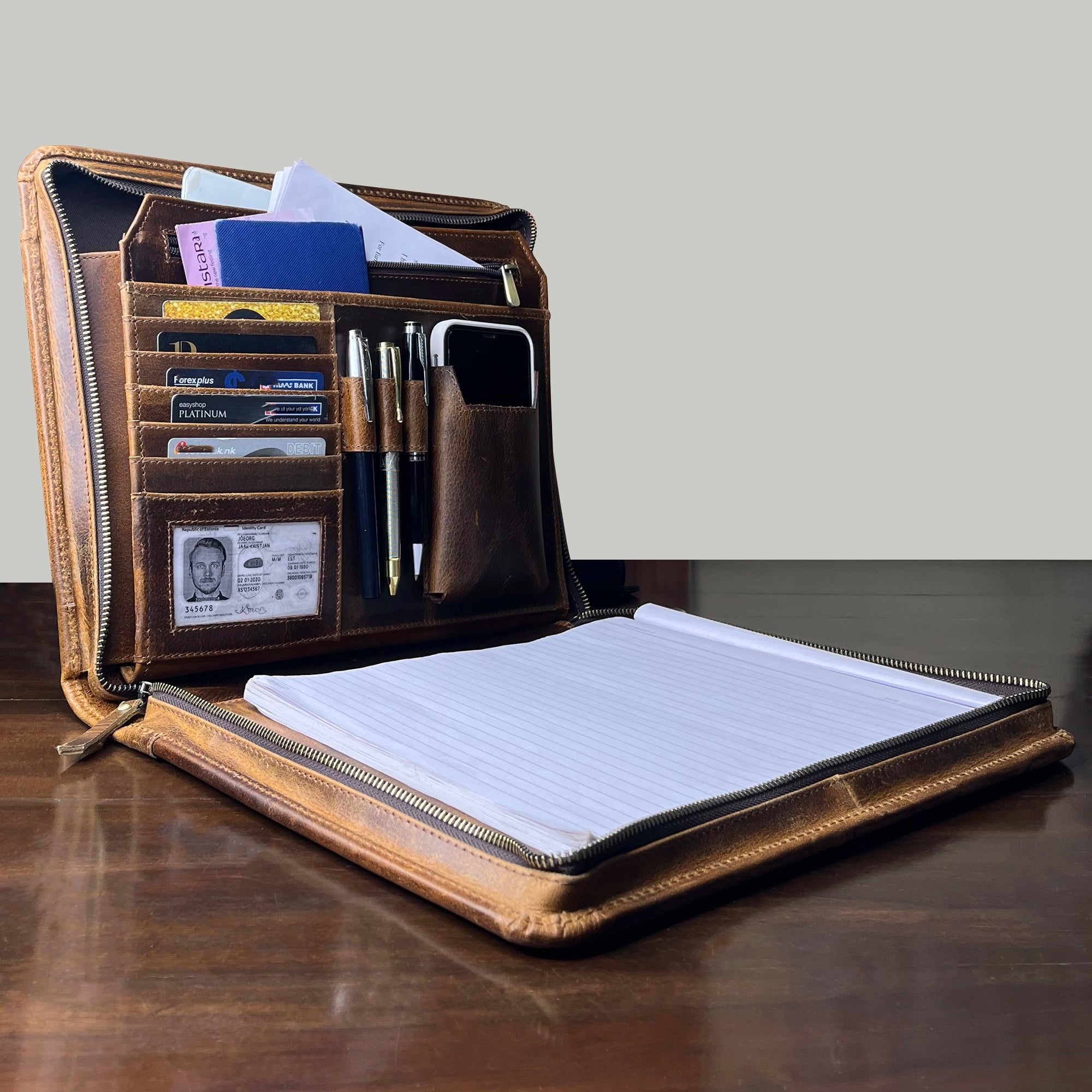
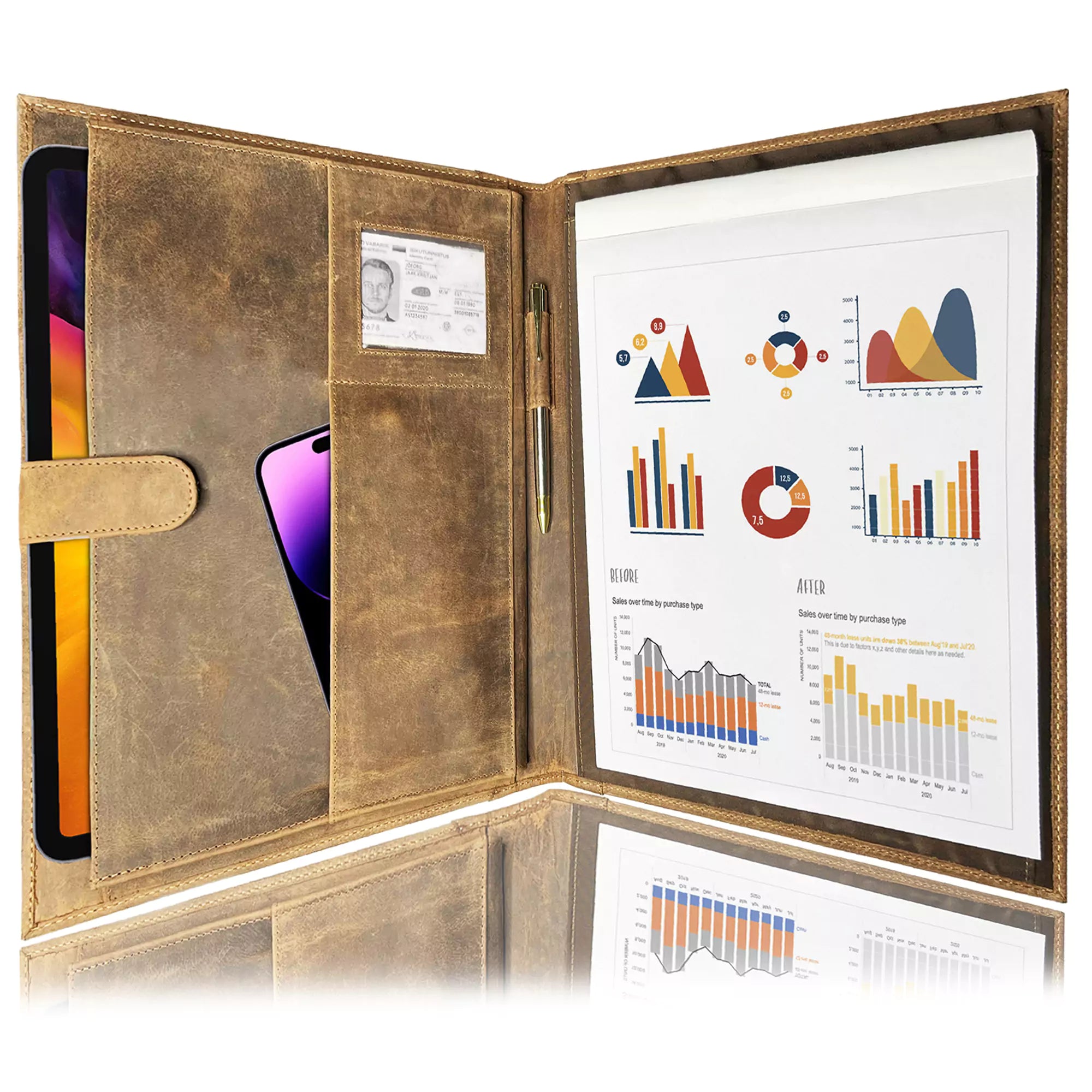
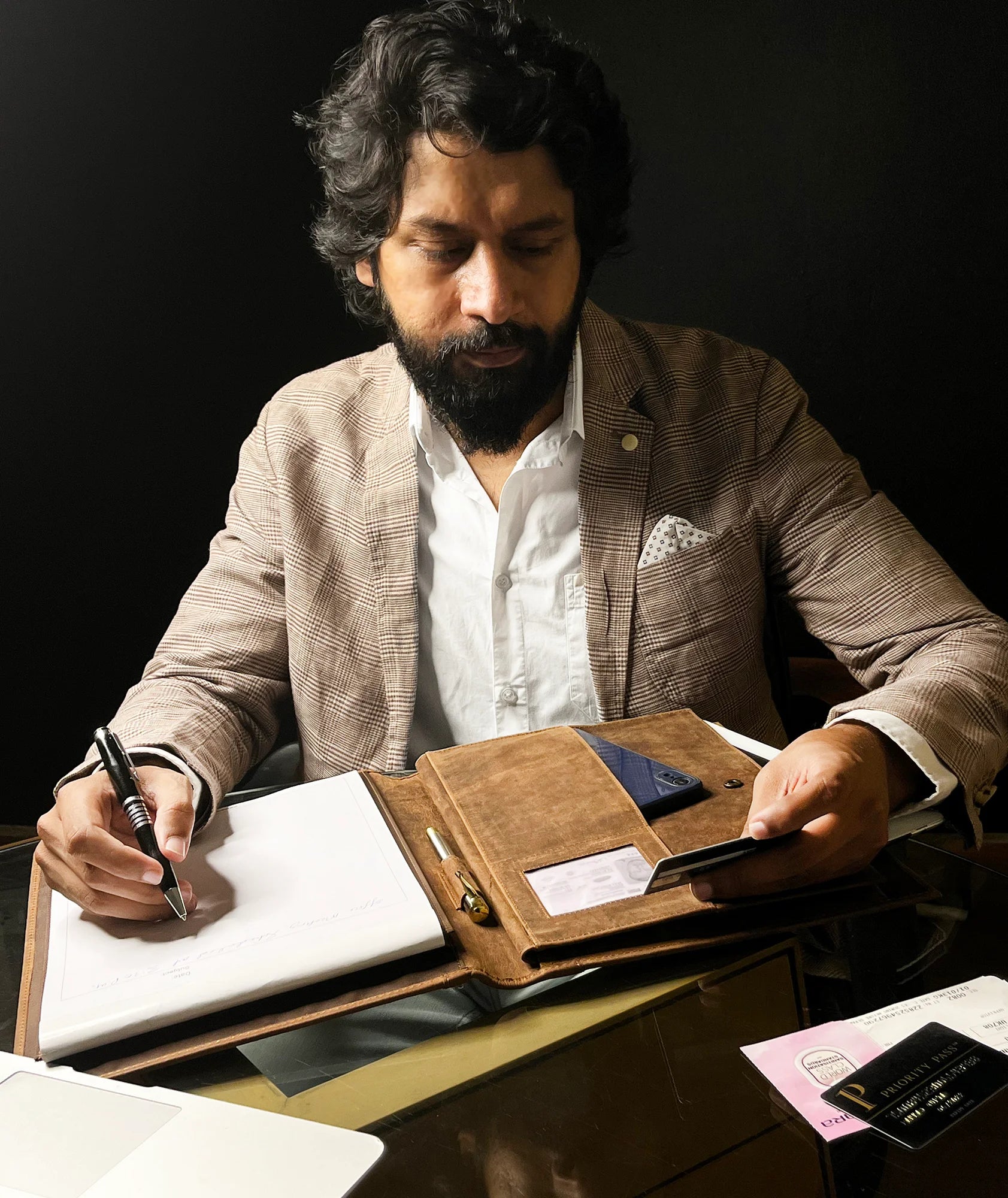
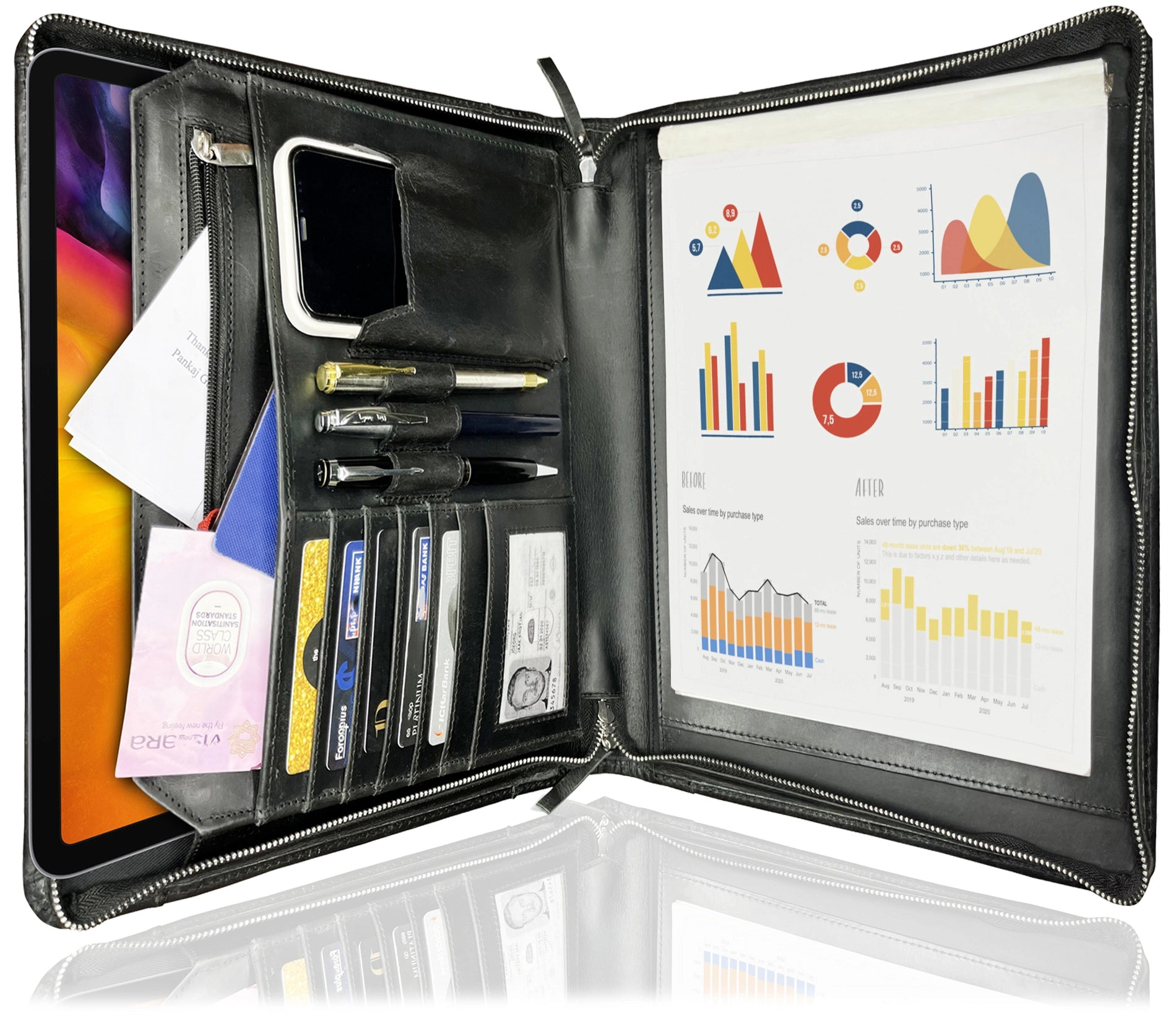
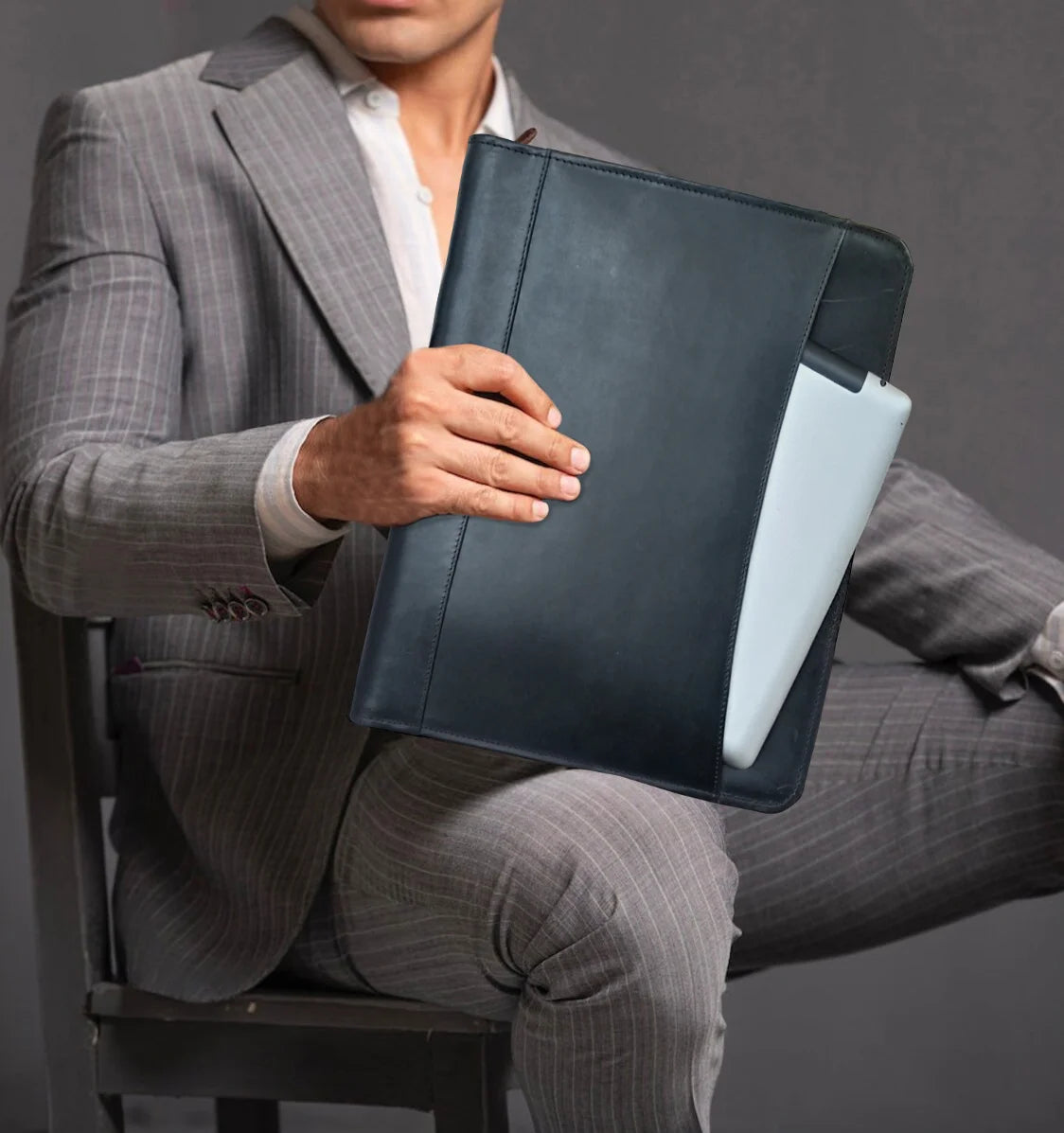
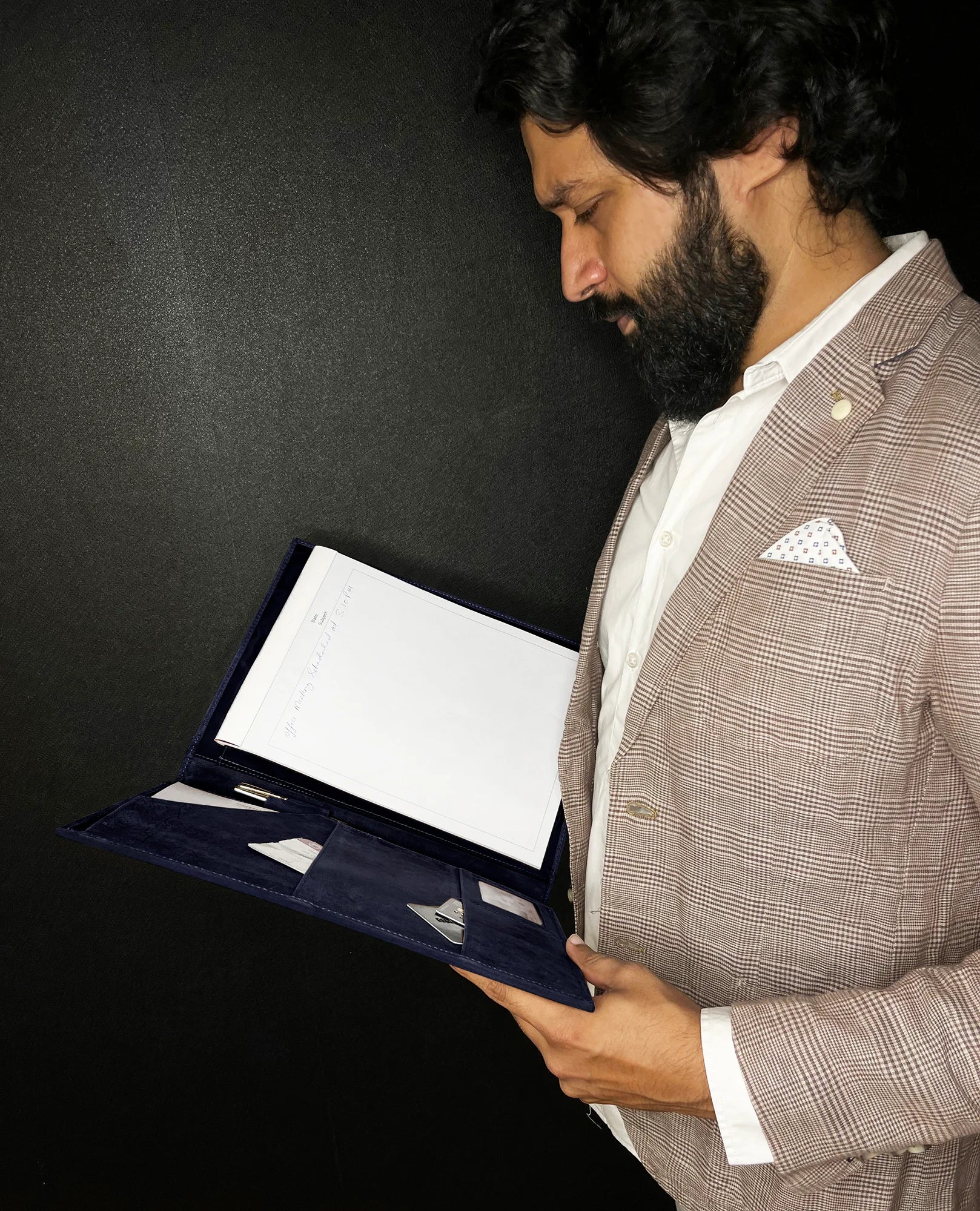
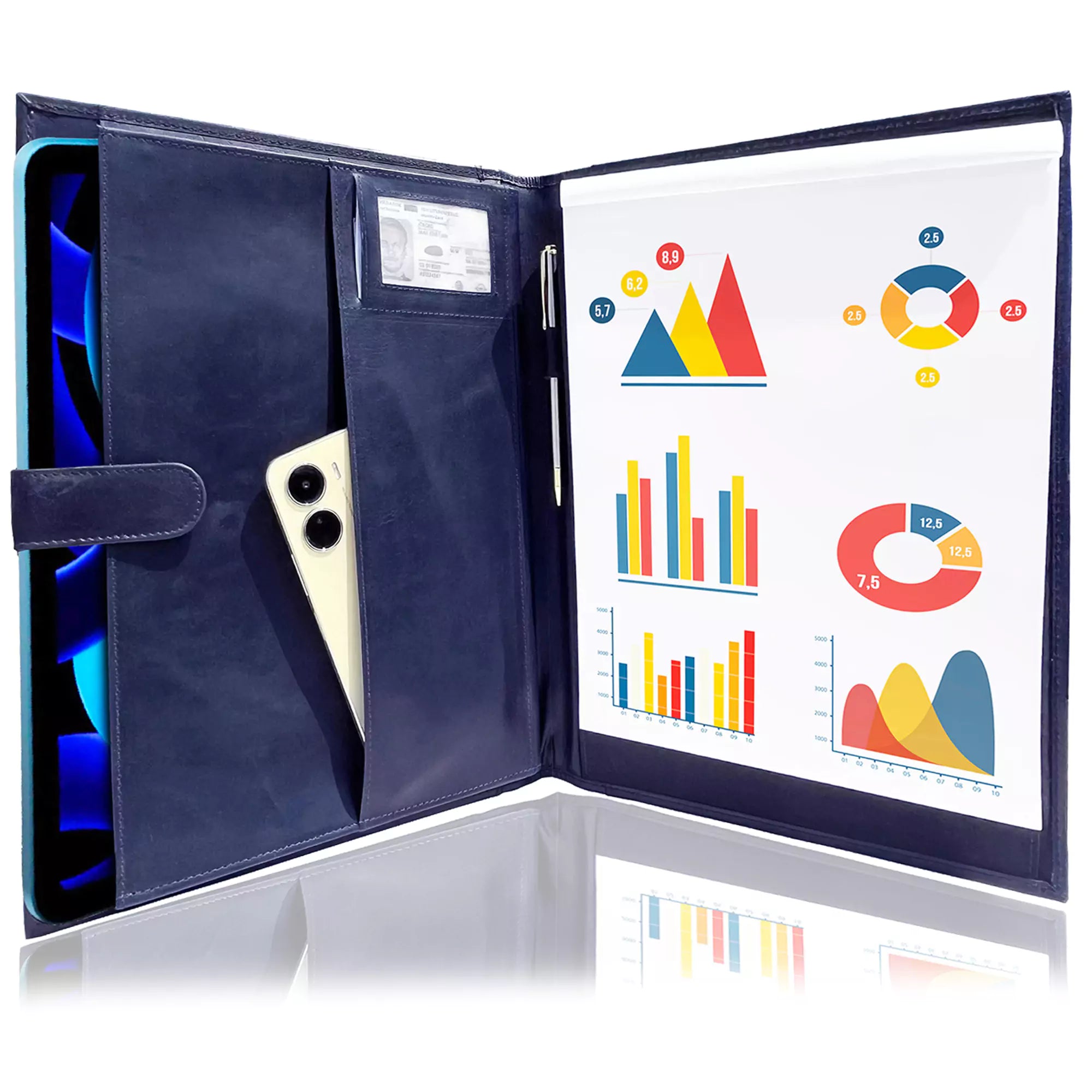
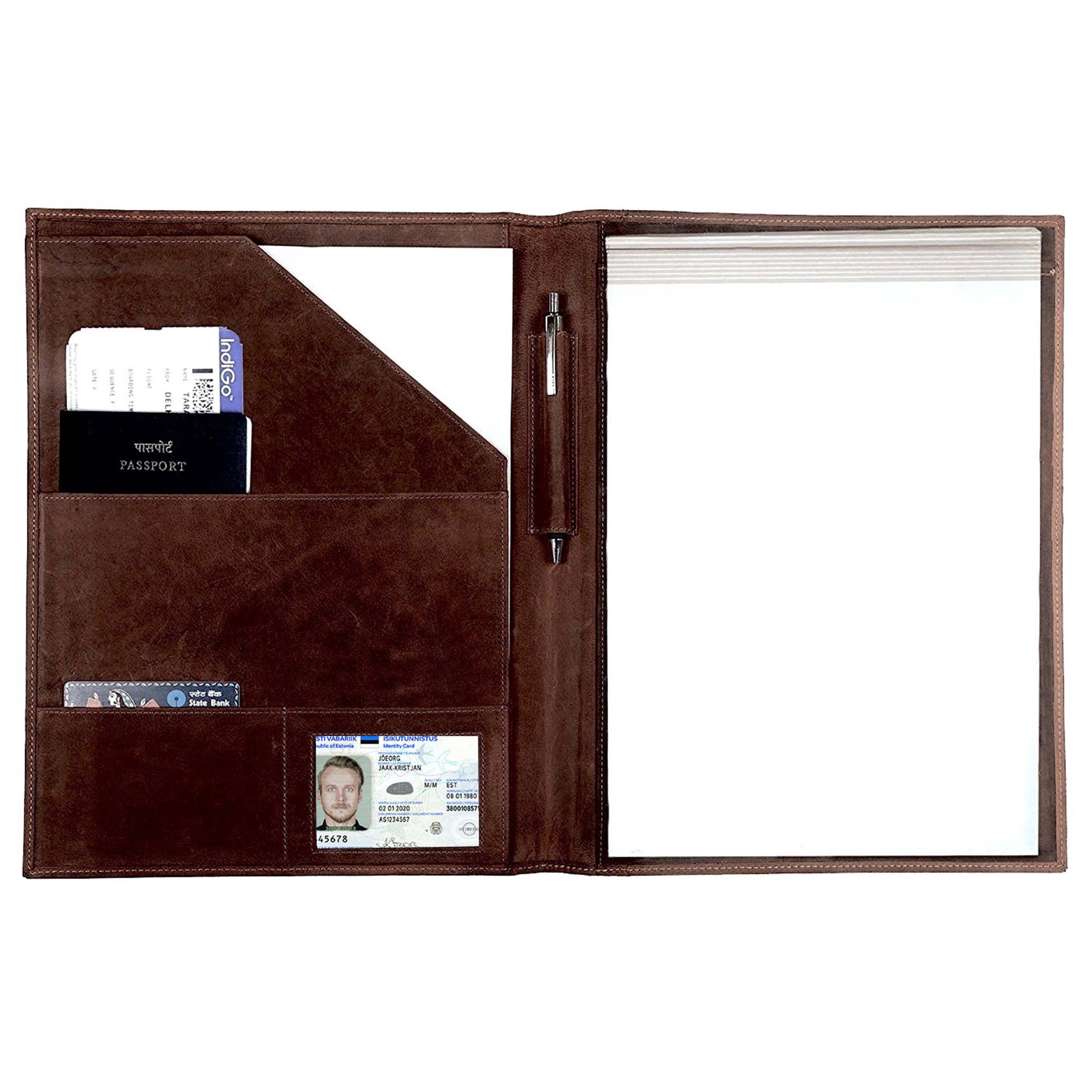
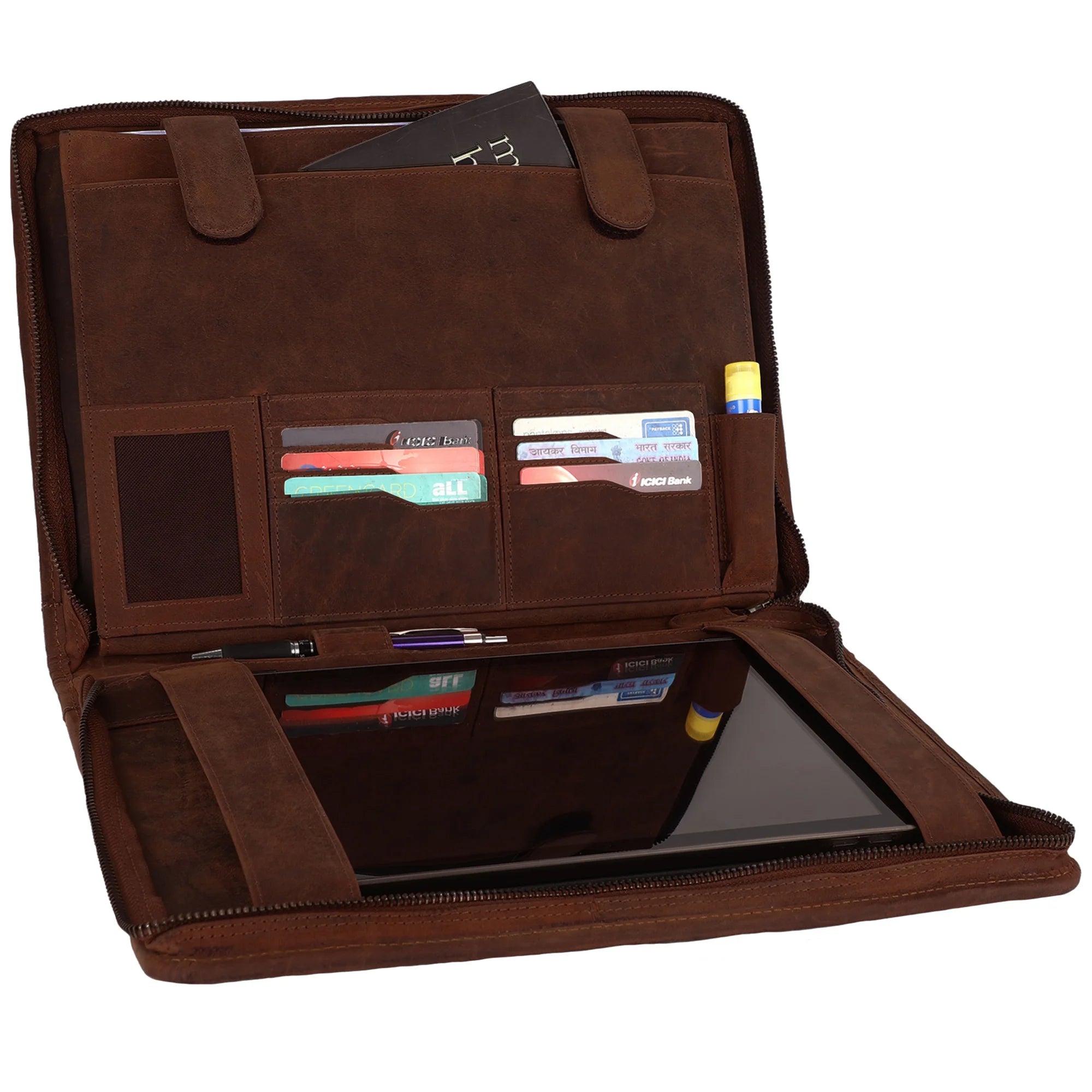
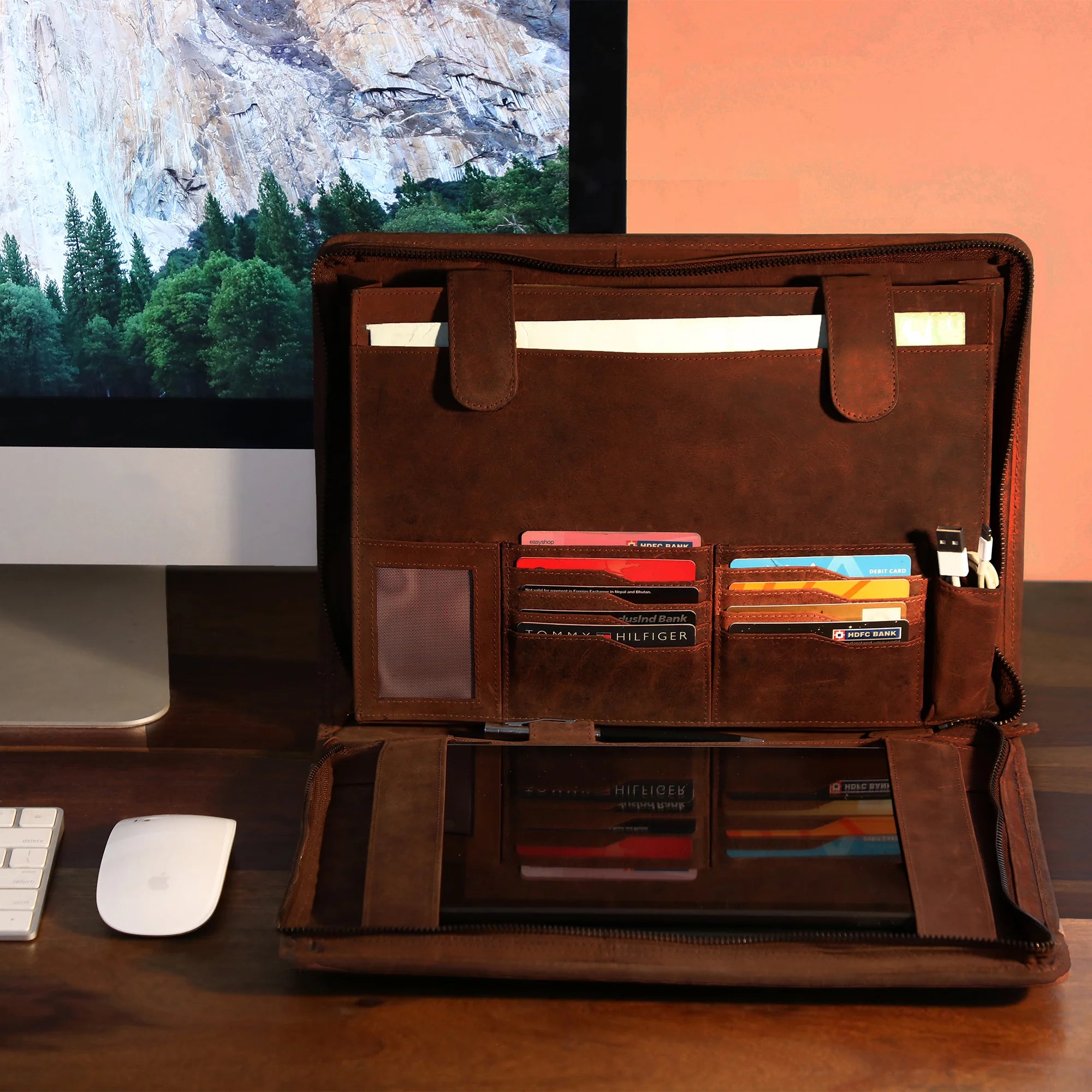
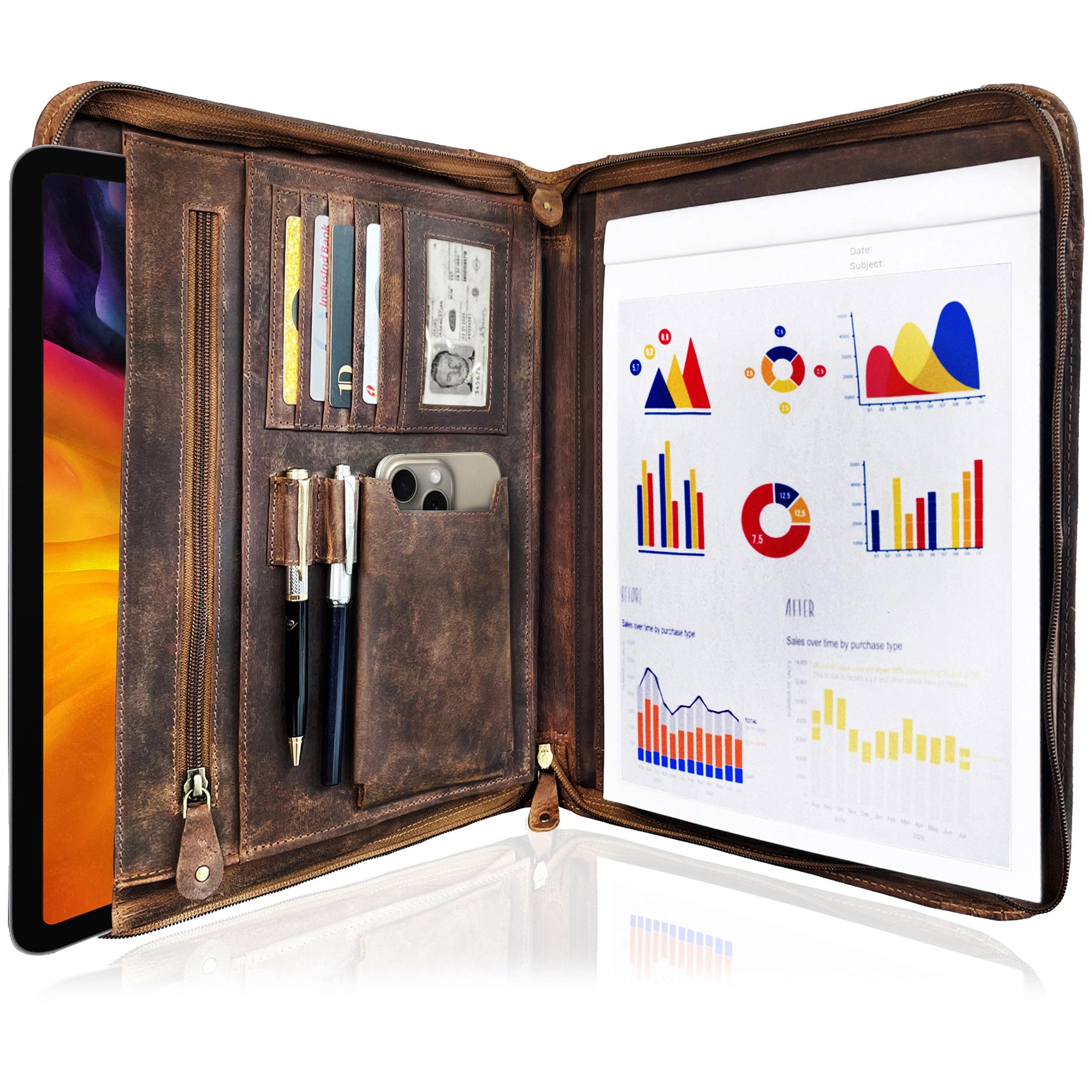
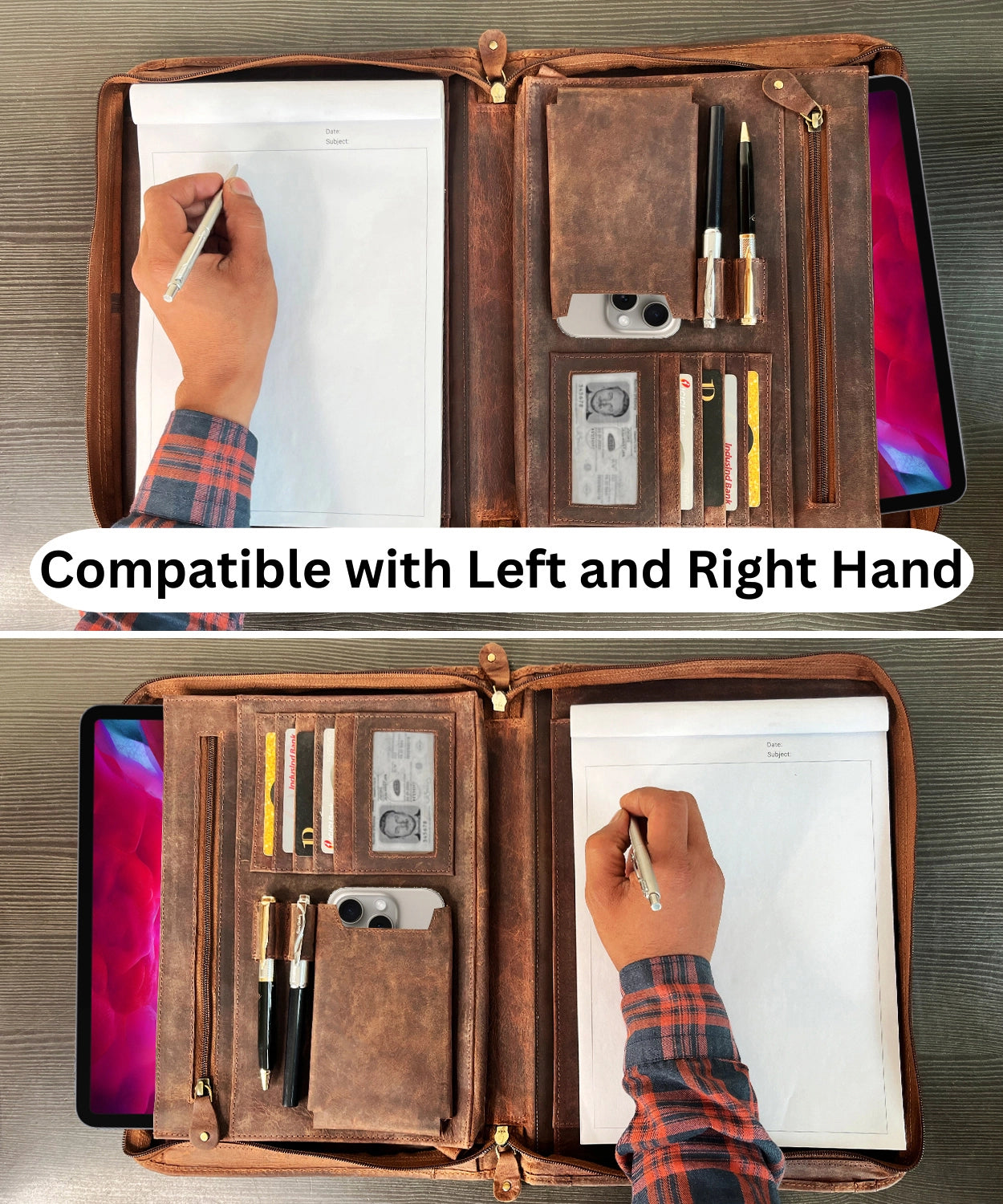
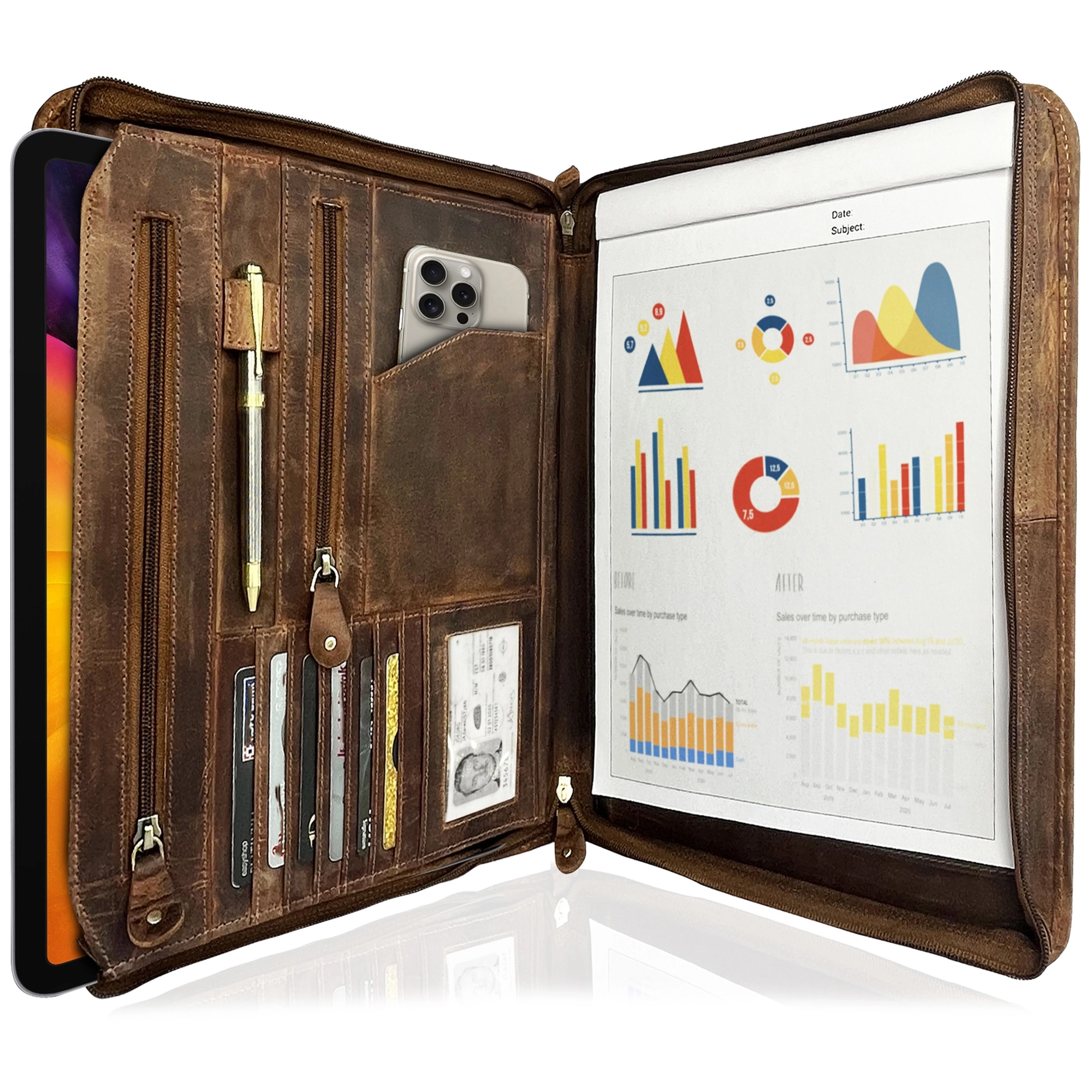
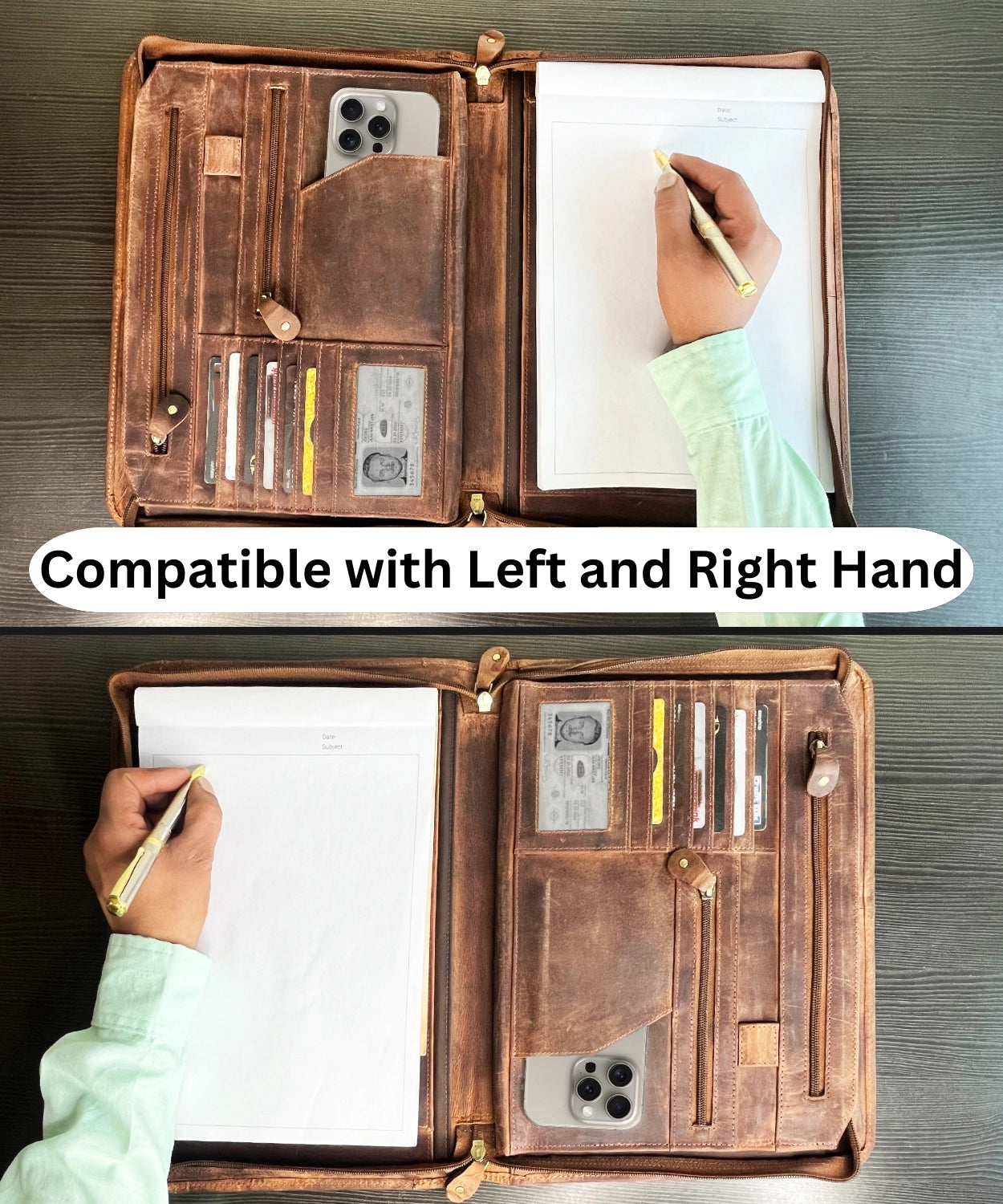
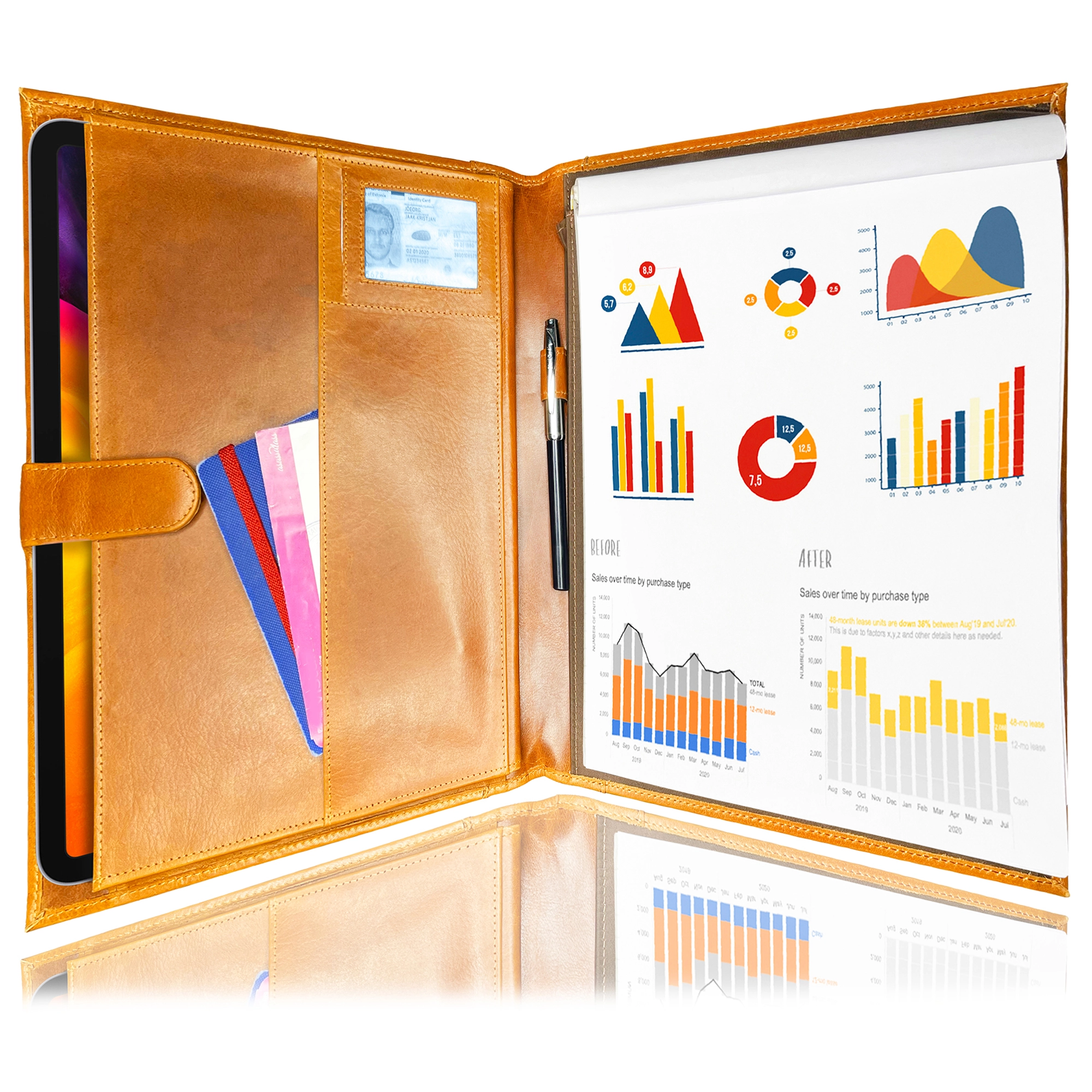
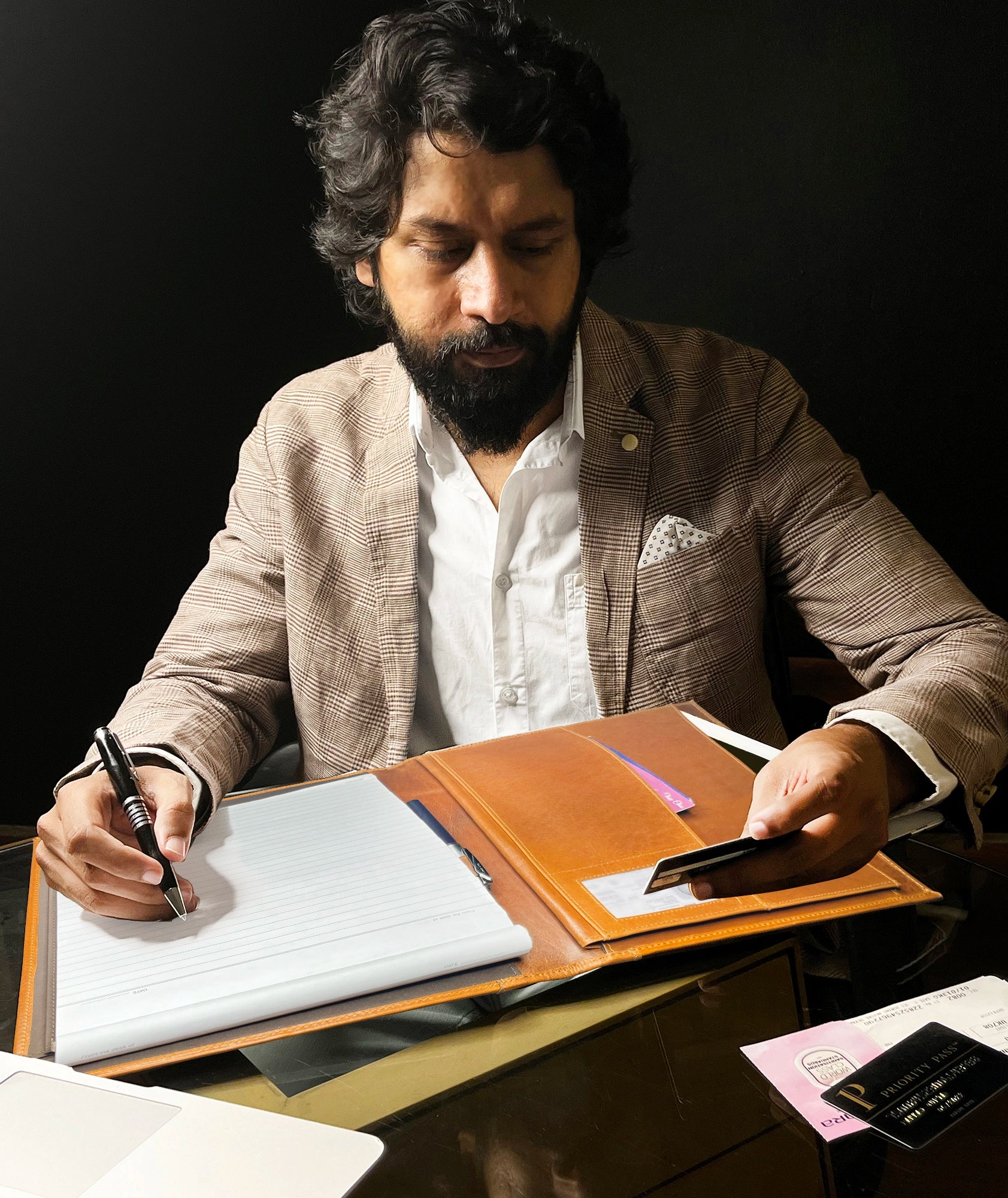
A leather portfolio, also called a padfolio, is a slim leather folder that holds a writing pad, documents, business cards, and a pen in one organised case for meetings and interviews. Every portfolio in this collection is handcrafted from leather with organised compartments, document sleeves, and a legal pad holder - the professional accessory that makes a considered impression the moment it lands on the table.
What Is a Leather Portfolio (Padfolio)?
A leather portfolio is a flat, folder-style organiser that keeps everything a professional carries into a meeting in one place: a notepad for writing, sleeves for documents and a resume, slots for business cards, and a loop for a pen. Open it on a table and your materials are laid out and ready; close it and everything is protected and presentable. The terms "portfolio" and "padfolio" are used interchangeably - padfolio emphasises the writing pad it holds, portfolio the broader document organisation, but they describe the same leather folder.
This collection runs 13 styles from a $54.95 classic portfolio to zippered organisers, in colours from antique brown to black, tan, cognac, and blue. Each is built to hold a standard writing pad, organise your papers, and develop a patina that makes a well-used portfolio look more distinguished over the years, not less.
Which Leather Portfolio Should I Choose?
The headline picks, each linked to its product page, with prices verified from the live collection:
The one-rule version: choose an open portfolio like the Royal ($54.95) if you want quick access and a slim profile, and the zippered Kingsman ($84.99) if you carry the portfolio in a bag and want everything sealed inside. Pick the colour to match your role: black and dark brown for formal settings, tan and cognac for a warmer, creative impression.
Open Portfolio or Zippered Padfolio - Which Should I Choose?
The single biggest choice is the closure, and it comes down to how you carry it:
- Open portfolio (Royal, Hunter) - Folds like a book with no zip; slimmer, faster to open in a meeting, ideal when it travels on a desk or in hand
- Zippered padfolio (Kingsman) - A full zip seals all four sides, so nothing slides out in a bag; the secure choice for commuters and travellers
Choose open if your portfolio mostly moves between desk and meeting room and you value a slim, quick-access folder. Choose zippered if it rides in a leather messenger bag or leather backpack where loose papers would spill. Many professionals own both - an open one for the office, a zippered one for travel.
What Should a Professional Portfolio Hold?
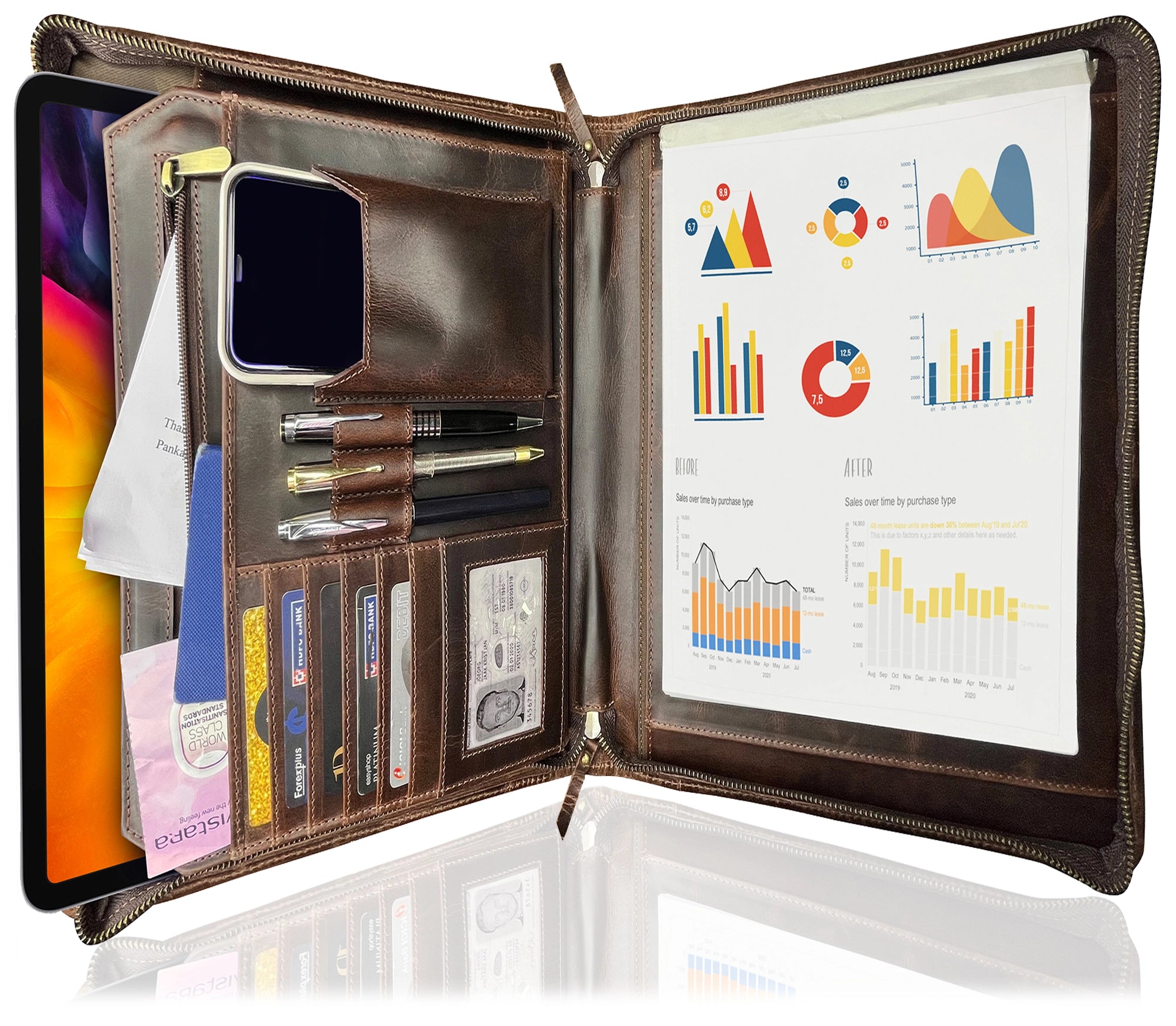
A well-designed portfolio organises a complete meeting kit without bulk. The standard layout across this collection:
- A writing pad - A standard letter or A4 legal pad sits in the holder, ready for notes
- Document and resume sleeves - Flat pockets keep printed documents and resumes crisp and unfolded
- Business card slots - Quick-access slots so you can hand a card across the table smoothly
- Pen loop - A dedicated holder so your pen is always with the portfolio, not lost in a bag
- Inner pockets - For a phone, calculator, or loose notes
The discipline of a portfolio is that everything has a place, so you arrive at a meeting or interview organised rather than shuffling loose paper. That visible composure is half of why a leather portfolio earns its reputation as a professional's tool.
Why Does a Leather Portfolio Make a Strong Impression?
In a meeting or interview, the small signals carry weight, and a full-grain leather portfolio is one of the strongest. Setting down a considered leather folder, opening it to organised documents, and writing on a proper pad reads as preparation and seriousness in a way a plastic folder or loose papers never will. It is the professional equivalent of a firm handshake - quiet, but noticed.
The leather itself is part of the message. Full-grain develops a patina with use, so a portfolio carried to years of meetings looks more distinguished over time, signalling experience rather than wear. Our guide to the types of leather explains why full-grain is the grade that ages this way, where lower grades simply look worn. For interviews especially, where first impressions are everything, a leather portfolio is a small investment that signals you take the moment seriously.
How Do I Care for a Leather Portfolio?
A portfolio lives a gentler life than a bag, so care is minimal:
- Wipe occasionally with a soft dry cloth to keep the surface clean
- Condition every 6 months with a leather balm to keep it supple and prevent the spine from drying
- Store flat rather than crammed upright in a bag, so it keeps its shape
- Keep it dry and away from direct heat, which can warp the leather over time
The full routine is in our guide on how to care for leather bags, and the deep-dive on whether water ruins leather covers what to do if a spill reaches it. Kept simply, a leather portfolio stays handsome through a whole career of meetings.
Is a Leather Portfolio a Good Gift?
It is one of the most thoughtful professional gifts, because it marks a career moment and gets used at every meeting after. Engraved initials make it personal, and the price sits comfortably in the gift range - most portfolios here fall under gifts $50-$100.
The natural occasions: a graduation gift for a new graduate heading into interviews is the classic, alongside a new job, a promotion, or a work anniversary. Leather is also the traditional third wedding anniversary material, so it suits 3rd anniversary gifts, and it makes a refined groomsmen gift for a professional wedding party. Pair a portfolio with a leather journal or a men's leather wallet for a complete professional set.
Who Is a Leather Portfolio NOT For?
Honest guidance. If you take all your notes digitally on a tablet or laptop, a portfolio's writing pad goes unused - though the document sleeves and card slots may still earn their place, and a tablet-sleeve folder suits better. If you need to carry a large volume of files daily, a structured leather satchel or briefcase holds more than a slim folder. For interviews, client meetings, presentations, and anyone who still values writing notes by hand, a leather portfolio is the accessory that quietly signals you are prepared.
Portfolio, Journal, or Notebook - What Does a Professional Need?
These three get confused, but they serve different purposes and many professionals carry more than one. A portfolio is the meeting and interview tool - it organises documents, cards, and a replaceable writing pad in a presentable case you open in front of others. A leather journal is a bound book for sustained personal writing, planning, and reflection that stays with you over time. A notebook is the disposable pad you fill and replace.
The professional's setup that works: a portfolio for client-facing moments where presentation matters, and a journal for the thinking, note-keeping, and planning you do alone. The portfolio holds the pad you write meeting notes on and the documents you present; the journal holds the ideas you return to. For a complete desk, a leather desk mat ties the set together. Knowing the difference means you carry the right tool to each setting rather than forcing one to do every job.
How Do You Use a Portfolio in an Interview?
A portfolio used well is a quiet advantage in an interview. Before you arrive, load it: fresh copies of your resume in the document sleeves, a few business cards in the slots, a working pen in the loop, and a clean pad for notes. Arrive with it closed and held, set it on the table as you sit, and open it deliberately - the motion itself reads as composed and prepared.
During the interview, take brief notes on the pad rather than relying on memory, which signals engagement, and when references to your experience come up, you can produce a clean resume copy from the sleeve without fumbling. At the close, a business card handed smoothly from the slot leaves a final impression of organisation. None of this is about showing off the portfolio - it is about the portfolio letting you focus on the conversation while everything you need is exactly where you reach for it. That ease is precisely what makes a candidate look prepared, and it is why a leather portfolio is a classic gift for anyone entering the job market.
What Makes a Quality Leather Portfolio?
Three details separate a portfolio that lasts a career from one that looks tired within a year. First, the leather grade: full-grain resists the scuffs of daily desk-and-bag life and develops a patina, where lower grades scratch and peel at the corners. Second, the stitching and spine: a portfolio is opened and closed thousands of times, so reinforced stitching at the spine is what stops it loosening and the cover from separating. Third, the interior fit: card slots and the pen loop should hold their contents snugly without stretching, and the pad holder should grip a standard pad firmly so it does not slide when you write.
Rustic Town portfolios are handcrafted with all three in mind, which is why the same portfolio carried to years of meetings keeps its shape and gains character rather than wearing out. For an accessory that represents you in professional settings, that durability is not just about value - it is about always showing up looking prepared.