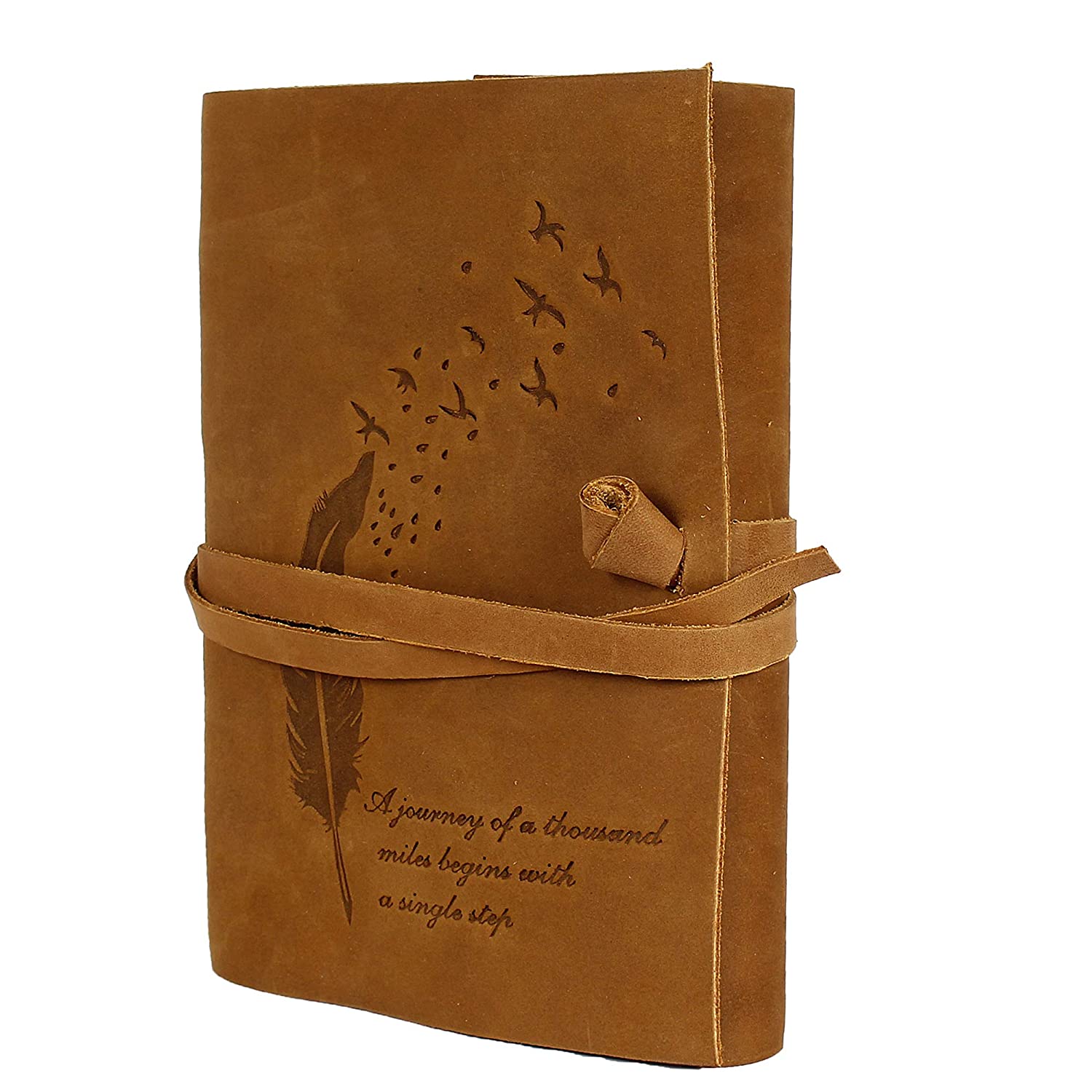
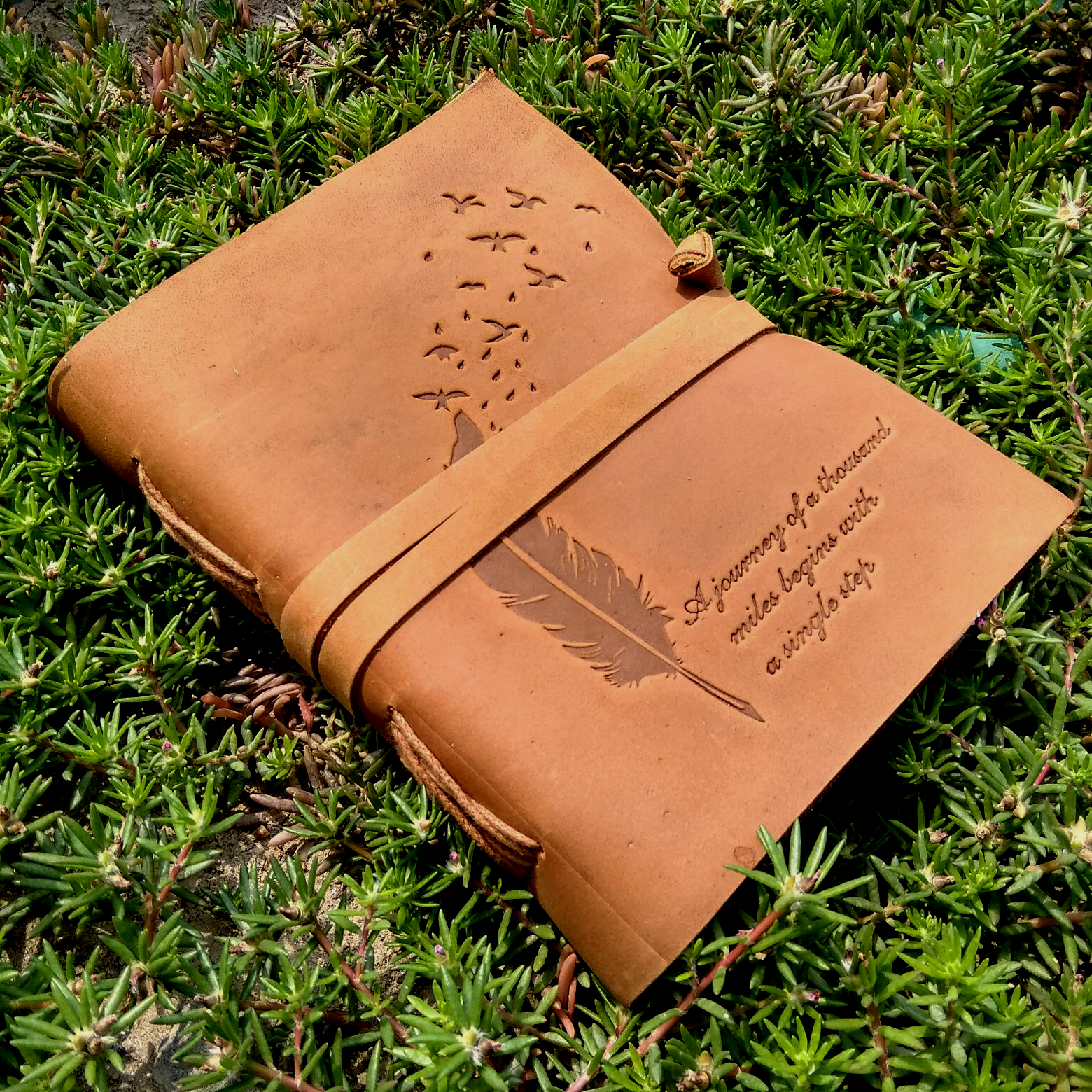
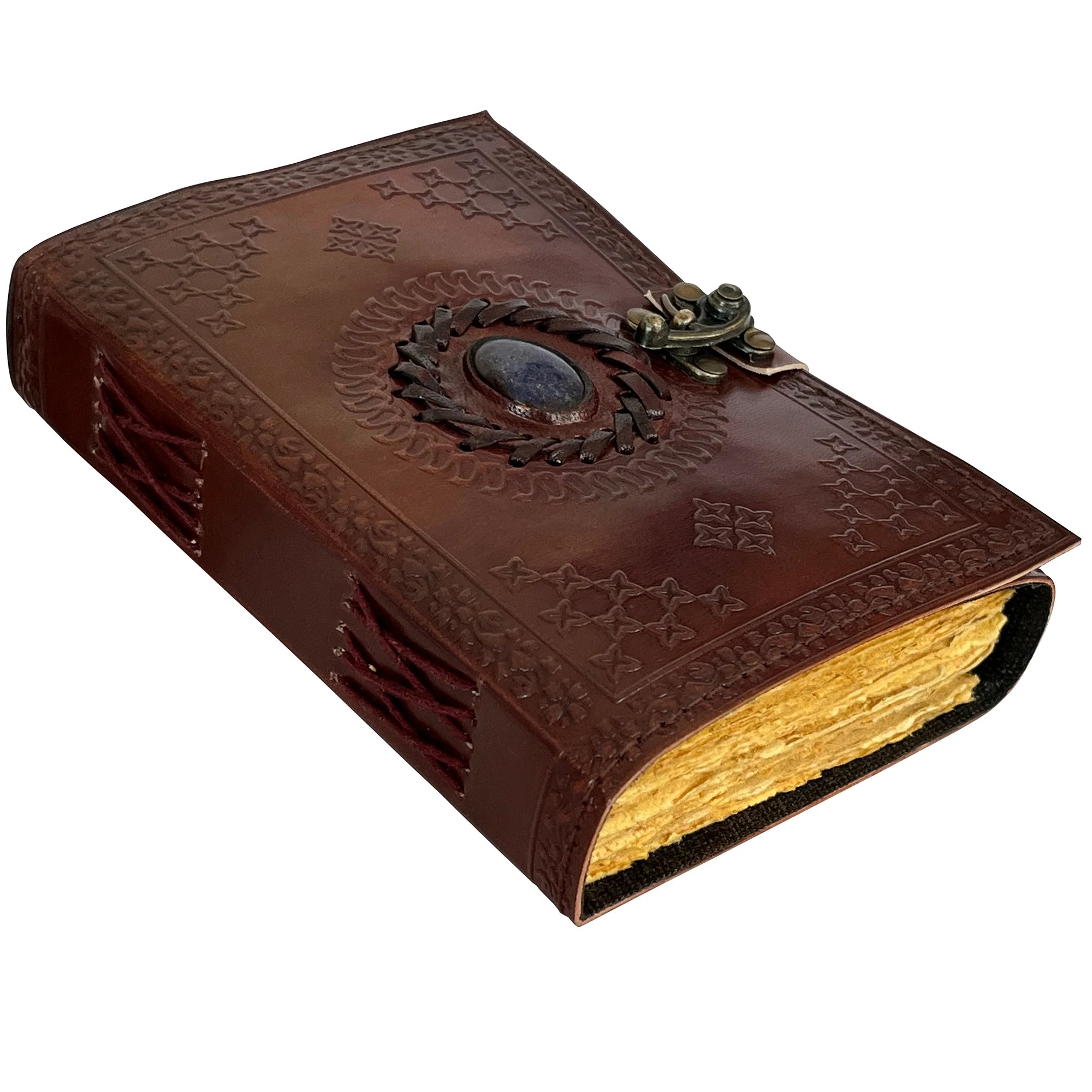
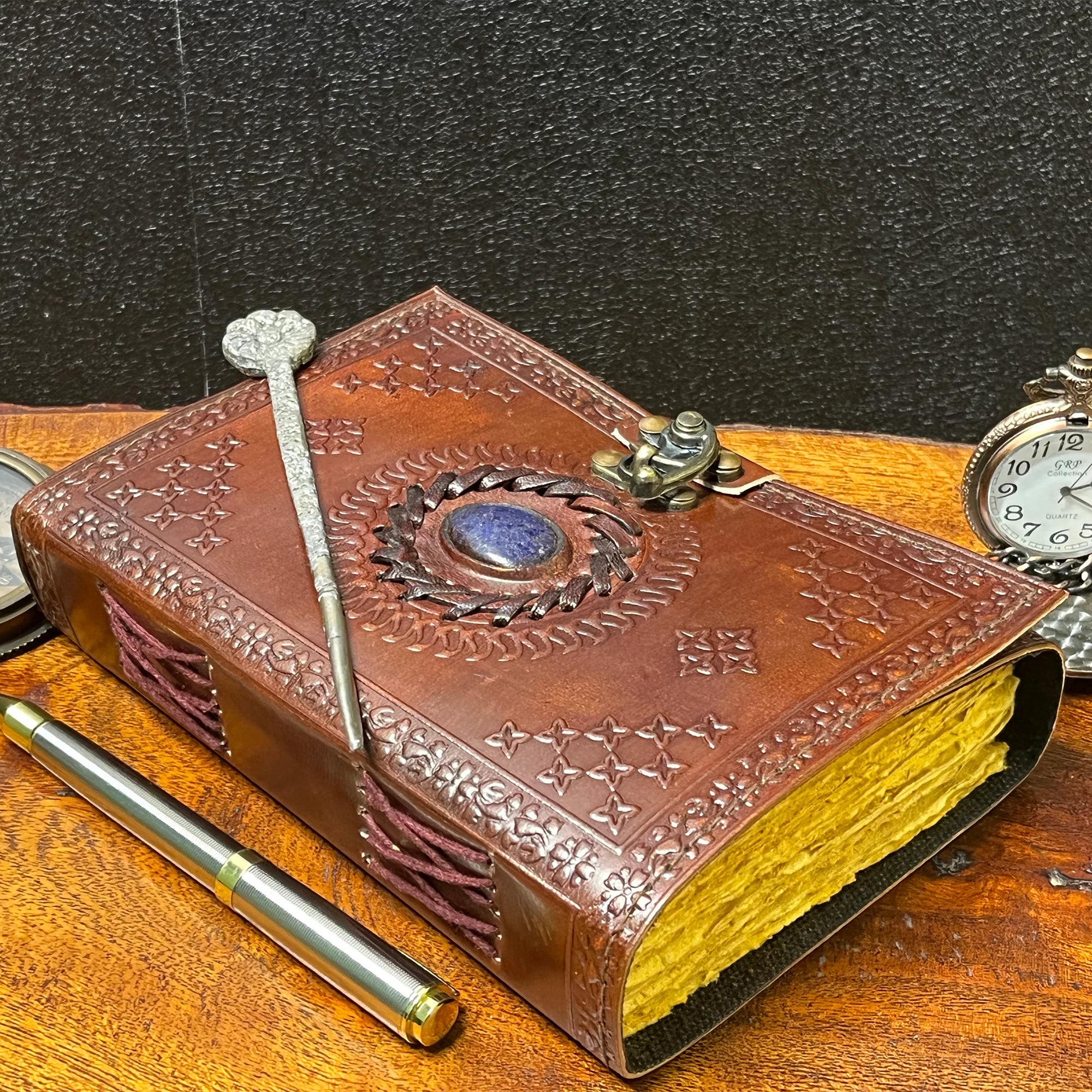
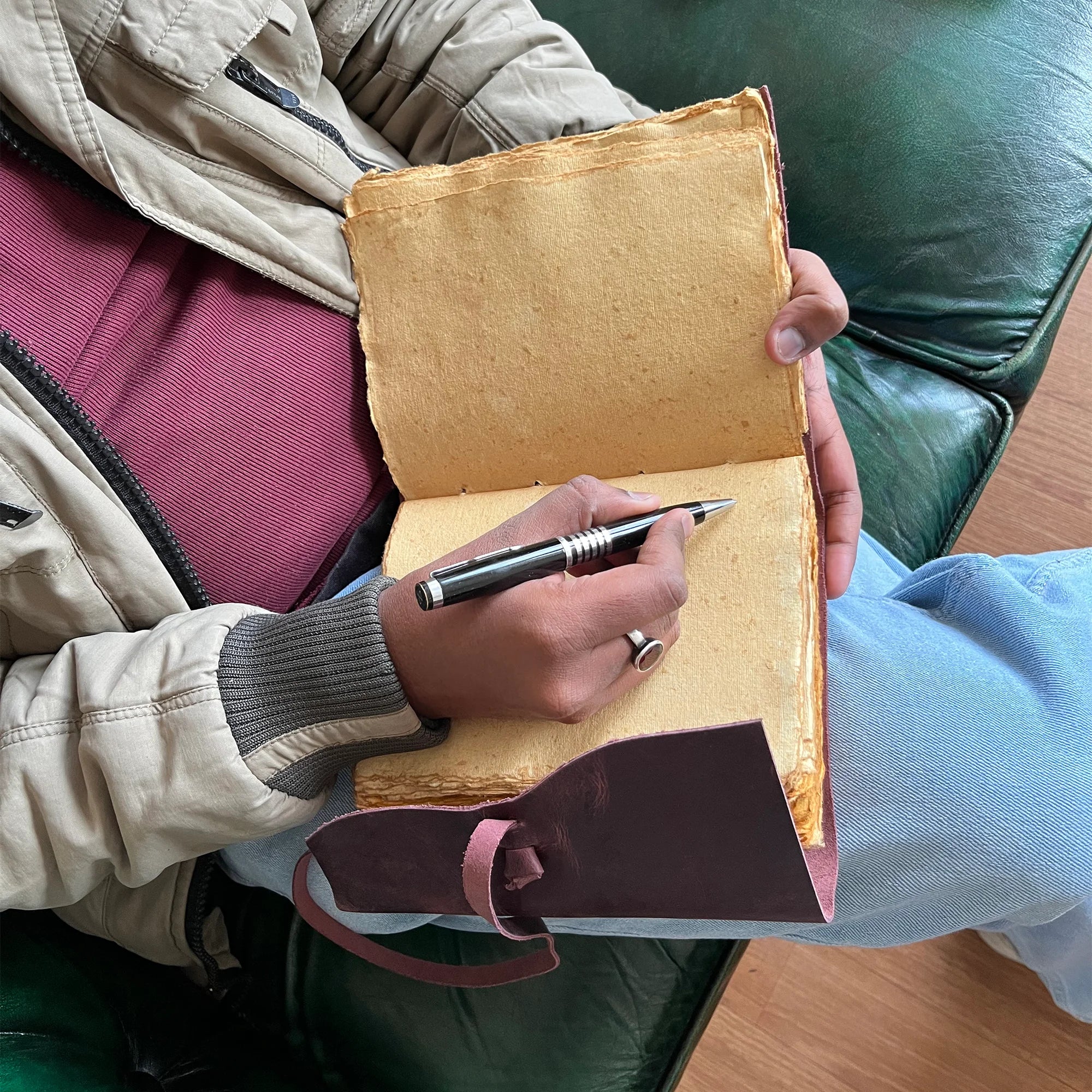
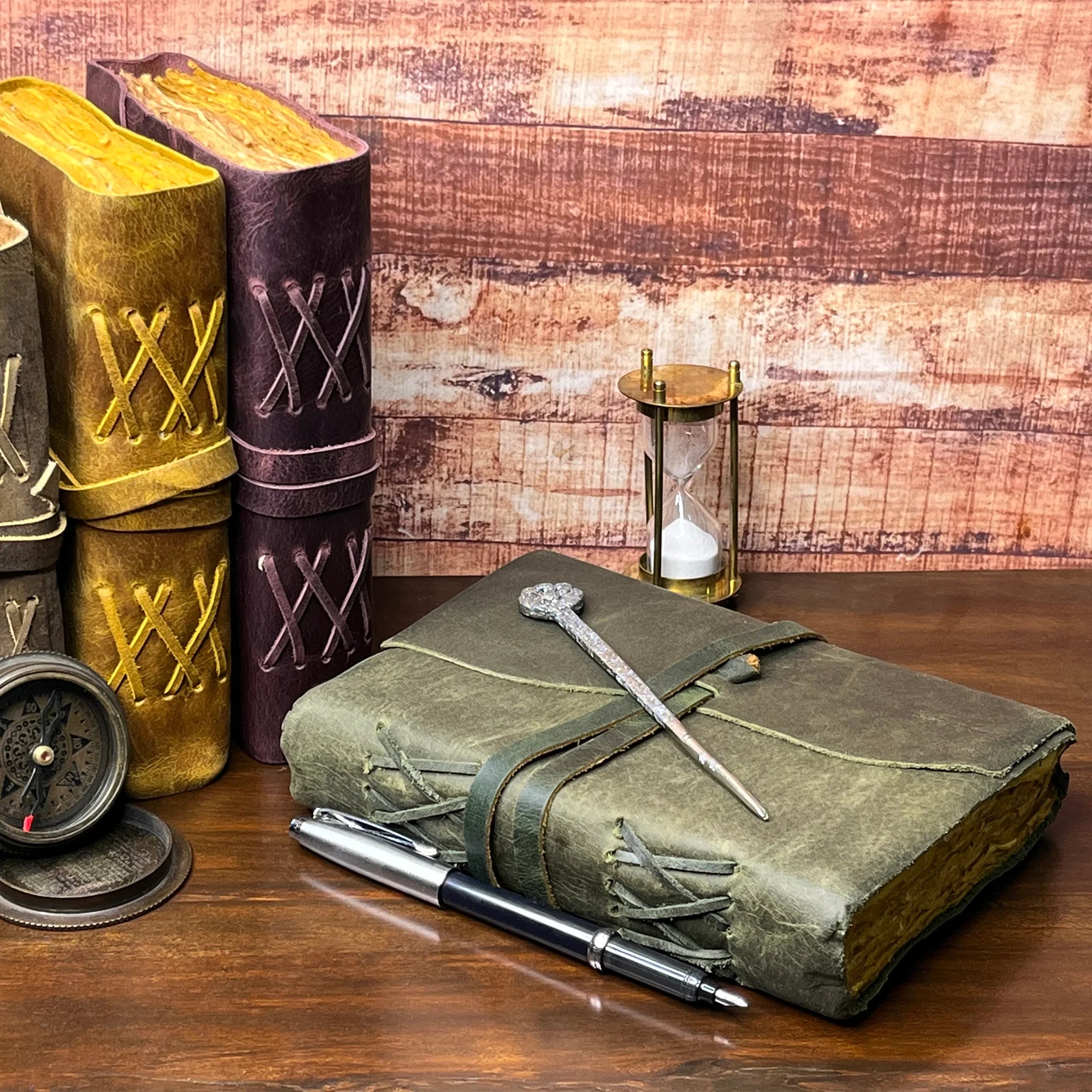
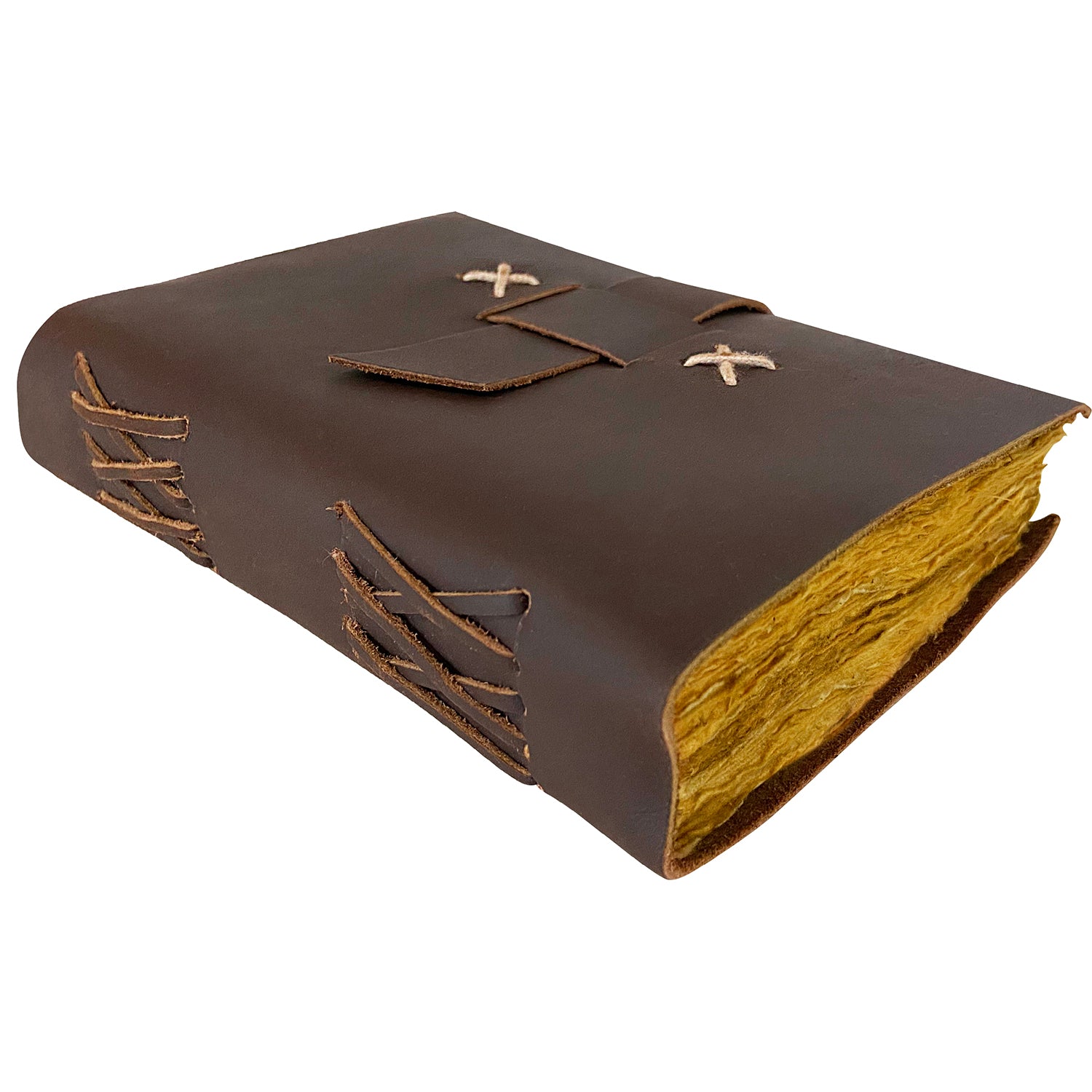
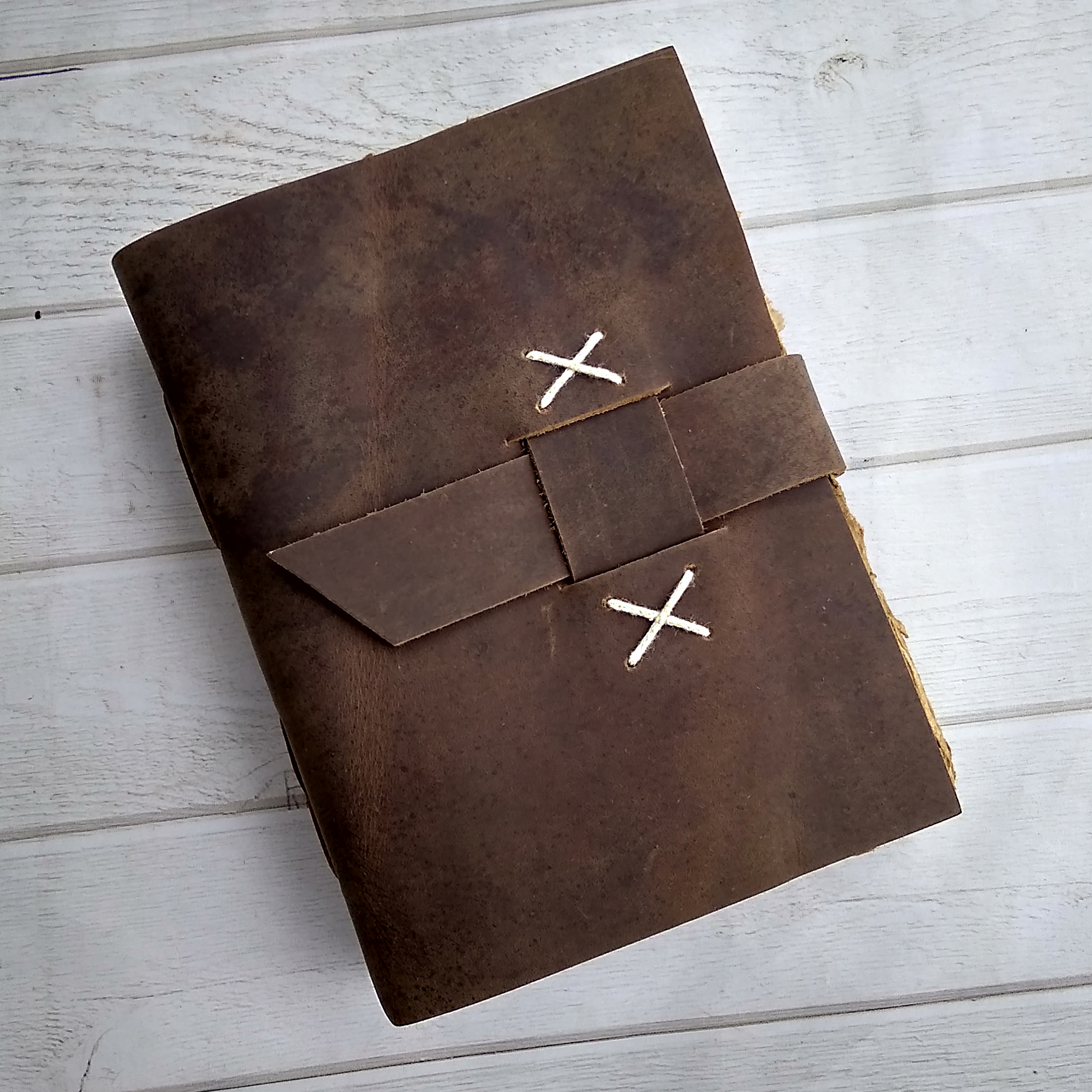
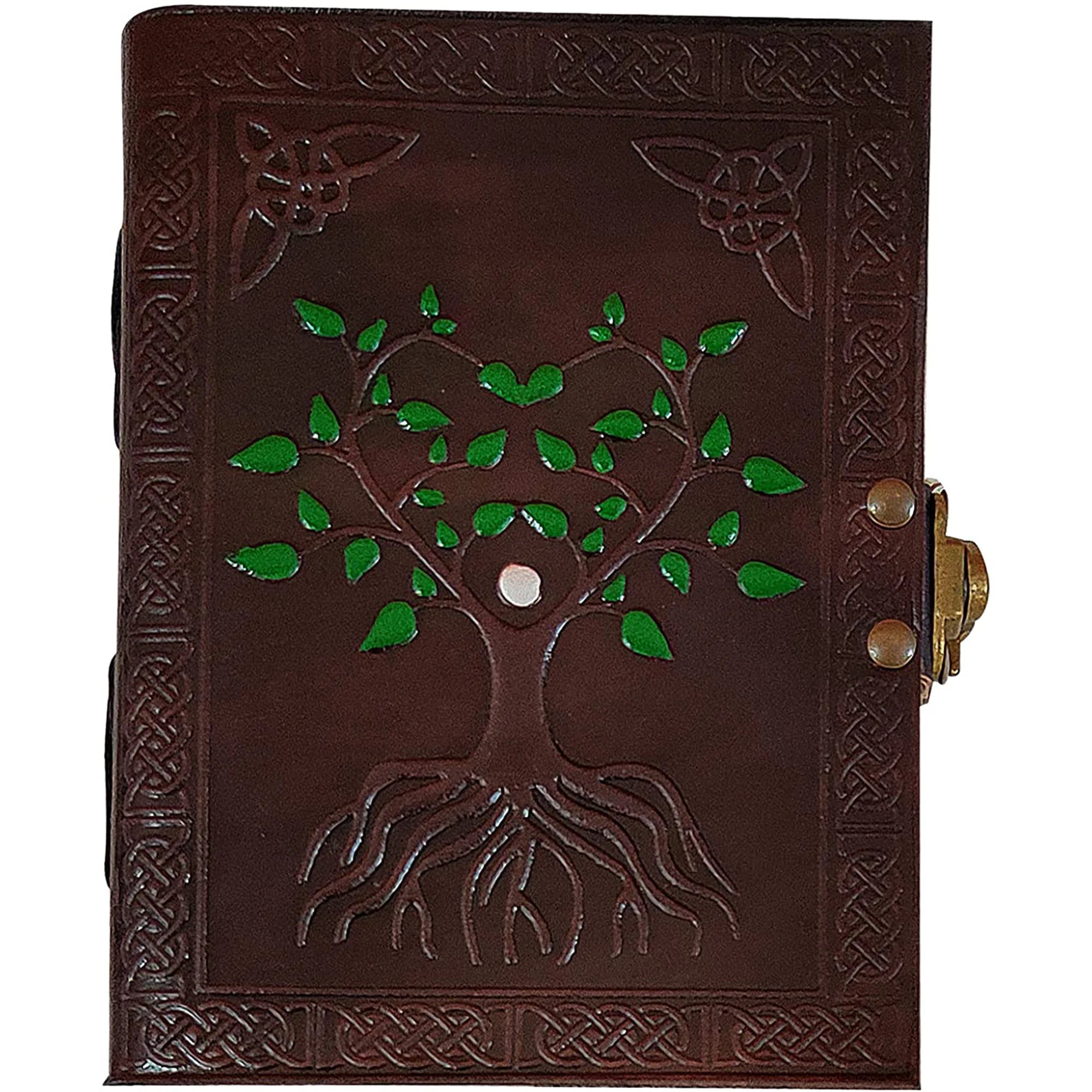
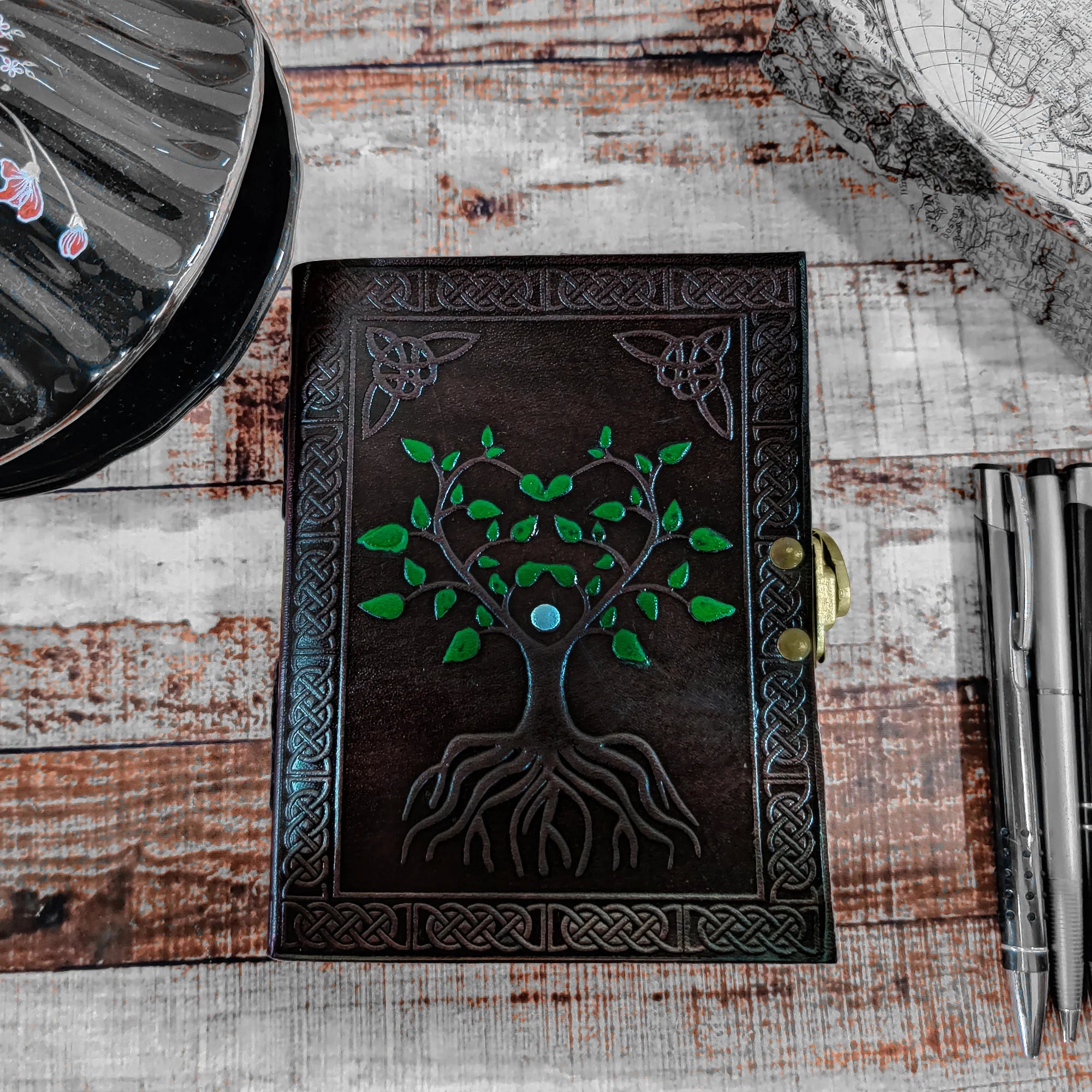
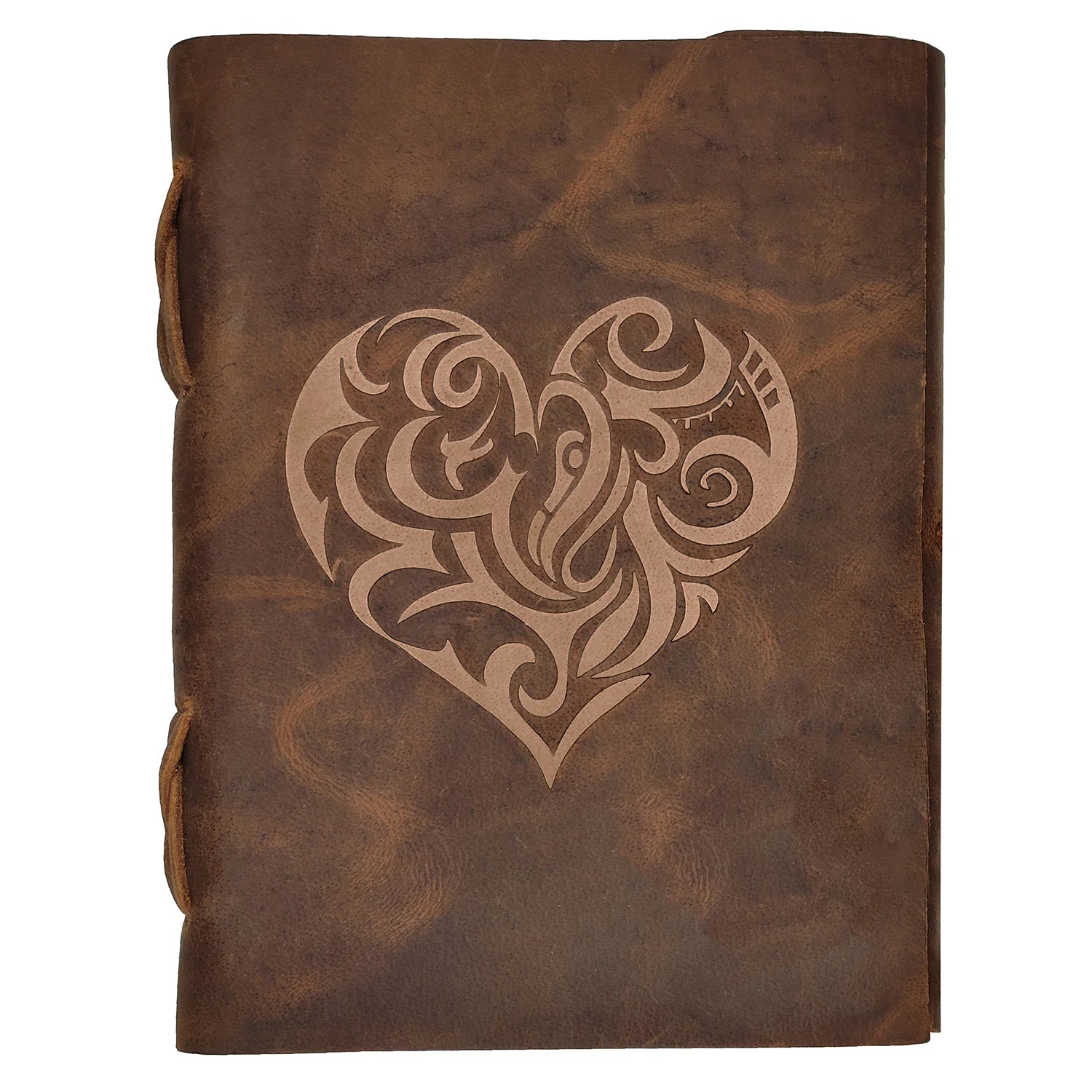
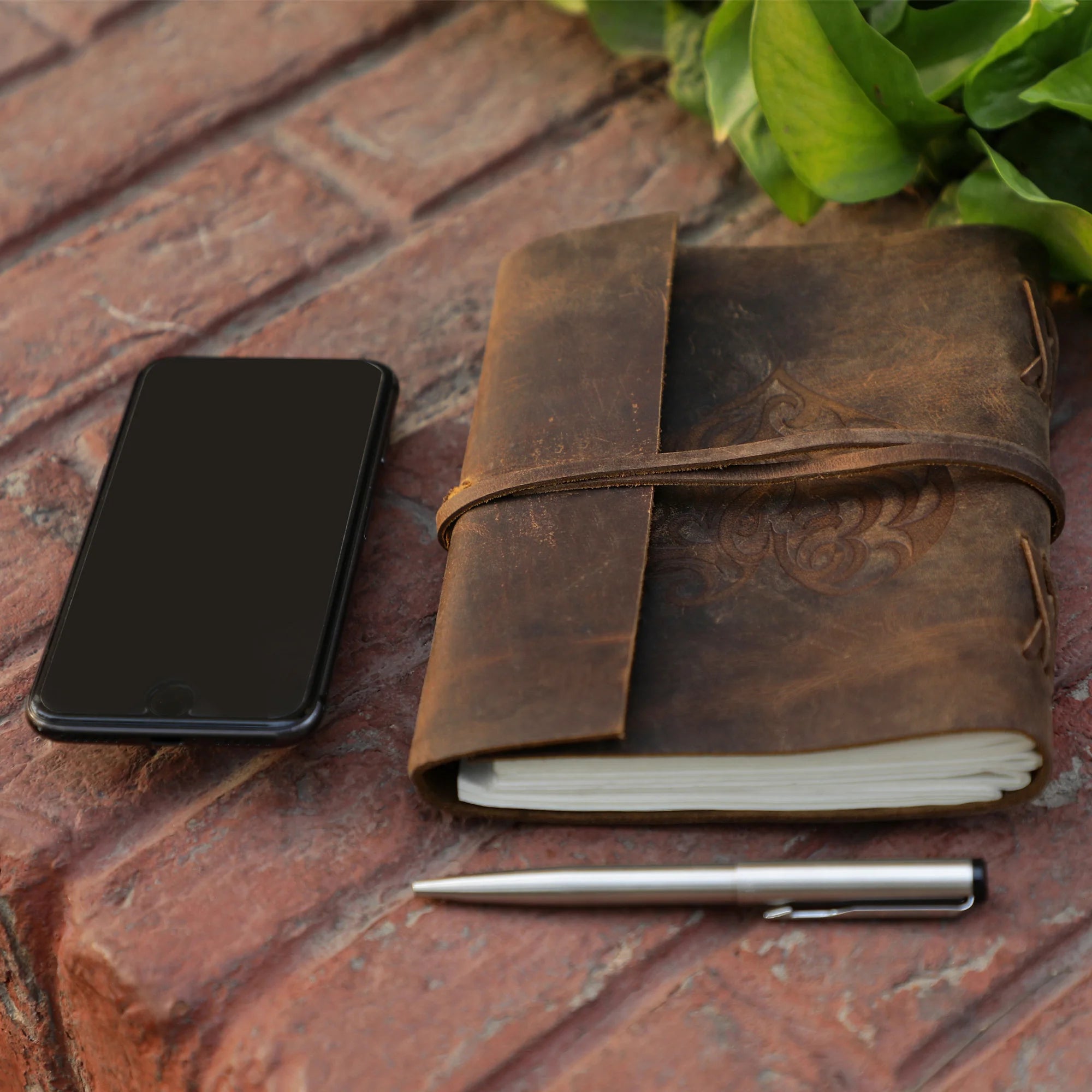
A leather journal is a handcrafted notebook bound in genuine leather, used for writing, journaling, sketching, and travel notes, often refillable so the cover lasts a lifetime while the paper renews. This collection of 28 journals spans lined, blank, and sketch papers, refillable designs, and decorative stone and lock covers - a writing companion built to be kept and written in for years.
What Is a Leather Journal?
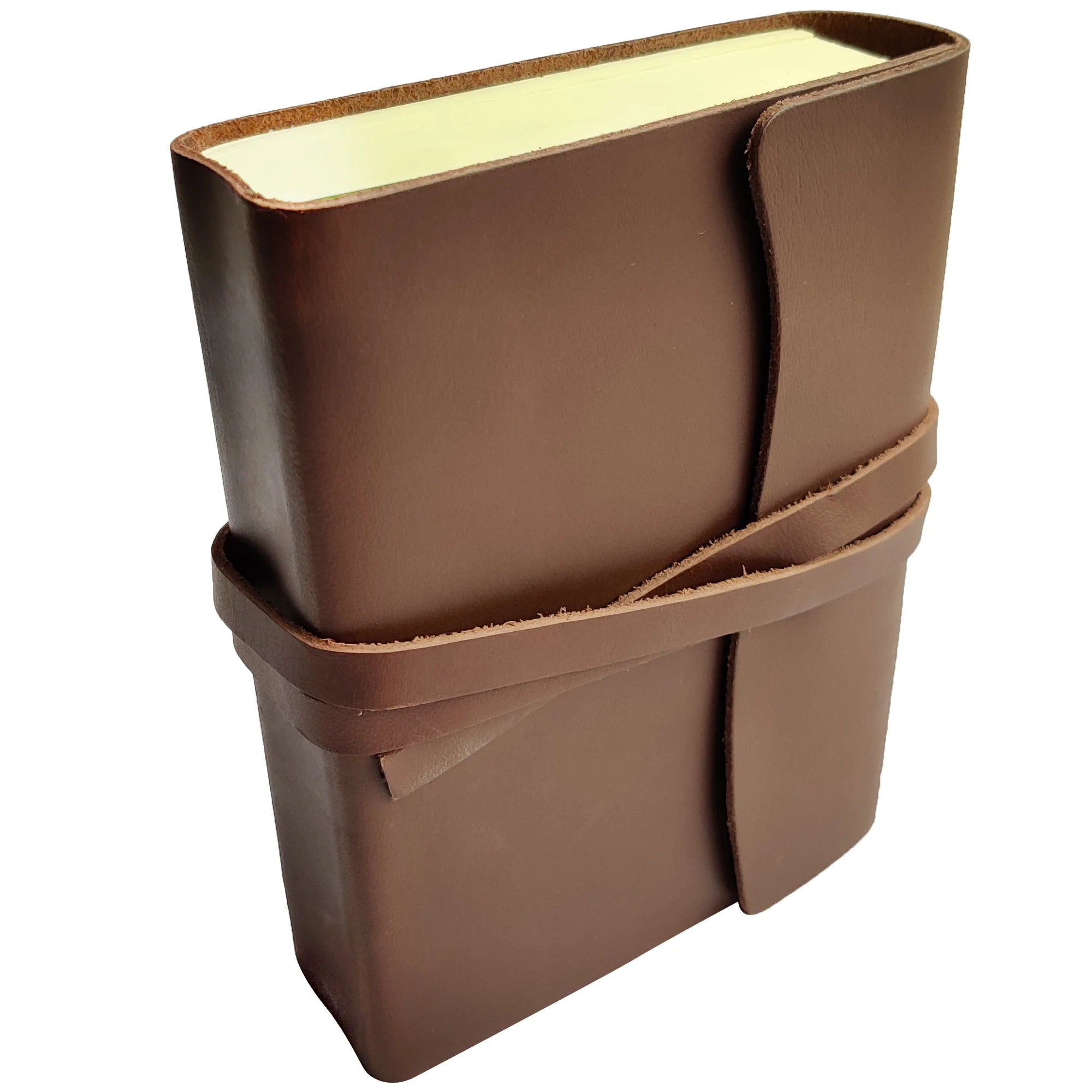
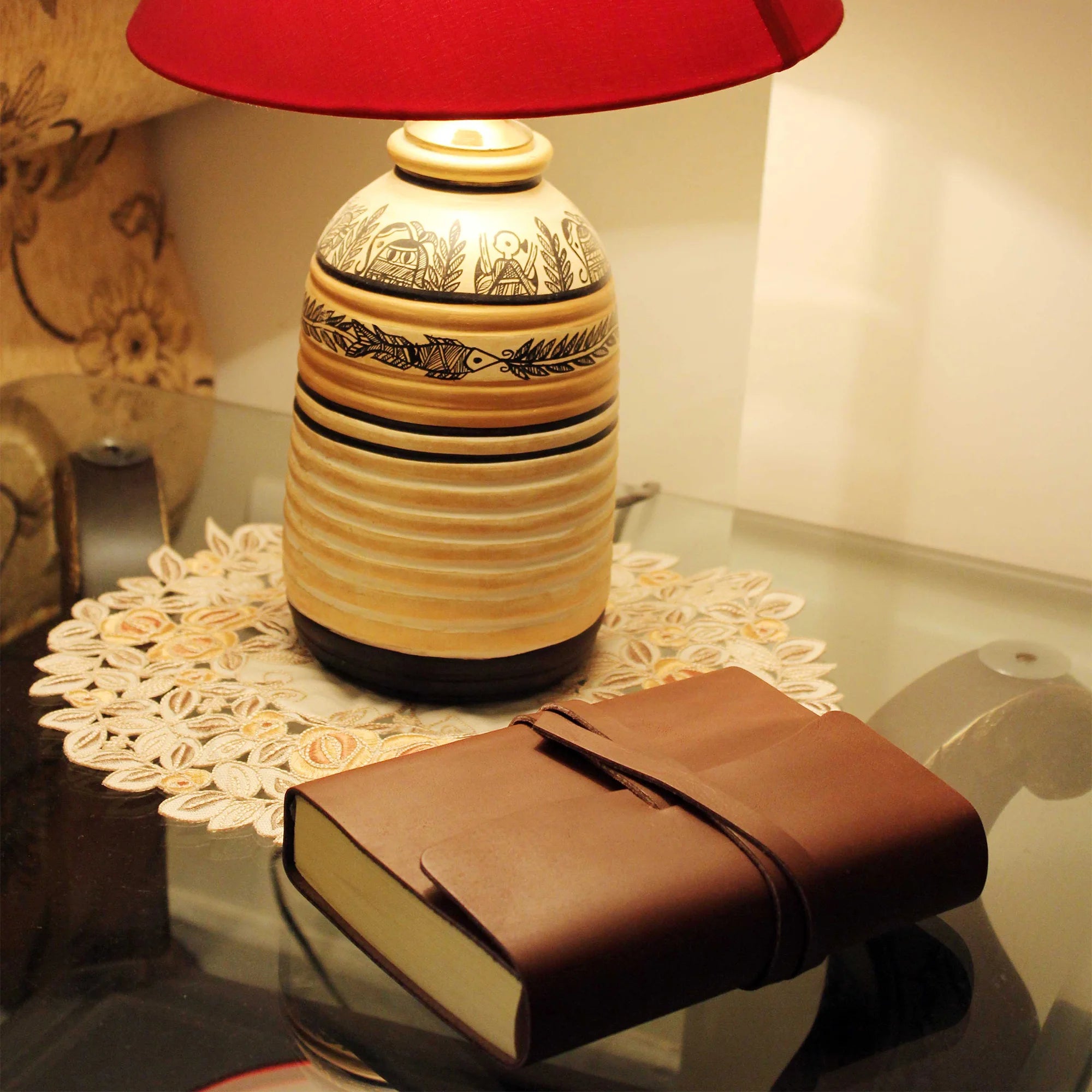
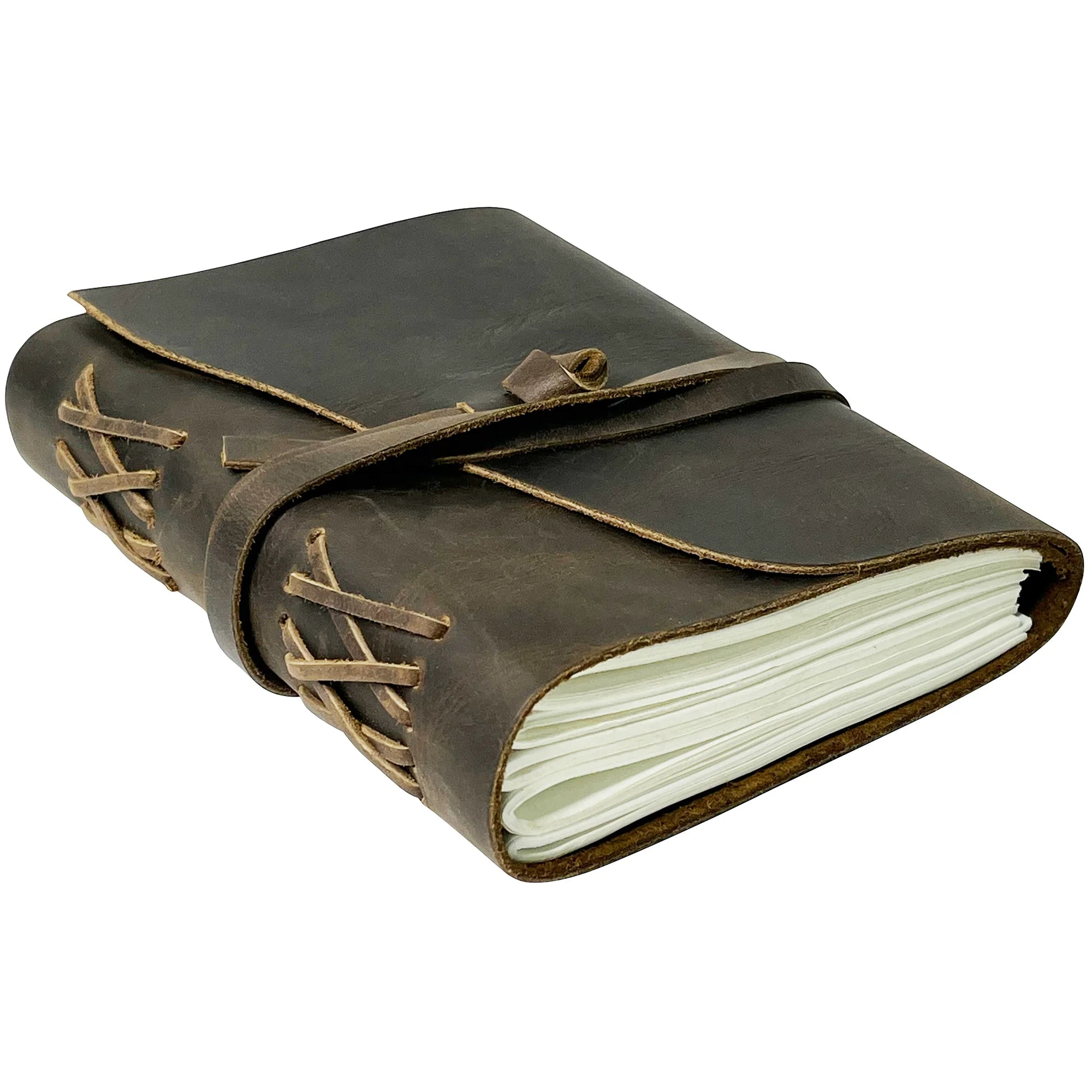
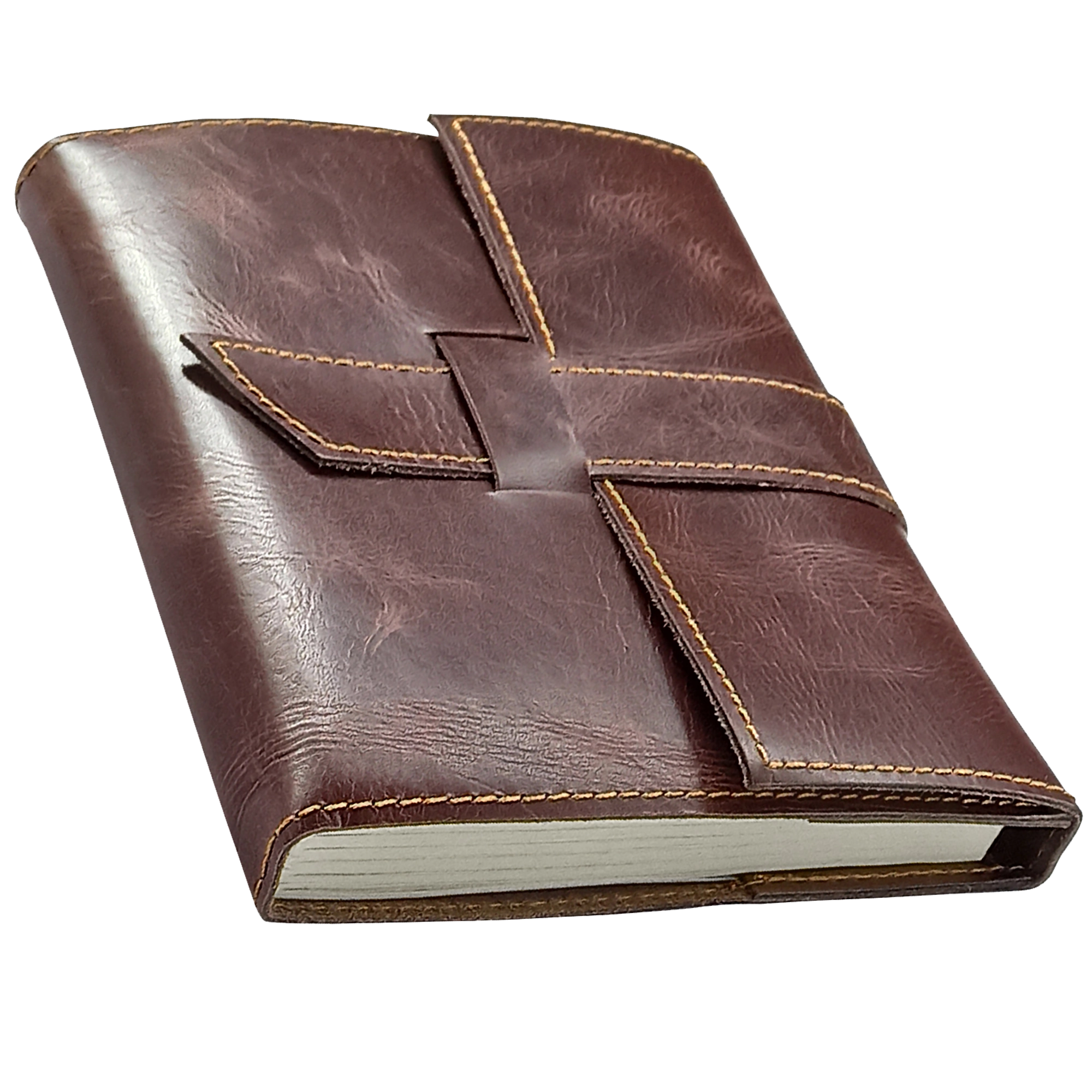
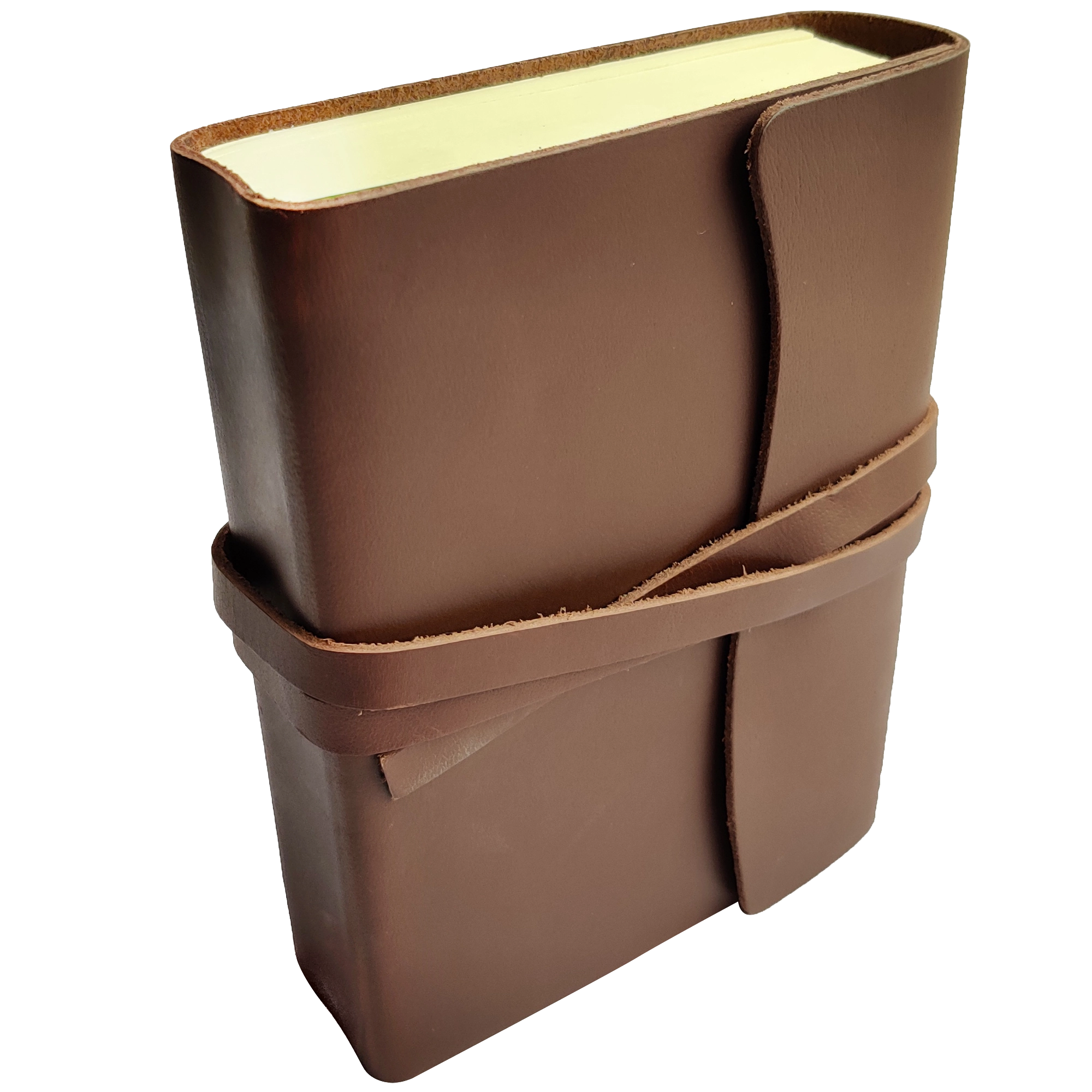
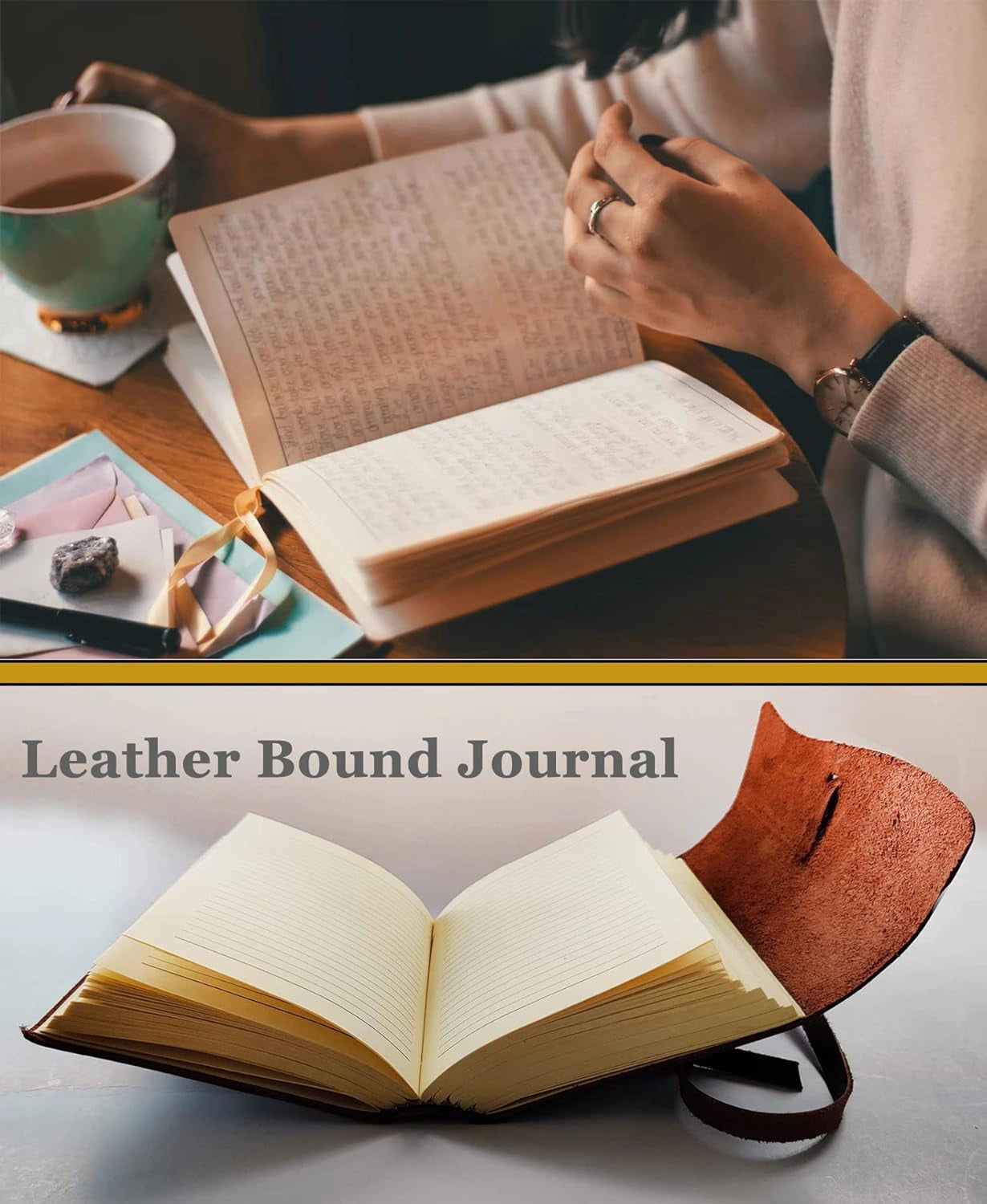
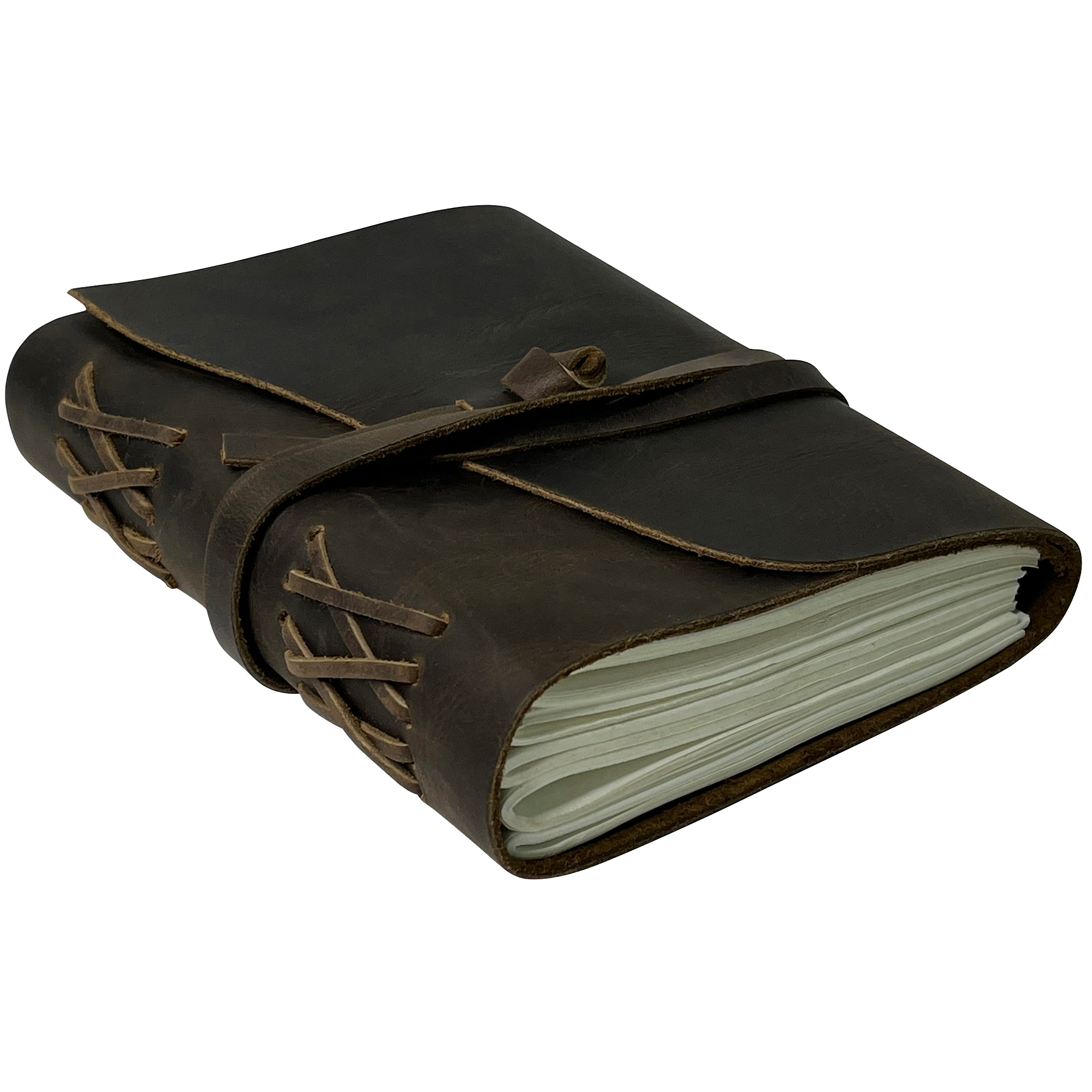
A leather journal is a bound book wrapped in a leather cover, made to be written in by hand - for daily journaling, travel diaries, sketching, note-taking, or creative writing. Unlike a disposable notebook, a leather journal is meant to last: the cover ages into a patina, and refillable designs let you replace the paper indefinitely so one cover carries you through book after book. It is the difference between a notebook you throw away and a journal you keep.
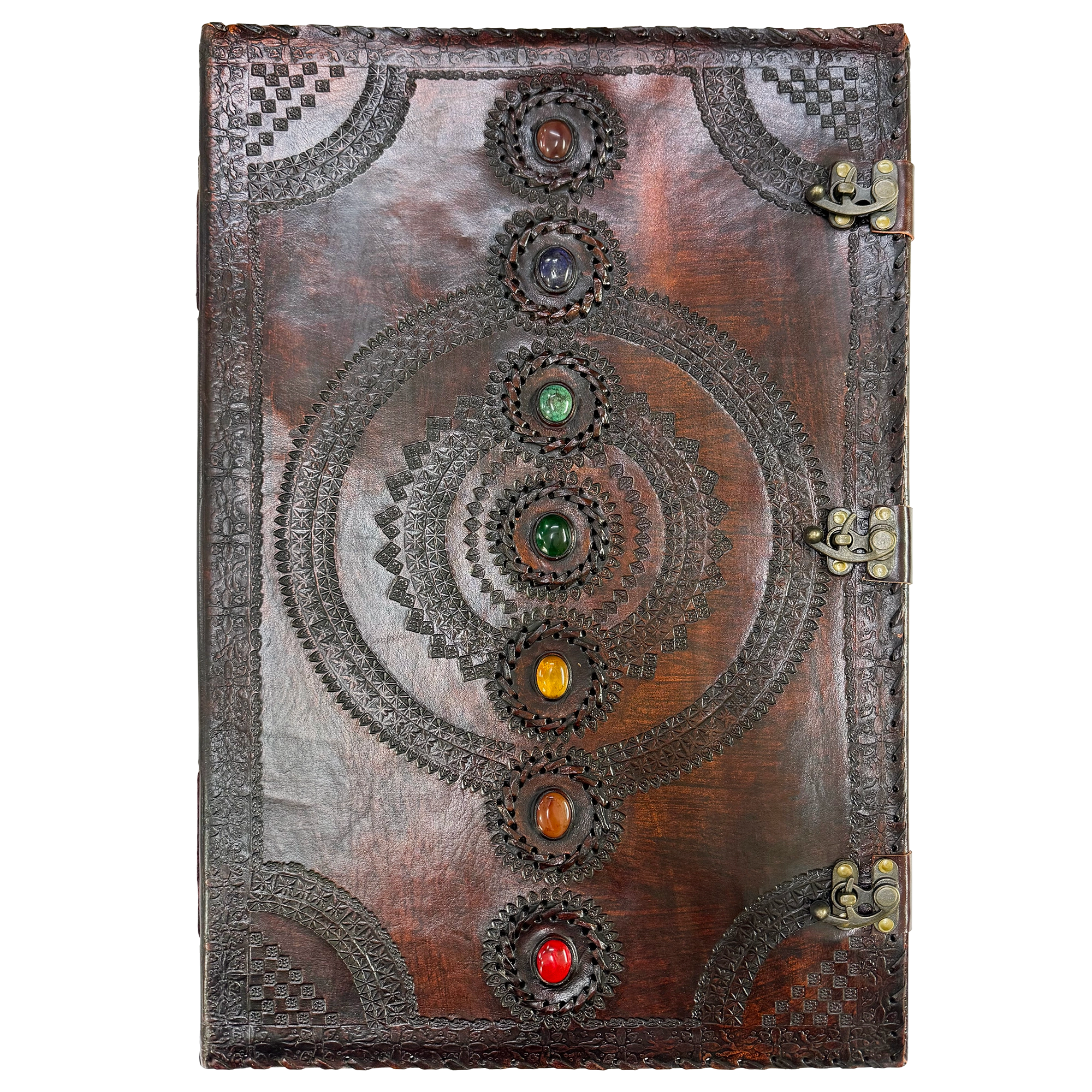
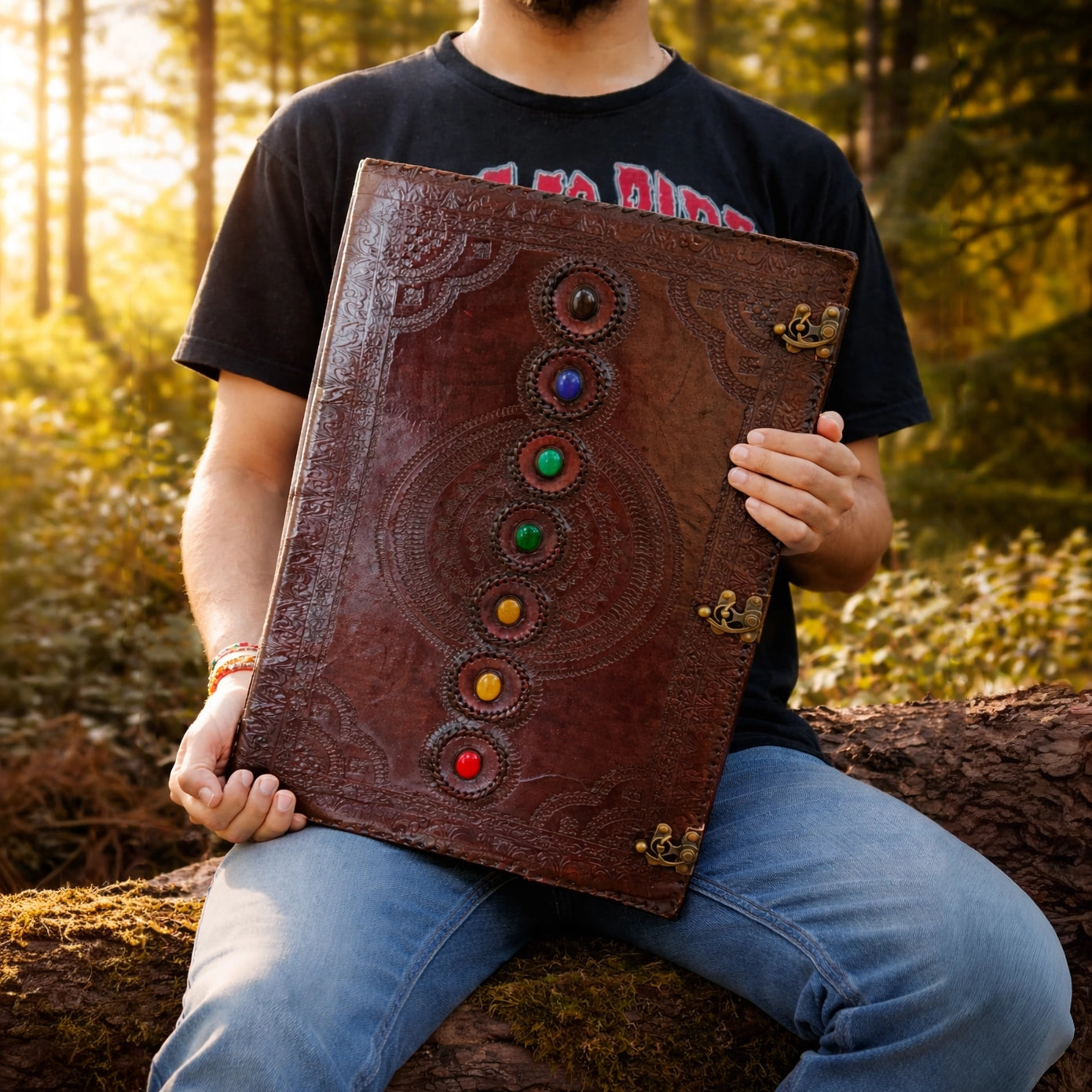
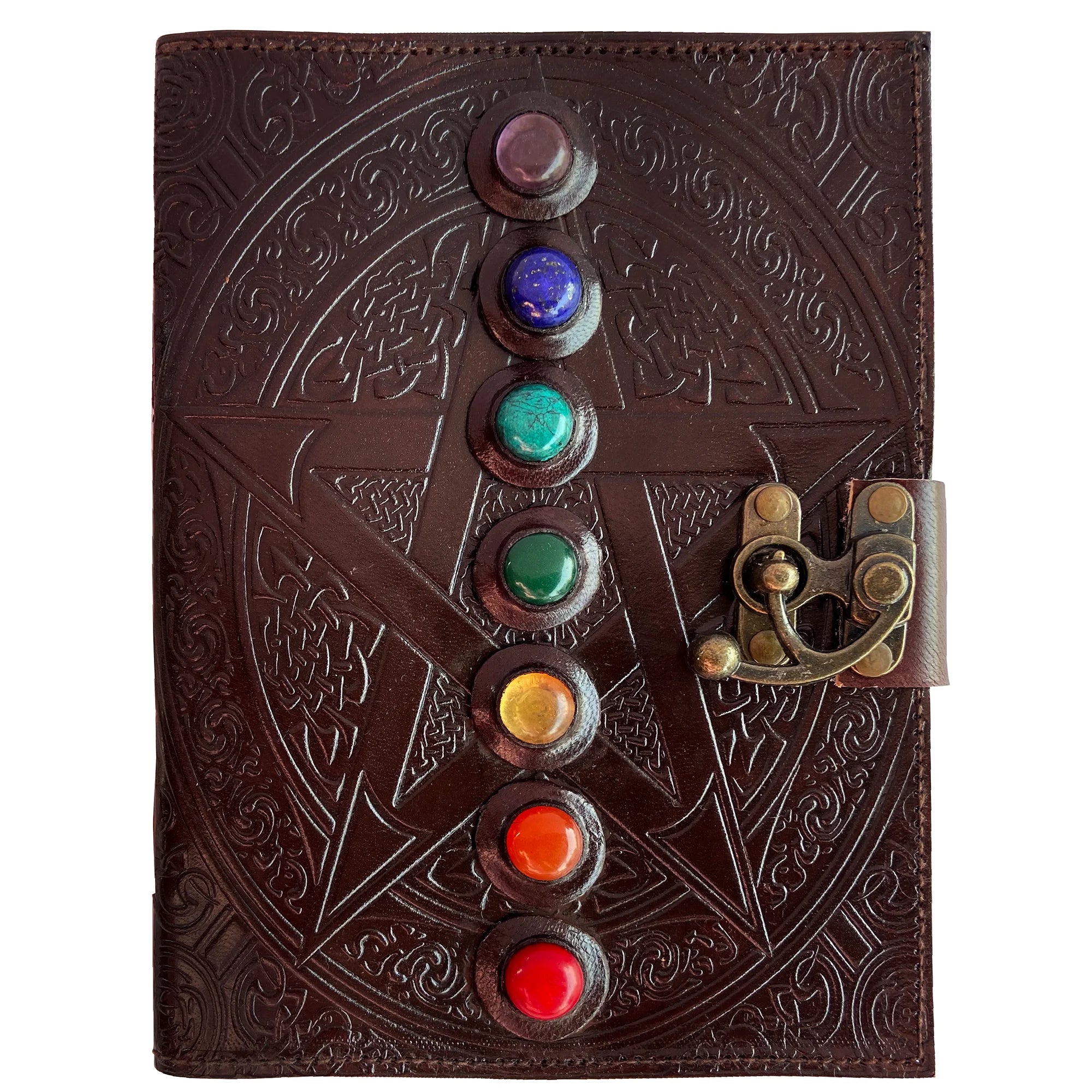
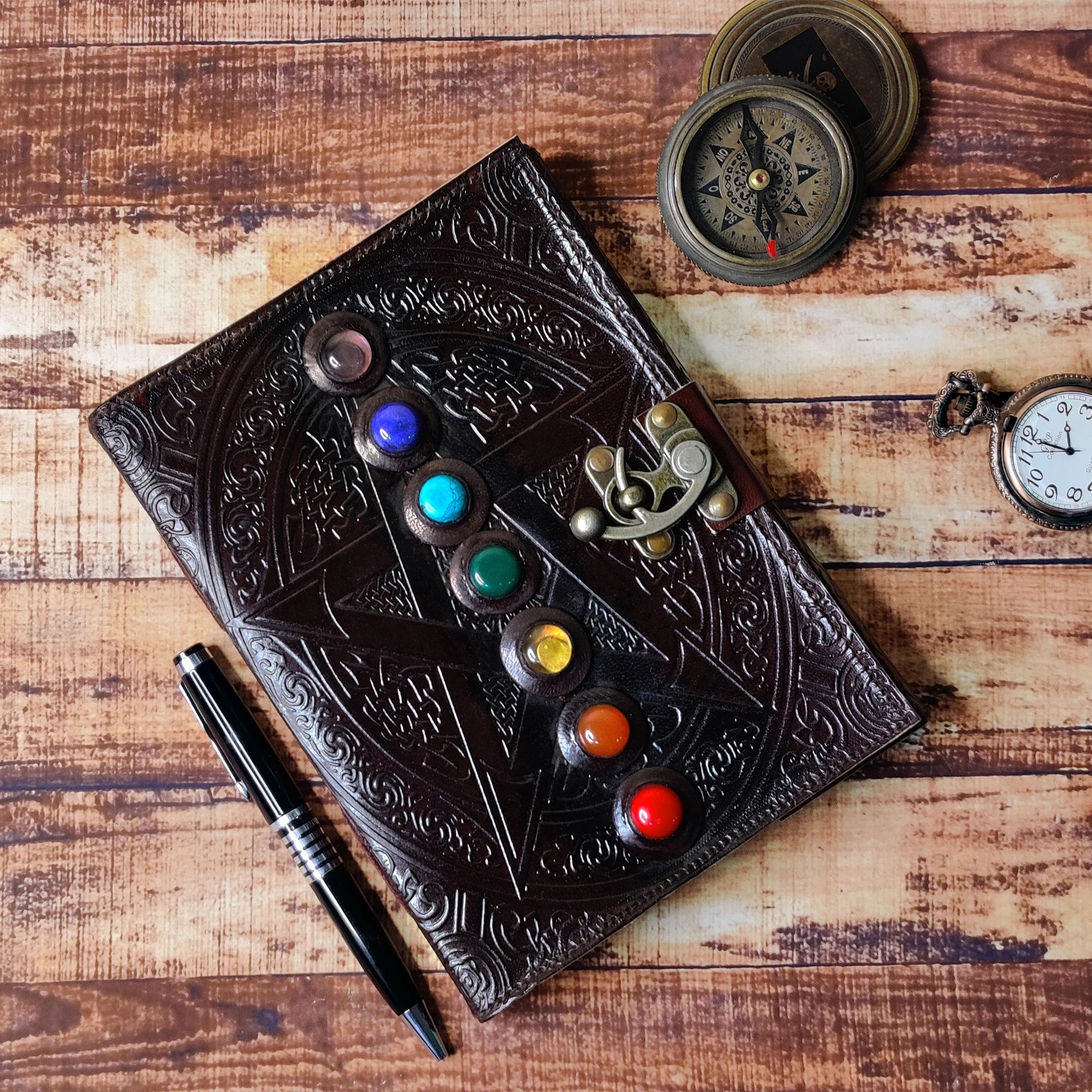
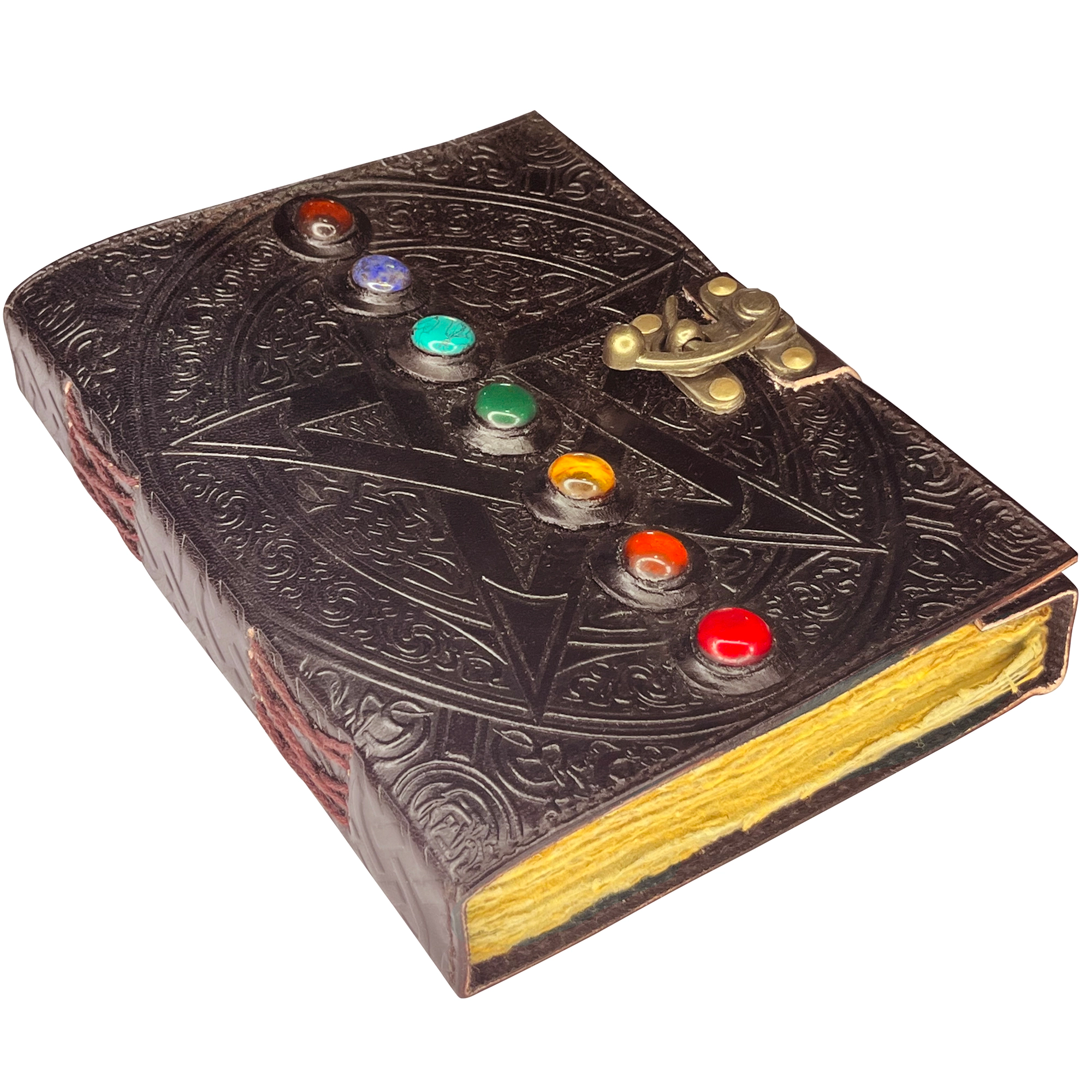
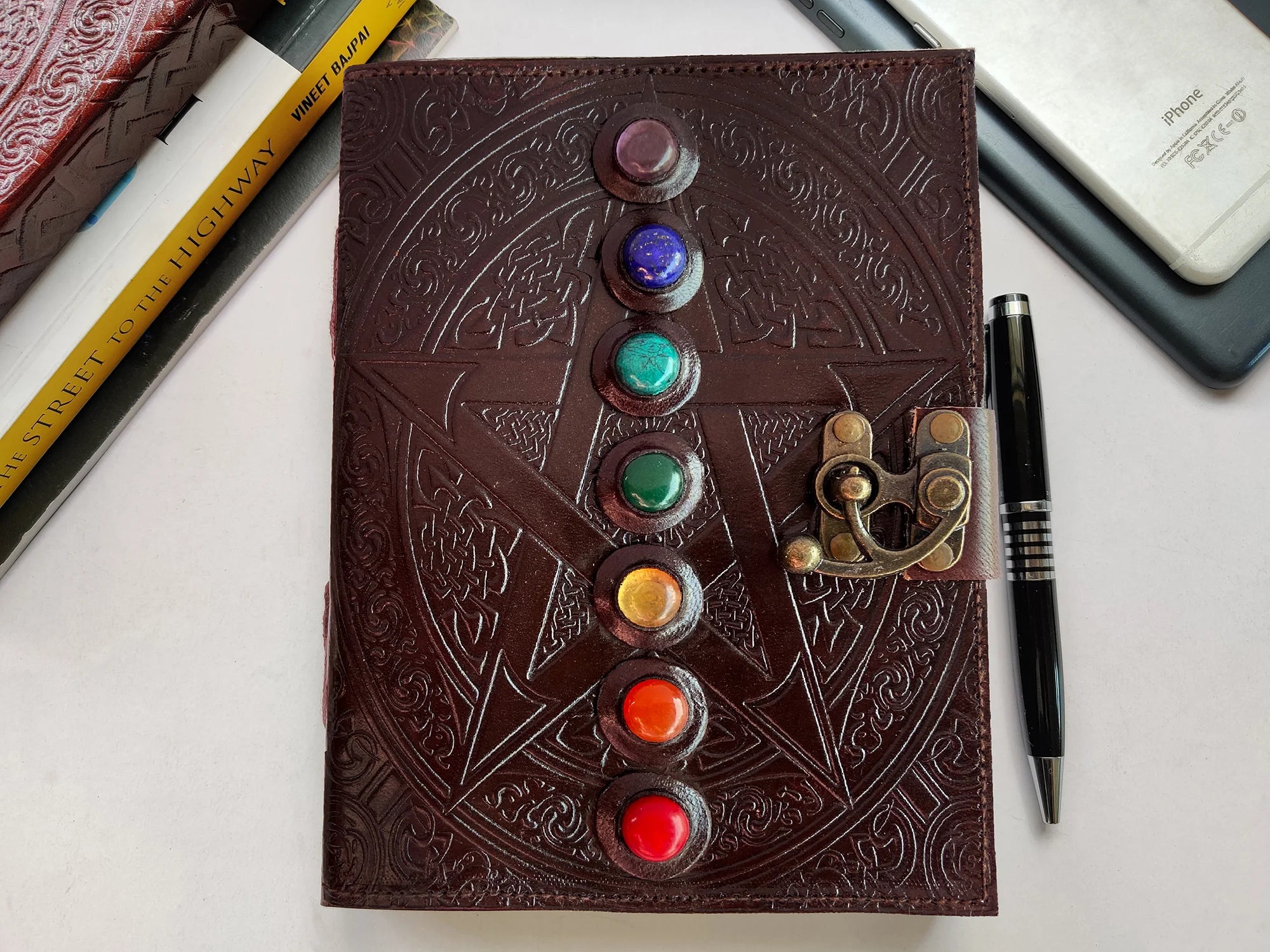
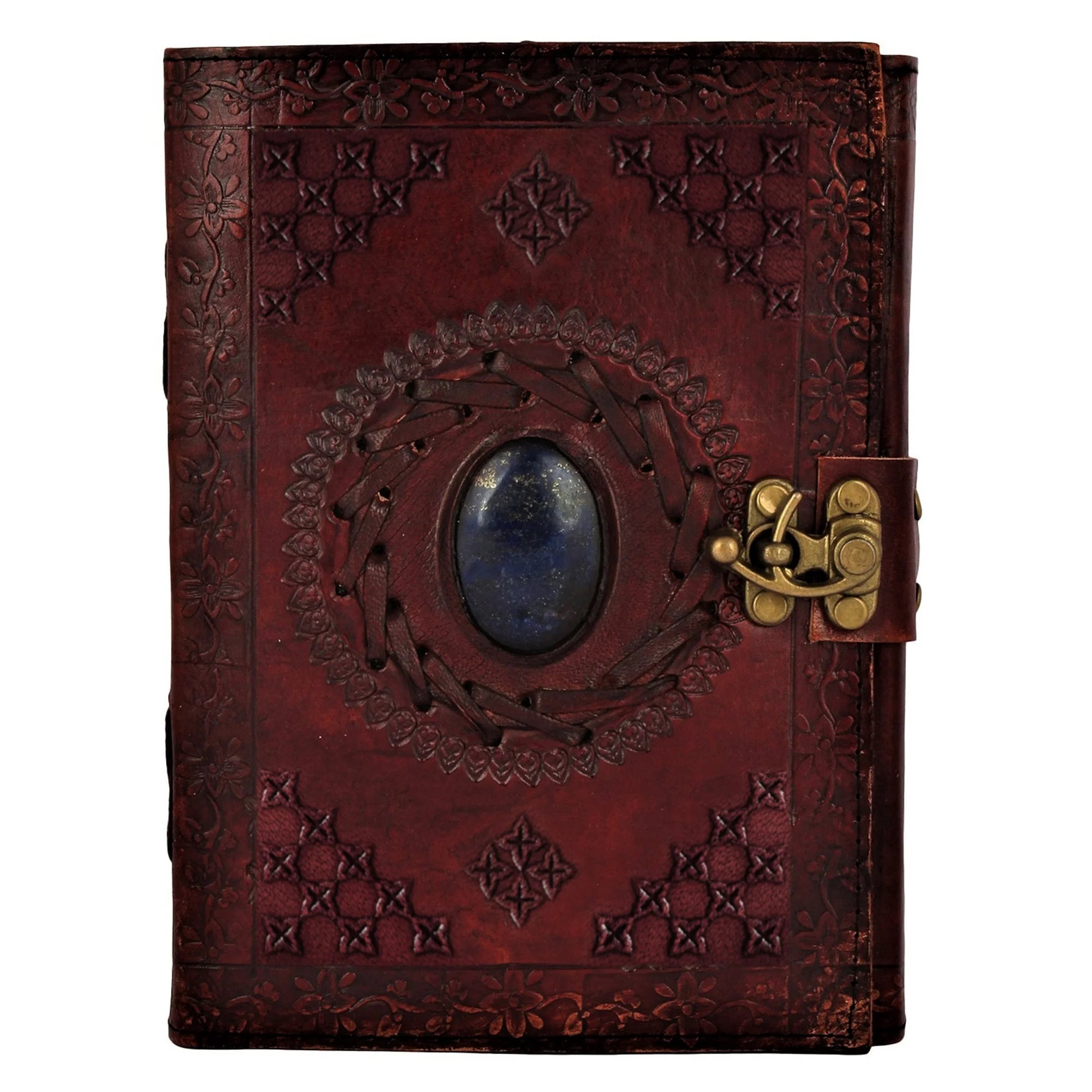
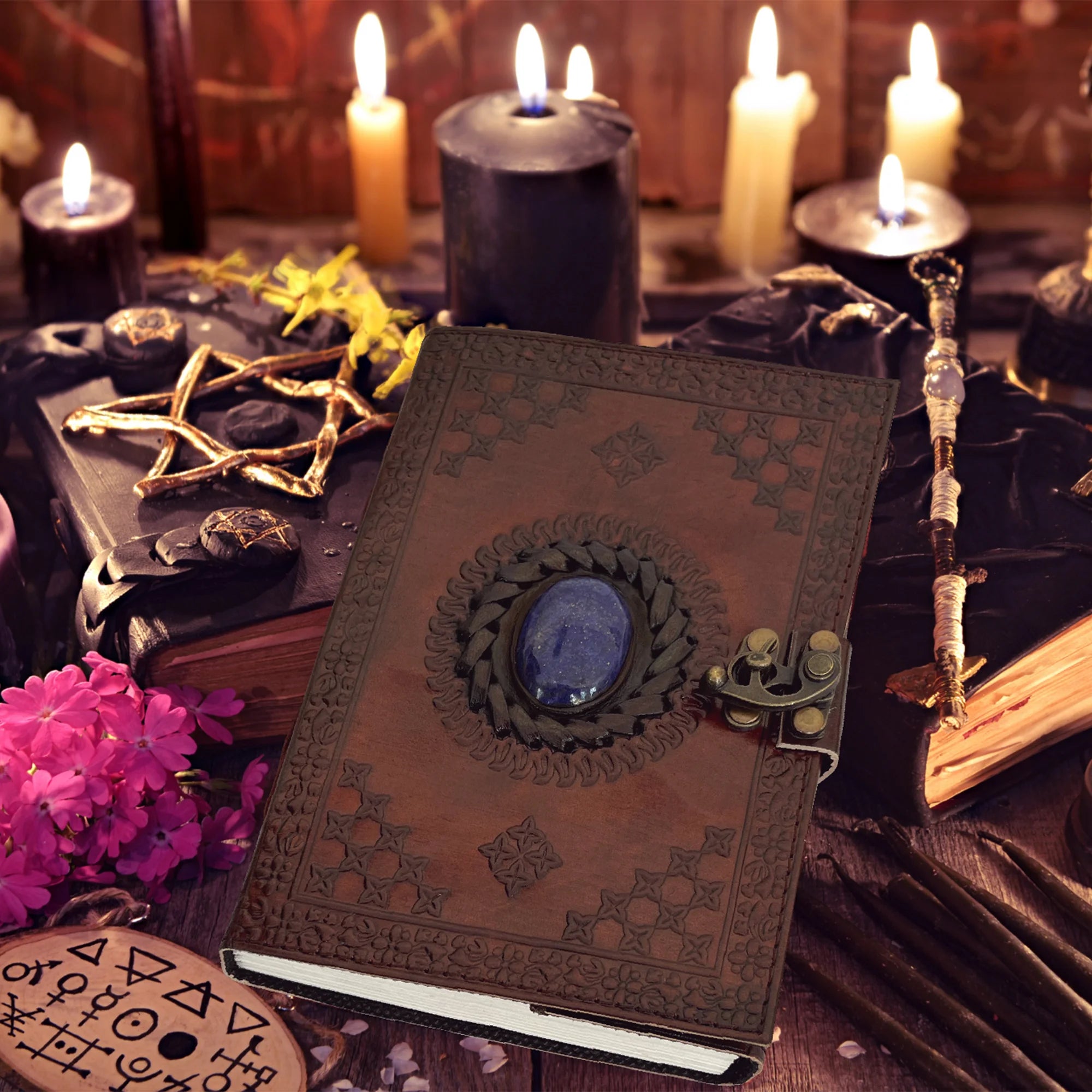
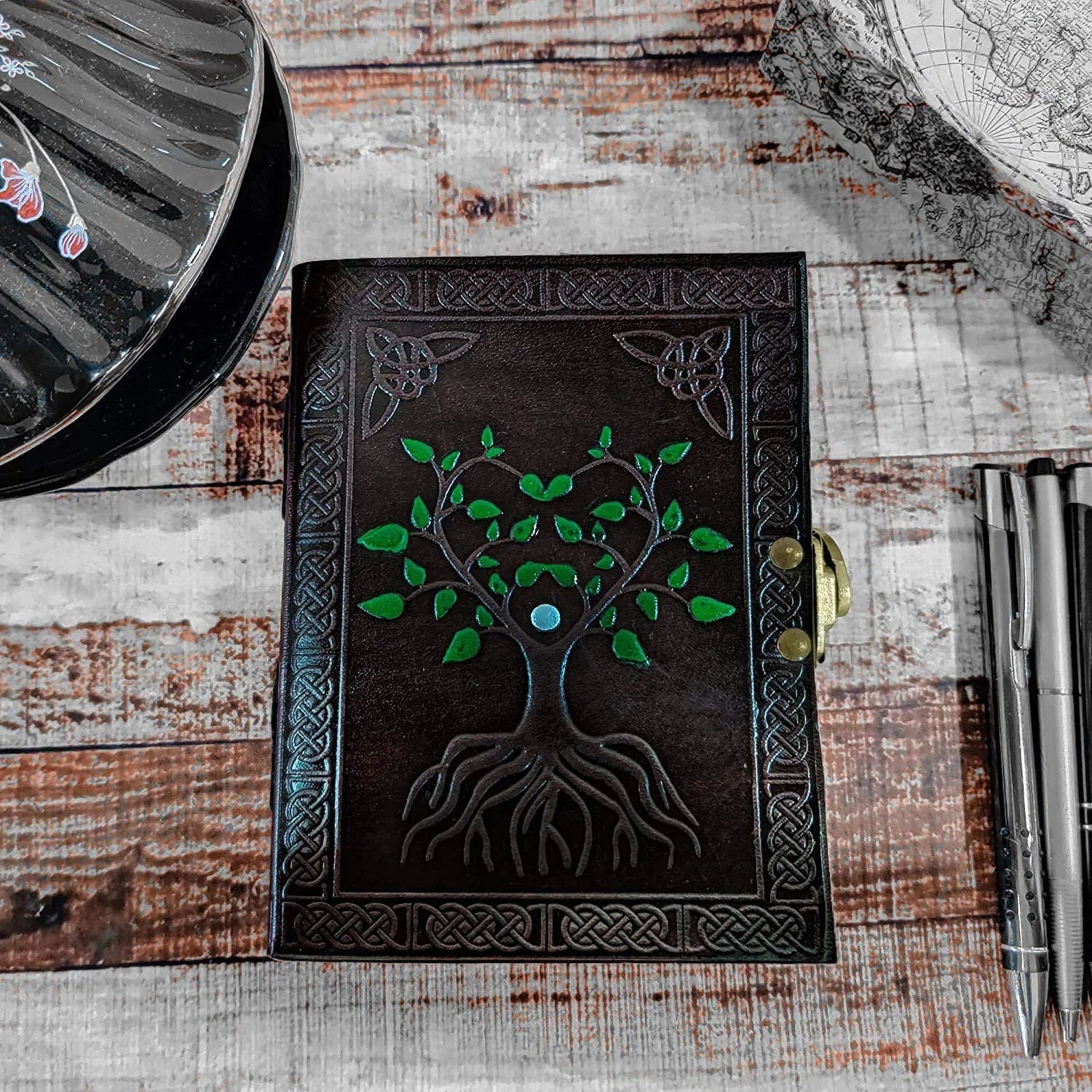
This collection covers every kind of writer. There are vintage journals for everyday writing, refillable journals whose paper renews, sketchbooks for artists, and decorative pieces like the seven-stone "book of shadows" journals with their carved covers and locks. Papers come lined for writing, blank for sketching, and dotted for planning, so the journal matches how you actually use it.
Which Leather Journal Should I Choose?
The headline picks, each linked to its product page, with prices verified from the live collection:
The one-rule version: most writers should start with the Shrewd ($49.99) for everyday journaling or the Visionary ($59.99) if you want blank pages for mixed writing and sketching. Choose a stone-and-lock journal for a decorative keepsake or gift, and check whether your chosen journal is refillable so you can renew the paper later.
What Paper Should I Choose - Lined, Blank, or Dotted?
The paper decides how the journal works for you, so match it to your purpose:
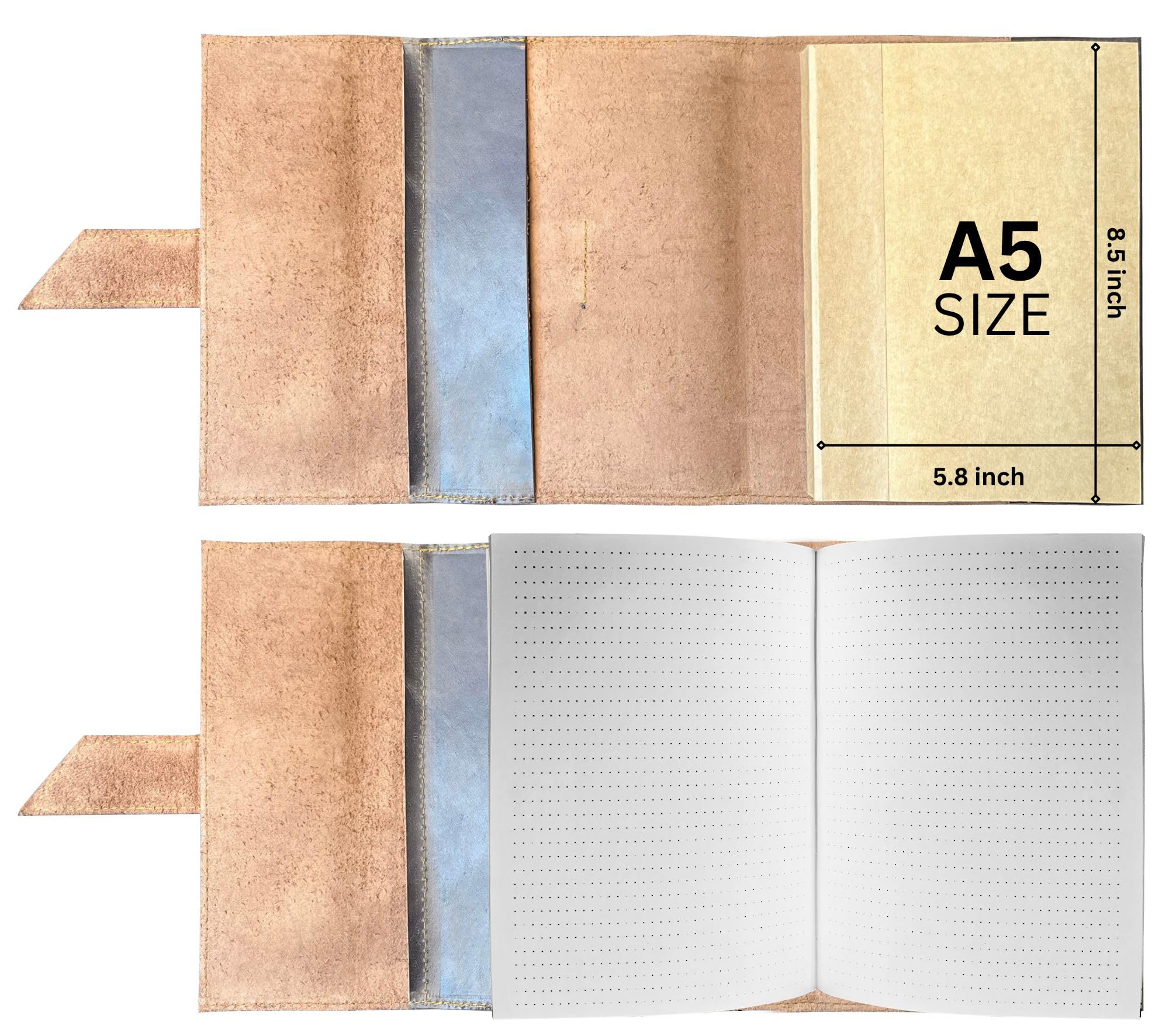
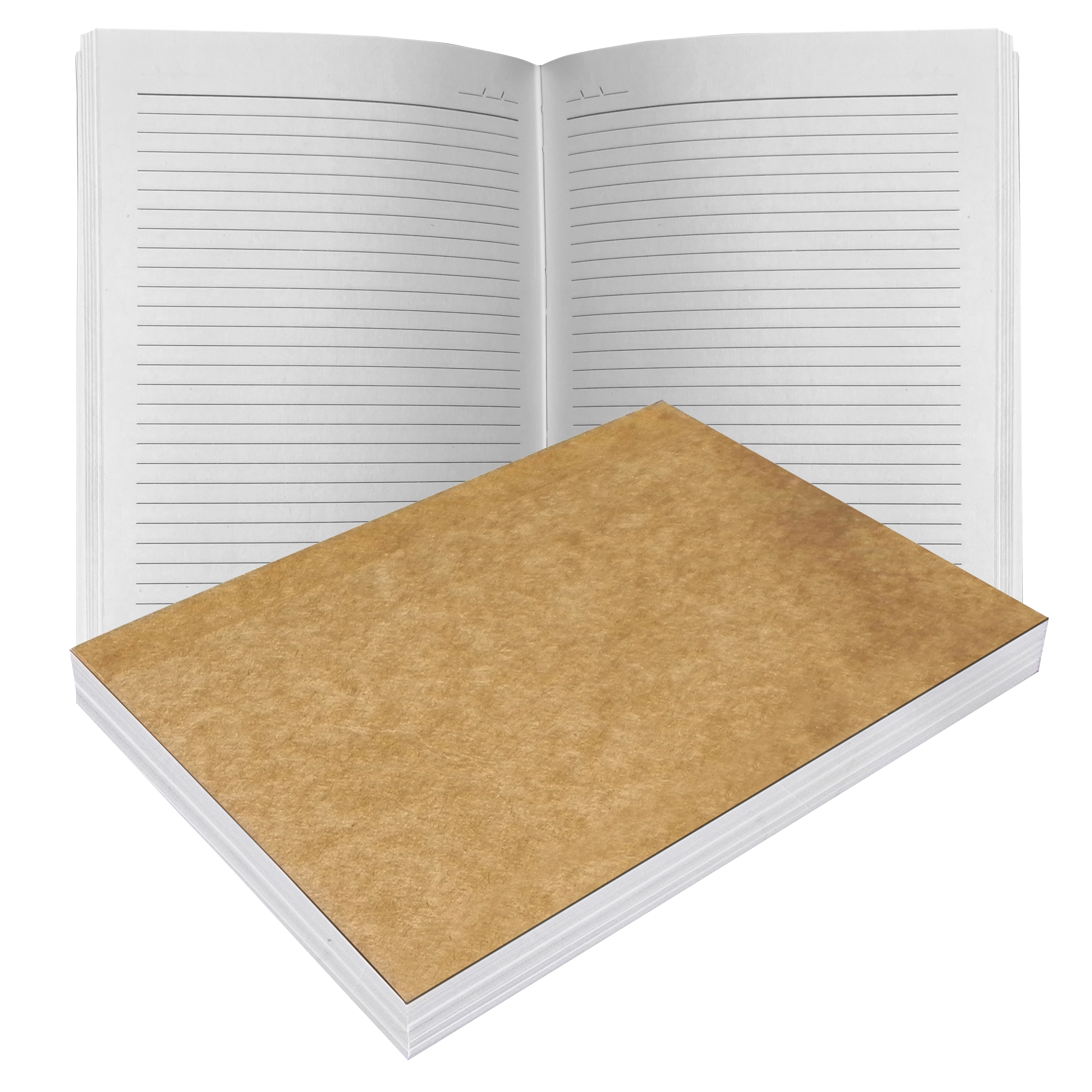
- Lined - Best for writing - daily journaling, diaries, notes, and reflection where straight lines keep handwriting neat
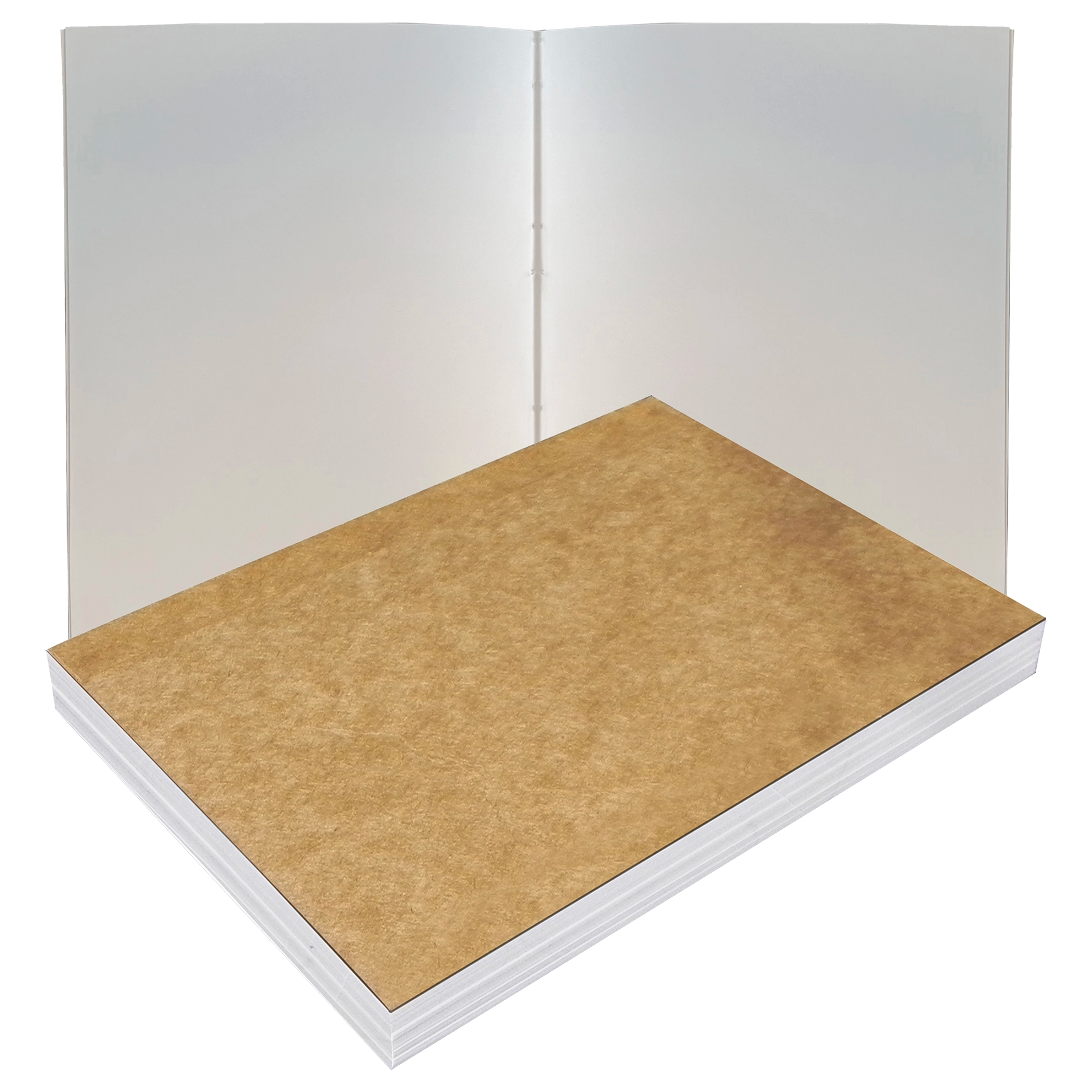
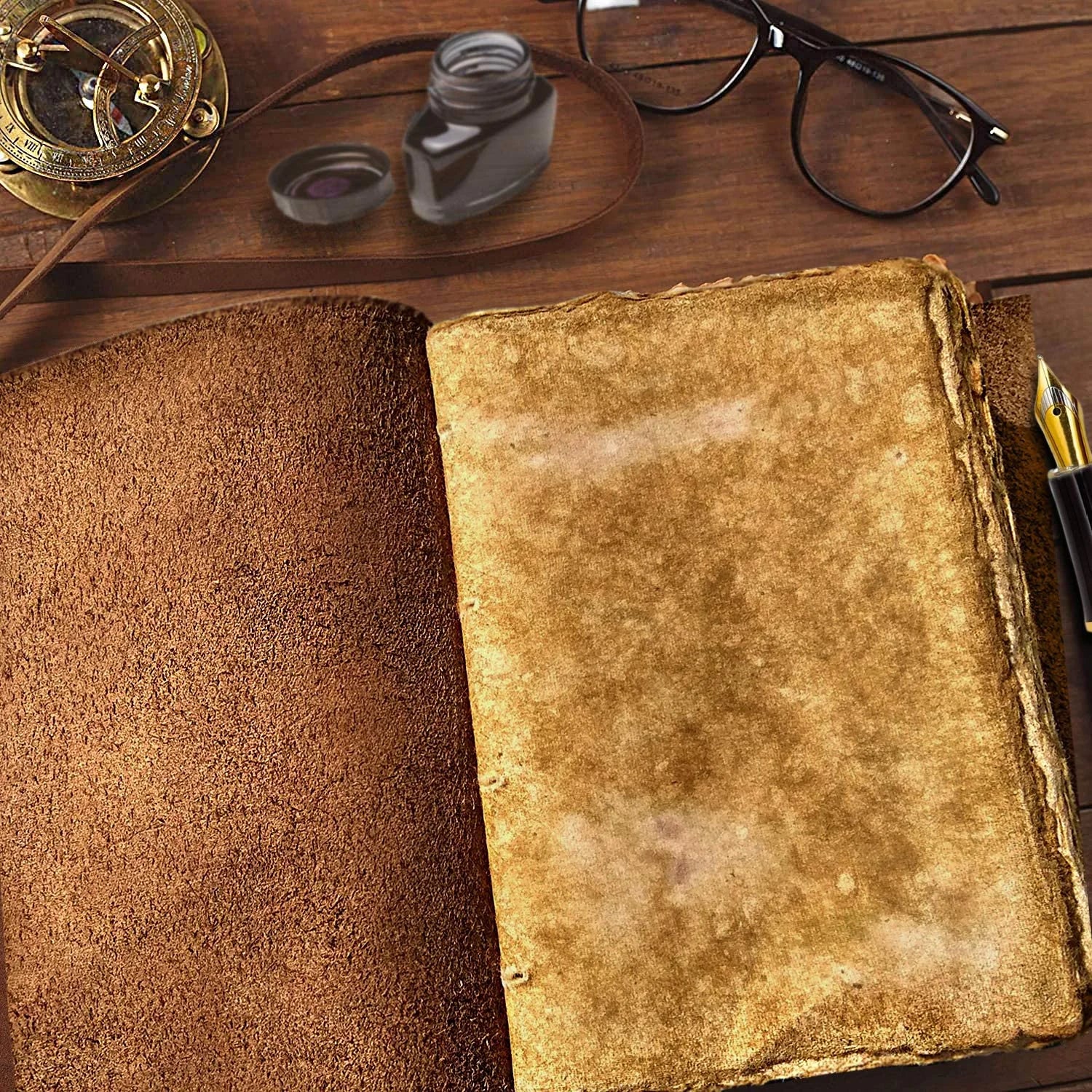
- Blank - Best for sketching, mixed writing and drawing, mind-mapping, and anyone who finds lines restrictive
- Dotted - Best for bullet journaling and planning - the dots guide structure without the rigidity of lines
If you are unsure, blank is the most flexible, suiting both writers and artists, while lined is the safest for pure writing. Refillable journals let you switch paper types between refills, so the same cover can hold a lined diary this year and a dotted planner the next.
What Does Refillable Mean and Why Does It Matter?
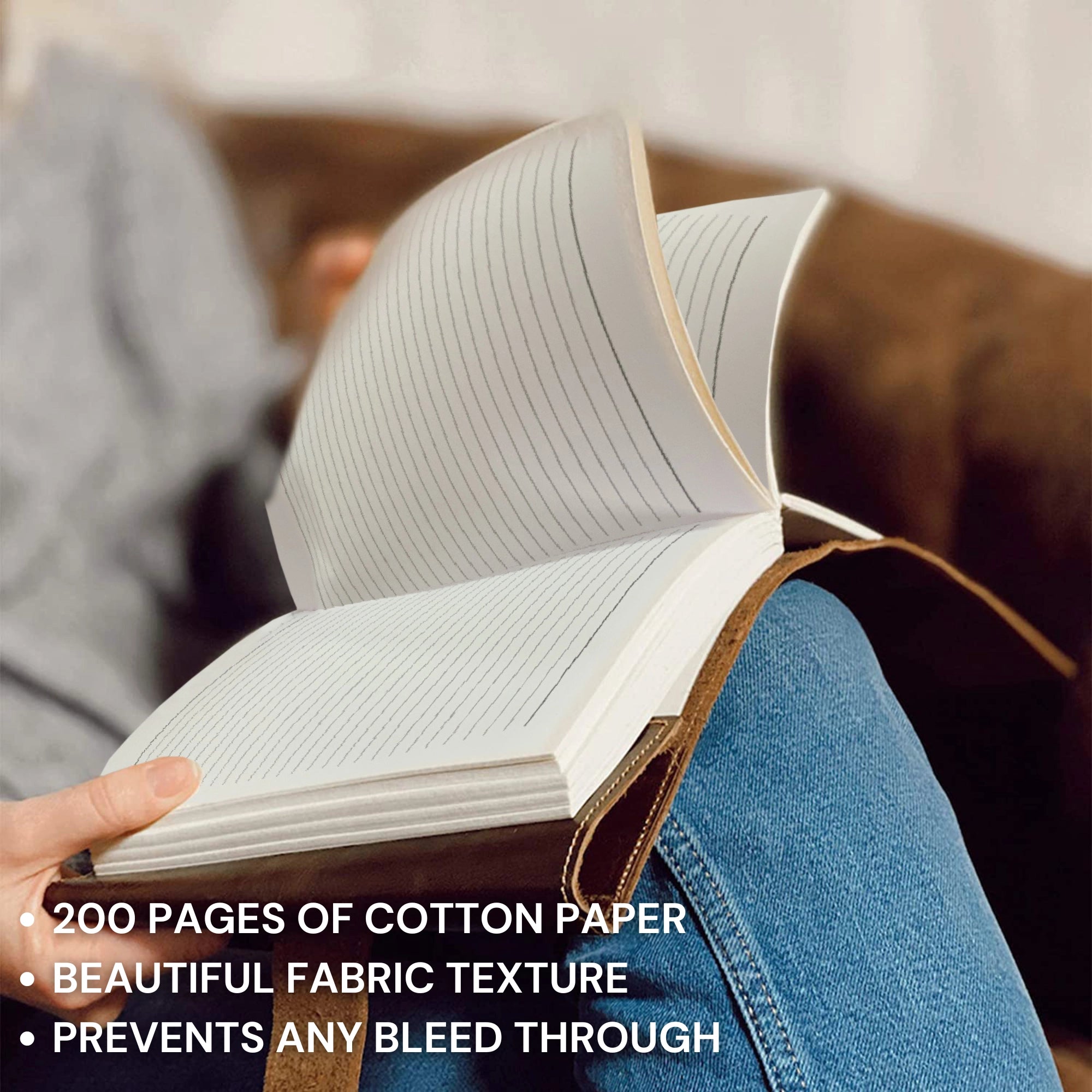
A refillable leather journal has a cover designed to hold replaceable paper inserts, so when you fill the pages you simply swap in a fresh refill rather than buying a whole new journal. The leather cover, which is the expensive and beautiful part, lasts for decades and develops a richer patina with every book you complete, while the paper renews indefinitely.
This matters for two reasons. First, value: one cover serves through dozens of refills over a lifetime, so the cost per filled notebook drops to the price of paper alone. Second, continuity: a refillable journal becomes a lifelong companion that carries the marks and patina of years of writing, rather than a series of disconnected notebooks. Rustic Town offers 6" x 8" refills in lined and dotted paper in sets of four, so keeping a refillable journal stocked is simple. A refillable design is the choice for anyone who writes regularly and wants one journal for the long haul.
Why Write by Hand in a Leather Journal?
In a world of screens, handwriting in a journal does something typing cannot. Writing by hand is slower and more deliberate, which research has long linked to better memory, clearer thinking, and a calmer mind - the act of forming words on paper engages the brain differently from tapping a keyboard. A journal has no notifications, no battery, and no distractions; it is just you and the page.
The leather journal adds permanence to that practice. A beautiful object invites you to use it, and a journal that ages with you becomes a record you return to - travel pages from years ago, ideas captured in the moment, the handwriting of a particular season of life. Full-grain leather is part of this: it softens and deepens with handling, so the journal becomes physically marked by your use of it. Our guide to the types of leather explains why full-grain ages into character this way.
How Do I Care for a Leather Journal?
A leather journal needs very little to last a lifetime:
- Handle it often - the oils from regular handling naturally help condition the cover
- Condition once or twice a year with a leather balm to keep the cover supple, especially the spine
- Keep it dry and away from direct heat and prolonged sun, which can dry or warp the leather
- Store flat or upright on a shelf, not crammed, so the cover holds its shape
The full routine is in our guide on how to care for leather bags, and the deep-dive on whether water ruins leather covers what to do if a journal meets a spill or rain. A well-kept leather journal becomes more beautiful the longer you write in it.
Is a Leather Journal a Good Gift?
A leather journal is one of the most meaningful gifts you can give a writer, traveller, or thinker, because it invites them to record their own life - and engraving makes it personal. The range covers every budget, with most journals under gifts $50-$100 and the decorative pieces in gifts $100-$200.
It suits almost every occasion: a graduation gift for a new chapter, a bridesmaid gift, and the third wedding anniversary, where leather is traditional - browse 3rd anniversary gifts. A journal pairs naturally with a leather portfolio for a professional, or a pencil case for an artist, to make a complete creative set.
Who Is a Leather Journal NOT For?
Honest guidance. If you keep all your notes digitally and never write by hand, a leather journal may sit unused - though many digital note-takers keep a journal precisely to step away from screens. If you need a journal for rough outdoor field use in constant wet, a weatherproof synthetic notebook handles soaking better. And if you want a cheap pad for disposable lists, a leather journal is more than that job needs. For anyone who writes, sketches, journals, or travels and values the act of putting pen to paper, a leather journal is a companion that lasts.
What Size Leather Journal Should I Choose?
Size shapes how and where you use a journal, so match it to your writing habit:
- Pocket / small - Fits a bag or large pocket for travel notes, quick ideas, and writing on the move
- Medium (around 6" x 8") - The everyday all-rounder; enough room to write freely while staying portable, and the size Rustic Town refills are made for
- Large / extra-large - A desk or studio journal for sustained writing, sketching, and decorative keepsake pieces like the chakra-stone books
Most writers are best served by a medium journal - it carries easily yet gives room to write, and the refillable 6" x 8" format keeps it stocked simply. Choose a smaller journal if it lives in a bag for travel, and a large one if it stays on a desk for longer sessions or doubles as an art book. Many writers keep two: a small one that travels and a larger one at home.
How Do You Start and Keep a Journaling Habit?
A leather journal is most rewarding when it becomes a habit, and the leather itself helps - a beautiful object invites daily use in a way a plain pad does not. A few approaches that work for beginners: write at the same time each day, often morning or before sleep, so it becomes routine; start small with a few lines rather than pages, removing the pressure to produce; and keep the journal somewhere visible, since a journal left in a drawer is a journal forgotten.
What you write matters less than the consistency. Some keep a daily diary, some log travels, some capture ideas, gratitude, or sketches; bullet journaling suits planners, free writing suits thinkers. A refillable journal supports the habit over the long term, since you never face the small discontinuity of finishing one book and starting another - the cover simply continues. Over months and years, the filled pages become a record of your thinking and your life that no digital app quite replicates, and the journal itself, softened and patinated by handling, becomes part of the story. Pair it with a good pen kept in a leather pencil case and the writing kit is complete.