



The Complete Leather Bag Buying Guide: What Every First-Time Buyer Should Know
Understanding Leather Quality: Grades That Matter
The single most important factor determining your leather bag's longevity, appearance, and value is the leather quality itself. Not all leather is created equal, and understanding the grading system helps you evaluate products accurately and set appropriate expectations.
Full-Grain Leather: The Premium Standard
Full-grain leather represents the highest quality leather available, using the complete hide with the natural grain surface intact. This means all the natural characteristics—grain patterns, subtle color variations, and unique markings—remain visible, making each piece distinctive.
Why it matters: Full-grain leather is the most durable leather type, lasting decades with proper care. It develops rich, beautiful patina over time—natural darkening and character development that makes the bag more attractive as it ages rather than deteriorating. The natural oils and fibers remain intact, allowing the leather to breathe, resist cracking, and maintain suppleness indefinitely.
How to identify it: Full-grain leather shows natural grain patterns with slight variations rather than perfectly uniform appearance. It feels substantial and slightly textured. When you press it, quality full-grain leather shows temporary indentation that quickly disappears. Over time, it develops distinctive wear patterns and darkening where it's handled most frequently.

Investment consideration: Full-grain leather bags typically cost $300-800+ depending on size and construction. This represents genuine value—a full-grain leather messenger bag or laptop bag from quality makers like Rustic Town easily serves you for 15-20+ years, making the annual cost far lower than repeatedly replacing cheaper alternatives.
Top-Grain Leather: Quality at Accessible Prices
Top-grain leather is the second-highest quality, created by removing the very top layer of the hide and slightly processing the surface to remove minor imperfections. This creates more uniform appearance while maintaining excellent durability.
Why it matters: Top-grain leather offers most of full-grain's benefits—durability, attractive aging, longevity—at somewhat lower price points. It's not quite as resilient as full-grain and develops slightly less dramatic patina, but it still dramatically outperforms lower leather grades.
How to identify it: Top-grain leather appears more uniform than full-grain, with consistent color and texture. It still feels substantial and natural but lacks the distinctive grain patterns and character marks of full-grain. Quality top-grain leather still develops attractive patina and lasts many years.
Investment consideration: Top-grain leather bags typically range $150-400, offering excellent value for buyers who want quality leather longevity without premium full-grain prices. This represents the sweet spot for many first-time leather bag buyers.
Genuine Leather: Budget Option with Limitations
Despite the name suggesting authenticity, "genuine leather" is actually the lowest quality grade still marketed as real leather. It's created from leftover leather scraps bonded together, then coated with finish creating leather-like appearance.
Why it matters: Genuine leather lacks the durability and aging characteristics of higher grades. It typically lasts 2-5 years before showing significant deterioration—cracking finish, stiffness, structural weakness. It doesn't develop attractive patina; instead, the finish cracks and peels, looking increasingly shabby.
How to identify it: Genuine leather often has very uniform, almost plastic-like appearance. It feels thinner and less substantial than higher grades. The texture seems slightly artificial—too perfect or too consistent. Over time, the finish cracks in unattractive patterns rather than developing rich patina.
Investment consideration: Genuine leather bags typically cost $50-150. While initially economical, they require replacement far sooner than quality leather, making them more expensive long-term. For first-time buyers serious about quality, investing more in top-grain or full-grain leather provides better lifetime value.

Specialty Leather Treatments
Beyond basic grades, leather receives various treatments creating specific characteristics worth understanding.
Oil-tanned leather is treated with oils during tanning, creating supple, water-resistant material with rich feel. It requires less conditioning than untreated leather and ages beautifully. Common in rugged bags designed for outdoor or heavy use.
Vegetable-tanned leather uses plant-based tanning agents rather than chemicals, creating natural leather that develops particularly beautiful patina. It's environmentally friendlier than chrome-tanned leather and shows the most dramatic color development over time.
Distressed or tumbled leather is intentionally aged during manufacturing for vintage appearance. This treatment means minor scratches and scuffs blend in rather than standing out—practical for bags facing heavy use.
Waxed leather features wax coating providing additional water resistance and distinctive appearance. The wax can be replenished over time, extending water protection indefinitely.
Types of Leather Bags and Their Purposes
Understanding which bag type serves which purpose prevents the common mistake of buying the wrong bag for your actual needs. Each leather bag category evolved to solve specific problems and excels at particular use cases.
Leather Messenger Bags: The Urban Professional's Choice
Messenger bags descended from bicycle courier bags, designed for cross-body wear enabling hands-free carrying and quick access to contents. Modern leather messenger bags maintain these core advantages while adding organization for contemporary professional needs.
Best for: Daily commuting, urban mobility, professionals working from various locations, anyone needing hands-free carrying with professional appearance.
Typical capacity: 15-25 liters, accommodating laptops (13-15"), daily work essentials, documents, and possibly a change of clothes.
Key features to evaluate: Cross-body strap comfort and adjustment, laptop padding quality, closure security and accessibility, interior organization level.
Further reading: For comprehensive guidance on messenger bag features and how to choose quality examples, see our detailed messenger bag anatomy guide. To understand how to style messenger bags professionally, explore ourbusiness casual styling guide.
Leather Laptop Bags: Technology Protection Priority
Laptop bags are purpose-built around protecting expensive electronics while maintaining professional appearance. Unlike messenger bags that adapted for laptops, laptop bags were designed from inception to secure computers.
Best for: Professionals whose work centers on their laptop, consultants visiting client sites, remote workers traveling between locations, anyone prioritizing maximum computer protection.
Typical capacity: 10-20 liters, focusing on laptop, accessories, chargers, and essential documents rather than bulk items.
Key features to evaluate: Laptop padding thickness and suspension system, cable organization, professional aesthetic, carrying comfort via handles and straps.
Further reading: Compare laptop bags with briefcases and messenger bags in ourcomprehensive comparison guide to understand which style best serves your professional needs.
Leather Duffel Bags: Weekend Travel Companion
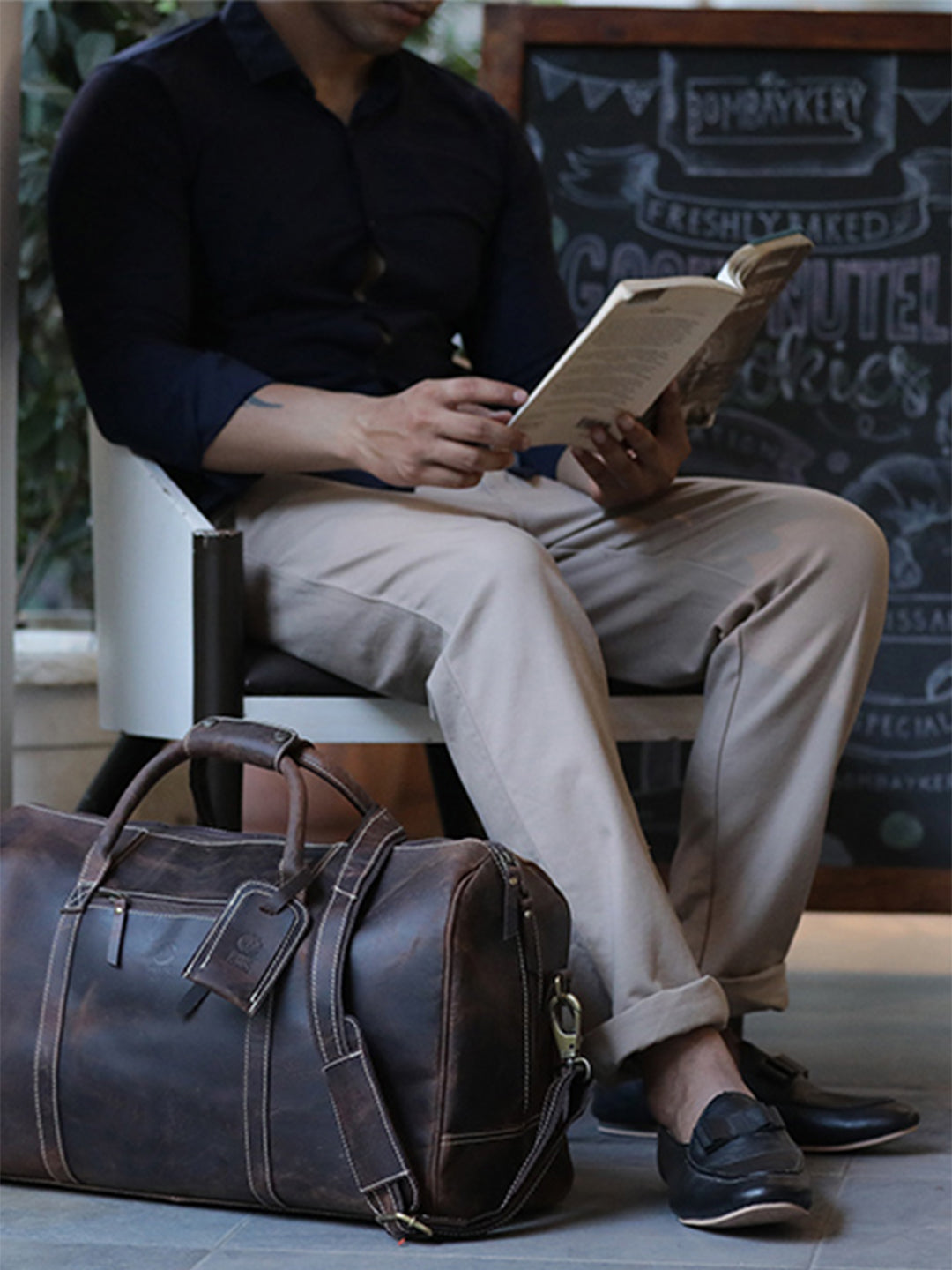
Duffel bags evolved from sailors' cylindrical bags, designed for carrying clothing, gear, and personal items for short trips. Leather duffels maintain this capacity focus while adding refined appearance appropriate for business travel.
Best for: Weekend getaways, overnight business travel, gym bags, anyone needing to transport 2-3 days of clothing and essentials.
Typical capacity: 20-50 liters, accommodating multiple outfits, shoes, toiletries, and travel gear.
Key features to evaluate: Main compartment access width, carrying handle comfort, shoulder strap quality, bottom reinforcement, exterior shoe pocket.
Further reading: Uncertain whether you need a duffel, messenger, or laptop bag? Our leather travel bag decision guide walks you through choosing the right category for your specific situation.

Leather Briefcases: Traditional Professional Authority
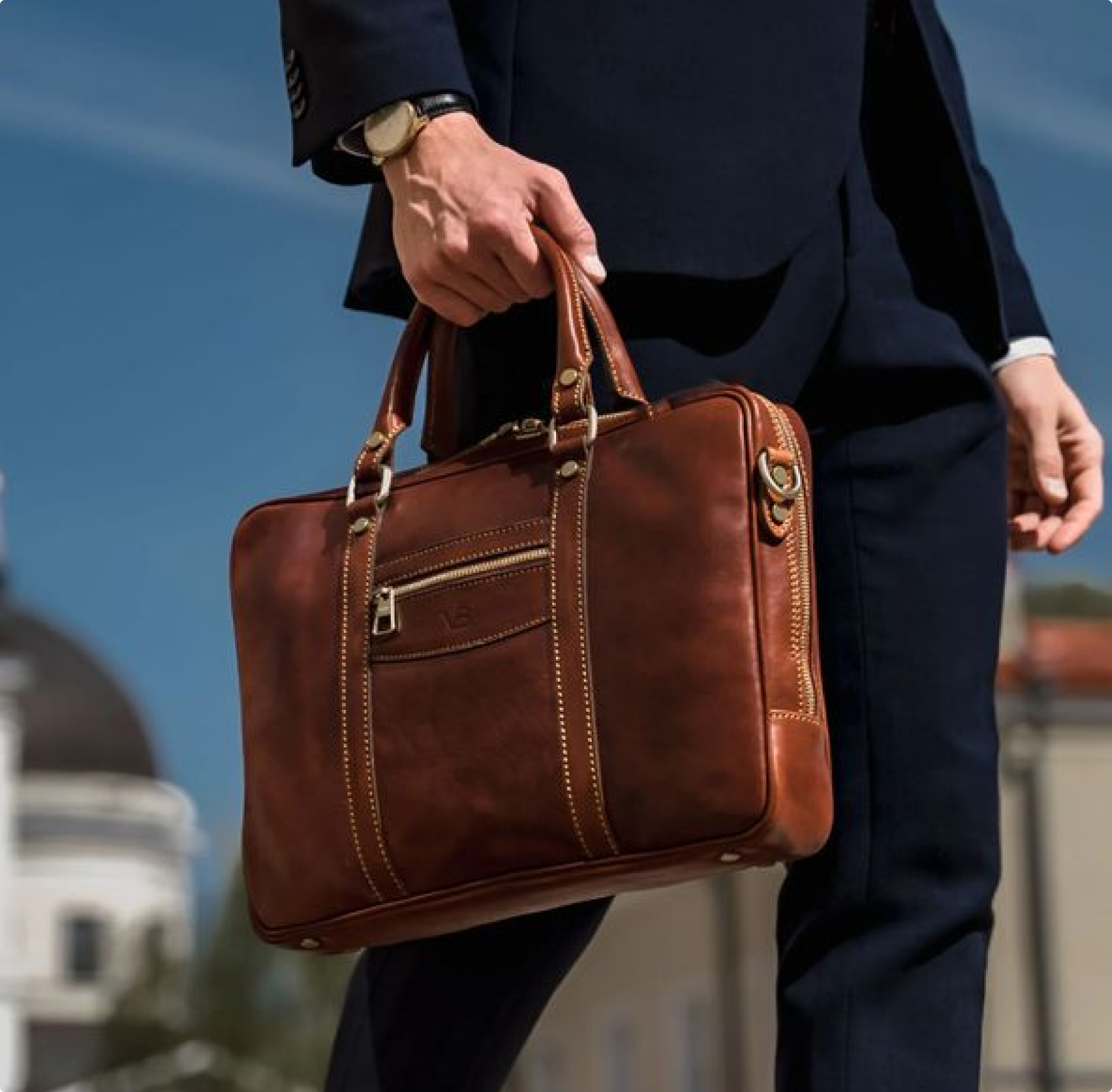
Briefcases represent the classic professional bag, featuring structured construction, top handle carry, and organized interiors for documents and business materials. Modern versions include laptop compartments while maintaining traditional professional appearance.
Best for: Traditional corporate environments, law and finance professionals, anyone in conservative industries where formal appearance matters, established professionals prioritizing classic style.
Typical capacity: 15-25 liters, emphasizing document organization and laptop protection over bulk storage.
Key features to evaluate: Structure maintenance (bag holds shape when empty), document organization quality, hardware quality, shoulder strap inclusion for carrying flexibility.
Further reading: Understand the distinctions between briefcases, laptop bags, and messenger bags in ourdetailed comparison article.
Sizing Considerations: Finding Your Right Fit
Choosing the correct size dramatically affects both functionality and appearance. Too small frustrates through inadequate capacity; too large encourages overpacking and creates bulk.
Capacity Guidelines by Use Case
Daily commuting (laptop + essentials): 15-20 liter bags work for most professionals. This accommodates 13-15" laptops, chargers, documents, daily necessities, and perhaps a light jacket without excess bulk.
Daily commuting + gym clothes: 20-25 liter messenger bags or 25-30 liter duffels handle work items plus workout gear. Anything smaller forces uncomfortable compromises.
Overnight business travel: 25-35 liter duffels or large laptop bags (18-22 liters) suit 1-2 night trips with business attire.
Weekend personal travel: 30-45 liter duffels accommodate 2-3 nights of casual clothing, toiletries, and extras comfortably.
Minimalist daily carry: 10-15 liter slim laptop bags or small messengers serve people carrying just laptop, tablet, and absolute essentials.
Physical Proportion Matters
Bag size should suit your body frame. Bags too large for your build look overwhelming and create awkward silhouettes. Guidelines:
Petite builds (5'4" and under): Choose bags on the smaller end of size ranges. A 15-18 liter messenger bag looks proportional where a 22-25 liter version overwhelms. Avoid wide duffels extending beyond your torso width.
Average builds (5'5"-5'10"): Most standard bag sizes work well. Choose based on capacity needs rather than proportion concerns.
Larger builds (5'11"+): Can comfortably carry larger bags. A 25 liter messenger or 45 liter duffel looks proportional and balanced on larger frames.
Testing approach: When evaluating bags in person, wear them and check mirrors from multiple angles. The bag shouldn't appear to be wearing you or extending beyond your body width significantly.
Laptop Size Considerations
If your bag will carry a laptop, verify compartment dimensions match your computer:
- 13" laptops: Fit in most bags marked 13" and up; avoid bags specifying 15" only
- 15" laptops: The most common size; most messenger bags and laptop bags accommodate these
- 17" laptops: Require specifically sized bags; many messengers and laptop bags max out at 15"
Pro tip: Measure your laptop's dimensions (including thickness when closed) and compare against bag compartment specifications. Allow 0.5-1 inch clearance on each side for padding and easy insertion/removal.
Evaluating Construction Quality
Beyond leather grade, construction quality determines whether your bag lasts decades or falls apart within years. Learning to recognize quality craftsmanship protects your investment.
Stitching Standards
Quality stitching represents the first indicator of construction standards.
Stitch density: Count stitches per inch—quality bags feature 6-8+ stitches per inch. Sparse stitching (4-5 per inch) indicates cost-cutting that weakens seams.
Thread quality: Heavy-duty polyester or nylon thread resists UV degradation and moisture. Thread should be substantial, not thin or gossamer-like.
Reinforcement: Critical stress points—strap attachments, corners, hardware mounting—should feature double or triple stitching. Bar-tacking (dense X or box stitching patterns) creates exceptionally strong attachment points.
Seam finishing: Interior raw edges should be finished via binding, overlocking, or folding. Unfinished edges fray over time, creating weak points and sloppy appearance.
Hardware Quality Assessment
Hardware represents common failure points. Quality hardware lasts decades; cheap hardware fails within years.
Material standards: Solid brass or stainless steel hardware withstands corrosion and maintains strength indefinitely. Zinc alloy offers reasonable mid-range durability. Avoid plated hardware where coating wears through revealing cheap metal underneath.
Operation testing: Zippers should glide smoothly without catching. YKK brand zippers indicate quality commitment. Buckles should feel substantial and operate smoothly without sharp edges. Snaps should engage firmly without excessive force.
Weight assessment: Quality hardware has satisfying heft—it feels substantial in hand. Lightweight, flimsy hardware indicates cost-cutting that sacrifices longevity.
Attachment security: Hardware should attach via rivets or substantial stitching, not just glue. Test by gently pulling—hardware shouldn't shift or show separation from leather.
For comprehensive breakdown of which specific features matter most in messenger bags, including detailed hardware evaluation guidance, see our complete messenger bag anatomy guide.
Leather Joining Methods
How leather pieces connect affects both aesthetics and structural integrity.
Overlapped seams: Overlapping leather edges before stitching creates stronger connections than butting edges together.
Welted construction: A strip of leather or fabric between two joined pieces creates attractive finished edges and added strength—a sign of quality construction.
Edge finishing: Quality bags feature finished edges—burnished, painted, or bound—rather than raw cut edges. Finished edges resist fraying and present refined appearance.
Material Comparison: Leather vs. Alternatives
First-time buyers often wonder whether leather's premium price is justified compared to canvas or nylon alternatives. Understanding material trade-offs enables informed decisions.
Leather's Advantages
- Longevity: 15-20+ years with proper care versus 3-7 years for canvas, 8-12 years for quality nylon
- Aging trajectory: Becomes more beautiful over time through patina development rather than deteriorating
- Professional appearance: Conveys quality and sophistication across virtually all work environments
- Repairability: Can be professionally restored, conditioned, and repaired extending life significantly
- Tactile satisfaction: Feels substantial and pleasant to handle, creating emotional connection
- Timeless aesthetic: Classic styling remains appropriate across decades
When Alternatives Make Sense
Canvas offers lighter weight, lower cost, and casual aesthetic perfect for creative industries, students, or anyone preferring utilitarian styling. Canvas suits buyers who value authentic vintage appearance and don't need maximum professional polish.
Nylon provides weather resistance, minimal weight, and zero maintenance that active commuters, cyclists, and outdoor users require. Nylon serves buyers prioritizing technical performance over traditional aesthetics.
For detailed comparison of leather versus canvas and nylon messenger bags—including honest pros and cons of each material—see our comprehensive material comparison guide.
Budget Guidance: Investment vs. Expense
Understanding pricing helps distinguish genuine value from inflated marketing while establishing realistic budget expectations.
Price Range Expectations
Budget range ($50-150): Genuine leather or synthetic materials. Expect 2-5 year lifespan. Reasonable for testing bag styles before committing to quality investment, but false economy if seeking long-term solution.
Mid-range ($150-350): Top-grain leather from quality makers like Rustic Town. Expect 10-15 year lifespan with proper care. Sweet spot for first-time leather bag buyers wanting quality without premium pricing.
Premium range ($350-600): Full-grain leather with exceptional construction. Expect 20-30+ year lifespan. Best long-term value despite higher initial cost—annual cost over decades becomes minimal.
Luxury range ($600+): Designer brands where you're paying for name recognition alongside quality. Justifiable for some buyers but not necessary for maximum durability and function.
Calculating True Cost
Consider annual cost over expected lifespan rather than just sticker price:
- $100 genuine leather bag lasting 3 years = $33/year
- $300 top-grain leather bag lasting 15 years = $20/year
- $500 full-grain leather bag lasting 25 years = $20/year
The seemingly expensive full-grain option costs the same annually as mid-range while providing superior aesthetics and satisfaction throughout. This framework reveals where genuine value lies.
When to Invest More
Invest in premium leather bags when:
- You've identified your needs clearly through experience
- The bag will receive daily use for years
- Your professional environment rewards quality appearance
- You value possessions that improve with age
- You're committed to proper maintenance
When to Start More Modestly
Consider mid-range or alternative materials when:
- You're uncertain about specific bag type needs
- Your usage patterns may change significantly soon
- You're early in your career with limited budget
- You want to test styles before major investment
- Your work environment is very casual or rough on bags
Essential Care Knowledge for First-Time Owners
Proper leather care isn't complicated, but understanding basics ensures your investment lasts decades rather than years. These fundamentals apply regardless of leather grade or bag type.
Immediate Post-Purchase Care
Protection treatment: Apply water-repellent leather protector after purchase. This prevents stains from setting and adds weather resistance. Test in inconspicuous areas first.
Break-in patience: New leather feels stiff initially. Quality leather softens beautifully through natural use—don't force it. Use your bag normally and let break-in occur naturally over 2-4 weeks.
Documentation: Keep purchase receipts and care tags. Note the leather type for reference when selecting future care products.
Daily Care Habits
Avoid overstuffing: Pack only what you genuinely need. Overstuffed bags stretch leather permanently, stress seams, and lose their attractive shape.
Handle gently: Set bags down rather than dropping them. This prevents cumulative stress on leather, hardware, and seams.
Dust regularly: Wipe with soft, dry cloth removing surface dust before it embeds. This 30-second habit prevents gradual graying from accumulated grime.
Address spills immediately: Blot (never rub) fresh spills immediately with clean cloth. Fresh stains remove easily; set stains become permanent.
Periodic Maintenance
Cleaning schedule: Deep clean every 2-3 months with specialized leather cleaner, or when leather looks dull or feels grimy.
Conditioning frequency: Condition every 3-4 months to replace natural oils, prevent drying and cracking, and maintain suppleness. Adjust frequency for climate—dry environments need more frequent conditioning.
Storage practices: When not in use, stuff bags lightly to maintain shape, store in breathable dust bags, and keep in cool, dry locations away from direct light and heat.
For comprehensive leather care guidance including step-by-step cleaning and conditioning instructions, see our detailed leather messenger bag care guide. While focused on messenger bags specifically, the principles apply to all leather bag types.
Common First-Time Buyer Mistakes to Avoid
Learning from others' mistakes prevents costly errors and frustrating experiences.
Mistake 1: Choosing Style Over Function
The error: Buying bags that look beautiful but don't suit actual usage needs. A stunning vintage-style duffel that's too small for weekend trips or a sleek messenger that doesn't protect your laptop adequately.
The fix: Identify your primary use case honestly, then choose bags optimized for that purpose. Aesthetics matter, but function must come first. Style should refine your selection within the appropriate category, not determine the category itself.
Mistake 2: False Economy on First Purchase
The error: Buying cheap genuine leather or synthetic bags to "test" bag styles, then replacing them when they quickly deteriorate, spending more cumulatively than investing properly initially.
The fix: If budget constrains immediate purchase of premium leather, consider quality canvas or nylon alternatives for testing styles, or save longer for proper leather investment. Don't waste money on poor-quality leather that misrepresents what quality leather goods offer.
Mistake 3: Buying the Wrong Size
The error: Overestimating or underestimating capacity needs, resulting in bags too cramped for regular use or too bulky for typical carrying.
The fix: Audit what you actually carry daily. Gather those items and physically test whether they fit in bags you're considering. Account for growth but avoid speculating about unlikely future needs.
Mistake 4: Neglecting Care from Day One
The error: Treating leather bags carelessly initially, assuming newness means indestructibility, then being surprised when neglect causes permanent damage within the first year.
The fix: Implement basic care habits from your first day of ownership. Apply protective treatments immediately, establish cleaning routines early, and address any damage promptly before it compounds.
Mistake 5: Ignoring Construction Details
The error: Focusing exclusively on leather grade and appearance while overlooking stitching quality, hardware durability, and structural details that determine actual longevity.
The fix: Systematically evaluate construction elements using guidelines in this guide. A bag with top-grain leather and excellent construction outlasts full-grain leather with poor construction.
Mistake 6: Impulse Purchasing
The error: Buying leather bags impulsively based on sales or trends without careful consideration of needs and quality, leading to closets full of expensive bags that don't actually serve you.
The fix: Research thoroughly before purchasing. Read guides like this one, examine products in person when possible, sleep on decisions for at least 24 hours, and ensure each purchase serves a genuine, specific need.
Making Your First Purchase Decision
Armed with comprehensive knowledge about leather quality, bag types, sizing, construction, and care, you're prepared to make your first leather bag purchase with confidence. Follow this decision process:
Step 1: Define Your Primary Need
What's your most common use case?
- Daily commuting to office
- Business travel requiring overnight stays
- Technology protection for expensive laptop
- Professional meetings with traditional expectations
- Weekend personal travel
This determines which bag category you need: messenger, laptop, duffel, or briefcase.
Step 2: Establish Your Budget
What can you realistically invest?
- $150-250: Top-grain leather from quality makers
- $250-400: Premium top-grain or entry full-grain leather
- $400-600+: Exceptional full-grain leather with lifetime durability
Remember that proper leather bags last decades, so higher upfront investment creates lower annual cost. However, start where your budget allows—quality top-grain leather still dramatically outperforms cheap alternatives.
Step 3: Determine Size Requirements
Gather everything you'll typically carry in your bag. This includes:
- Laptop and tablet dimensions
- Chargers and cables
- Documents and notebooks
- Personal items (wallet, keys, phone)
- Clothing (if carrying changes or gym gear)
- Any specialized items (camera equipment, tools, etc.)
This physical assessment reveals necessary capacity, preventing guessing that leads to wrong sizing.
Step 4: Research Specific Products
With category, budget, and size determined, research specific bags meeting your criteria:
- Read detailed product descriptions
- Examine construction photos closely
- Read authentic customer reviews (focus on long-term reviews from 1+ years of ownership)
- Compare multiple options within your parameters
- Check maker reputation and return policies
Step 5: Evaluate Quality Indicators
For finalists, systematically assess quality:
- Leather grade (full-grain preferred, top-grain acceptable)
- Stitching density and reinforcement
- Hardware material and operation
- Closure security and ease of use
- Warranty or guarantee offered
- Care instructions provided
Step 6: Consider Long-Term Value
Beyond immediate cost, evaluate:
- Expected lifespan based on leather grade and construction
- Repair options if issues develop
- Aesthetic aging trajectory (will patina be attractive?)
- Versatility across your wardrobe and situations
- Resale value if circumstances change
Step 7: Make the Purchase
Once you've thoroughly researched and evaluated options, commit to your decision confidently. You've done the work to make an informed choice—trust your assessment.
Step 8: Plan for Care
Immediately upon receiving your bag:
- Apply protective treatment before first use
- Set up care supply kit (cleaner, conditioner, soft cloths)
- Create calendar reminders for quarterly conditioning
- Document your purchase for warranty purposes
Building a Complete Leather Bag Collection
While this guide focuses on your first purchase, understanding how leather bag collections typically develop helps you make strategic initial choices.
The Natural Evolution
Most professionals develop their leather bag collections in this order:
First purchase: Bag serving most frequent need (typically messenger or laptop bag for daily commuting)
Second purchase: Bag serving secondary need (often duffel for travel if first was daily commuter)
Third purchase: Specialized bag for specific situations (perhaps briefcase for formal meetings or second messenger in different size)
Refinements: Upgrading early purchases to higher quality versions after confirming styles and needs through experience
Strategic First Purchase Considerations
When choosing your first leather bag, consider versatility:
- Will this bag serve your most common scenario well?
- Can it reasonably handle secondary scenarios even if not perfectly?
- Does this category have enough variation to grow with you?
- Will owning this reveal needs for complementary bags?
A leather messenger bag often makes the most versatile first purchase for professionals—it handles daily commuting excellently while managing overnight trips acceptably with strategic packing. This lets you confidently invest in quality for your most frequent need while determining whether you also need dedicated travel bags through actual experience.
Where to Buy Your First Leather Bag
Purchase location affects not just price but also the ability to evaluate quality and access customer service.
Specialized Leather Goods Makers
Advantages: Direct from makers like Rustic Town ensures authentic products, best pricing without retail markups, access to full product lines, direct customer service, and often superior warranties.
Considerations: Can't physically examine before purchase, though detailed photos and measurements plus good return policies mitigate this. Requires research to identify reputable makers.
Quality Department Stores
Advantages: Physical examination of products, immediate purchase and possession, potential for sales events, easy returns.
Considerations: Higher prices due to retail markups, limited selection compared to specialty makers, sales staff may lack leather expertise.
Luxury Boutiques
Advantages: Curated selection of premium brands, knowledgeable staff, luxury shopping experience.
Considerations: Substantially higher prices, often paying for brand prestige rather than quality improvements, limited practical product variety.
Online Marketplaces
Advantages: Vast selection, competitive pricing, customer reviews providing insights.
Considerations: Quality varies dramatically, difficult to verify leather authenticity, counterfeit risks with luxury brands, inconsistent return policies.
Recommendation for first-time buyers: Start with established leather goods makers with strong reputations and clear return policies. This balances quality assurance with reasonable pricing. Once you've developed expertise recognizing quality, you can confidently navigate broader marketplaces.
Conclusion: Your Journey Begins
Purchasing your first quality leather bag represents more than acquiring a functional accessory—it's an investment in craftsmanship, durability, and the satisfaction of owning well-made goods that improve with age. While the initial research and investment may feel substantial, quality leather bags from reputable makers reward that effort with decades of reliable service, developing character and beauty that makes them more valuable over time.
The knowledge you've gained through this comprehensive guide transforms you from uncertain first-time buyer into informed consumer capable of recognizing quality, understanding value, and making confident decisions. You understand that full-grain and top-grain leather dramatically outlast genuine leather, that construction quality matters as much as material grade, that proper sizing prevents future frustration, and that minimal care habits ensure maximum longevity.
Your first leather bag purchase sets the foundation for a lasting relationship with quality goods. Whether you choose a leather messenger bag for daily urban commuting, a leather laptop bag for professional meetings, a leather duffel for weekend adventures, or a classic briefcase for traditional business settings, that bag will accompany you through career milestones, travel experiences, and daily life for years or decades to come.
Start with your most pressing need, invest in the highest quality your budget allows, commit to basic care practices, and trust that proper leather goods from quality makers justify their cost through extraordinary longevity and satisfaction. Your first purchase likely won't be your last—most professionals eventually own leather bags from multiple categories, each serving specific purposes—but it will be the one you remember most fondly as the beginning of appreciating craftsmanship that transcends temporary trends and disposable culture.
Make your choice thoughtfully, care for your purchase consistently, and enjoy watching your leather bag become increasingly yours through the patina and character that develops from years of shared experiences. Your investment in quality leather goods represents not just a purchase but a philosophy: valuing possessions designed to last, appreciating materials that improve with age, and choosing enduring quality over temporary economy. Welcome to the community of people who understand that some things are worth investing in properly from the start.

