


Bonded leather is technically a leather product but functionally not real leather in any meaningful sense - it is made by grinding leather scraps and fibre dust into a pulp, mixing that pulp with polyurethane binder and other adhesives, spreading the mixture onto a fabric backing, and applying a surface coating that is embossed to look like a grain pattern.
The resulting bonded leather contains as little as 10-17% actual leather content by weight, has none of the structural properties of genuine full-grain leather, and typically begins to peel, crack, and delaminate within 12 to 36 months of regular use. Understanding the difference between bonded leather and the other types of leather - particularly the genuine vs bonded distinction - is the single most important piece of knowledge any leather buyer can have.
The leather goods market has a vocabulary problem, and bonded leather is at the centre of it. A product described as real leather can legally be anything from a $200 full-grain hide to a $20 bonded sheet with 15% leather content. Both are, in the loosest regulatory sense, leather products. They are not remotely the same material. One lasts 20 years and develops patina.
The other peels within 18 months and ends up in a bin. Buyers who do not know the difference between genuine vs bonded - and do not know that genuine itself is a low grade, not a quality assurance - pay for the first material price expecting the performance of the second.
This guide explains exactly what bonded leather is, how it is made, how to identify it before buying, how it performs under real-world use, and what you should be buying instead. The types of leather vocabulary is the most important leather knowledge any buyer can have - and the genuine vs bonded question is the distinction that separates a 20-year bag from a 2-year one.

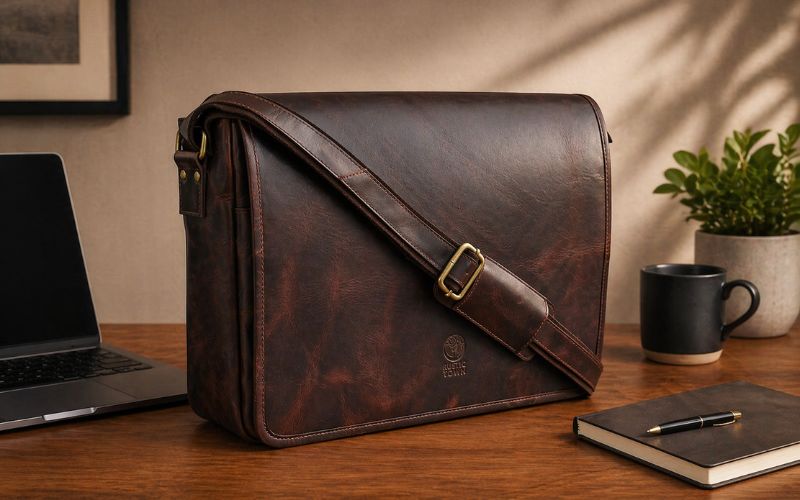
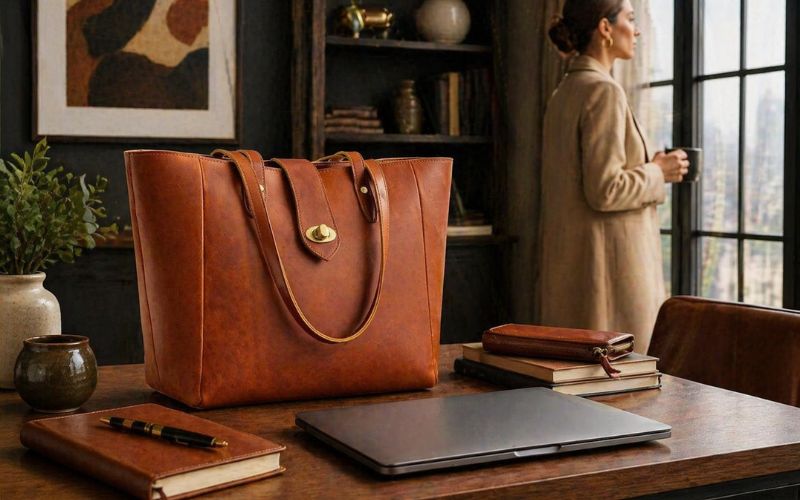
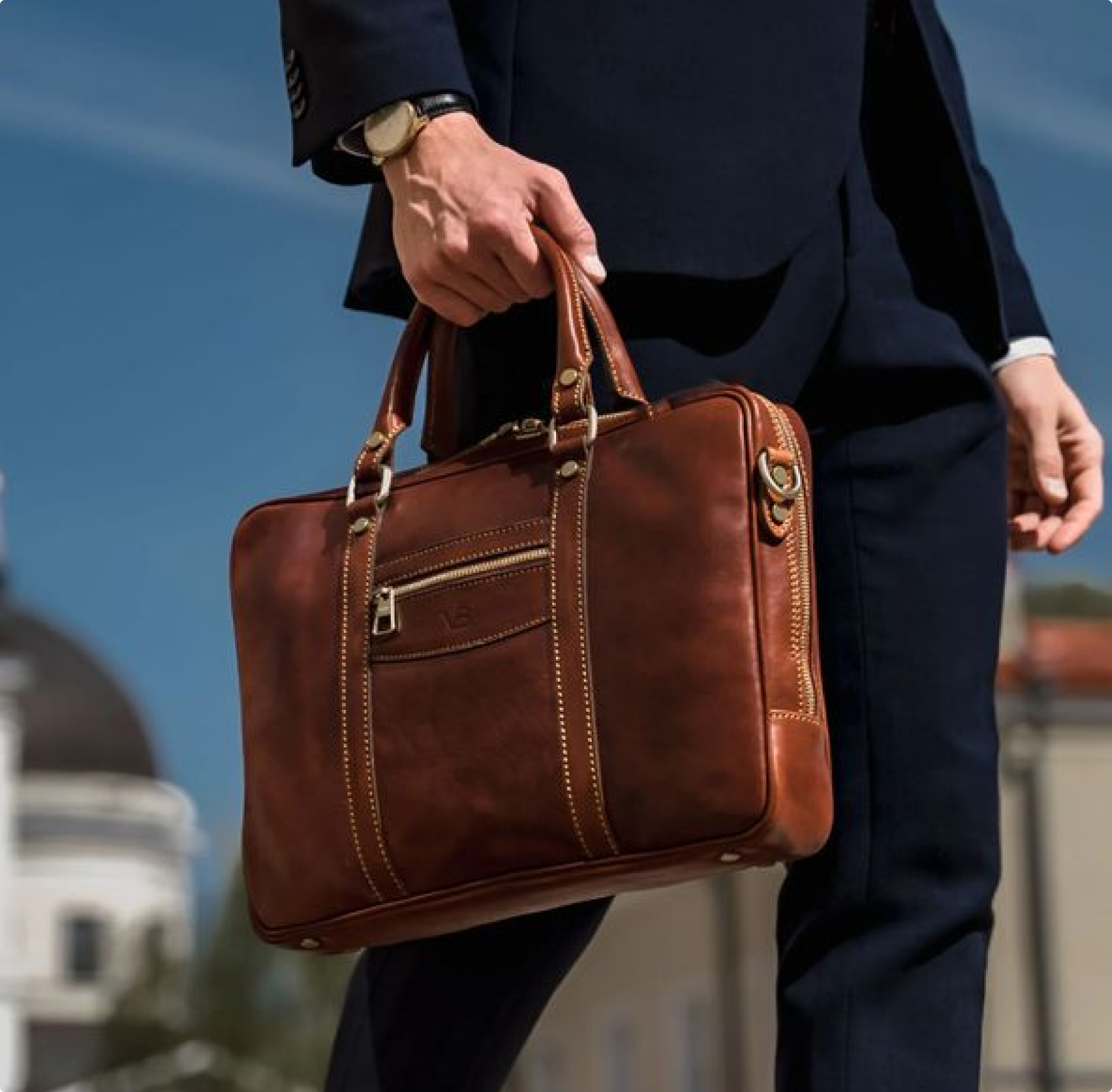
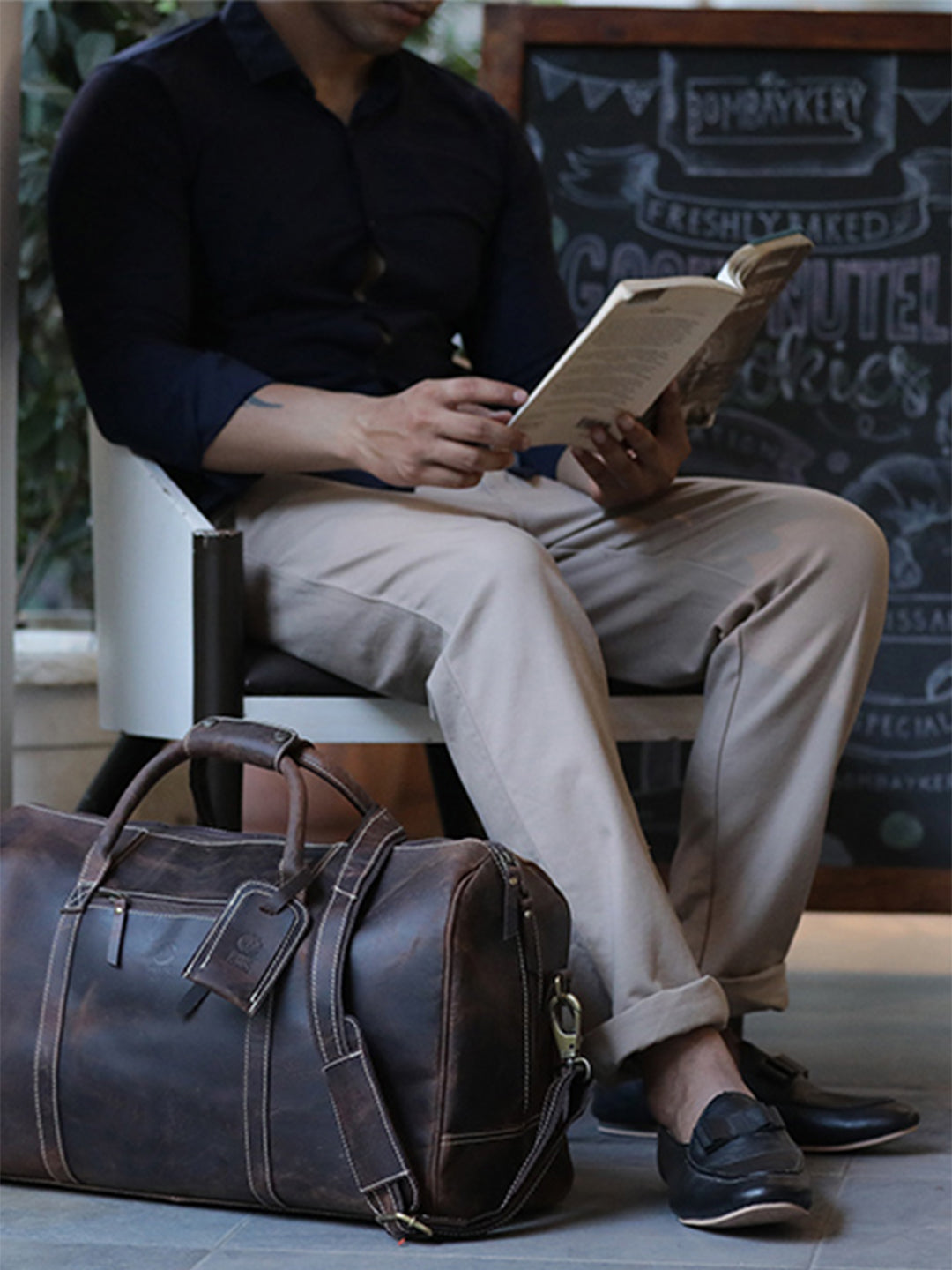
Rustic Town uses exclusively full-grain leather across the entire range - no bonded leather, no genuine leather, no surface-coated alternatives. See the duffle bag collection for reference on what real leather looks like at the correct price point.
What Exactly Is Bonded Leather and How Is It Made?
Bonded leather is not a leather grade in the traditional sense - it is a composite material that uses leather scraps as one ingredient among several. Understanding how it is manufactured explains why it performs the way it does and why it is not comparable to the other types of leather despite being sold alongside them in the same product categories.
What Is the Manufacturing Process for Bonded Leather?
The production of bonded leather begins with the leather scraps and fibre dust left over from the cutting and finishing of genuine leather products - the offcuts that would otherwise be discarded. These scraps are ground into small pieces and then into a fine pulp. The pulp is mixed with polyurethane binder, latex adhesive, and various chemical additives that hold the mixture together as it cures. This slurry is spread onto a fabric or paper backing - typically a polyester or cotton sheet - and allowed to dry into a flexible sheet.
Once the backing is impregnated with the leather-pulp-plus-binder mixture, the surface is coated with a polyurethane or vinyl layer that provides the appearance of leather. This surface coating is embossed with a grain pattern using heated rollers that press an artificial grain texture into the coating. The final product looks like leather in a photograph and feels like leather when new - the surface coating is textured to mimic natural grain, and the composite sheet has a similar flexibility to genuine leather.
How Much Actual Leather Is in Bonded Leather?
The actual leather content in bonded leather varies by manufacturer but typically ranges from 10% to 17% by weight, with the remaining 83-90% consisting of binder, backing material, and surface coating. Some manufacturers produce bonded leather products with up to 30% leather content, but these are at the upper end of the category. The industry has had periodic regulatory debates about whether products with this little leather content should be allowed to be called leather at all - debates that have not resulted in meaningful labelling reform in most markets.
For context, full grain leather is 100% leather - the entire hide layer, untreated except for tanning. Top-grain leather is 100% leather with a lightly sanded surface. Genuine leather (which is itself a low grade but still actual leather) is 100% leather from the compressed lower hide layers. Bonded leather is the only product in the types of leather category where the material is majority not leather at all.
|
Property |
Bonded Leather |
Genuine Leather |
Top-Grain Leather |
Full-Grain Leather |
|
Actual leather content |
10-17% (up to 30%) |
100% |
100% |
100% |
|
Source |
Scrap pulp + binder + backing |
Lower hide layers |
Outer grain - sanded |
Outer grain - intact |
|
Manufacturing |
Composite sheet - glued |
Split layer - processed |
Sanded and pigmented |
Minimal processing |
|
Surface |
Polyurethane coating - embossed |
Sanded + pigmented |
Sanded + pigmented |
Natural grain |
|
Lifespan daily use |
1-3 years |
2-3 years |
8-12 years |
15-20+ years |
|
Patina development |
None - peels instead |
None |
Moderate |
Excellent |
|
Honest description |
Composite material with leather content |
Low-grade leather |
Mid-grade leather |
Premium leather |

How Does Bonded Leather Perform Compared to Real Leather?
The performance difference between bonded leather and genuine types of leather is not a matter of degrees - it is a categorical difference. Bonded leather does not behave like a lower grade of leather. It behaves like a different material entirely, because structurally it is a different material. Understanding how it performs under real-world conditions is the knowledge that makes the genuine vs bonded decision obvious.
What Happens to Bonded Leather Under Daily Use?
The surface coating on bonded leather is not bonded to a dense grain layer the way the surface of natural leather is bonded to the hide structure. It is a layer of polyurethane adhered to a backing impregnated with leather pulp and binder. Under the repeated flex stress of daily use - a bag opening and closing, a chair flexing as someone sits in it, a wallet folding and unfolding - the surface coating begins to crack at the flex points within 12 to 24 months. Once cracked, the coating peels progressively, exposing the pulp-and-binder interior beneath. The peeling accelerates rapidly after it starts - a bonded leather item that looks intact at month 18 can be visibly delaminated at month 22.
This is the specific failure mode that every bonded leather product eventually experiences - not maybe, not sometimes, but always. It is not a manufacturing defect or a quality variance issue. It is a fundamental property of the material. Bonded leather exists on a timeline from the moment it is manufactured, and that timeline measures in months and low single-digit years, not in the decades that genuine full grain leather delivers.
Why Does Bonded Leather Feel Like Leather When New?
The sensory deception in bonded leather is the feature that catches most buyers out. When new, the embossed polyurethane coating has the tactile texture of leather grain. The composite material has a similar flexibility to thin leather. There is often a leather smell - either residual from the scrap content or artificially added to the surface coating. A new bonded leather product in a shop feels like leather to a buyer who is not specifically testing for the differences. This is not accidental. The material is manufactured to pass the casual in-store sensory assessment that most buyers rely on.
What new bonded leather cannot replicate is the weight and density of real leather, the specific natural grain variation that full-grain shows under close inspection, or the richness of genuine leather smell at close range. It also cannot replicate the behaviour over time - which is where the real leather vs bonded leather difference becomes undeniable.
|
Time Point |
Bonded Leather |
Full-Grain Leather |
Visible Difference |
|
Day 1 (new in shop) |
Looks like leather, feels like leather |
Looks like leather, feels like leather |
Very subtle - density and smell favour full-grain |
|
Month 6 |
Still intact, slightly worn at highest-use areas |
Slight break-in character at contact points |
Minimal |
|
Year 1 |
Surface coating may show early crack signs at flex points |
Early patina developing at handle areas |
Full-grain beginning to look more characterful |
|
Year 2 |
Visible cracking at handles, corners, flex points |
Established patina, leather visibly improving |
Full-grain noticeably better; bonded clearly deteriorating |
|
Year 3 |
Peeling, delamination, rapid visible decline |
Deepening patina, character building |
Full-grain is a better-looking object than day 1; bonded is failing |
|
Year 5 |
Typically discarded or unusable |
Beautiful mature patina |
Not comparable |
|
Year 15 |
Long replaced multiple times |
Still in daily use and looks better than ever |
Full-grain delivers on the promise bonded could not |
Rustic Town's full grain leather duffle bags - the grade that looks better every year of use and lasts 15-20 years of daily carry without the surface failure that
How Do You Identify Bonded Leather Before Buying?
Being able to identify bonded leather in a shop, at a market, or from a product page photograph is the single most practical types of leather skill any consumer can develop. Here is the specific identification guide - by description, by touch, by visual inspection, and by price point.
What Should You Look for in the Product Description?
Step 1. Check if the description says 'full-grain' explicitly.
Full grain leather stated explicitly in the product description is the single strongest indicator that the product is not bonded leather. Brands that use full-grain leather state this prominently because it is the material's primary selling feature. A product description that does not mention full-grain is almost certainly not made from full-grain leather - regardless of what the price suggests.
Step 2. Identify the vocabulary red flags.
Certain phrases in a product description indicate bonded leather or other composite materials: 'bonded leather,' 'reconstituted leather,' 'reconstructed leather,' 'LeatherSoft,' 'leather match,' 'eco leather' (sometimes), and generic terms like 'man-made material' or 'synthetic material with leather content.' If the description uses any of these phrases, or hedges around the leather type without specifying a grade, assume it is bonded leather until proven otherwise.
Step 3. Beware of 'genuine leather' as a standalone description.
The genuine vs bonded distinction matters here. Genuine leather is a step up from bonded leather - it is at least 100% actual leather - but it is not a quality indicator. It is the lowest commercial grade of real leather. A product described only as genuine leather is telling you it is not full-grain and not top-grain. It may or may not be a better material than bonded leather, depending on how it is processed. Neither is a good choice for a bag or item intended to last.
Step 4. Check the price against the category.
A leather duffle bag priced at $40 is not full-grain leather regardless of how the description is worded. The raw material cost of full-grain leather for a medium duffle bag is higher than $40 alone, before labour, hardware, finishing, and retail markup. When the total product price is below the raw material cost of the described grade, the described grade is not actually what is inside the product. A bag at $40 is almost certainly bonded leather or synthetic regardless of what the description implies.
Step 5. Verify weight and density in the product specification.
Bonded leather has a different weight-to-thickness ratio than genuine leather. A bonded leather product feels lighter per square centimetre than a natural leather product of the same thickness because of the pulp-and-binder composition versus the dense hide structure. If product weight is specified, compare it to similar products in full-grain leather at the same dimensions. Significantly lighter weight at the same dimensions suggests bonded leather or synthetic.
How Do You Identify Bonded Leather by Touch and Sight?
When you can physically handle the product, bonded leather has identifiable tells that distinguish it from full-grain and top-grain leather. The edges and cut sections are the most reliable indicators - a bonded leather product shows a layered structure at any cut edge, with the polyurethane coating visible as a distinct top layer, the pulp-and-binder middle layer visible below it, and the fabric backing visible at the bottom. Genuine leather shows a consistent fibrous cross-section throughout the thickness. The surface of bonded leather also shows unnaturally uniform grain patterns - perfect regular repetition of the embossed grain design - versus the natural irregular variation of full-grain leather.
The smell test is also reliable. Full-grain leather has a rich, earthy, warm smell from the natural hide and the tanning chemistry. Bonded leather often has a chemical or plastic smell from the polyurethane binder and surface coating, sometimes masked by an artificial leather fragrance that smells slightly too strong and slightly too uniform compared to real leather's natural smell. At close range, experienced leather users can distinguish these smells immediately.

Where Does Bonded Leather Fit in the Full Leather Grade Hierarchy?
Understanding where bonded leather sits within the complete range of types of leather makes the genuine vs bonded question part of a bigger knowledge set that helps you evaluate any leather product at any price point. Here is the complete hierarchy from highest quality to lowest, with honest performance expectations for each.
What Are All the Types of Leather in Order?
1. Full-grain leather - highest grade, 100% leather.
The outer grain layer of the hide, completely intact and unmodified. Highest fibre density, best durability, develops personal patina through use, lifespan of 15-20+ years in daily-use bags. The only grade worth investing in for any long-term use bag or accessory. Full-grain leather is the standard against which every other leather grade is measured.
2. Top-grain leather - second tier, 100% leather.
The outer grain layer, lightly sanded to remove natural blemishes and pigmented to uniform tone. The sanding reduces fibre density and limits patina development. Lifespan of 8-12 years in daily-use items. Acceptable at mid-range prices; not the investment grade of full-grain.
3. Corrected-grain leather - third tier, 100% leather.
The outer grain layer heavily processed and embossed with an artificial grain pattern to restore a leather appearance after the natural grain has been removed. Lifespan of 4-7 years under daily use. One of the most confusing types of leather for consumers because the embossed surface appears identical to full grain leather in product photographs.
4. Nubuck leather - outer grain buffed to nap, 100% leather.
Outer grain layer buffed to create a fine velvety nap. More durable than suede because it comes from the stronger grain layer. Susceptible to moisture and staining. Appropriate for shoes and fine garments; not ideal for daily-use bags where surface contact is constant.
5. Suede - inner split layer buffed to nap, 100% leather.
Inner hide split layer buffed to a soft nap. A legitimate leather material - just from a weaker layer of the hide. Appropriate for shoes and garments where softness is the primary requirement; inappropriate for daily carry bags where moisture resistance and abrasion resistance are required.
6. Genuine leather - lowest grade of actual leather, 100% leather.
The marketing term that confuses most buyers. Genuine leather is not a quality assurance - it is the lowest commercial grade of actual leather, produced from the compressed lower hide layers. Lifespan of 2-3 years in daily-use items. Any product described only as genuine leather without specifying a higher grade is using the lowest grade that can still be legally called leather.
7. Bonded leather - composite material, 10-17% leather.
Bonded leather sits below genuine leather in the hierarchy - it is the only product in the types of leather category that is majority not leather. Lifespan of 1-3 years in daily-use items. The primary advantage is cost; every other dimension favours real leather alternatives. The genuine vs bonded distinction is that genuine leather is at least entirely leather, while bonded leather is a composite material with leather content.
8. Faux leather / PU leather - 0% leather.
Polyurethane sheet material manufactured to look like leather. No actual leather content. Different material entirely, though sometimes marketed as 'vegan leather' or 'eco leather.' Lifespan varies by quality - ranges from 1-3 years in most consumer products to 5-8 years in premium PU materials. Included here because the marketing language often overlaps with bonded leather claims.
|
Grade |
Leather Content |
Primary Failure Mode |
Lifespan (Daily Use) |
Price Tier |
|
Full-grain leather |
100% |
None in 15+ years |
15-20+ years |
Premium |
|
Top-grain leather |
100% |
Surface coating wear |
8-12 years |
Mid-premium |
|
Corrected-grain |
100% |
Embossed surface cracks |
4-7 years |
Mid-range |
|
Nubuck |
100% |
Nap matting, moisture |
5-8 years |
Mid to premium |
|
Suede |
100% |
Moisture damage, fibre matting |
3-7 years |
Mid-range |
|
Genuine leather |
100% |
Surface peeling from lower hide layer |
2-3 years |
Budget |
|
Bonded leather |
10-17% |
Coating delamination and peeling |
1-3 years |
Budget |
|
Faux / PU leather |
0% |
Coating cracking |
1-5 years varies |
Budget |
See what genuine full grain leather looks like in Rustic Town's duffle bag collection
Where Is Bonded Leather Commonly Used - And Where Should It Not Be?
Bonded leather exists because it fills a market segment - low-price products that need to look like leather without the raw material cost of actual leather. Understanding where the material is commonly used helps consumers identify when they might be looking at bonded leather even when the description does not explicitly say so.
What Products Commonly Use Bonded Leather?
Budget furniture - particularly sofas and armchairs.
Bonded leather is most common in budget upholstered furniture - typically sold at $400-$800 price points for items that would cost $2,000+ in real leather. The flat panels of a sofa show the early signs of bonded leather failure within 18-36 months - cracks and peeling at the seat cushion fronts, at the arm tops, and along the back cushion flex points. This is the single most common application of bonded leather and the one where buyers most commonly report the rapid failure pattern.
Low-cost office chairs.
The 'executive leather' chairs available at office supply retailers in the $150-$400 range are almost universally bonded leather. The chair looks leather-like when new, and begins to visibly peel at the seat edge, the armrest tops, and the back cushion within 1-2 years of regular daily office use.
Budget bags and accessories.
Bags priced below the full-grain leather raw material cost are frequently bonded leather - particularly bags at the $30-$80 price point that are described only as 'leather' or 'genuine leather.' A duffle bag, tote, or messenger bag at this price point with a leather description almost always uses bonded leather or a lower-grade composite material, regardless of how attractive the product appears in the listing.
Book bindings and stationery.
Many 'leather-bound' notebooks, journals, and bibles use bonded leather rather than genuine hide. The application is appropriate here in the sense that a bound book is not subject to the flex stress of a carry bag and can last longer in bonded leather than a daily-use bag - but the same material in a daily-carry item would fail faster. Know what you are buying, even in stationery.
Where Should Bonded Leather Never Be Used?
Any daily-carry item.
Bags, wallets, belts, watch straps, and any item subject to daily flex and handling stress is the wrong application for bonded leather. The material cannot handle the repeated mechanical stress without surface failure within 1-3 years. For any item where longevity and improving appearance matter, bonded leather is the wrong choice regardless of price. The real leather vs bonded leather gap on daily-use items is the clearest practical demonstration of why the material distinction matters.
Investment or gift purchases.
A bonded leather bag, watch strap, or accessory purchased as a significant gift or a personal investment piece is almost guaranteed to disappoint within the first 2-3 years of use. The recipient or buyer will experience the peeling, cracking, and surface failure that defines the material - and the gift or investment will be remembered for its failure rather than its value. For any purchase intended to last or to matter, avoid bonded leather, and avoid genuine leather as well. Full-grain is the only grade appropriate for these categories.
Any item where aesthetic longevity matters.
Bonded leather does not develop patina. It develops wear. A bonded leather item at year 3 looks worse than at day 1 - sometimes dramatically worse. Any purchase where the aesthetic quality of the item at year 5 or year 10 matters is the wrong application for bonded leather. Full-grain leather is the only leather grade that looks better with age rather than worse.
What Should You Buy Instead of Bonded Leather?
Once you understand what bonded leather actually is, the buying decision becomes clearer: do not buy bonded leather for any daily-use item, and do not confuse genuine leather for a quality alternative in the genuine vs bonded trade-off. The correct answer is to skip both and buy full-grain leather - and to adjust your price expectations to match what quality actually costs.
What Are the Correct Price Expectations for Quality Leather Goods?
A medium full-grain leather duffle bag costs $80-$150 at honest artisan pricing. A full-grain leather briefcase costs $120-$200. A full-grain leather tote costs $80-$140. A full-grain leather wallet costs $40-$80. These are the price ranges where the raw material is actually full-grain leather and the construction is built to last 15-20 years of daily use. Prices below these ranges for items described as leather are signals that the material is not what the description implies.
The apparent savings of buying bonded leather disappear completely when the replacement cycle is factored into the cost calculation. A $40 bonded leather bag replaced every 2 years across 15 years costs $300-$400. A single $99 full-grain leather bag across the same 15 years costs $99. Full-grain leather is not the expensive option. It is the cheapest option per year of use over any meaningful ownership period, regardless of how the price comparison appears at the point of purchase.
|
Item Type |
Avoid (Bonded Leather) |
Better Alternative |
Best Choice |
15-Year Cost Comparison |
|
Duffle bag |
$40 bonded 'leather' bag |
$80 top-grain bag |
$99 full-grain bag |
Bonded $300+ / full-grain $99 |
|
Briefcase |
$70 bonded 'executive' case |
$130 top-grain case |
$180 full-grain case |
Bonded $490 / full-grain $180 |
|
Wallet |
$15 bonded wallet |
$35 top-grain wallet |
$55 full-grain wallet |
Bonded $105 / full-grain $55 |
|
Belt |
$20 bonded belt |
$40 top-grain belt |
$60 full-grain belt |
Bonded $160 / full-grain $60 |
|
Sofa (3-seater) |
$600 bonded leather sofa |
$1,200 top-grain sofa |
$2,500 full-grain sofa |
Bonded $1,800+ / full-grain $2,500 (once) |
|
Office chair |
$200 bonded executive chair |
$400 mid-range leather chair |
$700 full-grain leather chair |
Bonded $600+ / full-grain $700 (once) |
Rustic Town's full grain leather duffle bags - the correct answer to the question of what to buy instead of
How Do You Identify and Verify Leather Before You Buy?
The final practical skill this guide equips you with is the ability to verify leather type before purchase - whether you are shopping in a physical store, buying online, or evaluating a gift. The types of leather vocabulary and the genuine vs bonded knowledge are only useful if you can apply them at the point of purchase.
|
Verification Method |
What to Check |
What Indicates Full-Grain |
What Indicates Bonded |
|
Product description |
Specific leather grade stated |
'Full-grain leather' explicit |
'Bonded leather,' 'reconstituted,' 'leather match' |
|
Price point |
Price vs category norms |
At or above full-grain price range |
Below full-grain raw material cost |
|
Surface texture |
Grain pattern regularity |
Irregular natural variation |
Perfect uniform repeating pattern |
|
Cut edge |
Cross-section structure |
Consistent fibrous structure throughout |
Visible layers - coating, pulp, backing |
|
Weight |
Product weight vs dimensions |
Appropriately dense per size |
Unusually light for claimed material |
|
Smell |
Natural leather character |
Rich earthy natural smell |
Chemical or artificial fragrance |
|
Brand transparency |
Willingness to specify material |
Brand proudly states full-grain |
Brand hedges or uses vague language |
|
Customer reviews |
Long-term wear reports |
Reviews over 2+ years of use |
Reviews mention peeling or cracking |
Frequently Asked Questions: Bonded Leather
Q: Is bonded leather real leather?
A: Bonded leather is a composite material made from ground leather scraps (10-17% of total content) mixed with polyurethane binder, applied to a fabric backing, and surface-coated with embossed polyurethane. It contains some actual leather but is not real leather in the way full-grain or even genuine leather is. The majority of a bonded leather product is not leather - it is binder, backing material, and synthetic coating.
Q: How long does bonded leather last?
A: Bonded leather typically begins to show visible surface cracking within 12-24 months of regular use, with peeling and delamination starting within 24-36 months. Most bonded leather items used daily are unusable or discarded within 3 years. This is a fundamental property of the material, not a defect - the surface coating cannot withstand sustained flex stress over longer periods.
Q: What is the difference between genuine and bonded leather?
A: Genuine leather is 100% actual leather - specifically, the compressed lower hide layers that remain after the premium outer grain has been removed. Bonded leather is a composite of ground leather scraps and synthetic binder with leather content as low as 10-17%. Both are low-quality options for daily-use items, but genuine leather at least is entirely real leather. Bonded leather is majority not leather.
Q: How do you tell if a bag is bonded leather?
A: Check the product description for specific leather grade language - full-grain leather will be stated explicitly on quality products. Check the price - full-grain leather has minimum raw material costs that rule out most products below $70-80 for bags. Check cut edges for visible layers (coating, pulp, backing). Check the surface for unnaturally uniform grain patterns. Check the weight relative to size - bonded leather is lighter per square centimetre than natural leather.
Q: Is bonded leather the same as faux leather?
A: No - they are different materials. Bonded leather contains some actual leather content (typically 10-17%) mixed with synthetic binder. Faux leather (also called PU leather or vegan leather) contains zero leather content - it is 100% polyurethane or similar synthetic material. Both perform poorly compared to genuine leather over time, but they are technically different products.
Q: Can bonded leather be repaired when it starts peeling?
A: Bonded leather peeling and delamination cannot be meaningfully repaired. Unlike natural leather where surface damage can sometimes be treated with conditioning or specialist repair, the failure mode of bonded leather is the surface coating separating from the backing. There is no way to rebond the coating once it has started to peel. A bonded leather item showing peeling is beginning its end-of-life stage regardless of repair attempts.
Q: Why is bonded leather sold if it is so poor quality?
A: Bonded leather exists because it fills a market segment - consumers who want the appearance of leather at a price below what real leather costs. The material works adequately for the first 6-12 months, which is enough for many purchasing decisions. Sellers are not required to explain the 18-month failure timeline, and the product description language (including 'genuine leather' and similar terms in some regulatory contexts) is permitted to obscure what the material actually is. Understanding the material is the buyer's protection.
Q: What should I buy instead of bonded leather?
A: Full-grain leather, stated explicitly in the product description. For bags, wallets, and daily-use accessories, full-grain leather is the only grade that justifies the purchase for any long-term use context. Expect to pay 2-3x the bonded leather price for an item that lasts 10-15x as long - making full-grain leather cheaper per year of use despite the higher initial cost.
The Short Answer: What Buyers Need to Know About Bonded Leather
Bonded leather is technically a leather product but functionally a composite material that performs nothing like real leather and lasts a fraction of the time that any genuine leather grade delivers. The 10-17% leather content in the composite does not make the material behave like leather. It behaves like what it is: a pulp-and-binder sheet with a polyurethane surface coating. Under daily use the coating cracks within 12-24 months and peels within 24-36 months.
The genuine vs bonded question is important, but it is not the primary decision. Both genuine leather and bonded leather are low-grade options that fail within a few years of daily use. The correct answer for any bag, accessory, or item intended to last is full-grain leather stated explicitly in the product description. The types of leather vocabulary matters because it is the knowledge that prevents you from paying real leather prices for composite material - and the knowledge that points you to the grade worth actually investing in.
Do not buy bonded leather for any daily-use item. Do not accept genuine leather as a reasonable alternative. Skip both and buy full grain leather at the honest price point where quality leather is actually affordable. The real leather vs bonded leather comparison is not close. The material vocabulary is the tool that helps you navigate the distinction - and applied correctly, it saves you from years of replacement cycles and the steady small disappointment of bags and accessories that peel before they should.
Find Rustic Town's full-grain leather duffle bags - the alternative to bonded leather at the price point where real leather is genuinely affordable, handcrafted in Rajasthan.