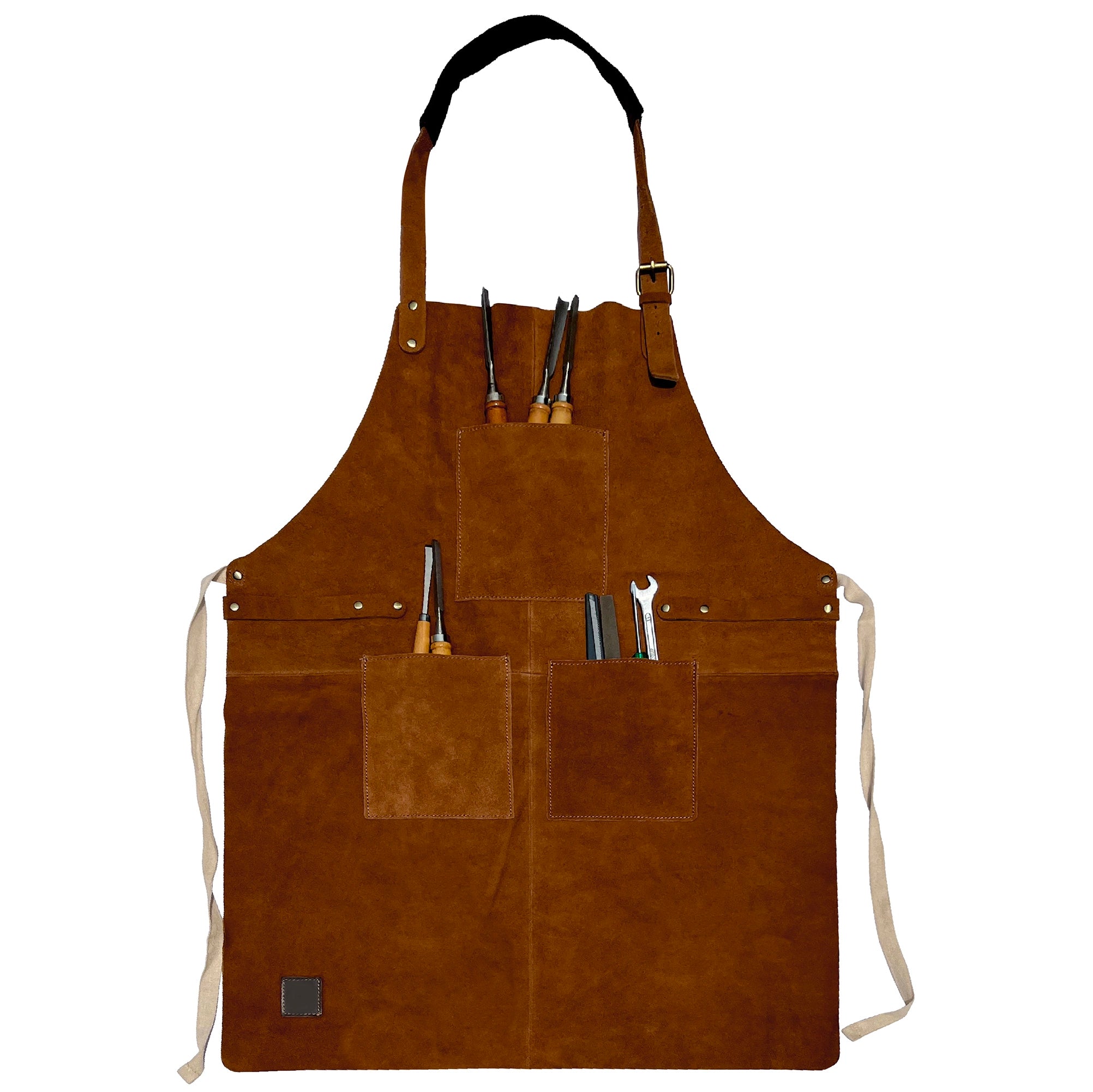
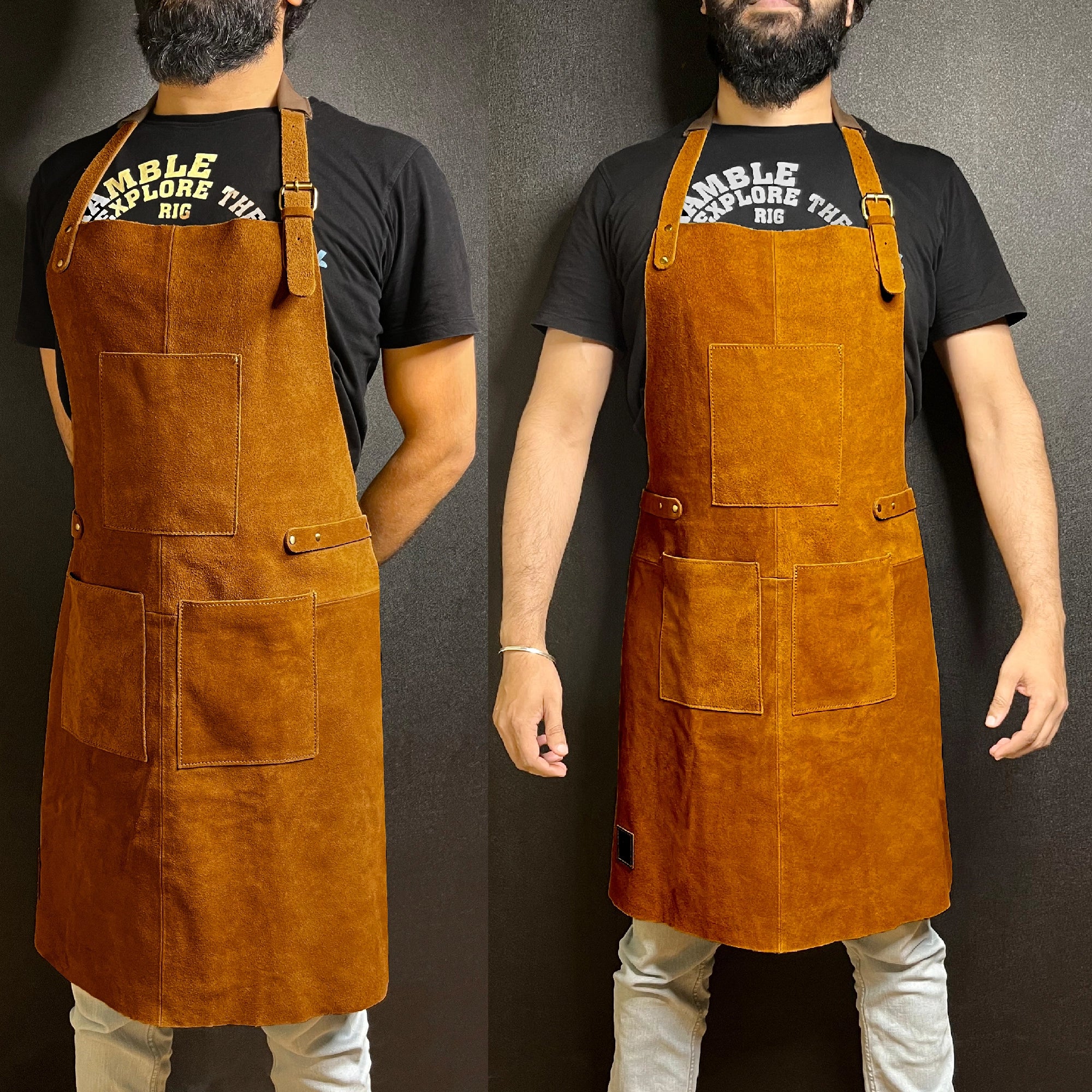
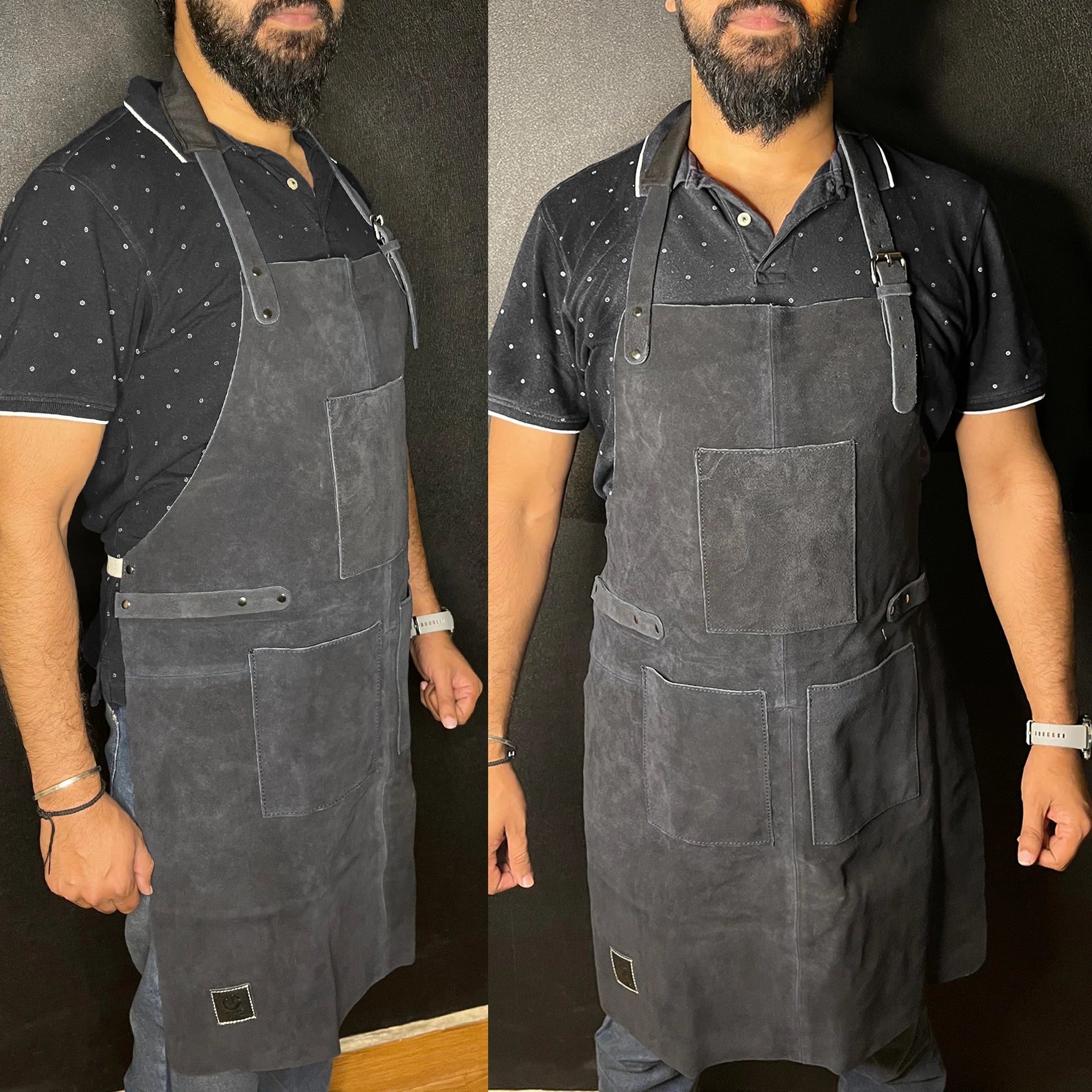
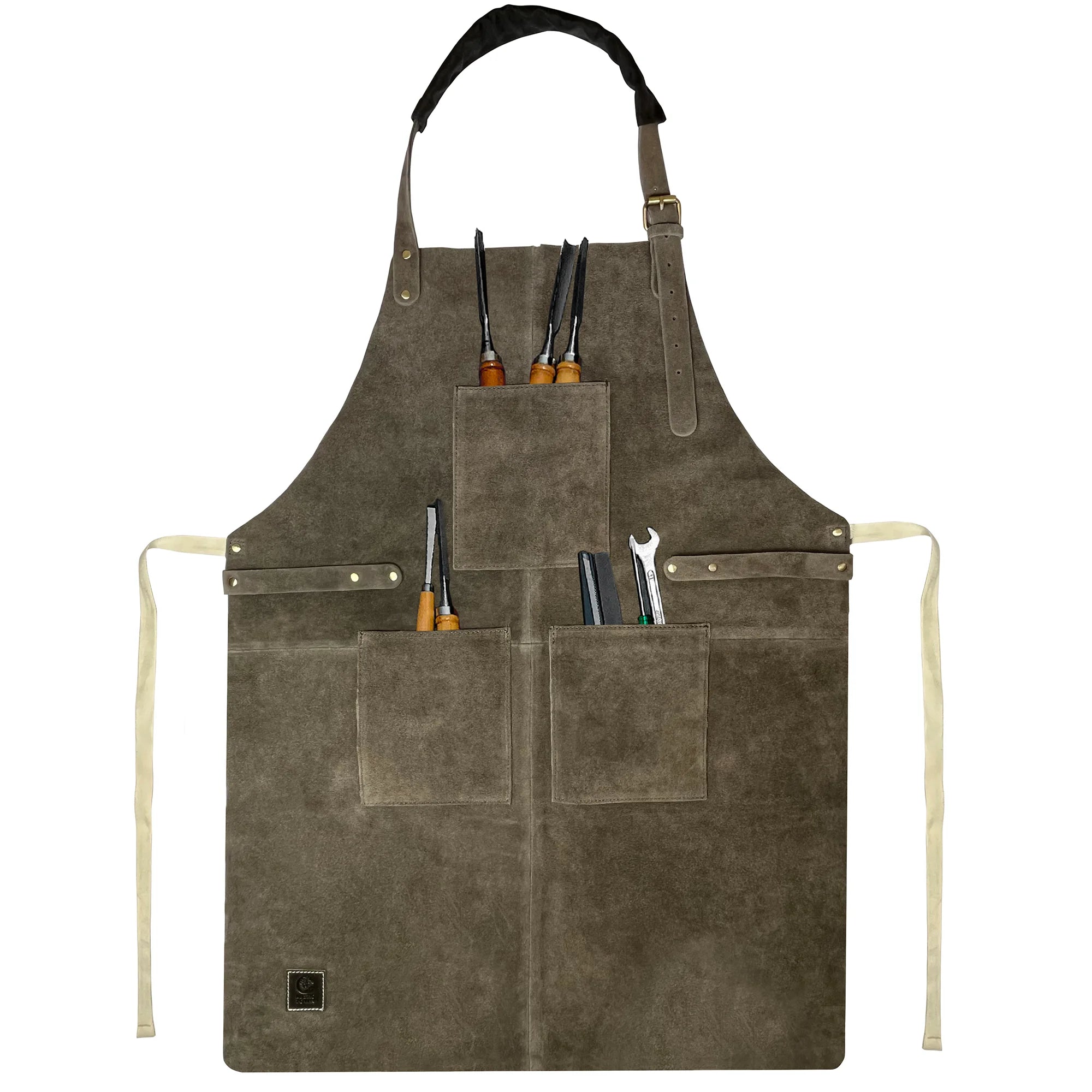
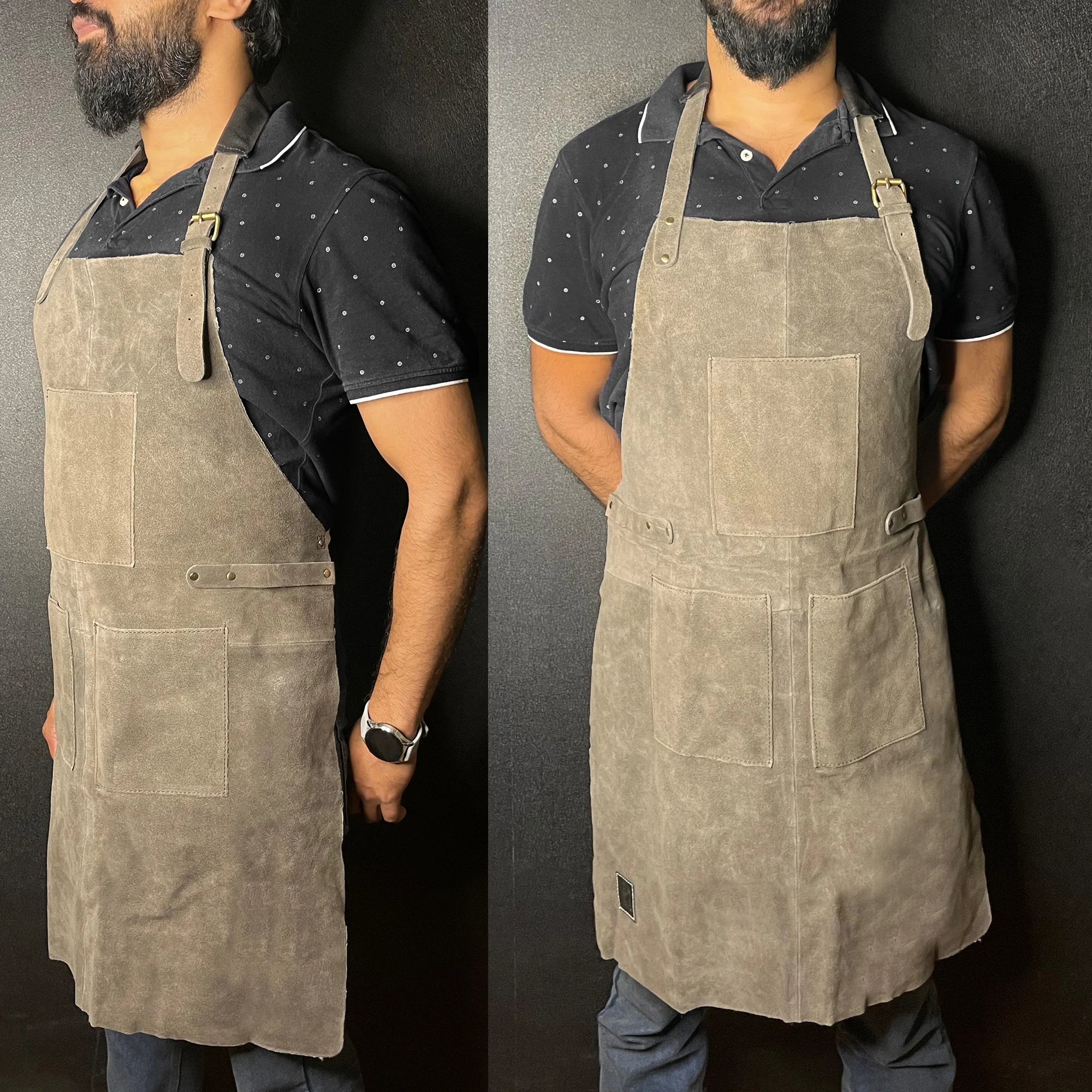
A leather work apron is a heavy-duty protective apron made from durable leather, worn by craftsmen, BBQ cooks, woodworkers, and artisans to shield clothing from sparks, spills, and sharp tools while keeping essentials in built-in pockets. Every apron in this collection is handstitched from rugged leather with adjustable straps and functional pockets - built to take years of hard, hot, messy work and age into character.
What Is a Leather Work Apron?
A leather work apron is a tough protective garment that covers the chest and lap, tied or strapped at the neck and waist, designed for work that ordinary fabric aprons cannot survive. Leather brings three things cotton cannot: it resists heat and sparks for grilling and forge work, it shrugs off sharp tools and splinters for woodworking, and it repels the oils, stains, and moisture of a busy workshop or kitchen. Built-in pockets keep tools, thermometers, or pens within reach, and the apron ages into a patinated, hard-worn look that marks a serious craftsman.
This collection runs 5 styles, from a natural grill apron at $38.99 to a heavy-duty full-grain buffalo workshop apron at $59.99, in colours from natural brown to blue and grey. Whether you grill, turn wood, work metal, pull espresso, or make in any medium, there is an apron built for the heat and mess of it.
Which Leather Apron Should I Choose?
The headline picks, each linked to its product page, with prices verified from the live collection:
The one-rule version: choose a Bennett full-grain buffalo apron ($59.99) for heavy professional BBQ or workshop use where maximum durability matters, and the Brooks Kuche grill apron ($38.99) for home grilling, lighter shop work, and an affordable entry to leather. All adjust to fit a wide range of body sizes, up to XXL.
What Work Is a Leather Apron Best For?
A leather apron suits any craft that involves heat, sharp tools, or mess - which is a wide range of work:
- BBQ and grilling - Heat and spark resistance protects against flare-ups and grease, the classic use
- Woodworking - Shrugs off splinters, tool edges, and sawdust while pockets hold chisels and pencils
- Metalwork and blacksmithing - Withstands sparks and heat that would burn through fabric
- Ceramics and pottery - Repels water, clay, and glaze that soak through cloth aprons
- Barista and kitchen work - Resists coffee, oil, and water while looking the part behind a counter
- Leatherwork, craft, and DIY - Protects against tools and adhesives in any maker's workshop
The common thread is that leather goes where fabric fails. If your craft involves anything hot, sharp, or staining, a leather apron is the one that survives it.
What Should You Look for in a Work Apron?
A work apron earns its keep through construction, since it takes real daily punishment.
Durable leather. The apron faces heat, sparks, tools, and stains, so it needs rugged hide. Full-grain buffalo leather, used in the Bennett aprons, is the toughest option and ages with character; all the aprons here use leather chosen to withstand hard use. Our guide to the types of leather explains the grades.
Functional pockets. Tool pockets keep what you need within reach - a thermometer and tongs for BBQ, chisels and a pencil for woodworking, a cloth and tamper for coffee. Look for pockets sized and placed for your craft.
Adjustable, comfortable straps. An apron worn for hours must fit well and not strain the neck. Adjustable neck and waist straps let one apron fit many body sizes - Rustic Town aprons adjust up to XXL - and cross-back or comfortable strap designs spread the weight.
Handstitched durability. A work apron is pulled, tied, and loaded daily, so strong stitching at the straps and pocket seams is what keeps it together through years of use.
How Do You Fit and Wear a Leather Apron?
A leather apron should sit comfortably without restricting movement. Adjust the neck strap so the bib covers your chest to roughly the collarbone without pulling, and tie or strap the waist so the apron stays put as you move, bend, and reach - snug but not tight. The adjustable straps on these aprons accommodate a wide range of body sizes up to XXL, so the same apron fits most wearers.
New leather is firm and will feel stiff at first; over the first few uses it softens and begins to mould to how you move, breaking in much like a good pair of leather boots. Load the pockets with the tools you reach for most, keeping heavier tools low and balanced so the apron hangs evenly. Worn and adjusted well, a leather apron becomes a comfortable second skin for work - protective, practical, and increasingly your own as it patinas.
How Do I Care for a Leather Apron?
A work apron lives a hard life, so basic care keeps it going for years:
- Wipe after use with a dry or barely damp cloth to remove grease, sawdust, and grime before they set
- Spot clean stains with a damp cloth or a leather-specific cleaner - never machine wash, which ruins leather
- Condition every few months with a leather balm to keep the apron supple despite heat and handling
- Dry naturally and store away from prolonged direct sunlight and direct heat sources
The full routine is in our guide on how to care for leather bags, and the deep-dive on whether water ruins leather is useful for aprons that meet grill grease, water, and weather. The marks a working apron picks up are part of its character - a well-worn leather apron tells the story of the work done in it.
Is a Leather Apron a Good Gift?
A leather apron is one of the best gifts for anyone who grills, makes, or crafts, because it is used in the activity they love and ages into a personal, hard-worn piece - and engraving makes it theirs. It is the standout gift for the BBQ enthusiast, the home woodworker, the maker, or the barista.
The natural occasions: Father's Day for the family griller, a graduation gift for a culinary or trade student, a milestone birthday, and the third wedding anniversary, where leather is traditional - browse 3rd anniversary gifts. Most aprons sit under gifts $50-$100, with the grill apron in gifts under $50. Pair an apron with a leather knife roll for the complete chef's or griller's gift set - the two pieces that define a serious kitchen and grill kit.
Who Is a Leather Apron NOT For?
Honest guidance. If you need an apron purely for wet work like dishwashing where it will be soaked constantly, a fully waterproof rubber or coated apron handles relentless water better than leather. If you need a lightweight apron for hot-weather all-day wear, a breathable cotton apron is cooler than leather. And if your work has no heat, sharp tools, or staining - light, clean tasks - a leather apron is more protection than you need. For grilling, woodworking, metalwork, pottery, and any craft with heat, sparks, sharp edges, or mess, a leather apron is the one that protects you and lasts.
Why Choose a Leather Apron Over Cotton or Canvas?
The difference shows the first time sparks fly or a tool slips. A cotton apron is light and cheap, but it offers almost no protection - embers burn through it, sharp tools cut it, and oil and stains soak straight in, so it is replaced often and protects little. Canvas is tougher than cotton and handles general mess well, but it still lacks real heat and spark resistance and absorbs liquids over time.
Leather is in a different category. It resists the heat and sparks of a grill or forge, turns away the edges and splinters of woodworking, and repels the oils and moisture that ruin fabric. It is the only apron material that genuinely protects against the hazards of hot, sharp, messy work. There is a durability dividend too: a cotton apron is a consumable replaced yearly, while a leather apron is bought once and worn for years, growing more characterful with every session. And there is the look - a patinated leather apron marks a craftsman in a way a printed cotton one never will. For light, clean, cool tasks, fabric is fine; for real craft work with heat, tools, and mess, leather is the apron that protects and lasts.
How Do You Build a Griller's or Maker's Kit?
A leather apron is the foundation of a serious griller's or craftsman's kit, the piece worn for every session that everything else works around. For the griller, the apron pairs with quality BBQ tools - tongs, a thermometer, a basting brush - kept in the apron's own pockets, and with a leather knife roll holding the knives for prep and carving. Together the apron and knife roll are the two pieces that define a serious cook's kit, which is exactly why they make the definitive culinary gift set.
For the woodworker or maker, the apron carries the hand tools reached for constantly - chisels, pencil, tape, marking knife - while larger tools live on the bench. The principle is the same across crafts: build the kit around quality, lasting pieces, and a first investment serves through years of work. Because the apron is leather, it softens and patinas alongside the skills, becoming a personal record of the work done in it - the burn mark from one cook, the stain from another, each one part of the apron's story and the maker's.