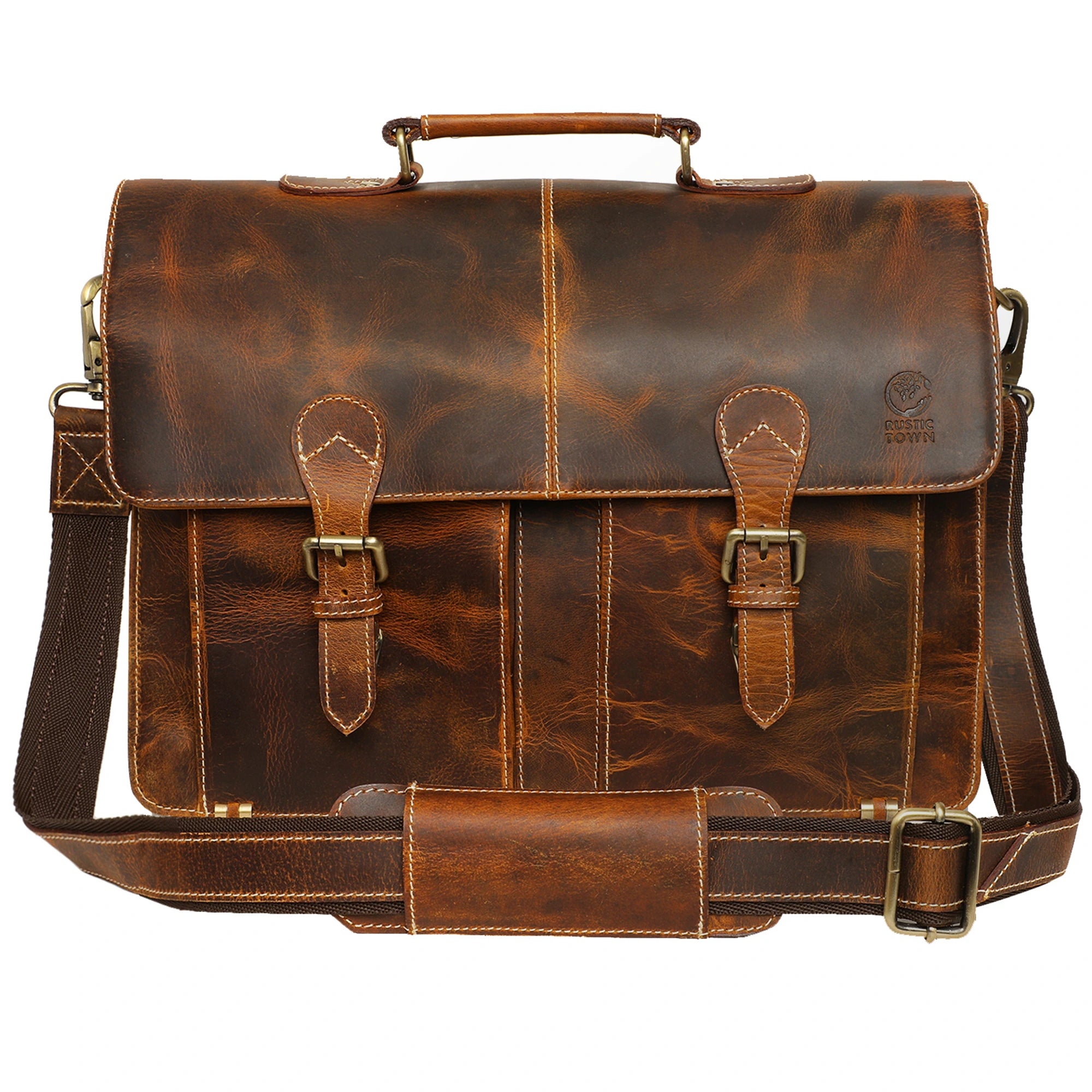
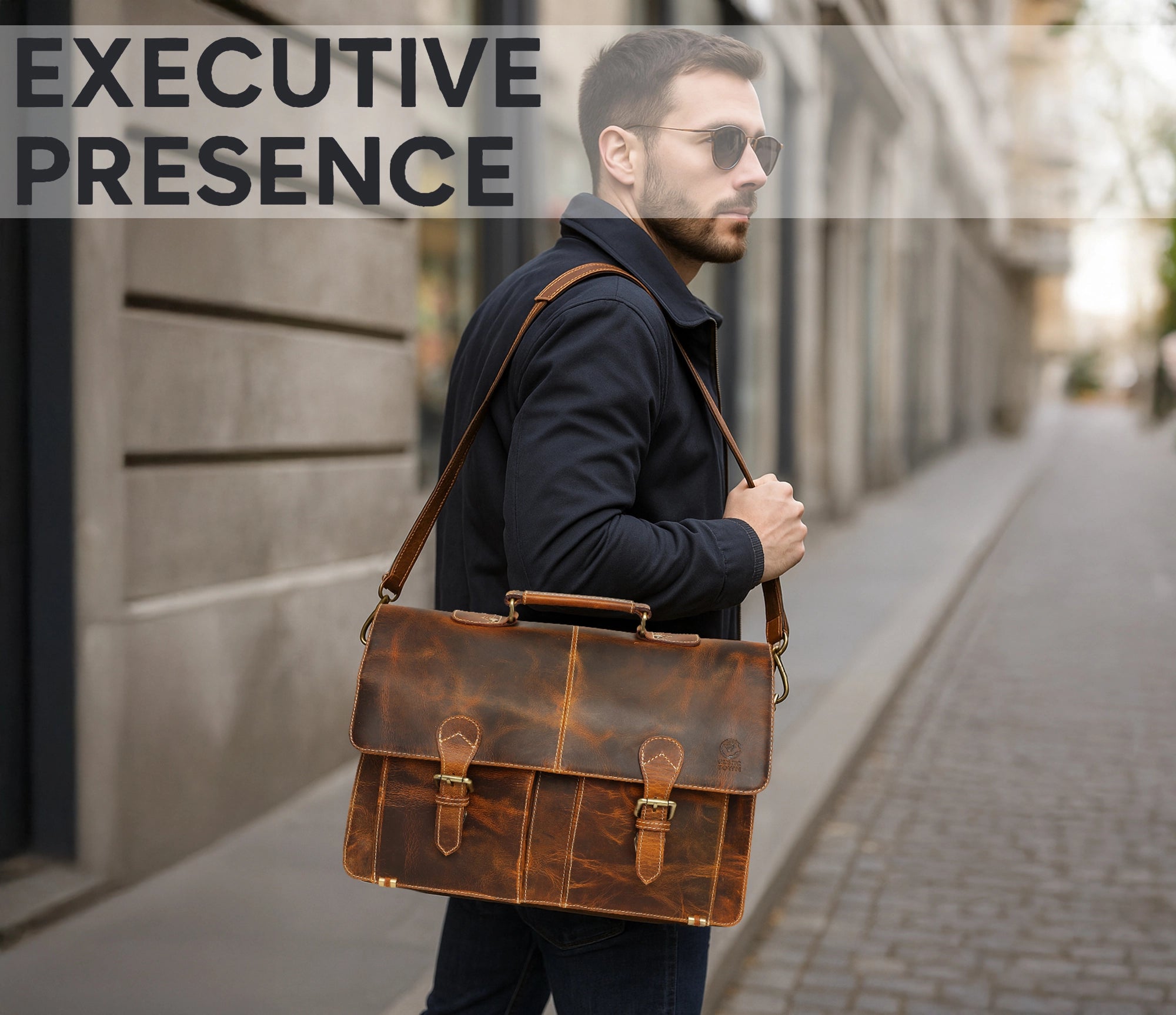
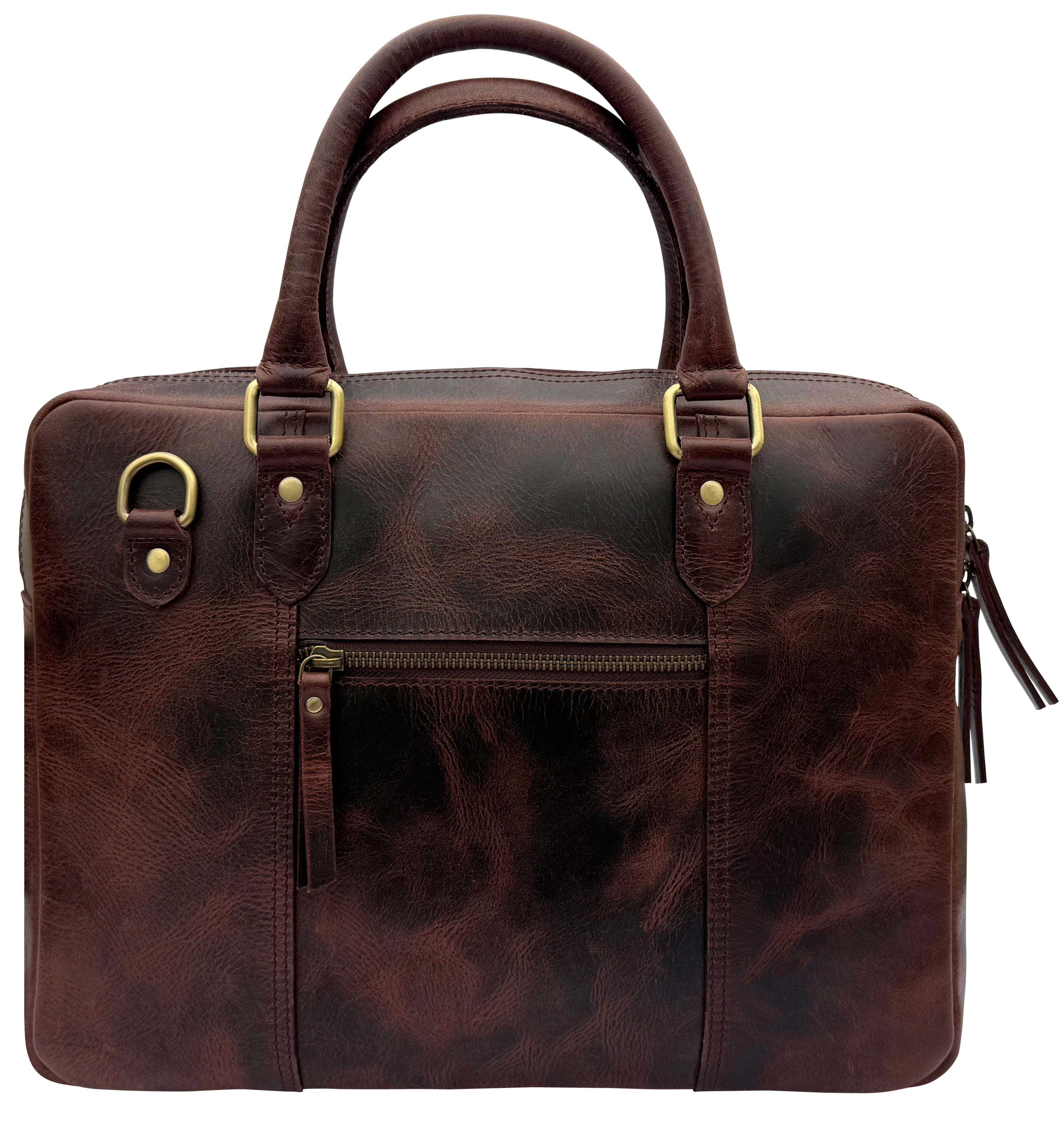
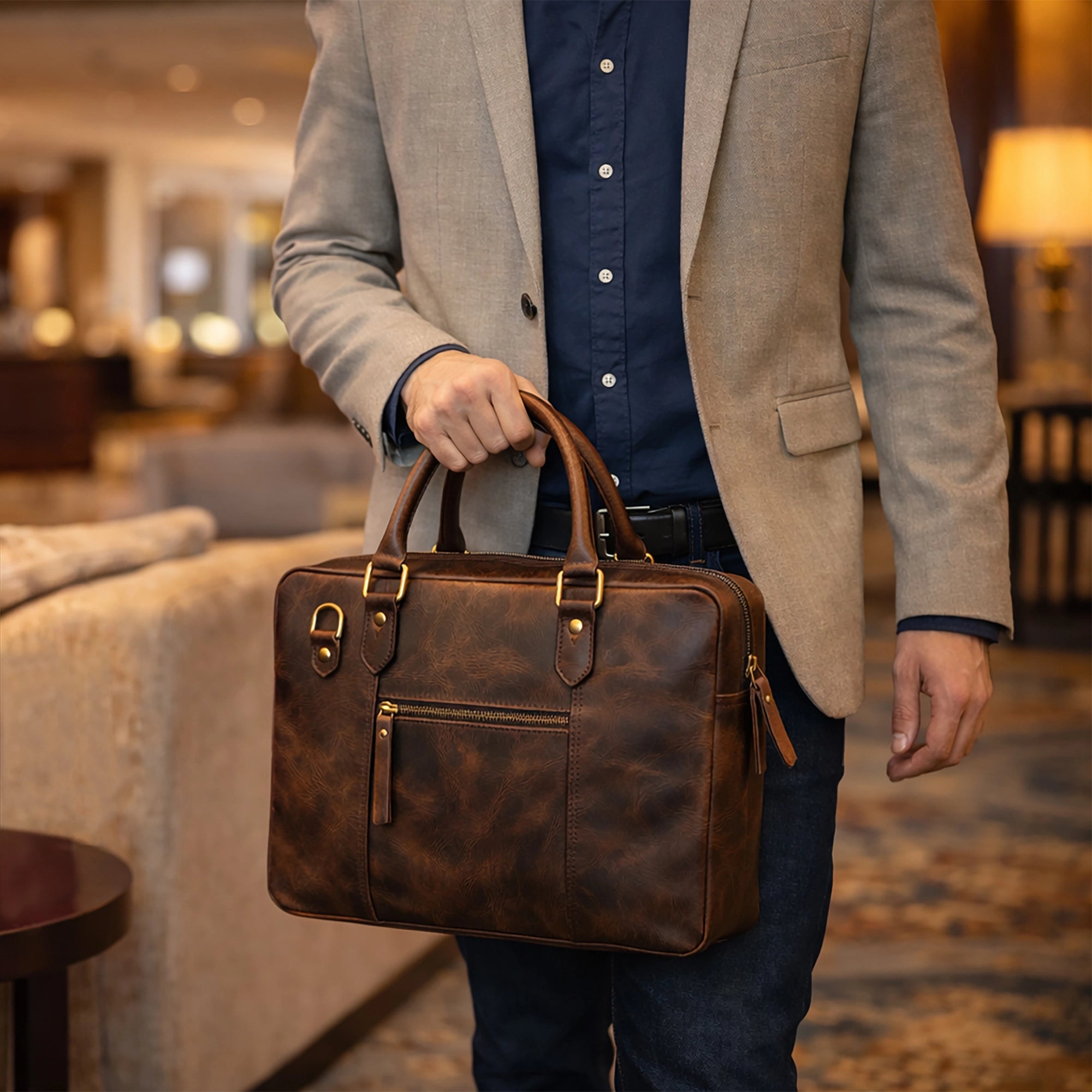
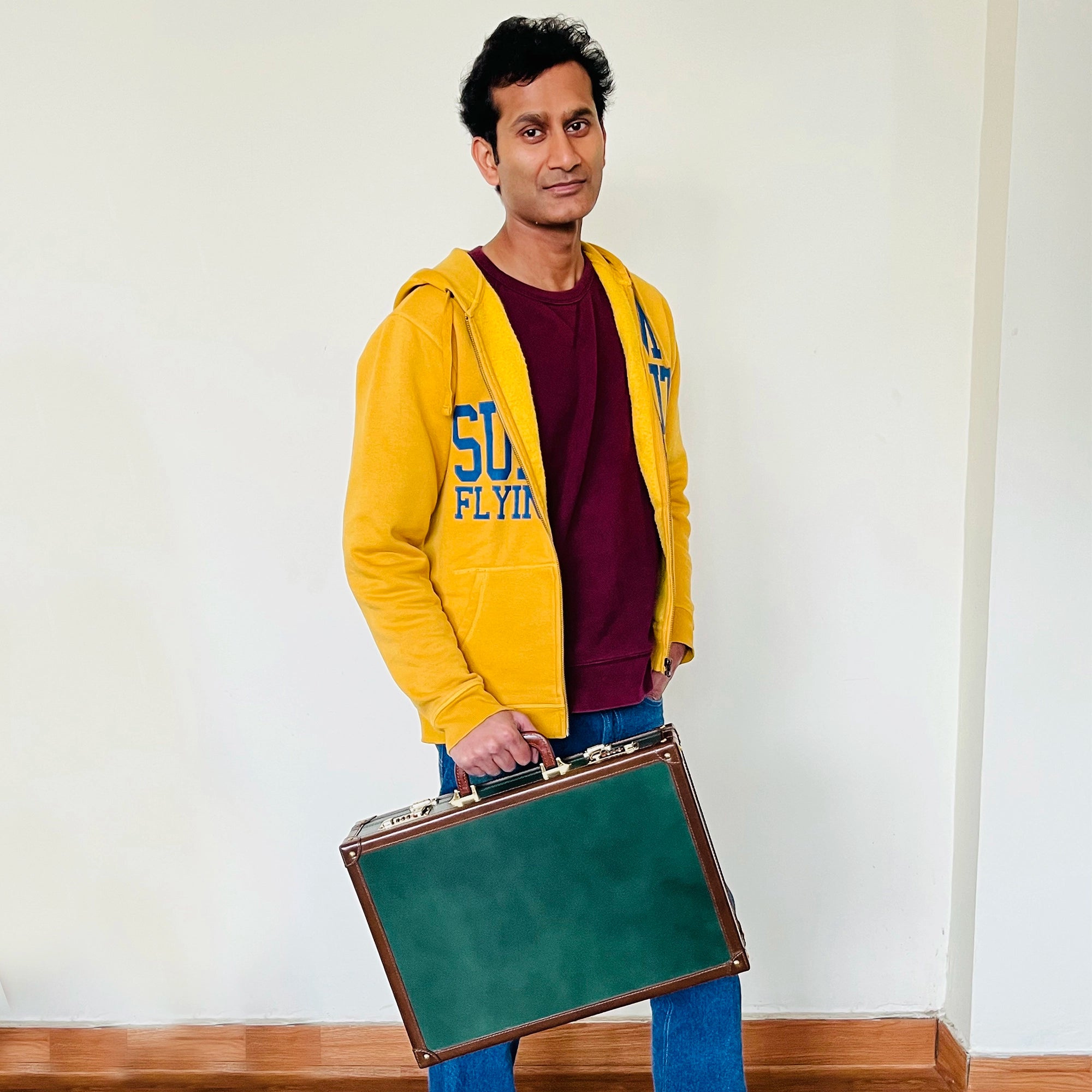
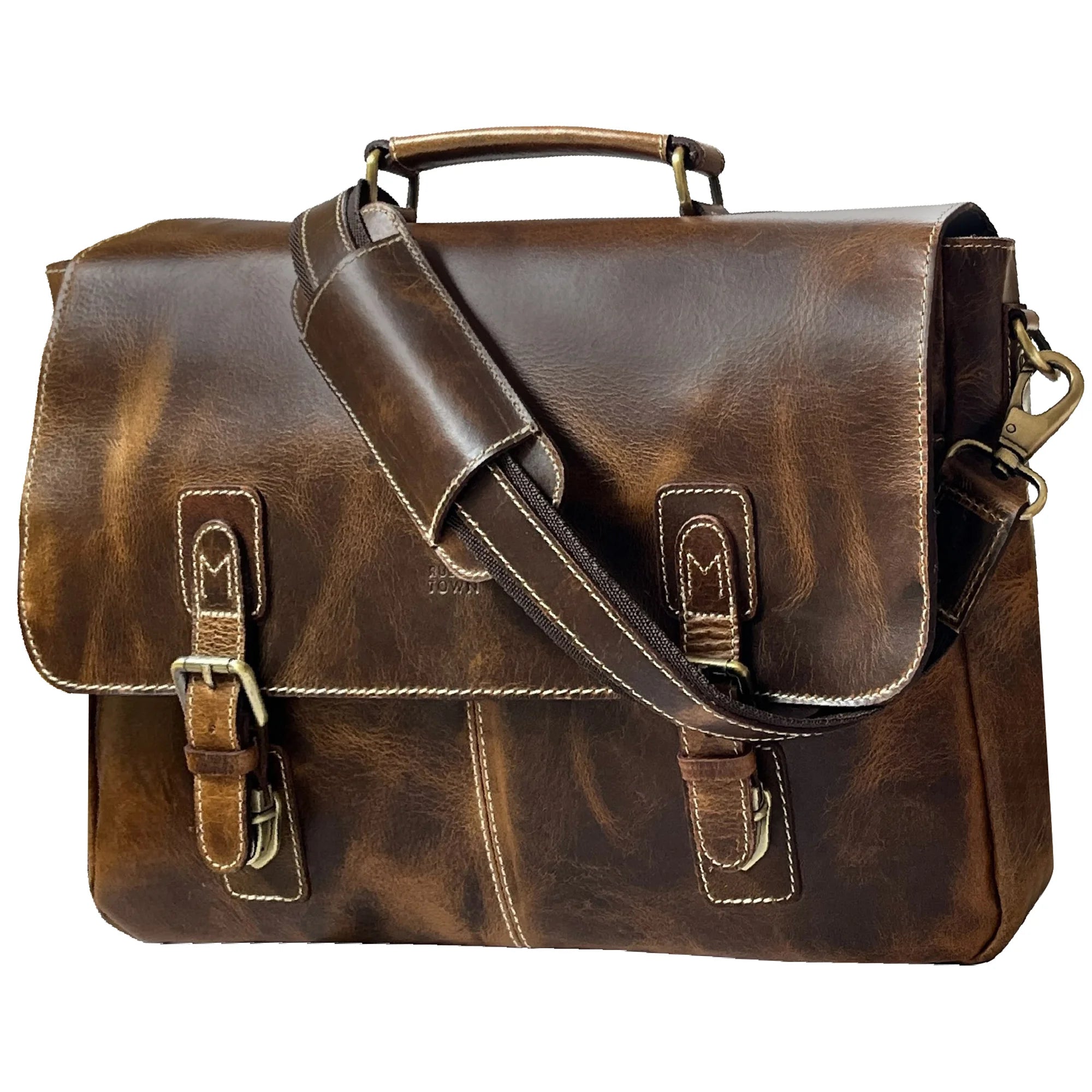
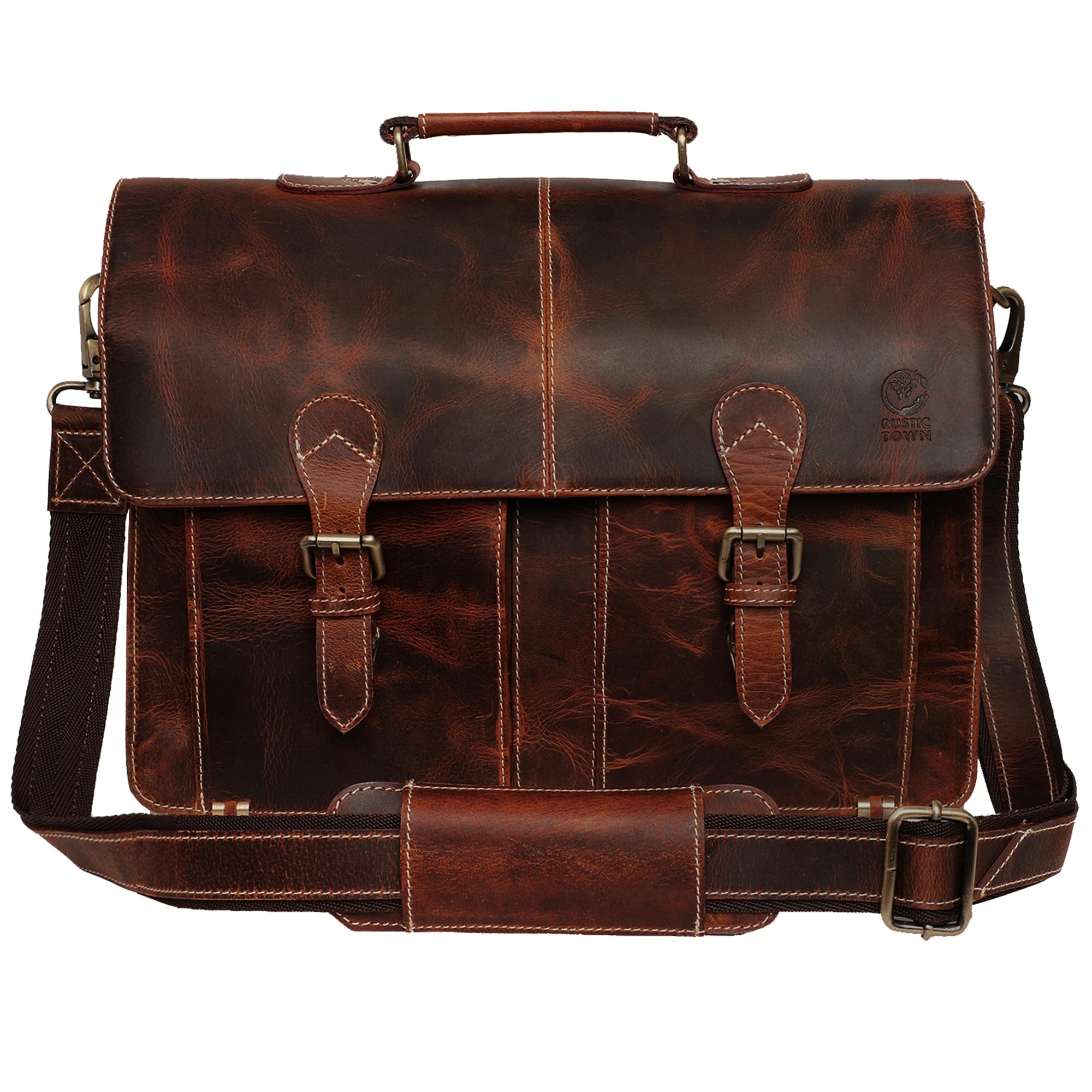
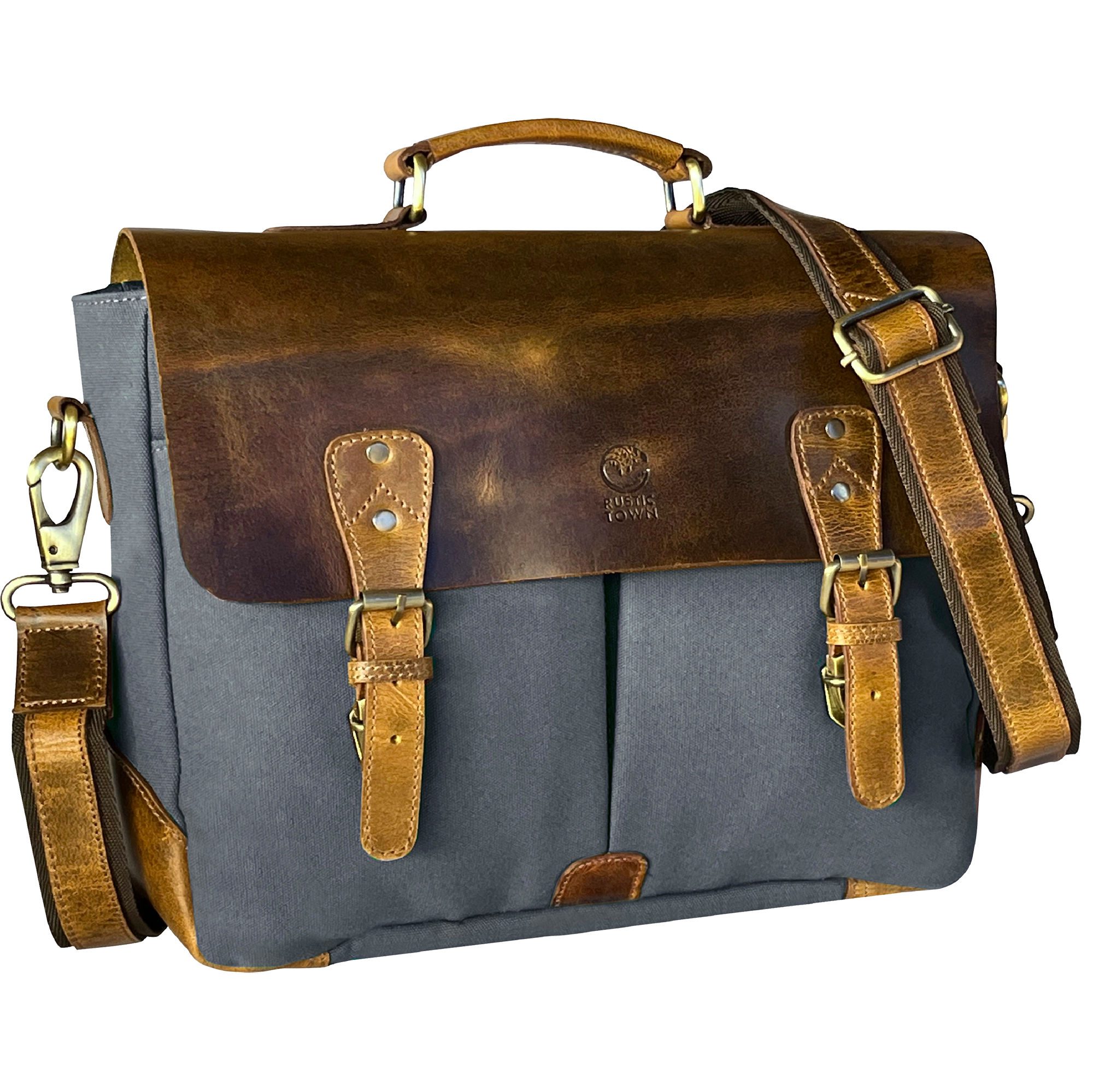
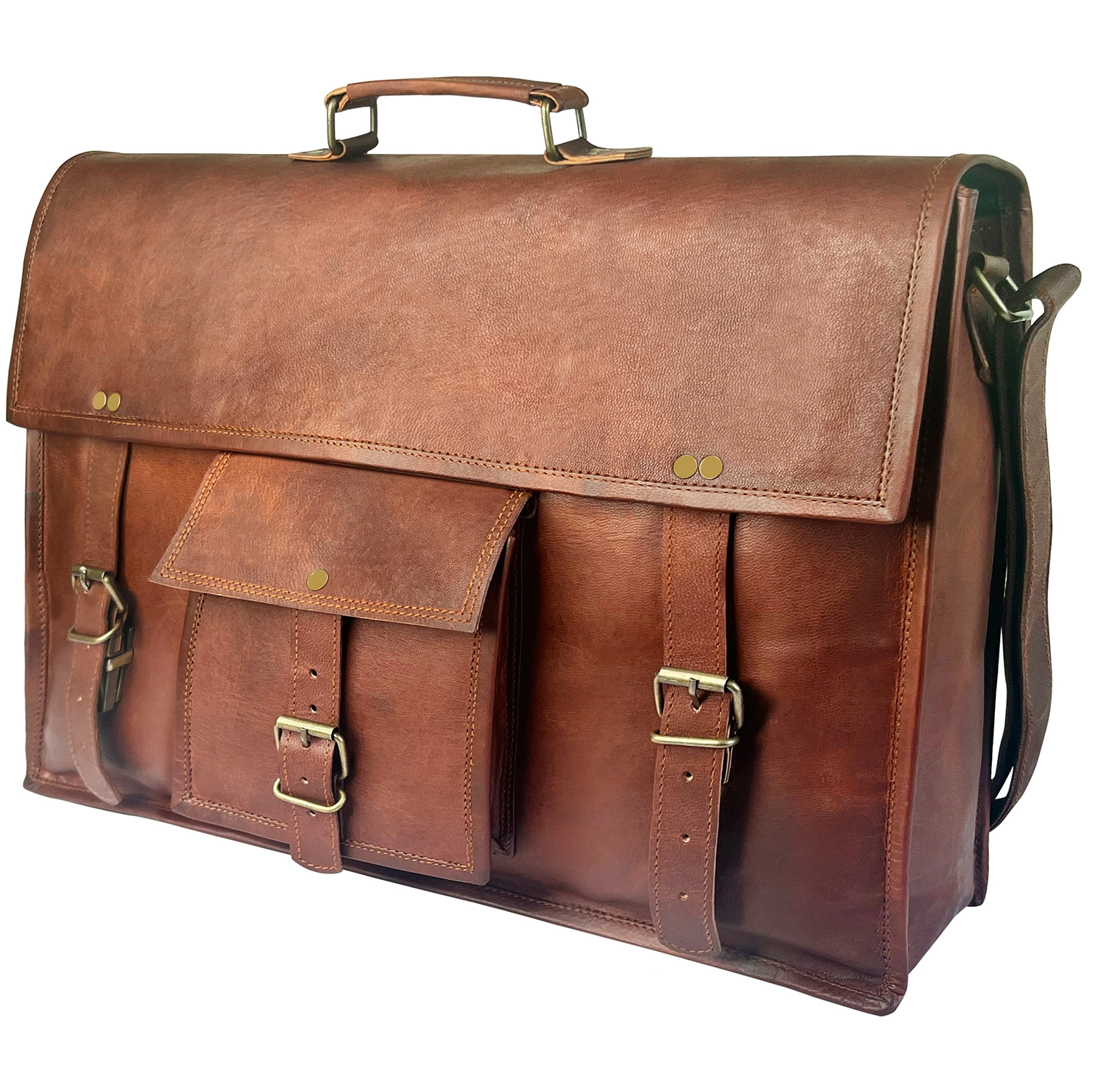
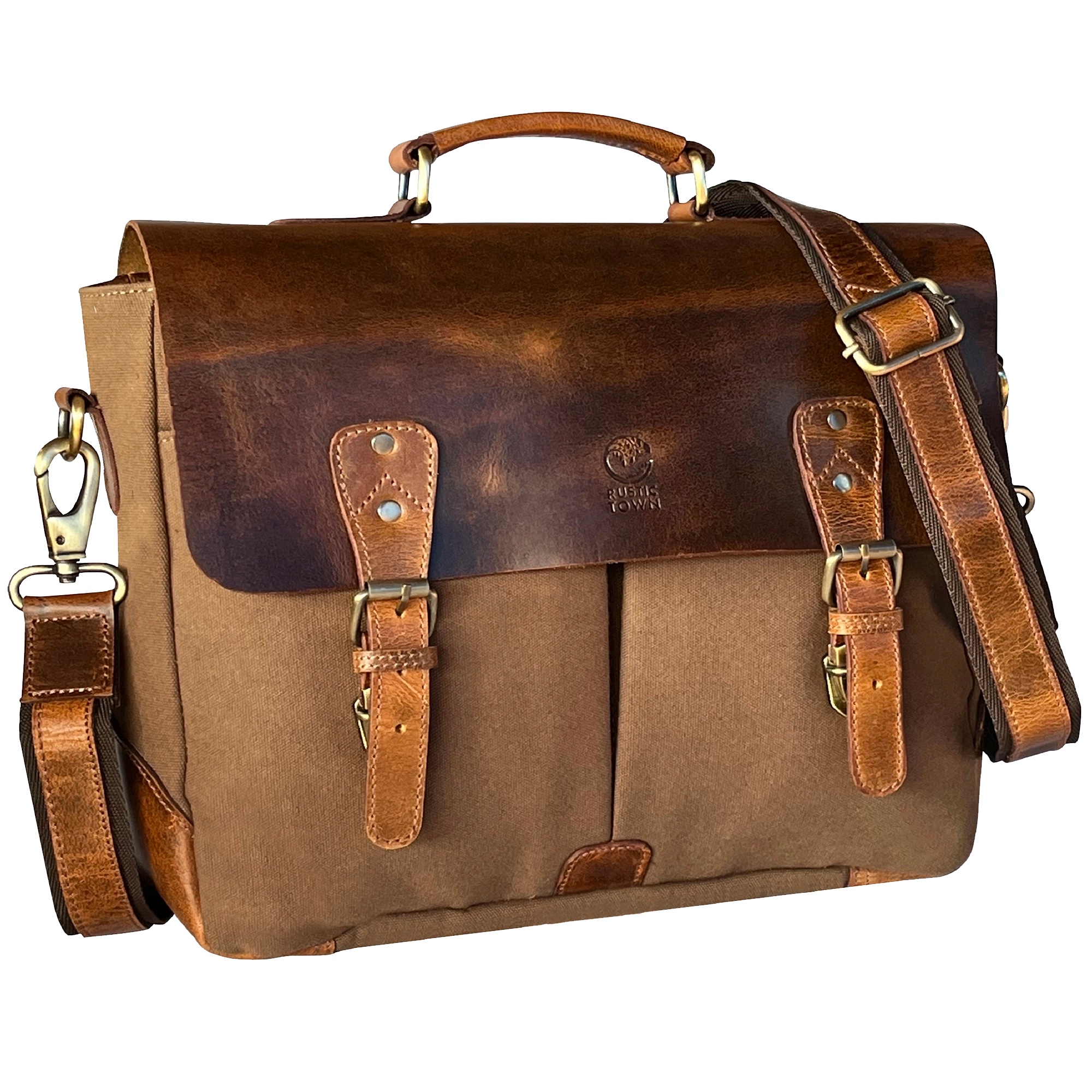
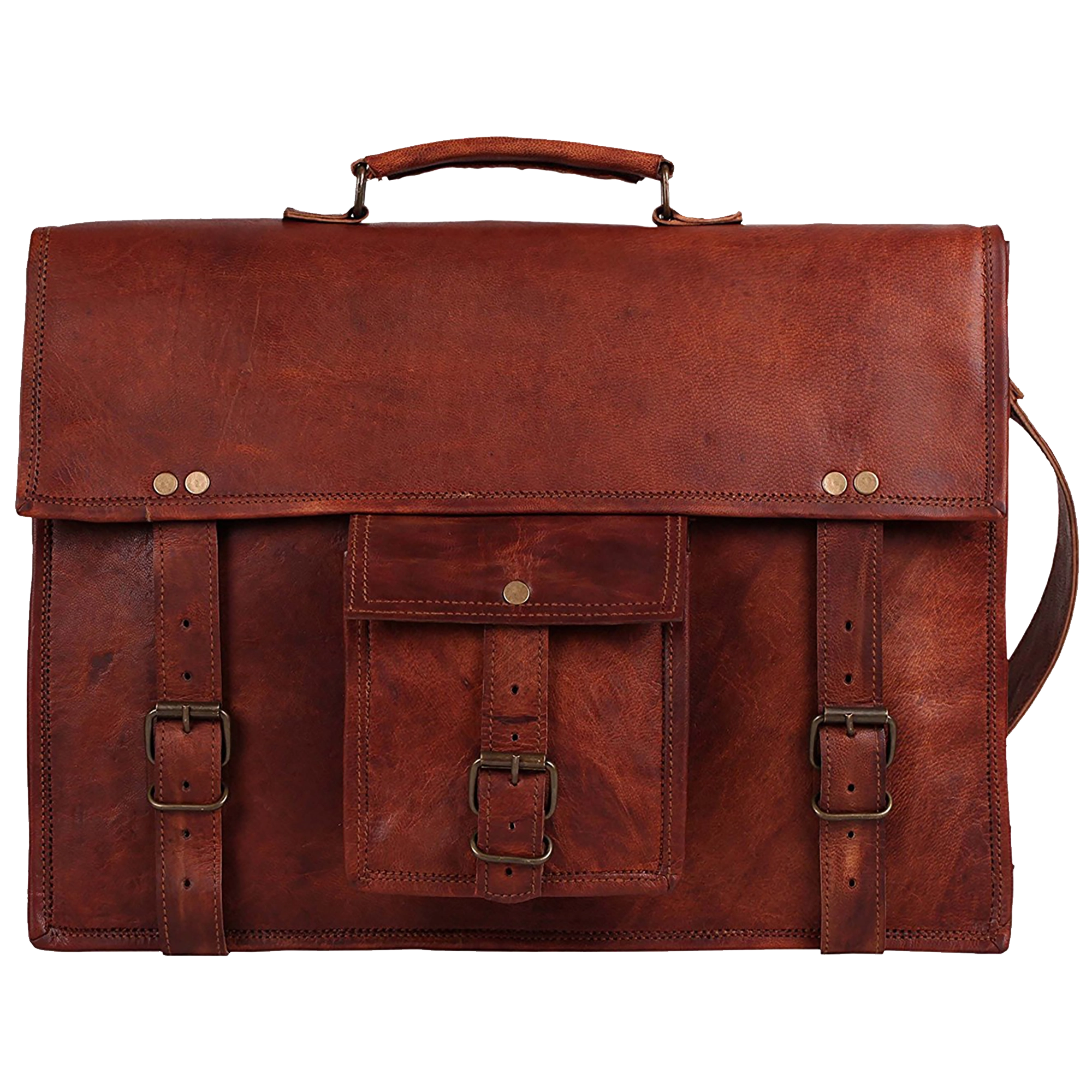
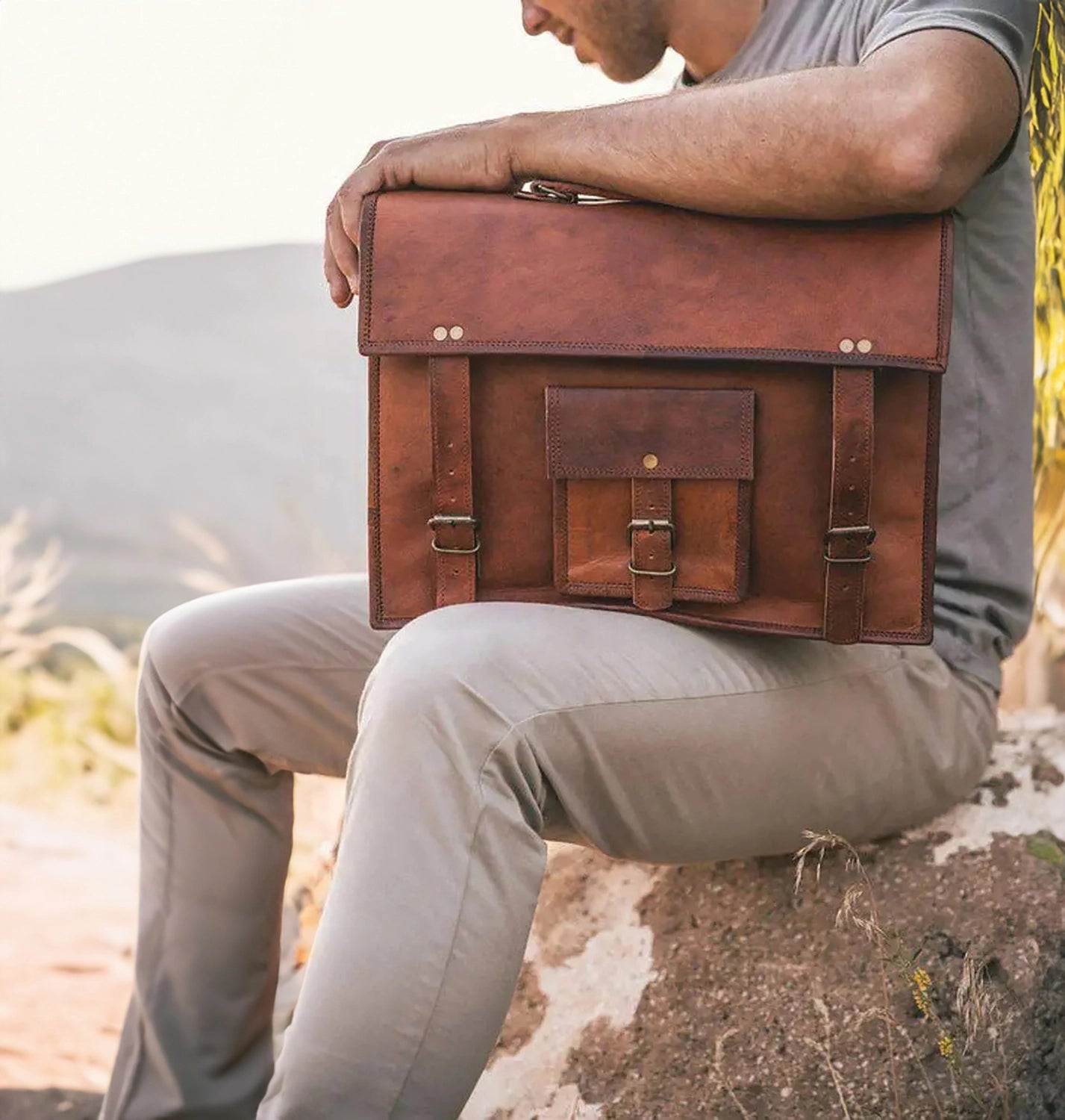
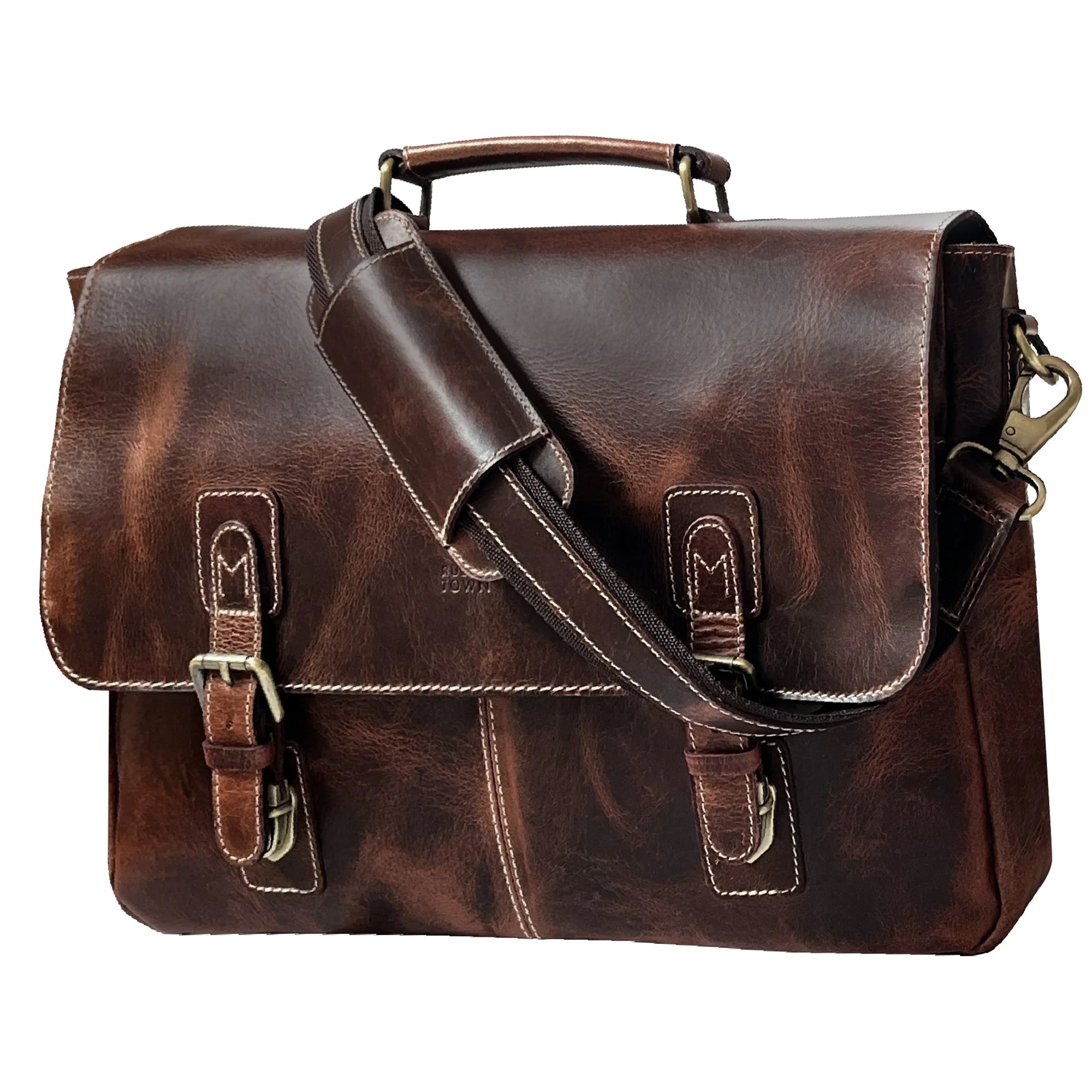
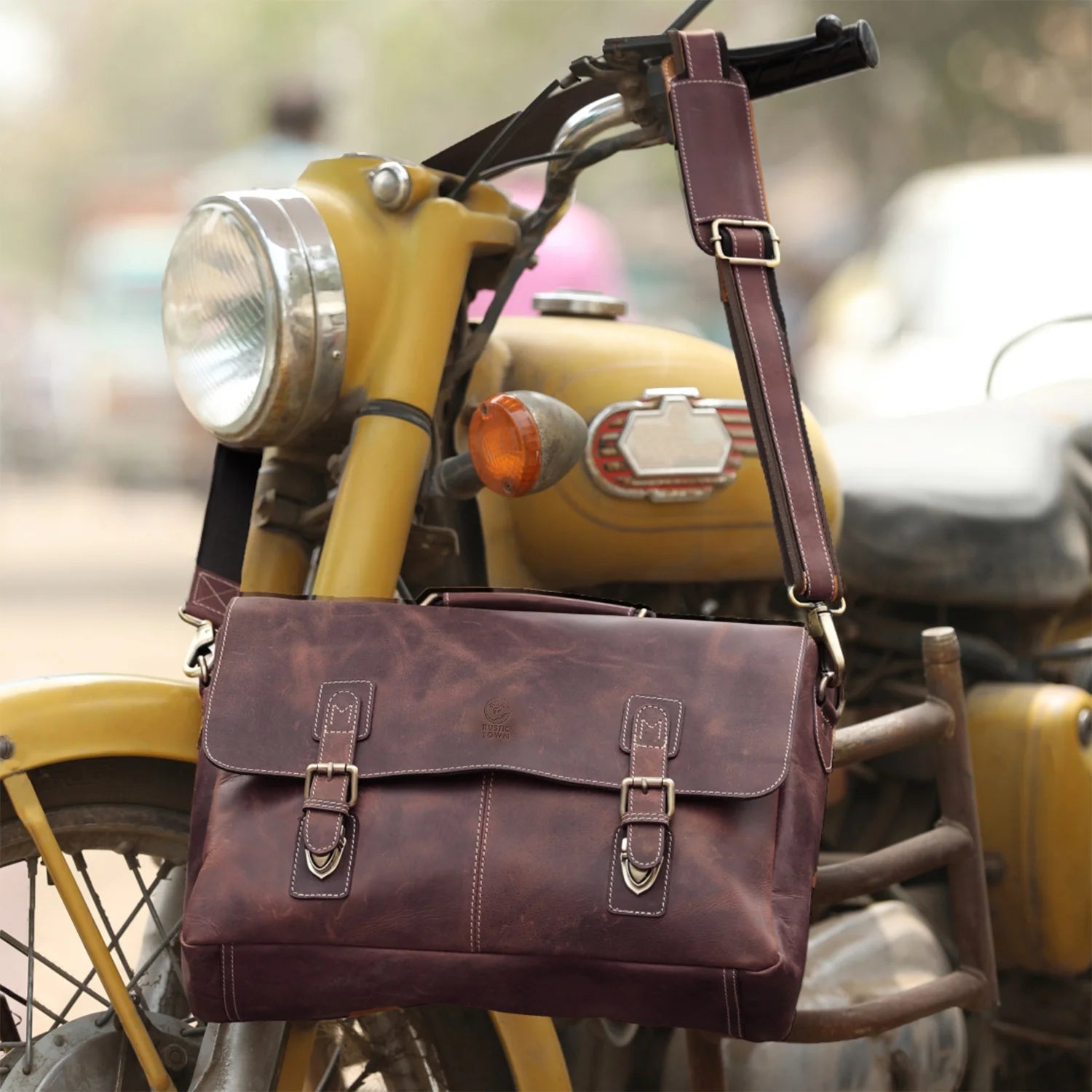
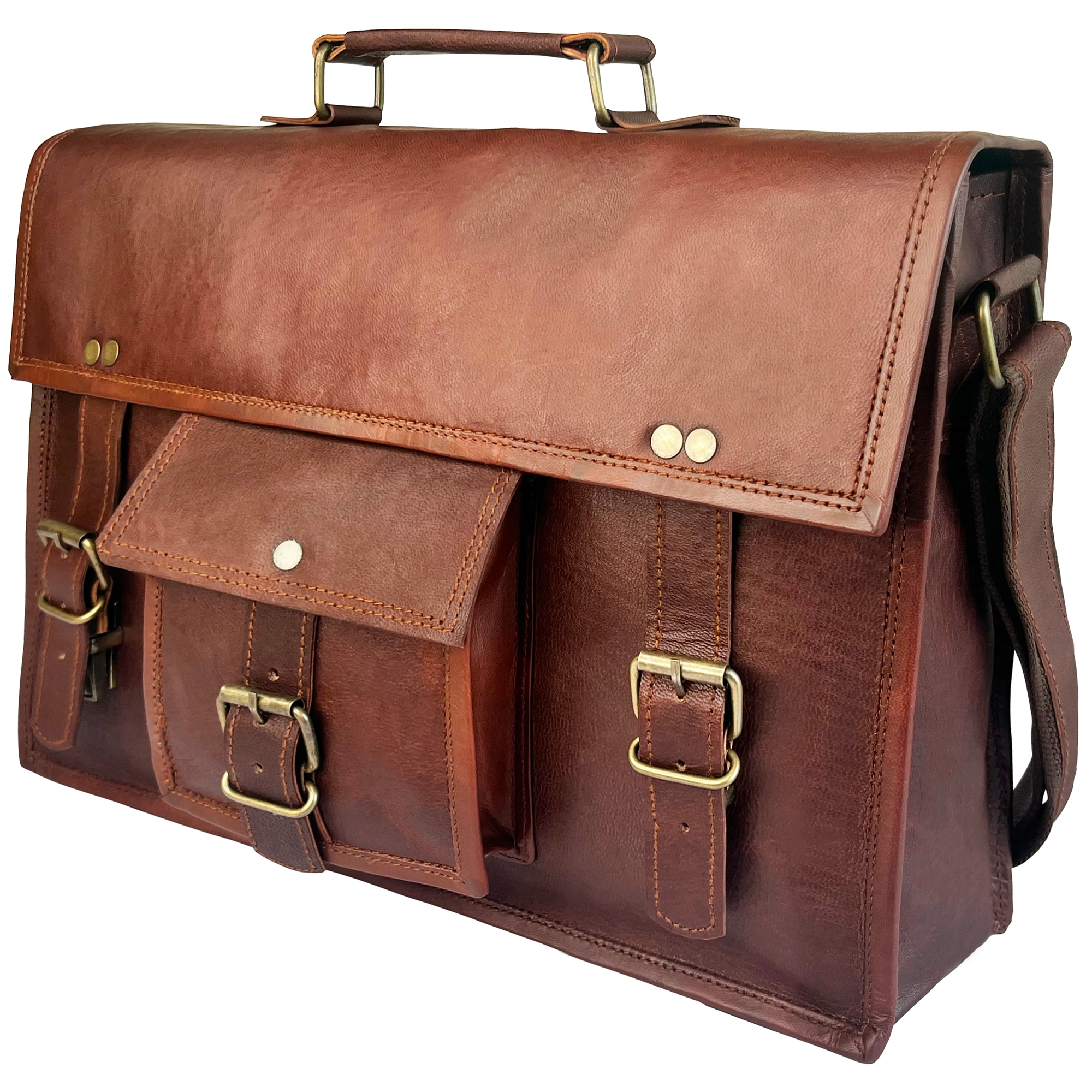
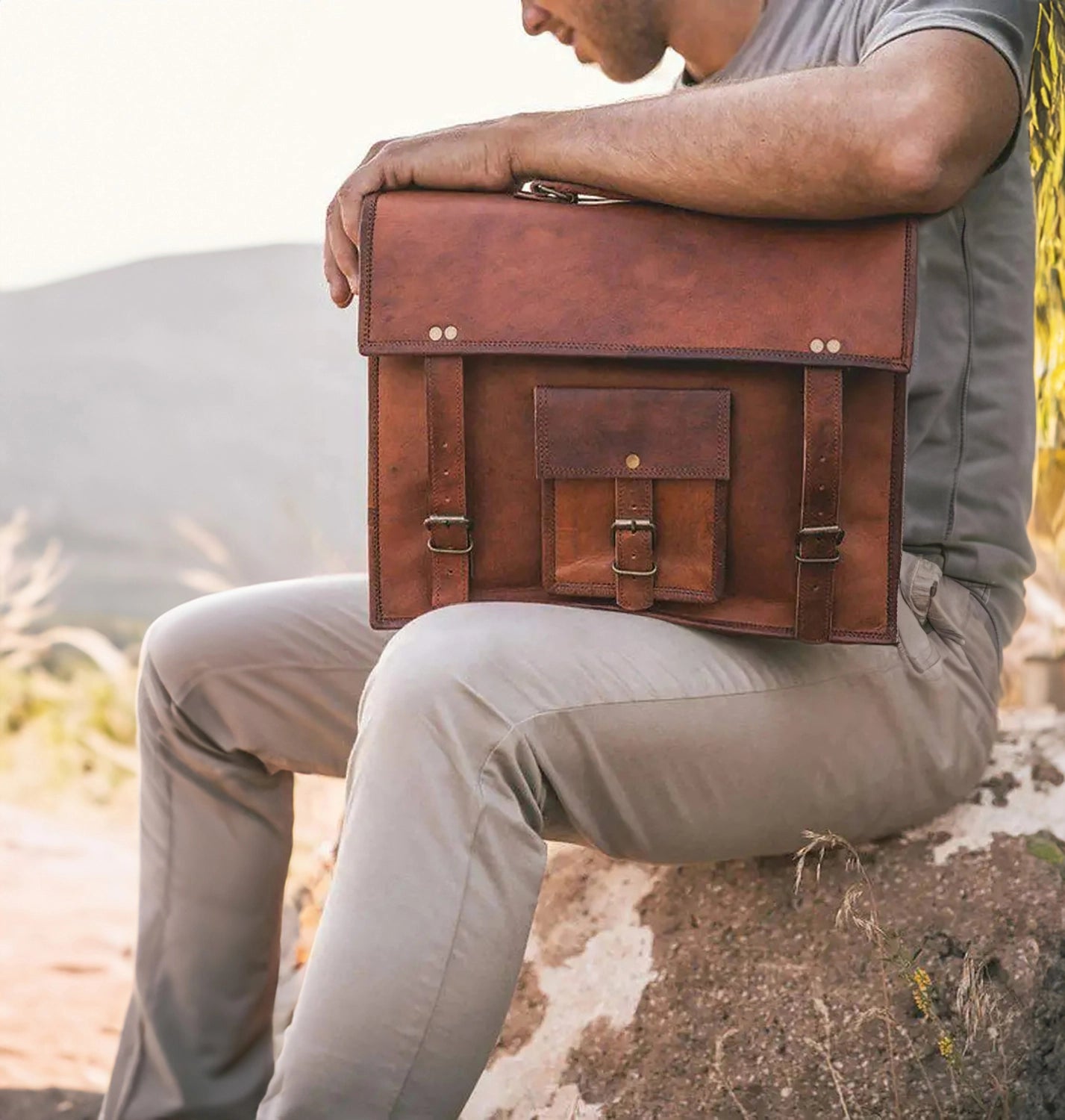
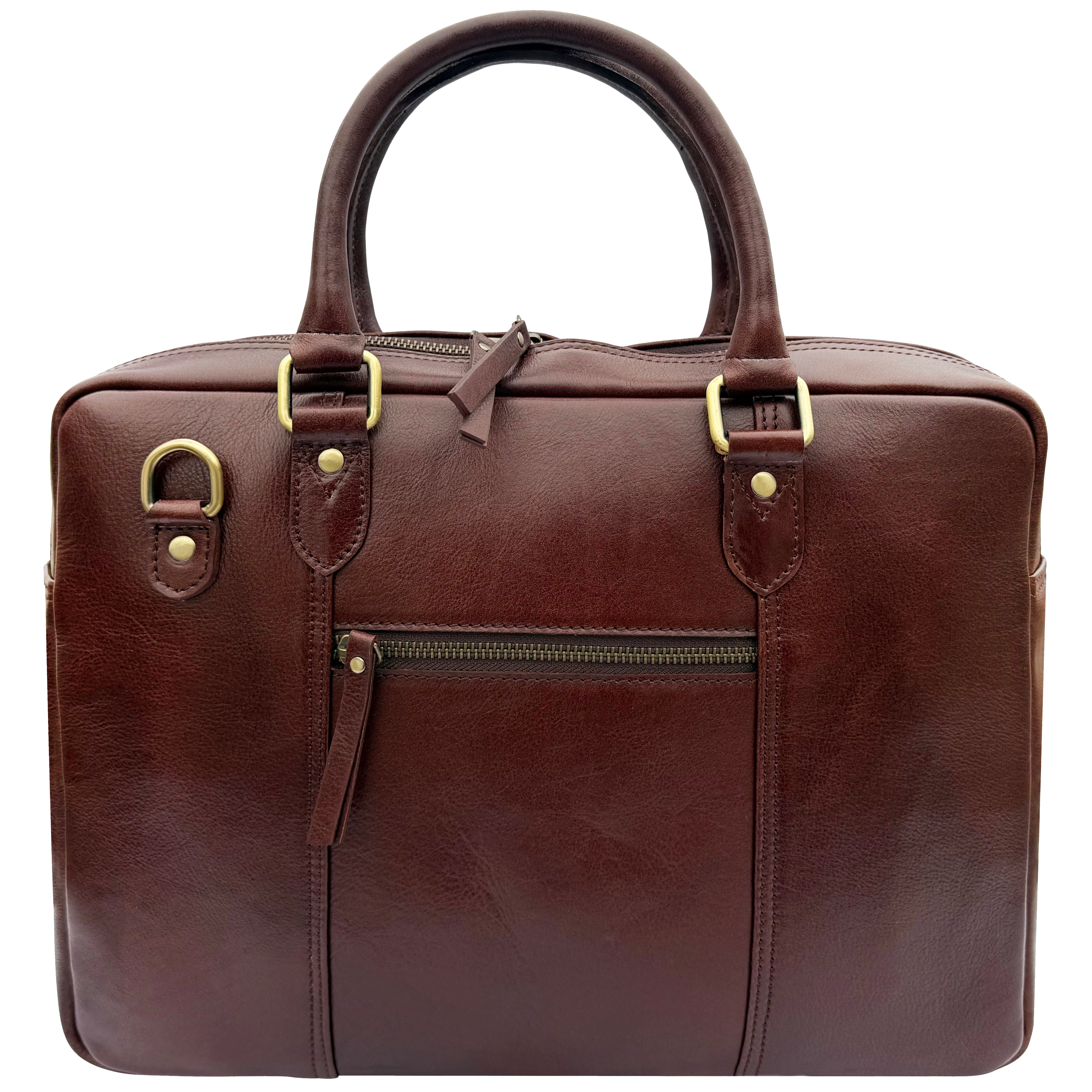
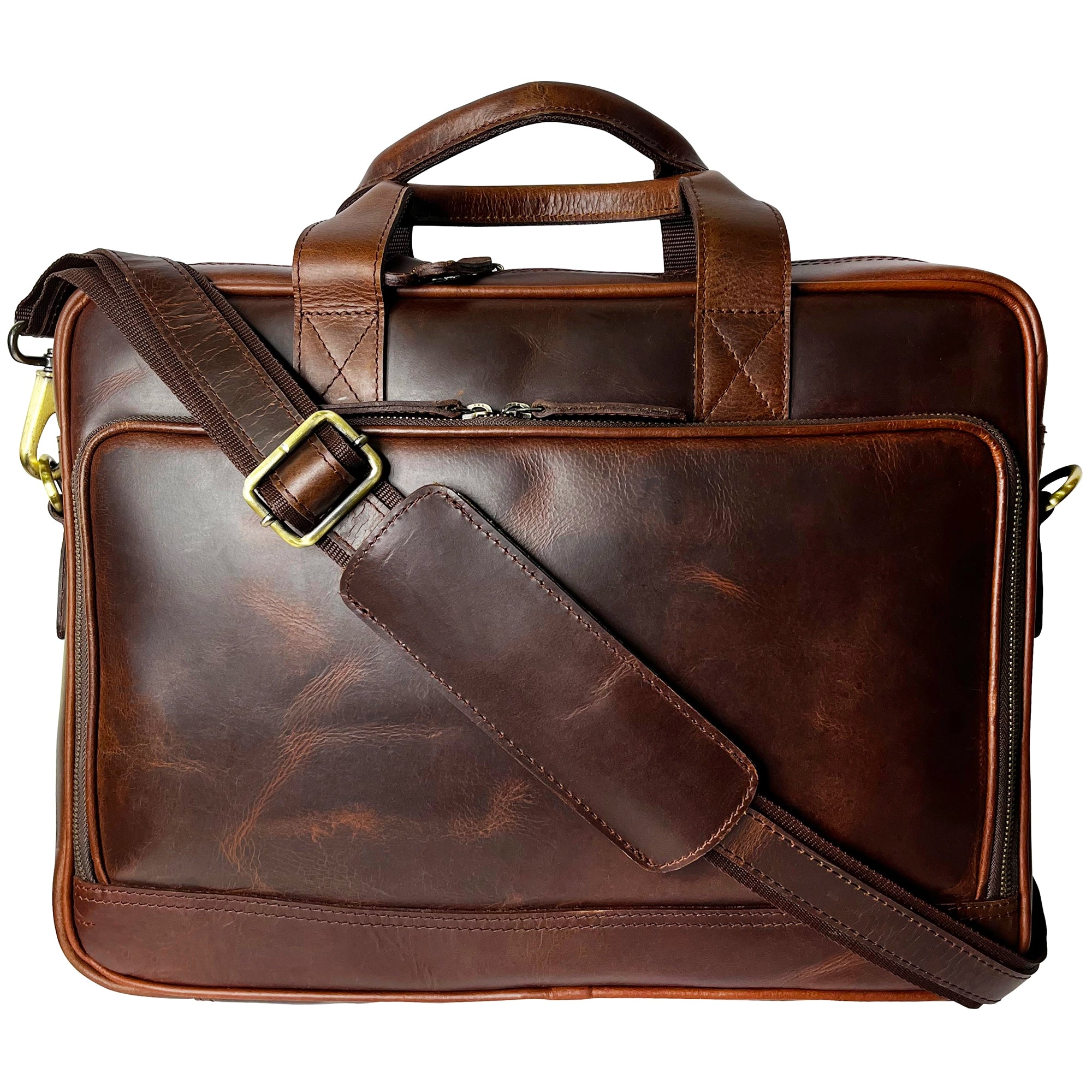
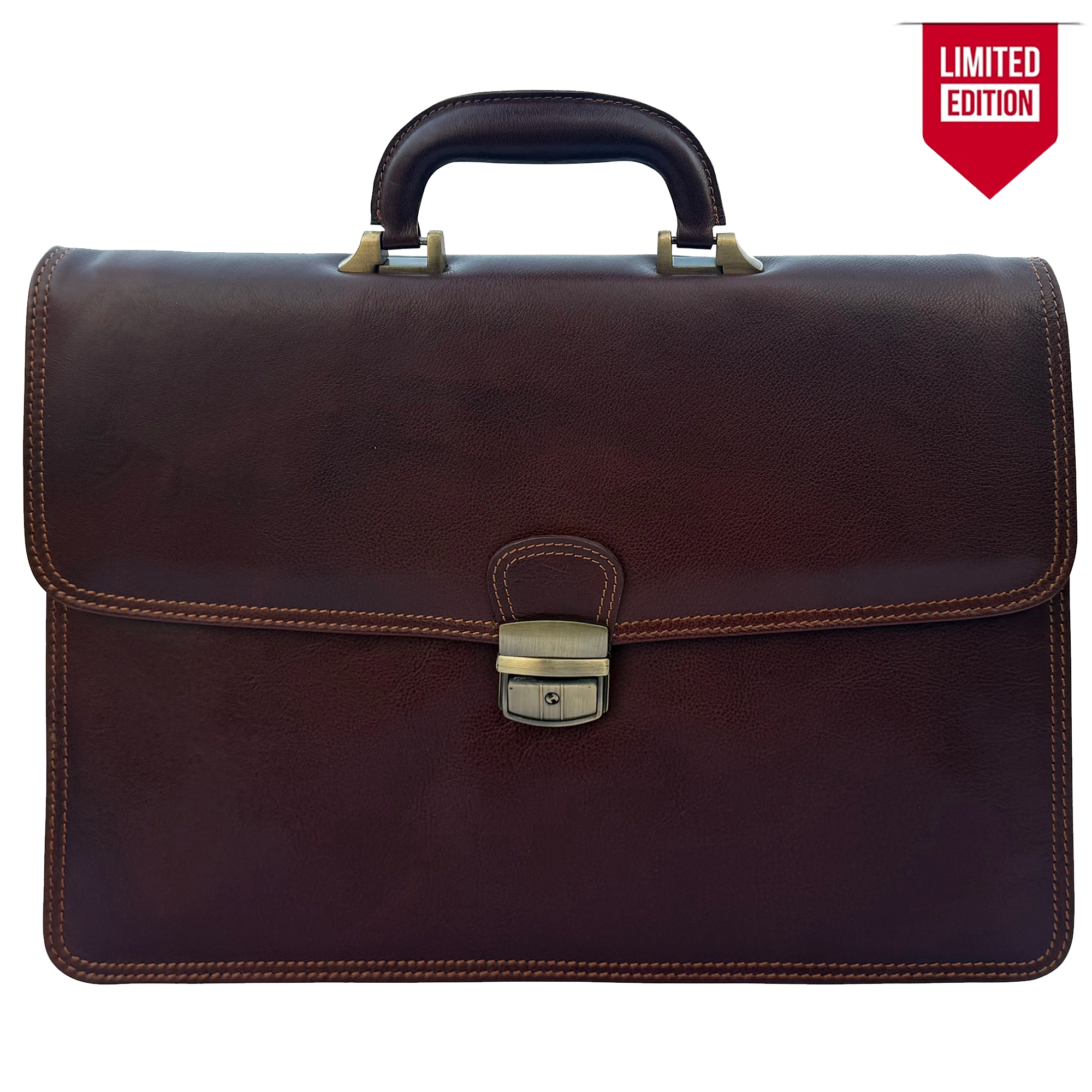
A leather satchel is a structured crossbody bag with a fold-over flap and buckled front, sized for a laptop and documents - the heritage silhouette that bridges casual messenger bags and formal briefcases. Every satchel in this collection is handcrafted from full-grain, vegetable-tanned leather and built to last decades, not seasons.
What Is a Leather Satchel?
The satchel is the oldest work bag still in daily use. Oxford and Cambridge students carried buckled leather satchels centuries before the briefcase existed, and the design has barely needed to change since: a structured body that protects its contents, a fold-over flap that shields against weather, and a long strap that carries the weight crossbody. The modern version adds one thing the scholars never needed - a padded compartment for a 16 inch laptop.
What separates a satchel from a messenger bag is structure and silhouette. A messenger bag is soft and casual; a satchel holds its rectangular shape, sits more formally against tailoring, and presents cleanly when set down in a meeting. What separates it from a briefcase is versatility - a satchel is worn crossbody and moves through a commute the way a briefcase never can.
Which Leather Satchel Should I Choose?
The collection runs from $89.99 to $199.00 across 17 styles. These are the headline picks:
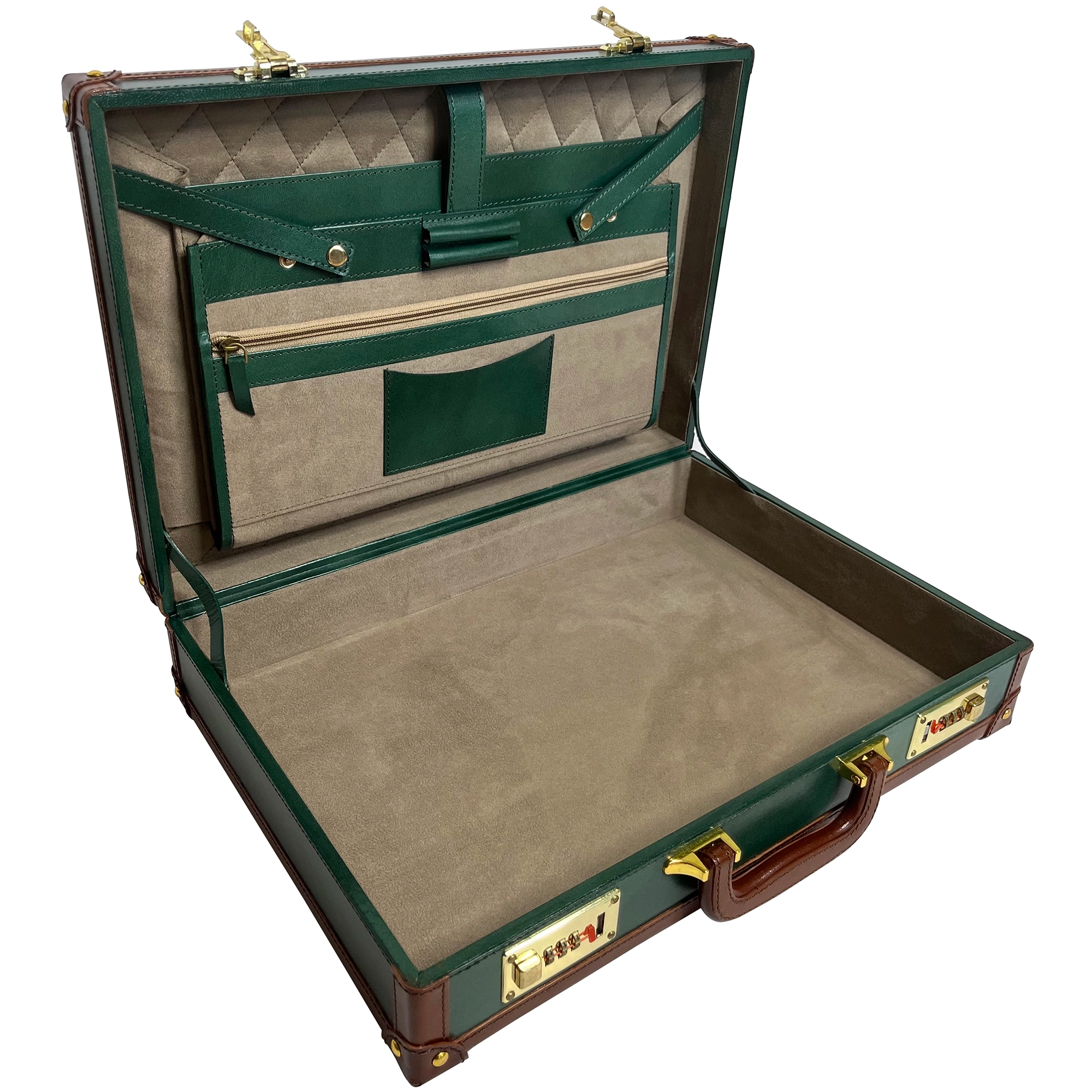
The one-rule version: most buyers should start with the Wayne Premium - it is the bag this collection is known for. Choose the Vintage Classic if budget leads, and the Aston if you want the most formal piece Rustic Town makes.
What Makes a Quality Leather Satchel for Men?
Four things decide whether a satchel lasts three years or thirty, and every bag here is built around all four.
Full-grain leather. These satchels use full-grain buffalo leather - the outermost, strongest layer of the hide with the natural grain intact. Full-grain is the only grade that improves with age, darkening and burnishing into a patina. Lower grades go the other way: "genuine leather" wears flat and dull, and bonded leather peels within two to three years. Our guide to the types of leather explains the grades in depth.
Vegetable tanning. Rustic Town leather is processed with traditional vegetable tanning rather than chrome - slower and more expensive, but eco-friendly and the reason the leather carries its distinctive natural character and earthy tone.
Structure that survives. A satchel's value is its shape. These bags use firm leather panels and reinforced bases so the silhouette stays crisp under a laptop's weight instead of slumping into a sack within a month.
Solid hardware and stitching. Buckles and rings are solid metal, and stress points - strap anchors, flap corners, base seams - are double-stitched. Hardware is where cheap bags die first; it is not where these do.
Satchel, Messenger Bag, or Briefcase - Which Suits You?
- Satchel - Profile: Structured, crossbody | Formality: Business-casual to formal | Shop: This collection
- Messenger bag - Profile: Soft, crossbody | Formality: Casual to business-casual | Shop: Leather messenger bags
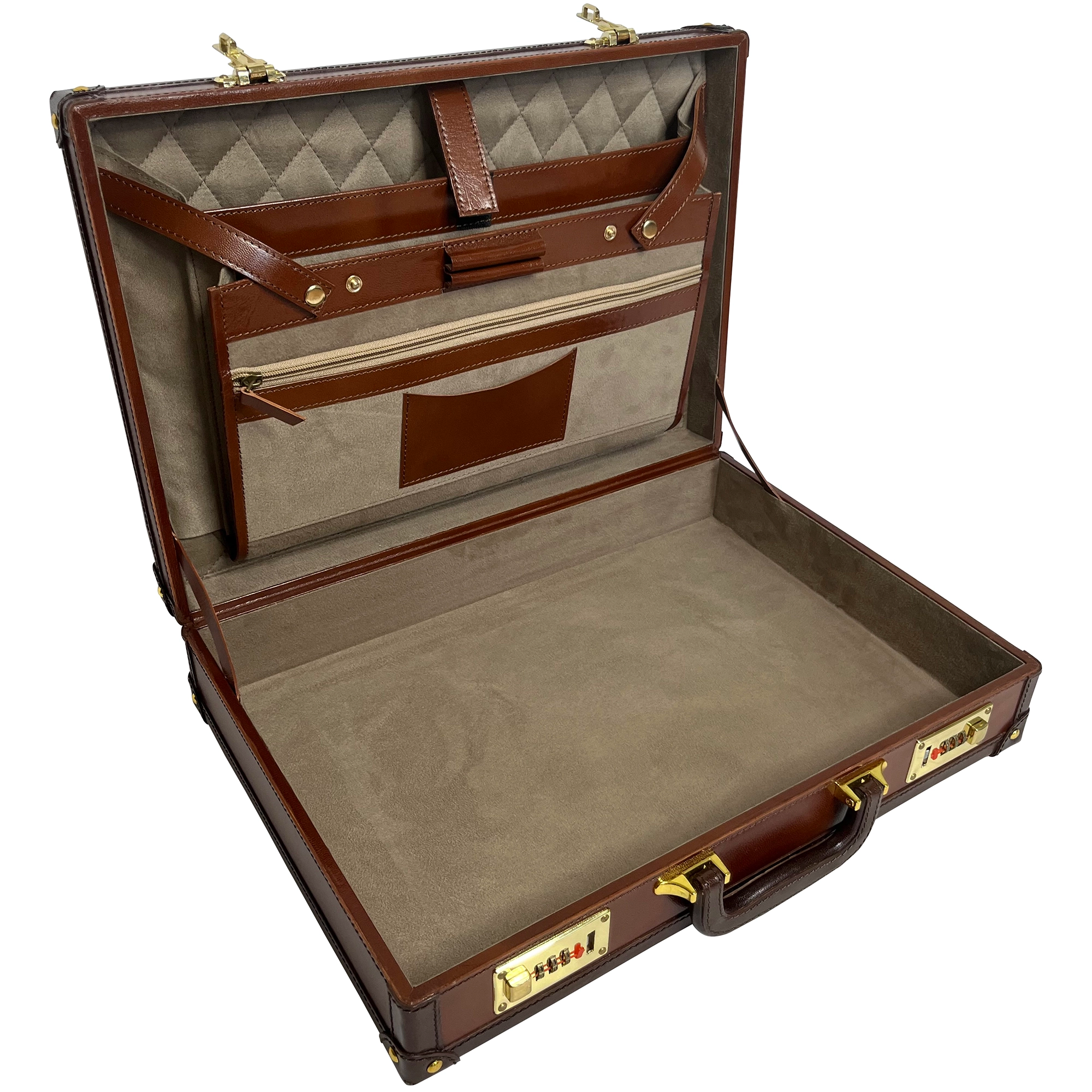
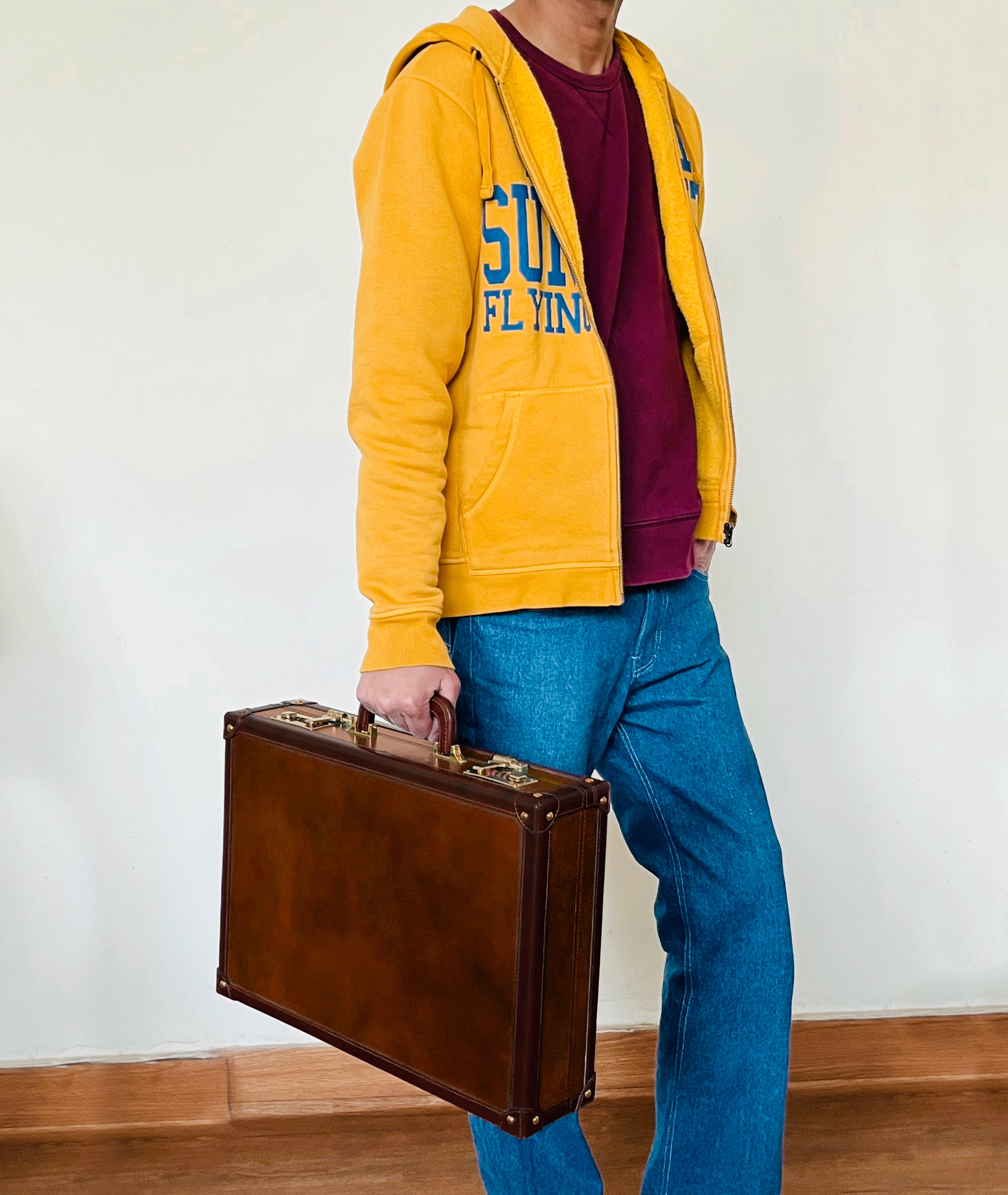
- Briefcase - Profile: Rigid, top handle | Formality: Business-formal | Shop: Aston, in this collection
- Backpack - Profile: Two straps | Formality: Casual commute | Shop: Leather backpacks
Pick the satchel if you want one bag that reads correctly in a boardroom and on a weekend train. Pick a messenger if your week is mostly casual, and a backpack if your daily load runs heavy. For longer trips, any of them pairs with a leather travel bag as the main luggage while the satchel rides as your personal item.
How Should a Satchel Fit and Be Worn?
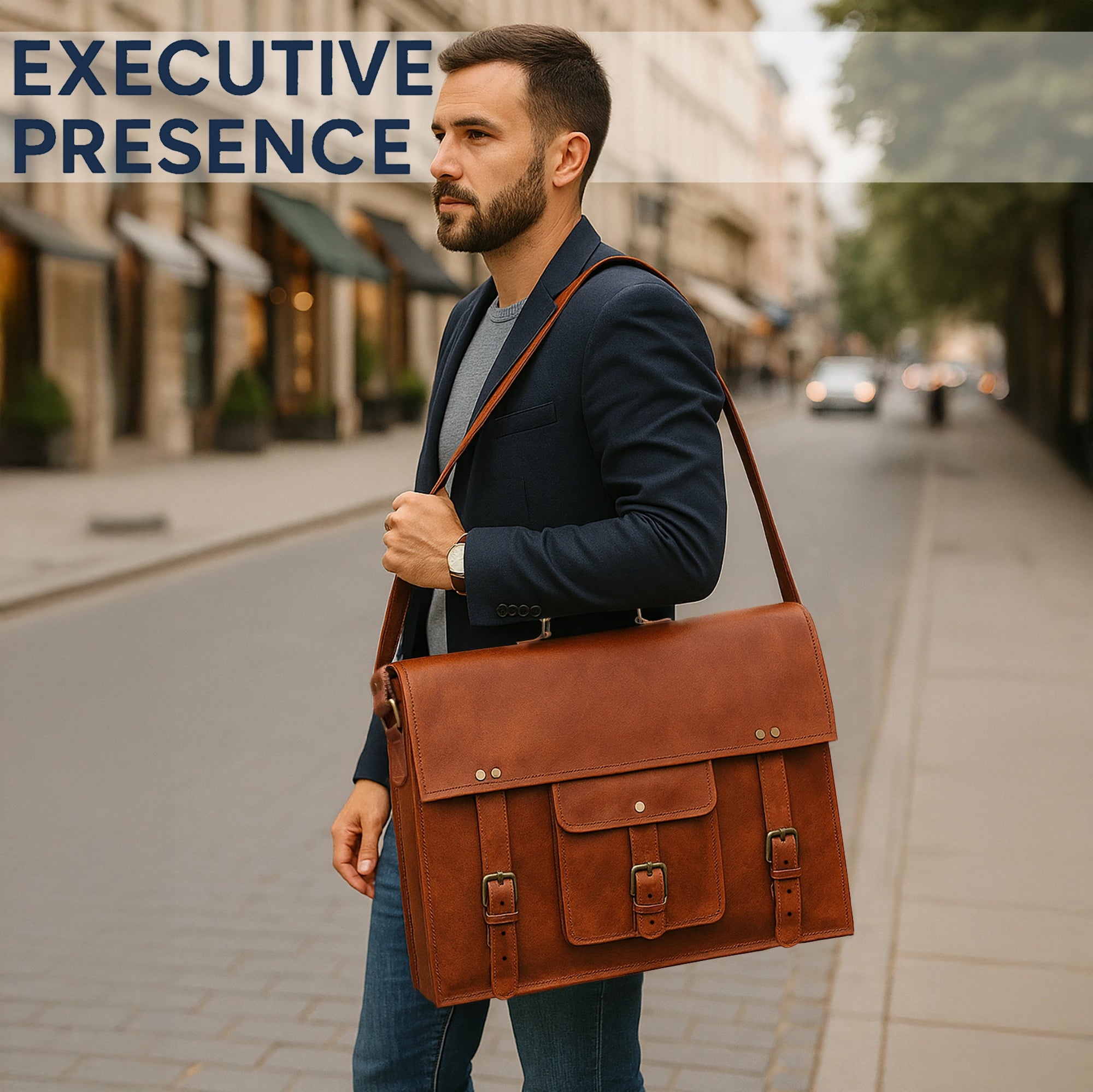
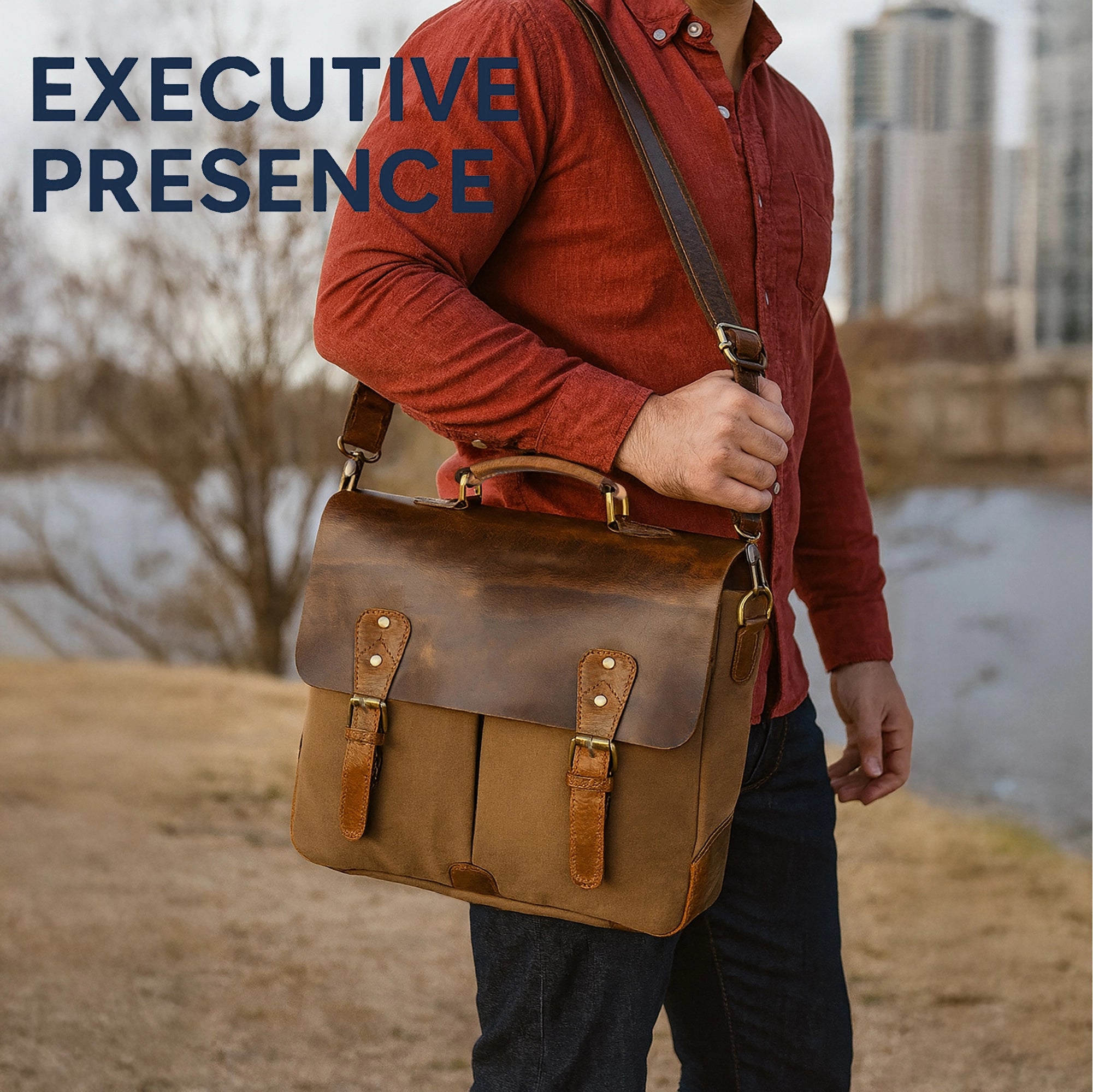
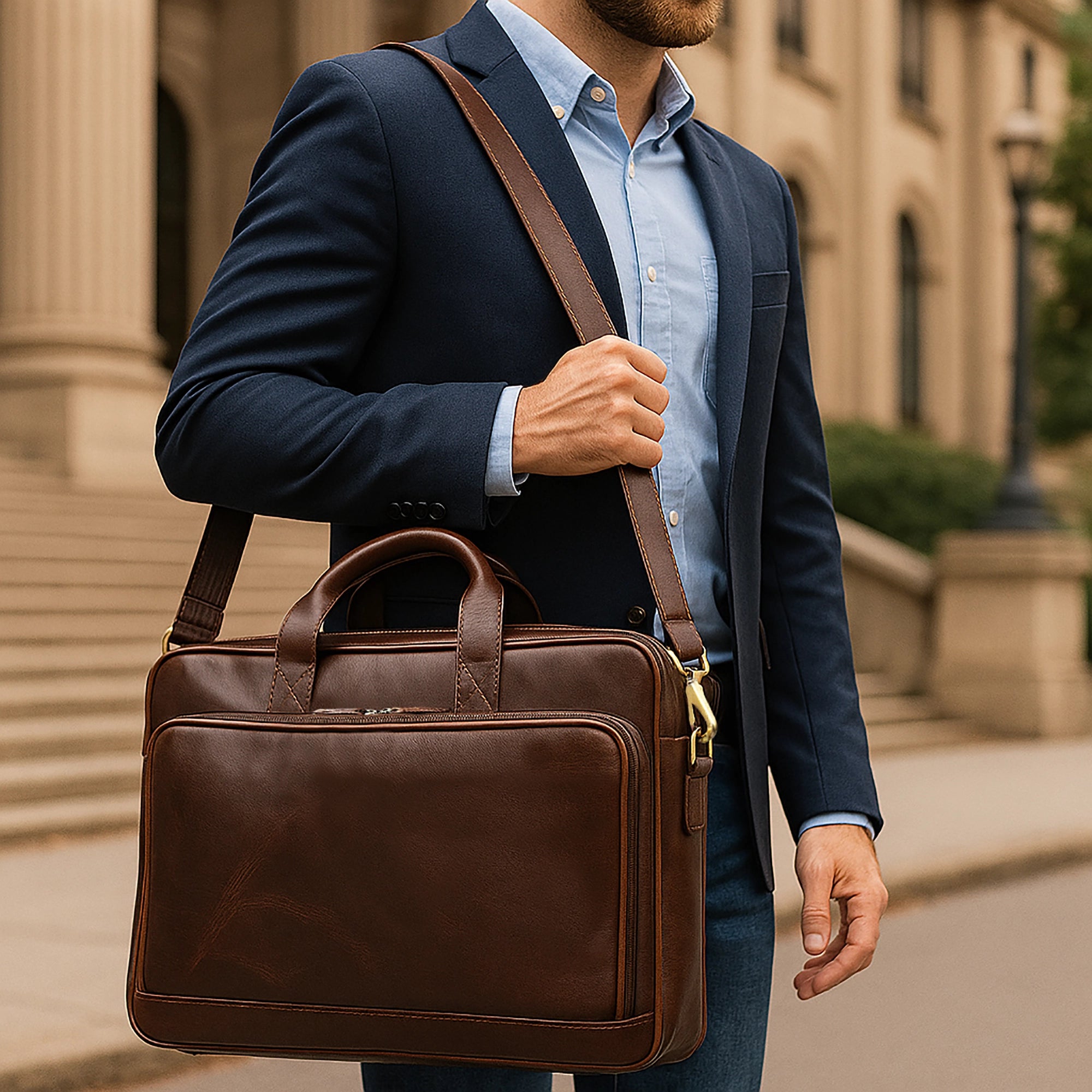
Worn crossbody, the strap should run shoulder to opposite hip with the bag sitting at or just above the hip bone - high enough that the flap opens at a natural hand position, low enough that the structure does not dig into your ribs when you sit. Adjust until the bag does not bounce at a brisk walk; bounce means the strap is too long.
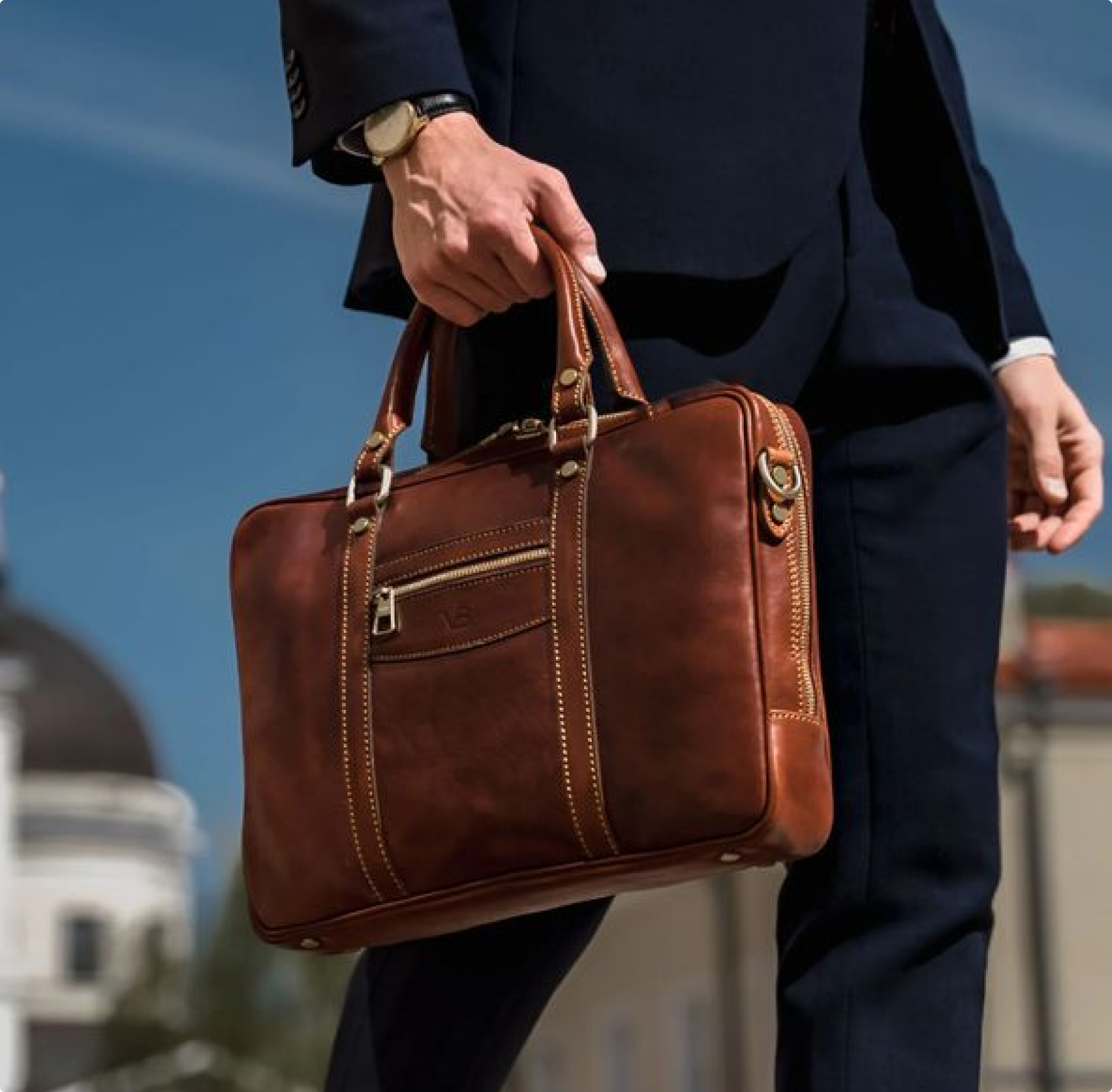
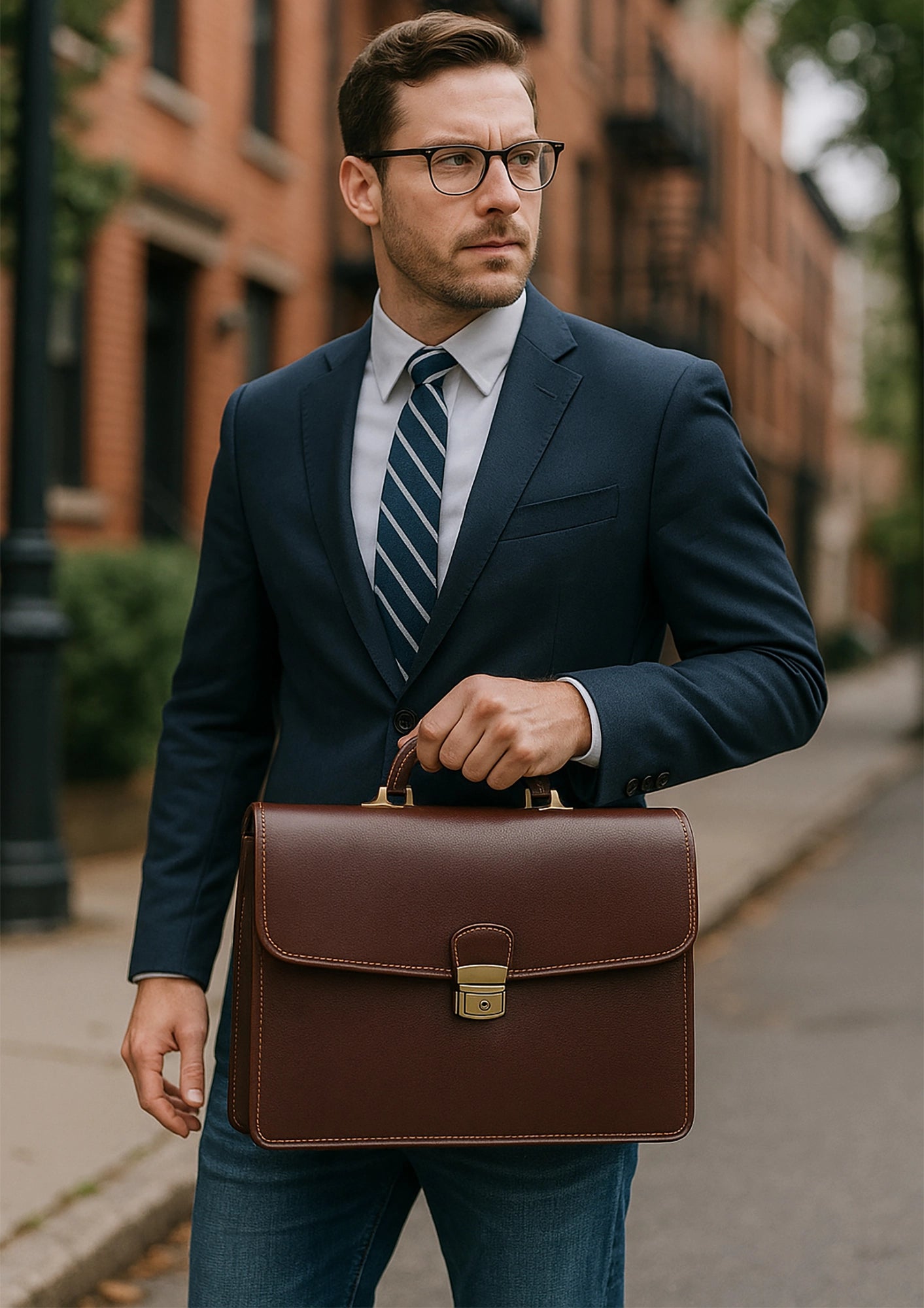
With a suit or blazer, many wearers shorten the strap and carry the satchel at the shoulder or by the top handle where fitted - the structured silhouette sits cleanly against tailoring either way. The full-grain strap will feel firm for the first two or three weeks, then soften and conform to your shoulder; that break-in is the leather adapting to you, and it is half the pleasure of a bag that improves with use rather than wearing out.
What Does a Satchel Cost Per Year of Use?
The honest comparison is not price, it is price divided by years of service:
- Fast-fashion laptop bag - Price: $60 | Realistic Lifespan: 2 years | Cost Per Year: $30.00
- "Genuine leather" mall brand - Price: $130 | Realistic Lifespan: 3 years | Cost Per Year: $43.00
- Rustic Town full-grain satchel - Price: $129.45 | Realistic Lifespan: 15+ years | Cost Per Year: under $9.00
- Designer-label full-grain - Price: $400-$700 | Realistic Lifespan: 15+ years | Cost Per Year: $27-$47
A $129.45 full-grain satchel kept for fifteen years costs less per year than a $60 synthetic replaced every two - and unlike the synthetic, it looks better at the end of that run than the beginning. Vegetable tanning and handcrafting cost more upfront precisely because they are what make the long lifespan possible.
What Should You Wear a Satchel With?
The satchel is the most dress-code-flexible bag in leather. In antique or walnut brown it pairs with a navy or grey suit without competing, sits naturally over a blazer and chinos, and grounds a plain shirt and jeans on casual days. The single styling rule worth keeping: roughly match your leathers - a brown satchel with brown shoes and belt reads considered; brown bag with black everything reads accidental. Black satchels are the narrower play, correct in strictly formal wardrobes and less at home on weekends, which is why brown outsells black in this collection several times over.
Where Does a Satchel Earn Its Keep? (Work, Travel, Campus)
At work, the satchel is the bag that survives the dress-code lottery. The same structured brown bag is correct beside a suit on client day and beside a knit on Friday, which is why professionals who alternate between formal and casual weeks tend to land on a satchel after cycling through messengers and briefcases.
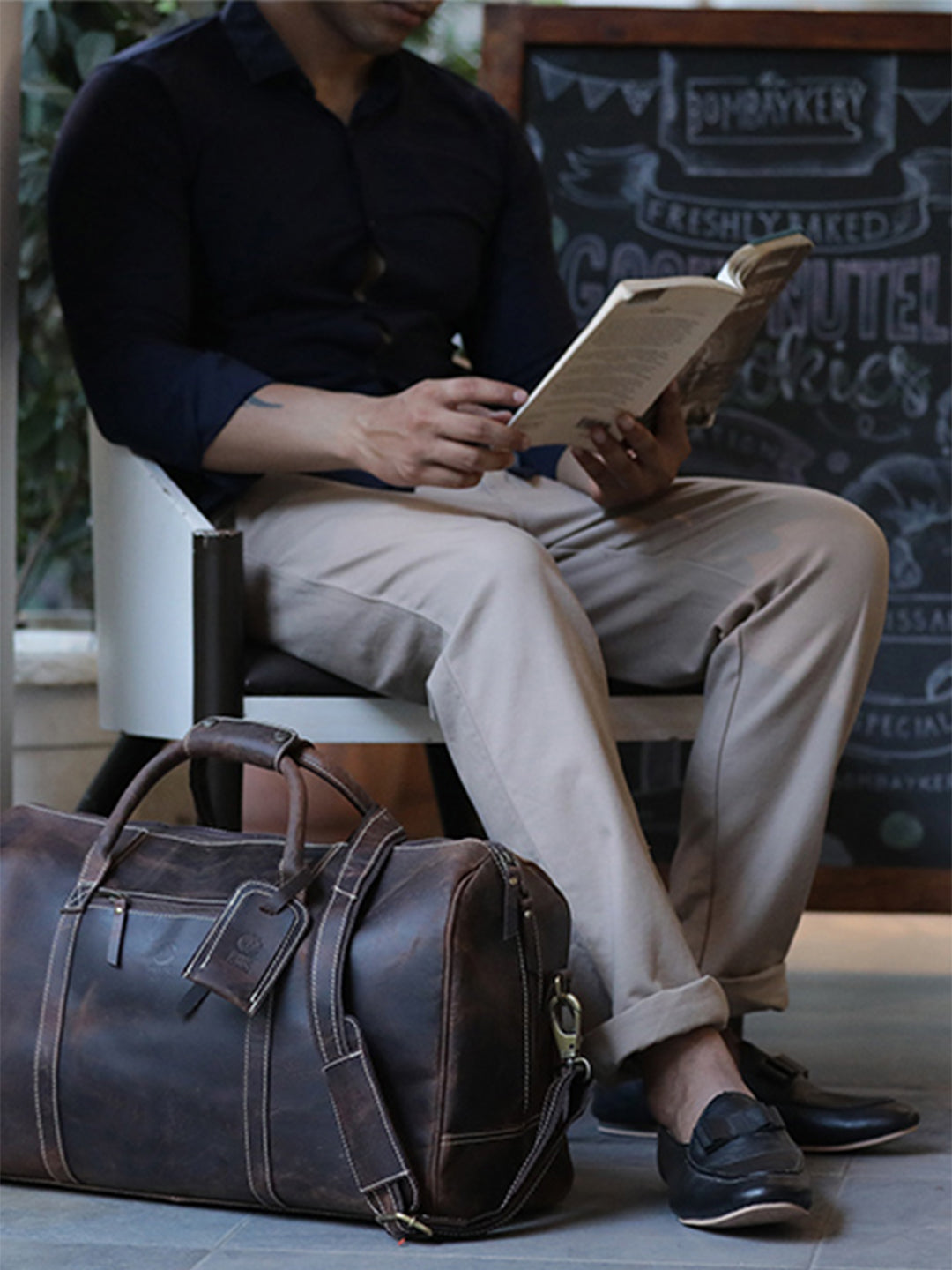
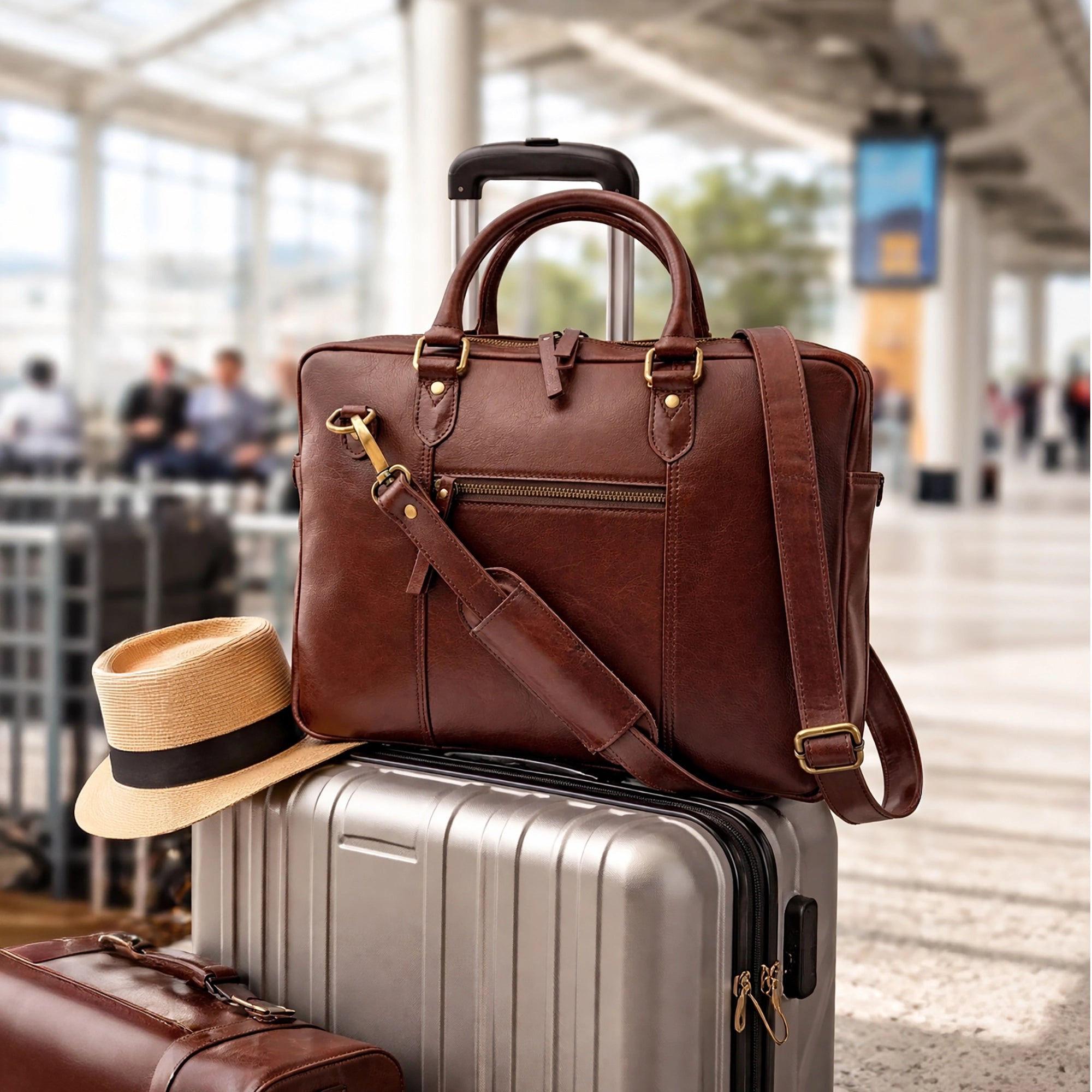
In travel, a 16 inch satchel is the ideal airline personal item: it slides under every economy seat, the firm panels protect a laptop better than a soft bag in an overhead scrum, and the flap keeps documents and passports covered but reachable in a queue. Pair it with a duffel overhead and a two-bag system covers a week away.
On campus, the satchel is back where it started - it carried Oxford students' books for centuries before it carried laptops. For graduate students and academics especially, the heritage silhouette signals exactly the right thing in a seminar room, and a full-grain version bought at the start of a degree routinely outlasts the career that follows it.
Why handcrafted matters across all three: a machine-made satchel is cut for speed, with thin split leather in hidden panels and glued stress points. A handcrafted one is cut around the strongest parts of the hide, stitched where machines glue, and individually finished - which is why no two bags share the same grain, and why the handcrafted bag is the one still working in 2046.
How Do I Care for a Leather Satchel?
A full-grain satchel asks for minutes of care per month and repays it in decades:
- Weekly: wipe with a dry, soft cloth to lift dust before it settles into the grain.
- Every 3-6 months: work in a thin coat of leather conditioner to keep the fibres supple - more often in dry or heavily air-conditioned climates.
- If it gets wet: blot, never rub, and air-dry at room temperature away from heaters and direct sun. Rain is not the enemy; heat-drying is.
- Storage: stuff with paper to hold the structure and keep it out of prolonged direct sunlight.
For the complete routine, read our guide on how to care for leather bags, and if your satchel meets weather regularly, the deep-dive on whether water ruins leather covers exactly what to do after every kind of soaking.
Is a Leather Satchel a Good Gift?
Few gifts get used five days a week for twenty years; a satchel does. Personalised engraving - initials or a date pressed into full-grain leather - lasts as long as the bag and turns a work bag into a keepsake.
The natural occasions: leather is the traditional material for the third wedding anniversary, making an engraved satchel a centrepiece 3rd anniversary gift. It is equally fitting as a graduation gift for a first job, and pairs with a dopp kit from the leather toiletry bags collection for a complete professional gift set.
Who Is a Leather Satchel NOT For?
Honest guidance, because the wrong bag helps nobody. If your daily carry exceeds 7-8 kg, a crossbody strap will fatigue one shoulder - choose a backpack. If your workplace is strictly casual and you want a soft, throw-it-anywhere bag, a messenger suits better than a structured satchel. And if you cycle through heavy rain daily, technical fabric is the practical pick; full-grain handles weather well with care, but no leather enjoys repeated soakings. For office professionals, hybrid workers, and anyone who wants one bag for a decade of Mondays - this is the collection.