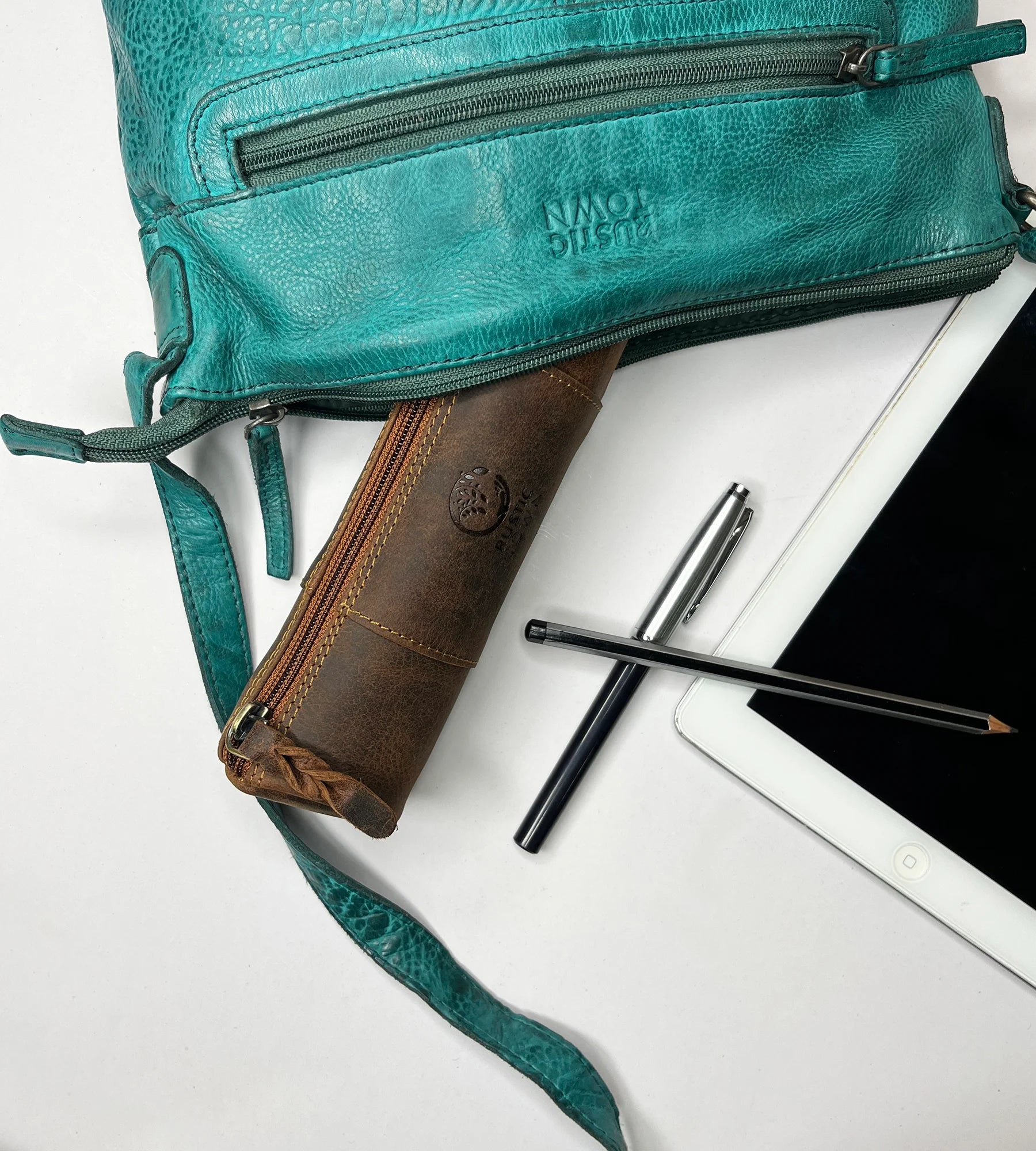
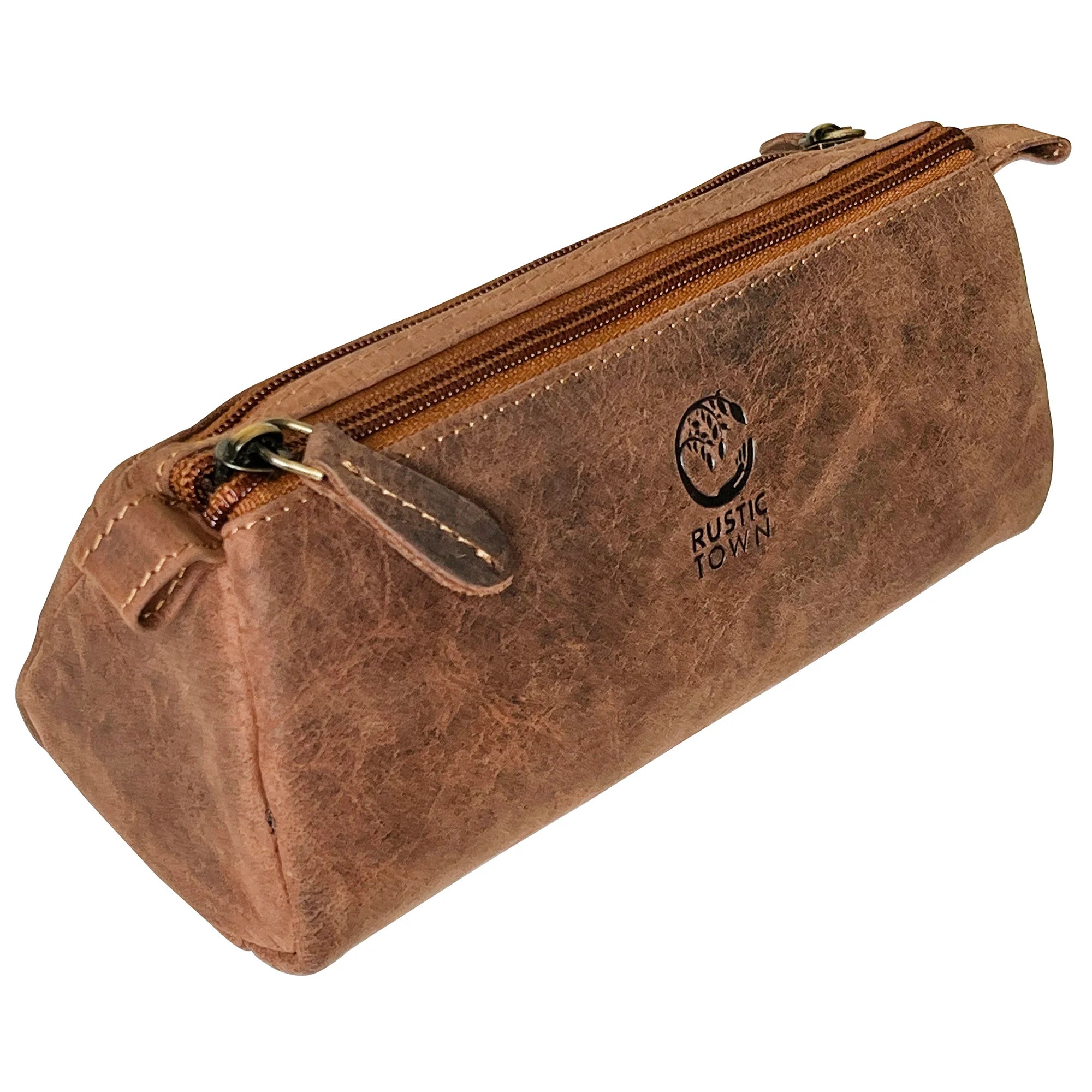
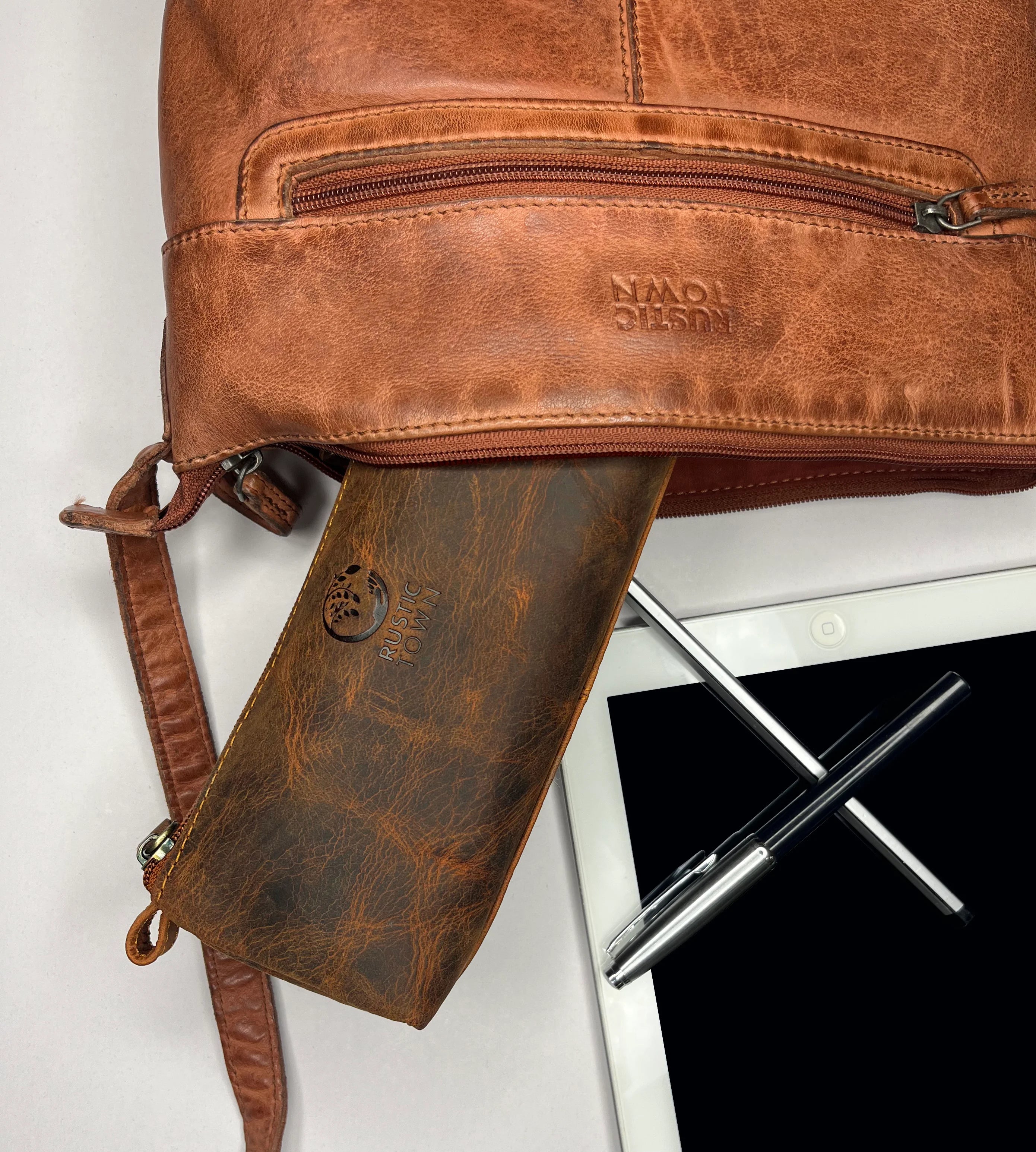
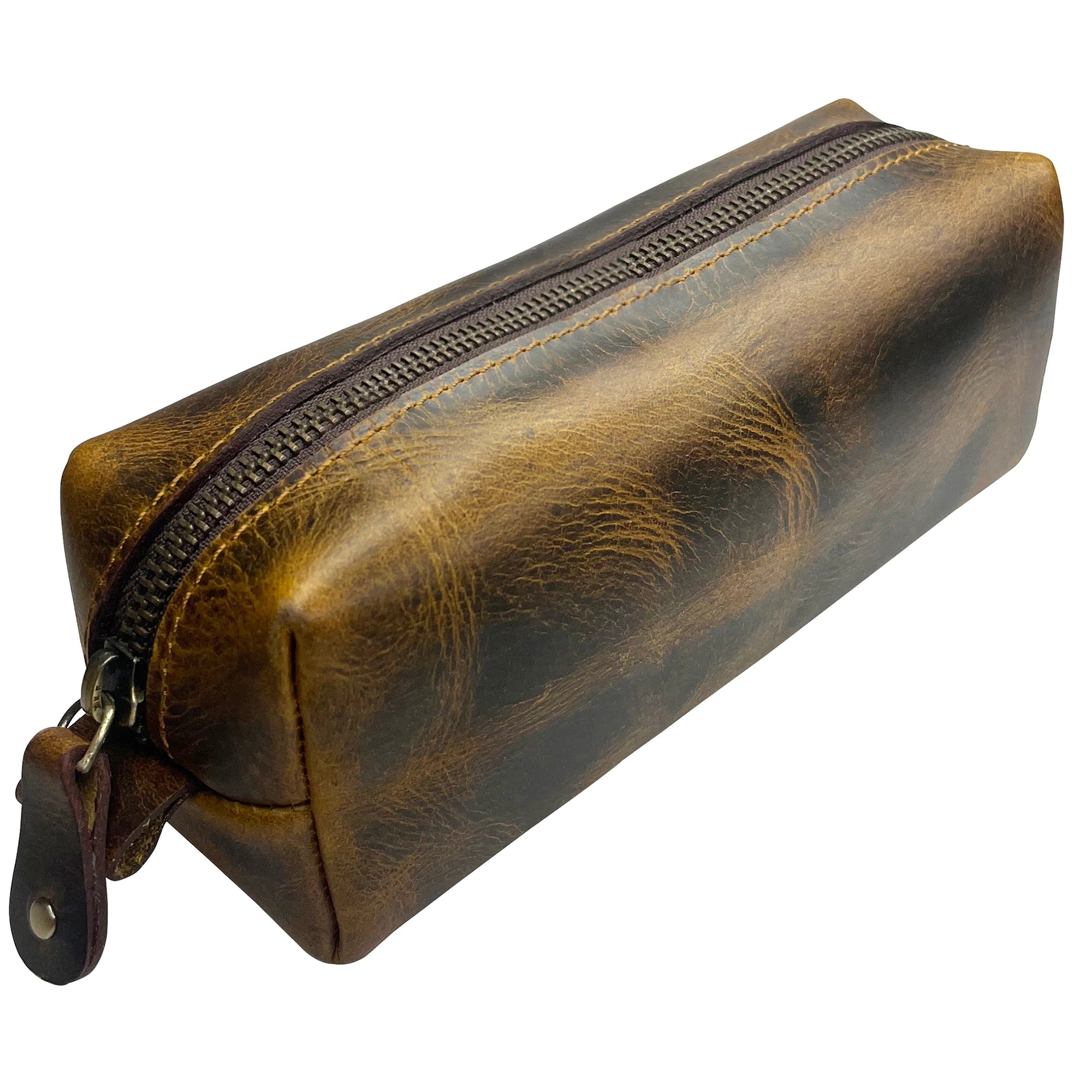
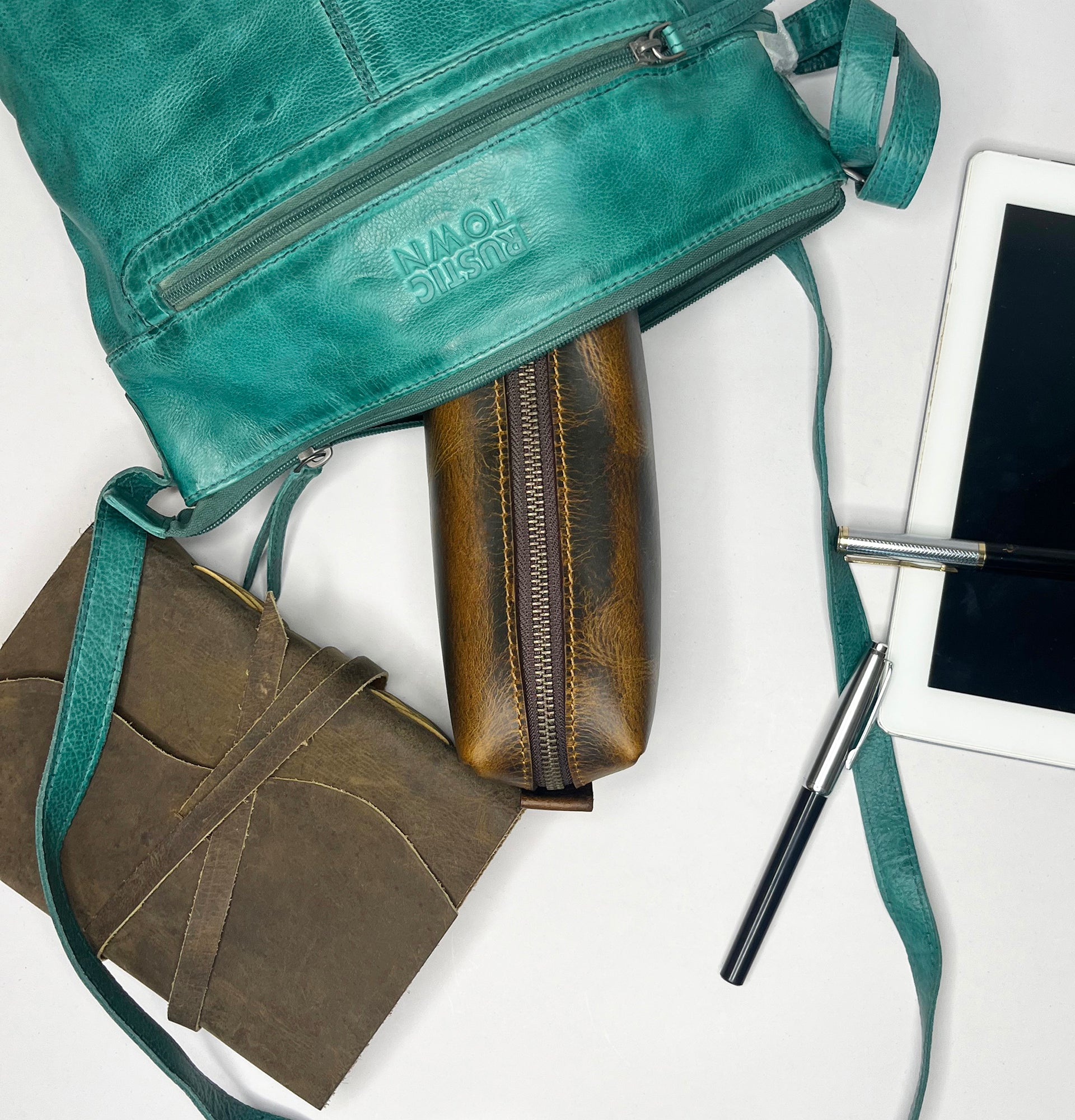
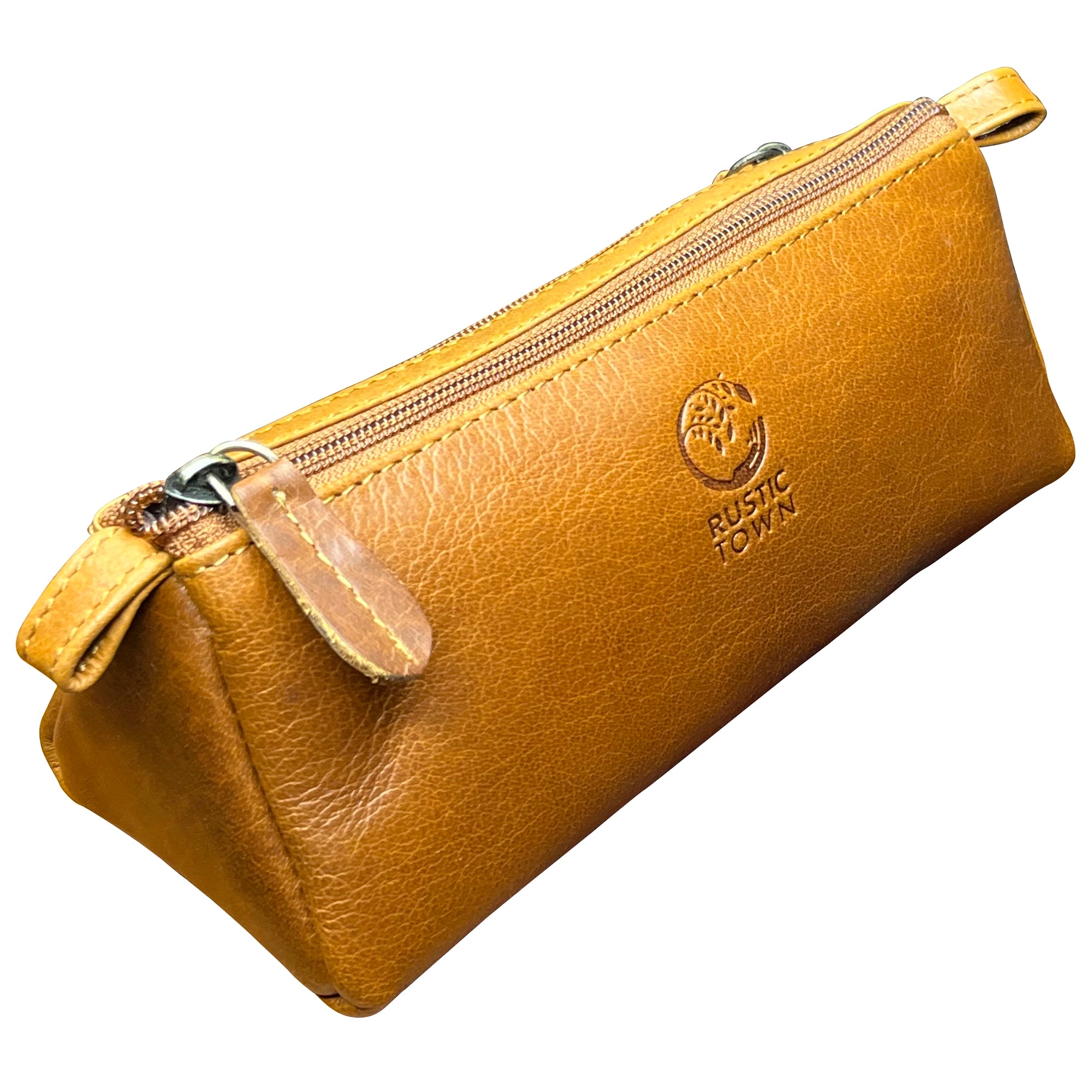
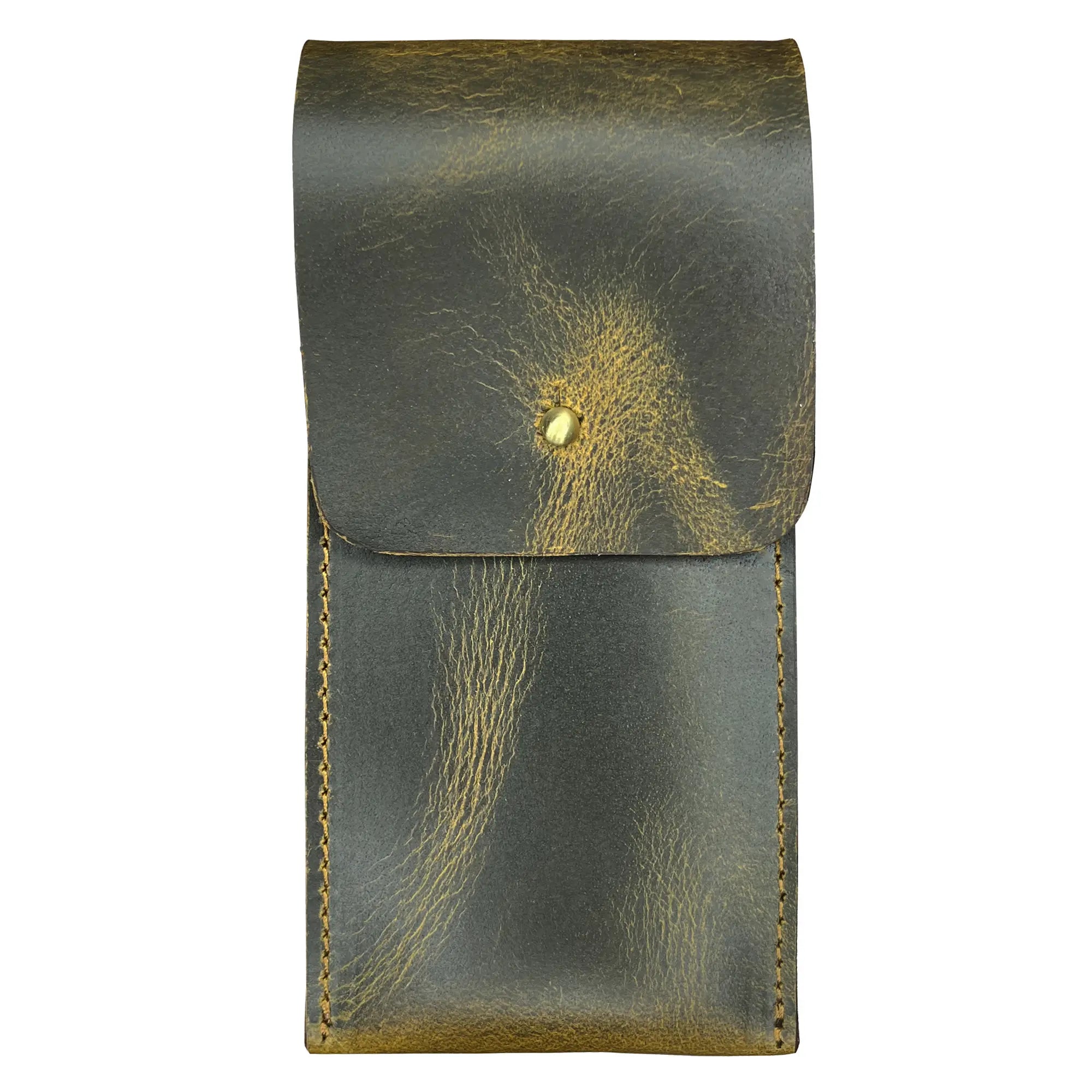
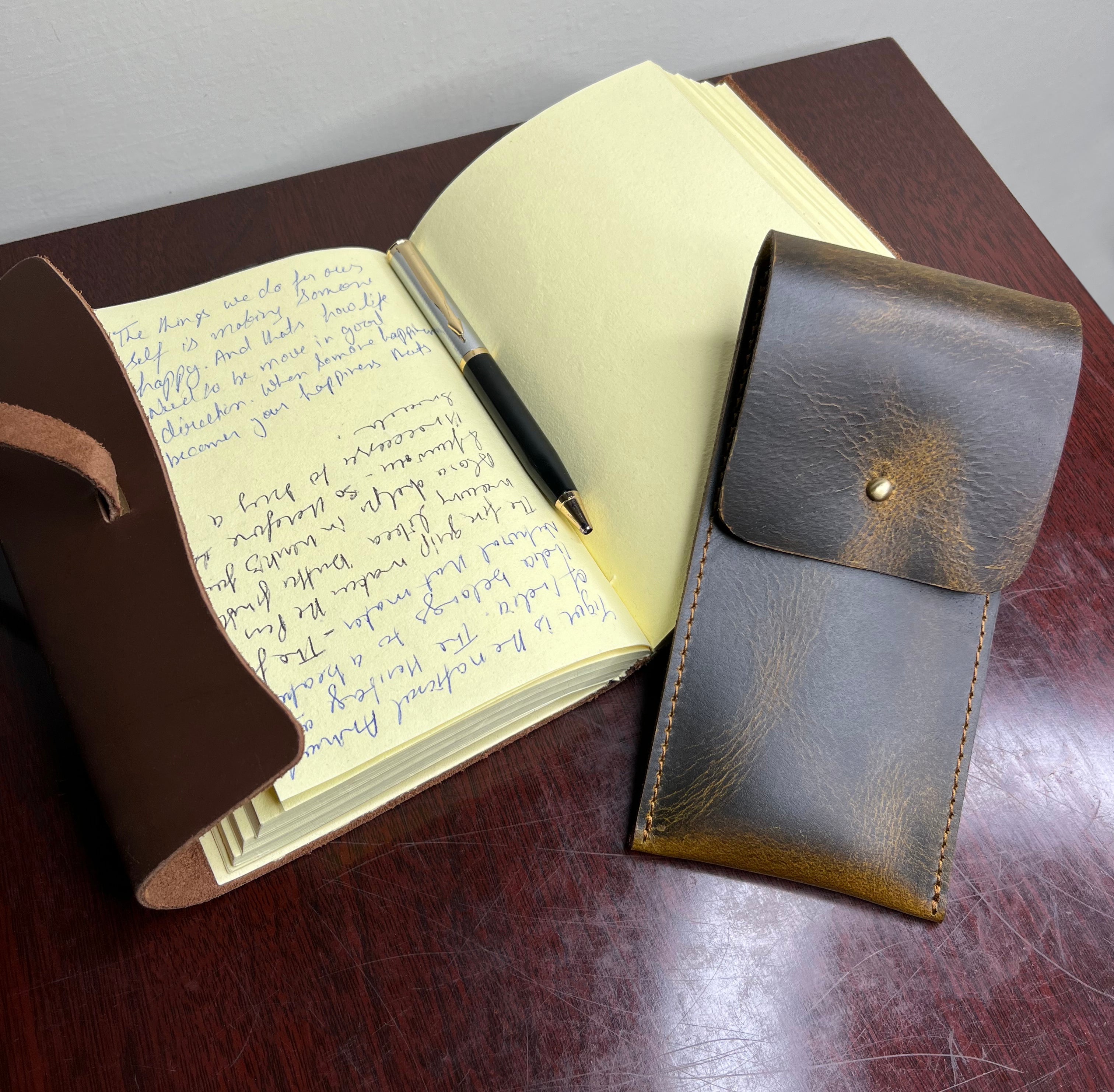
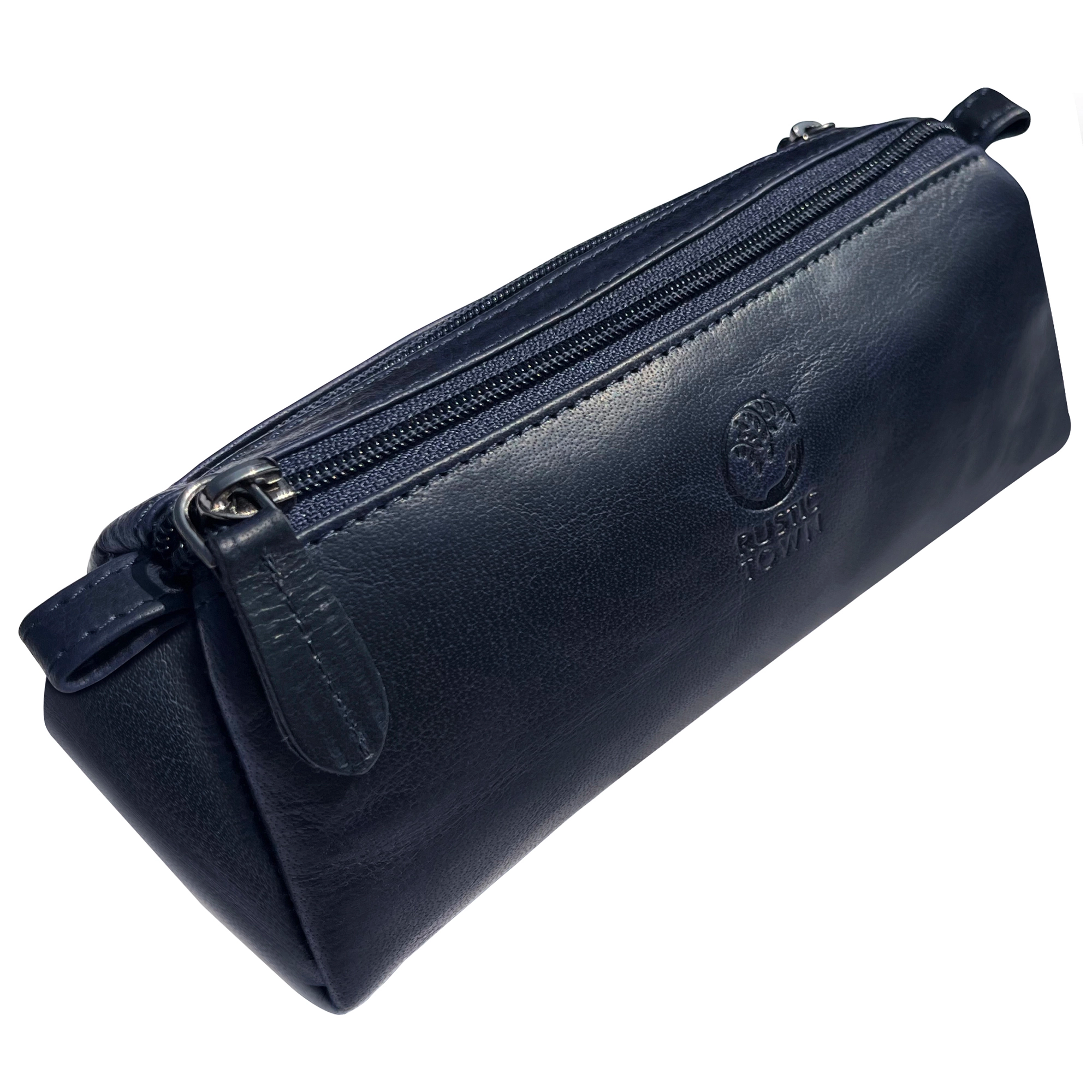
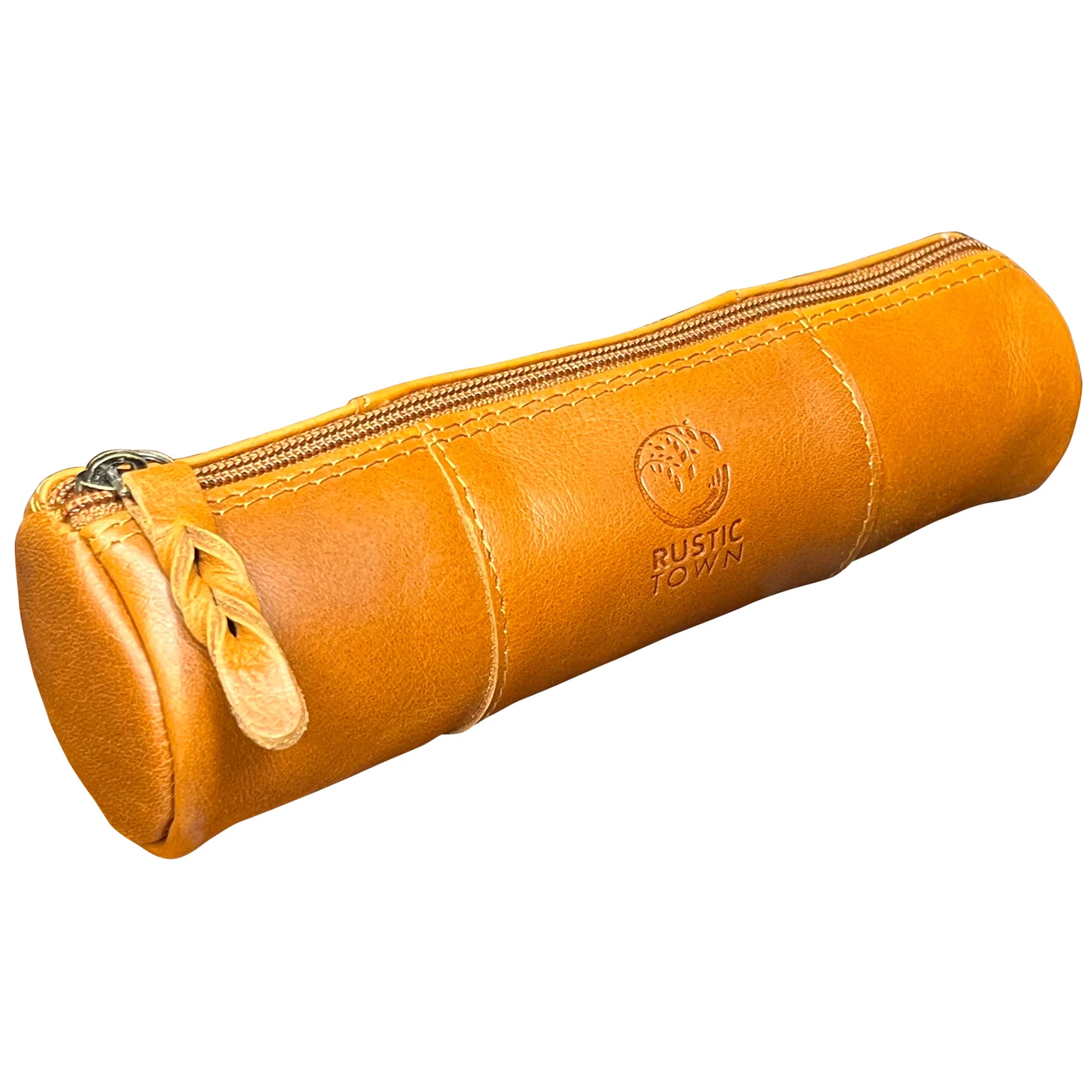
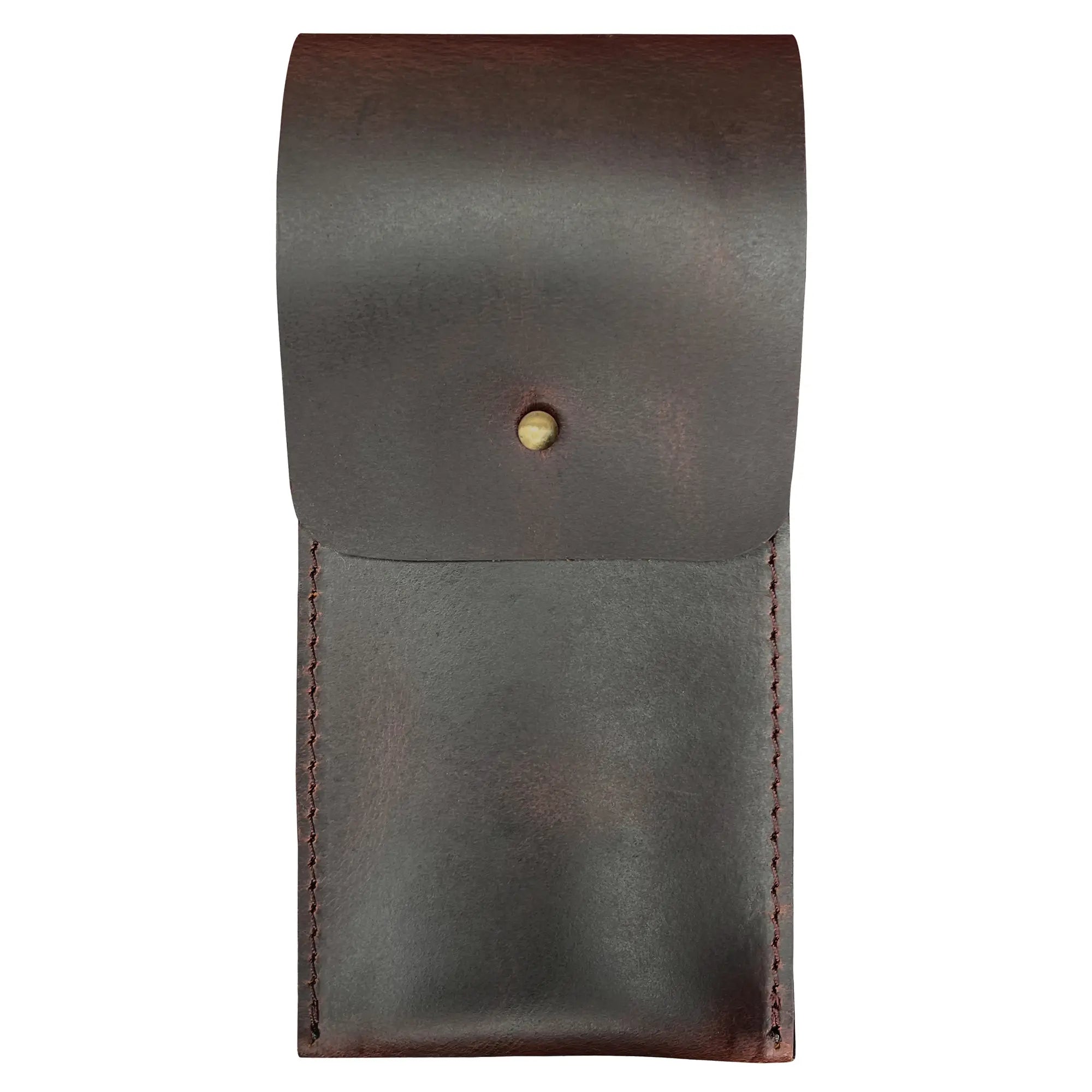
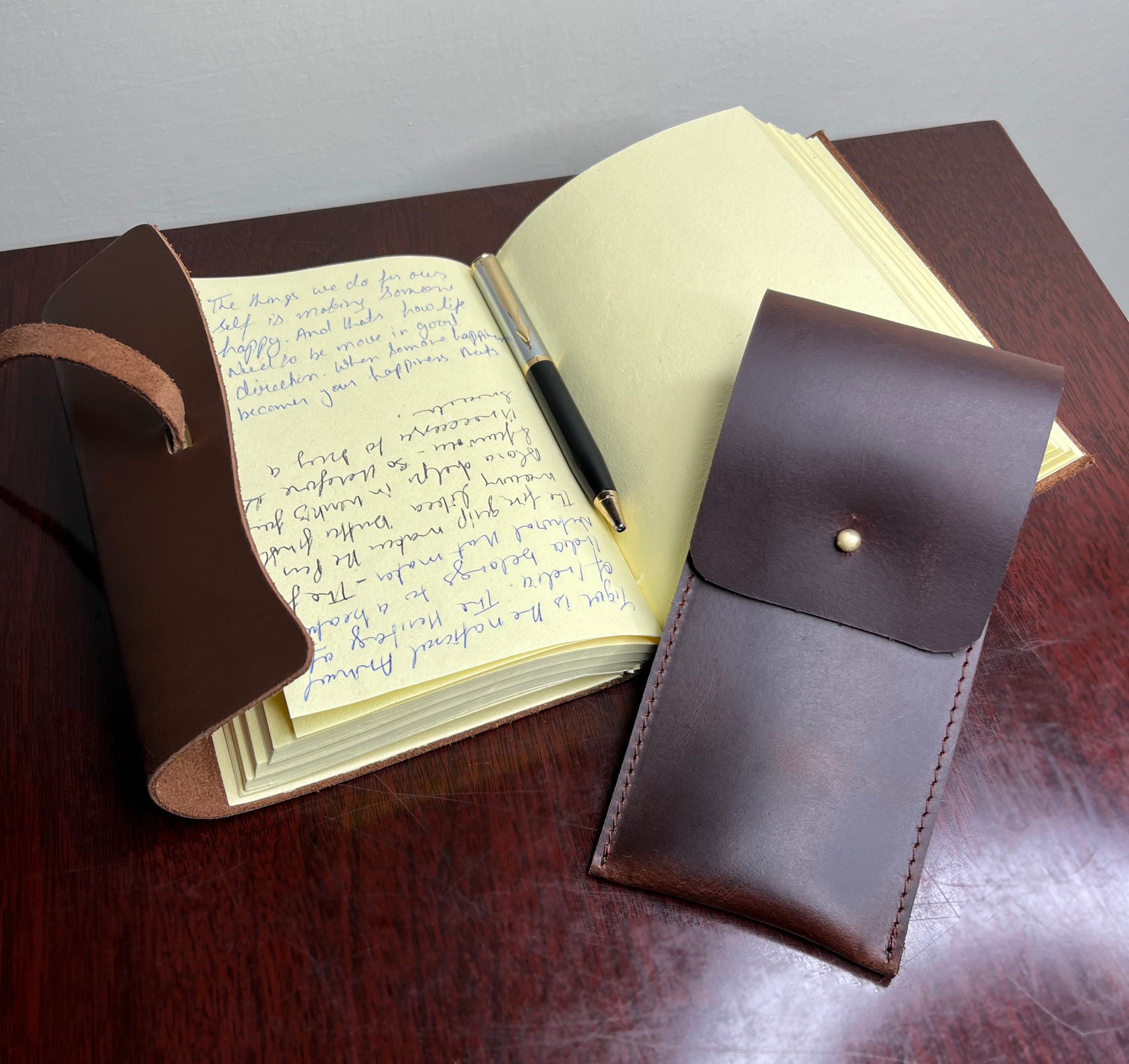
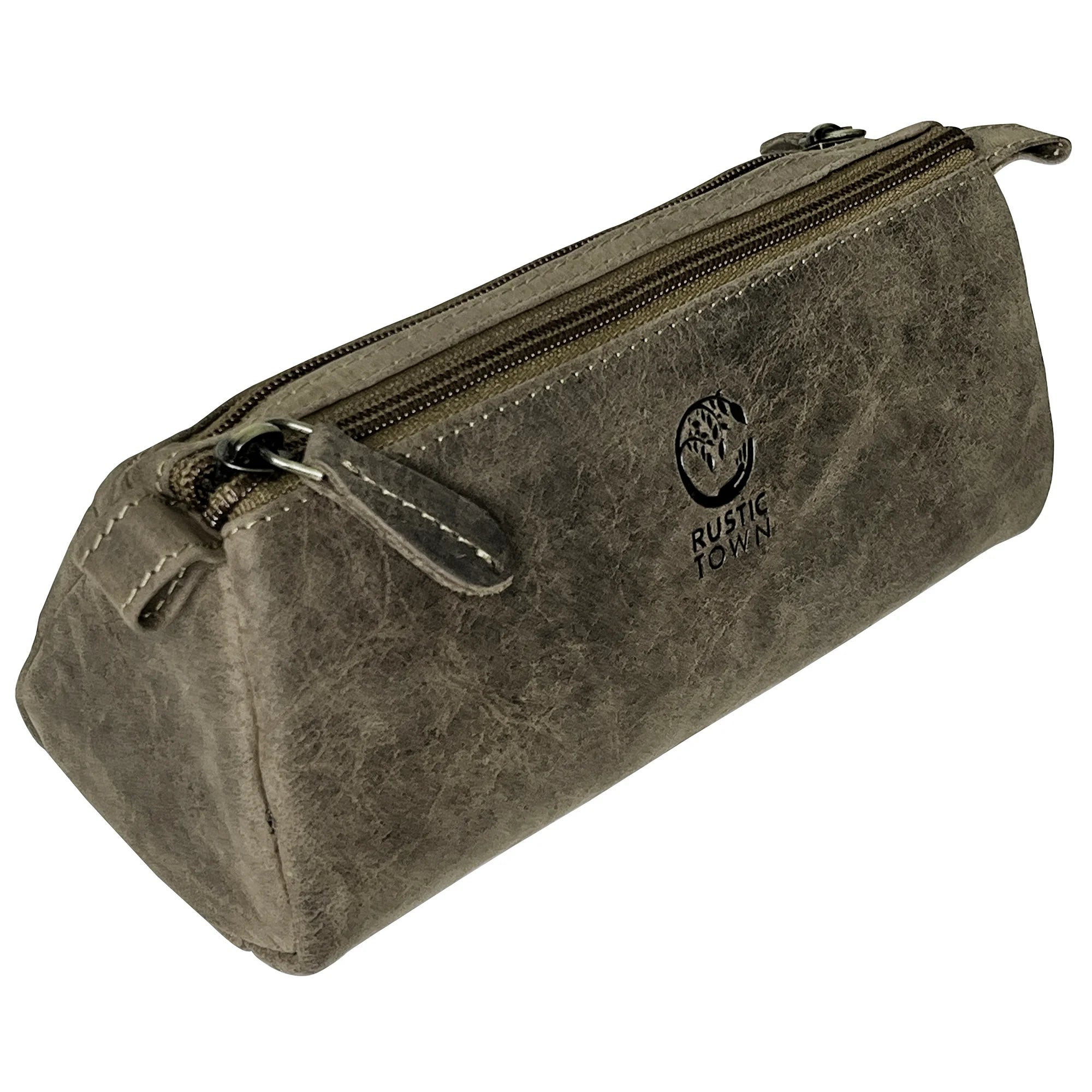
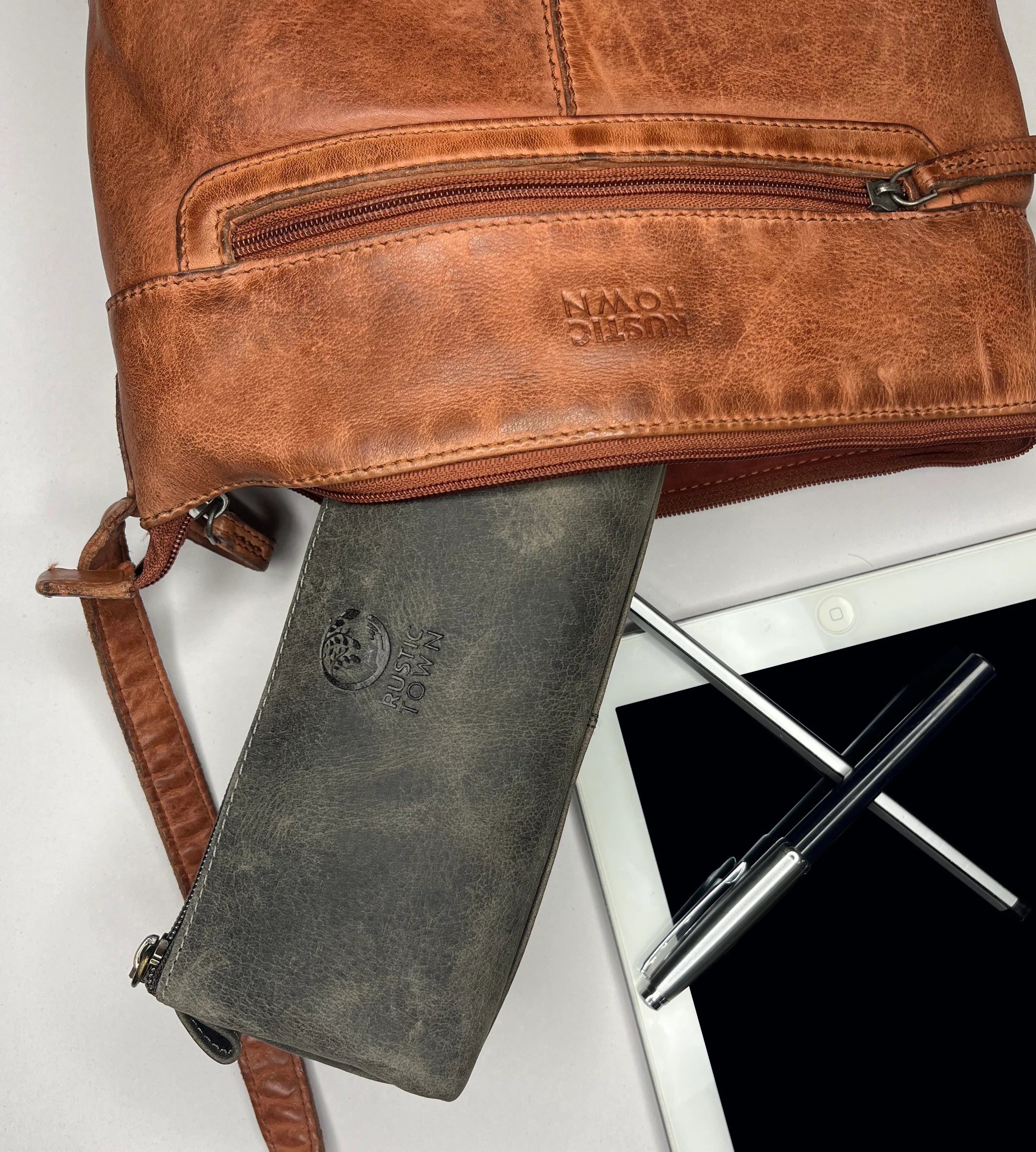
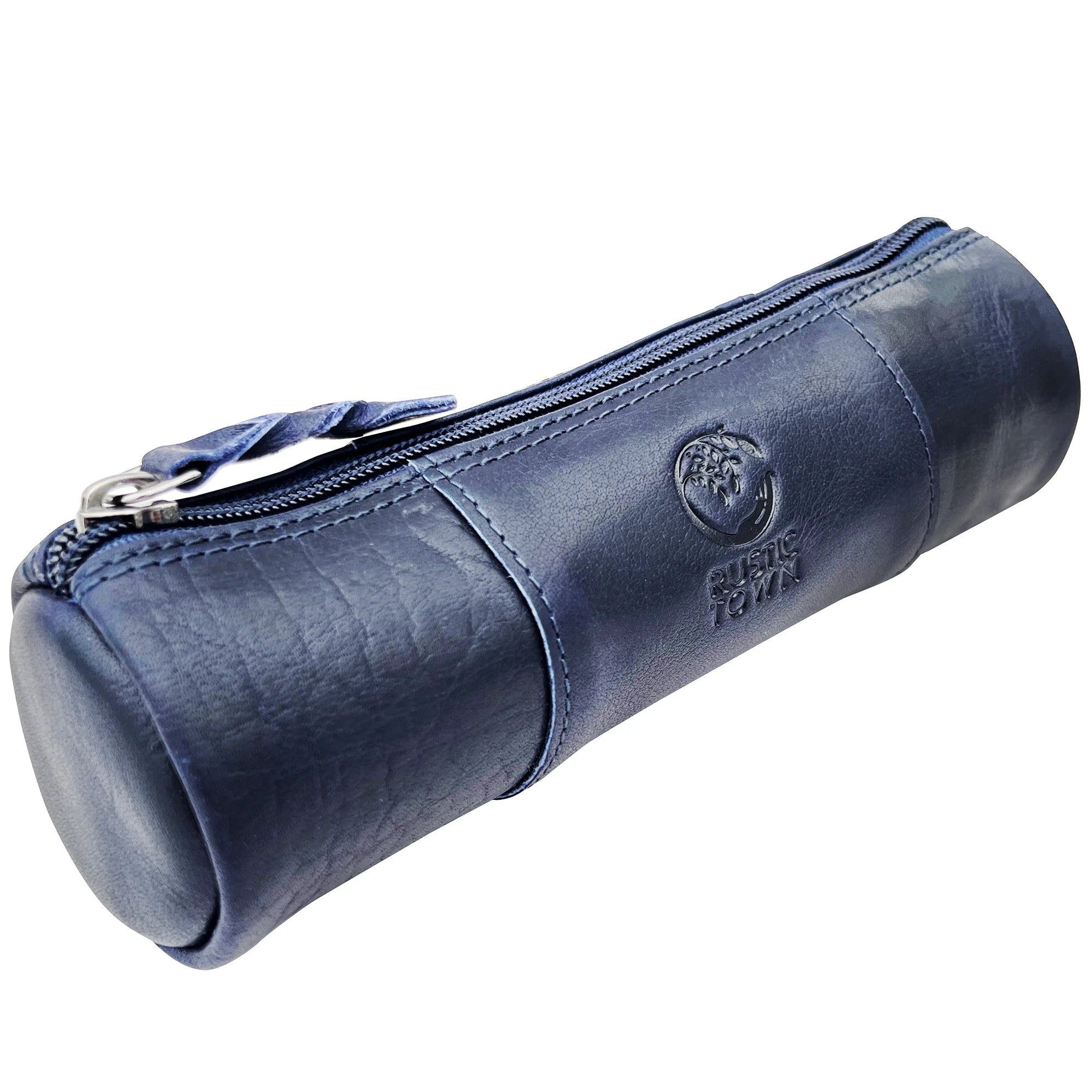
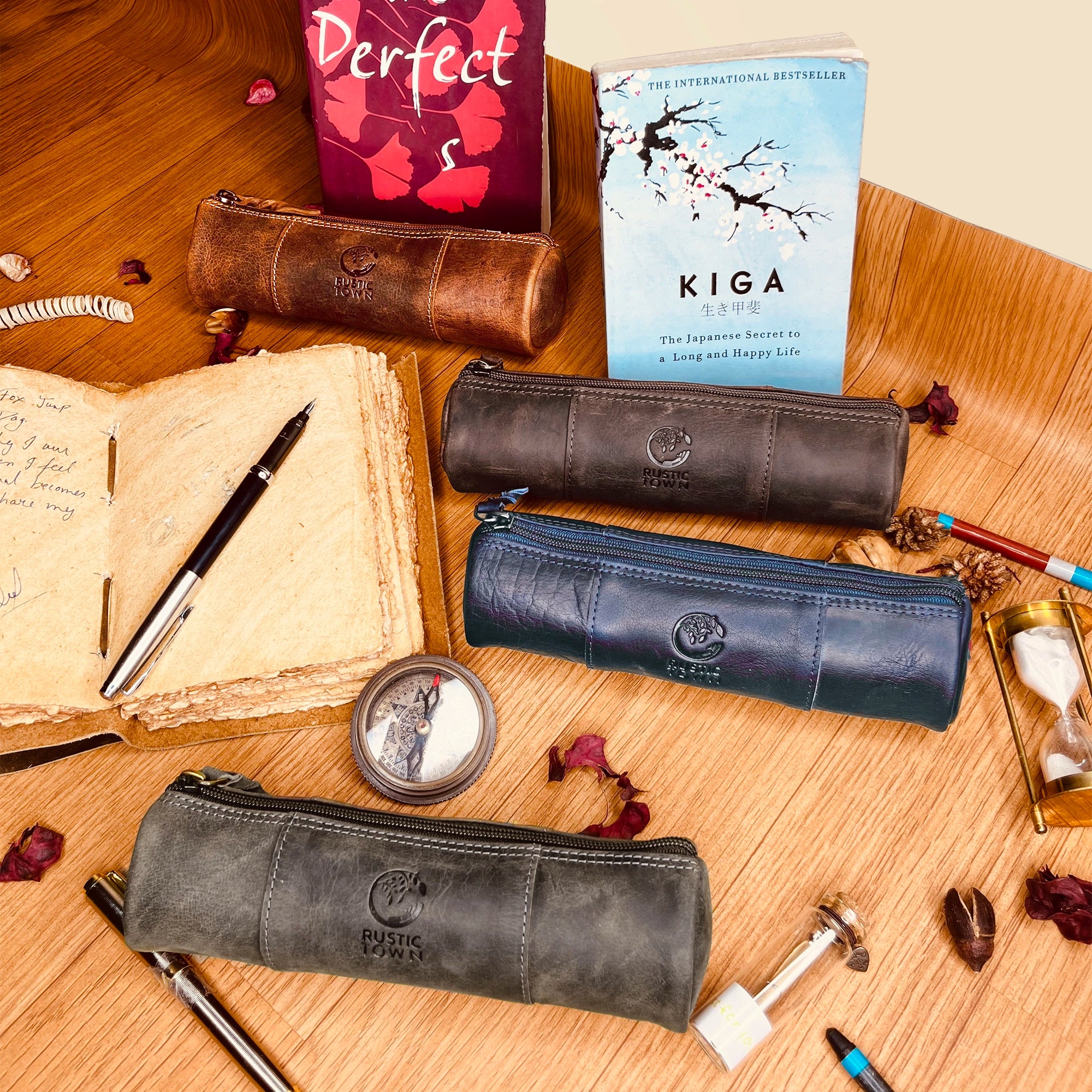
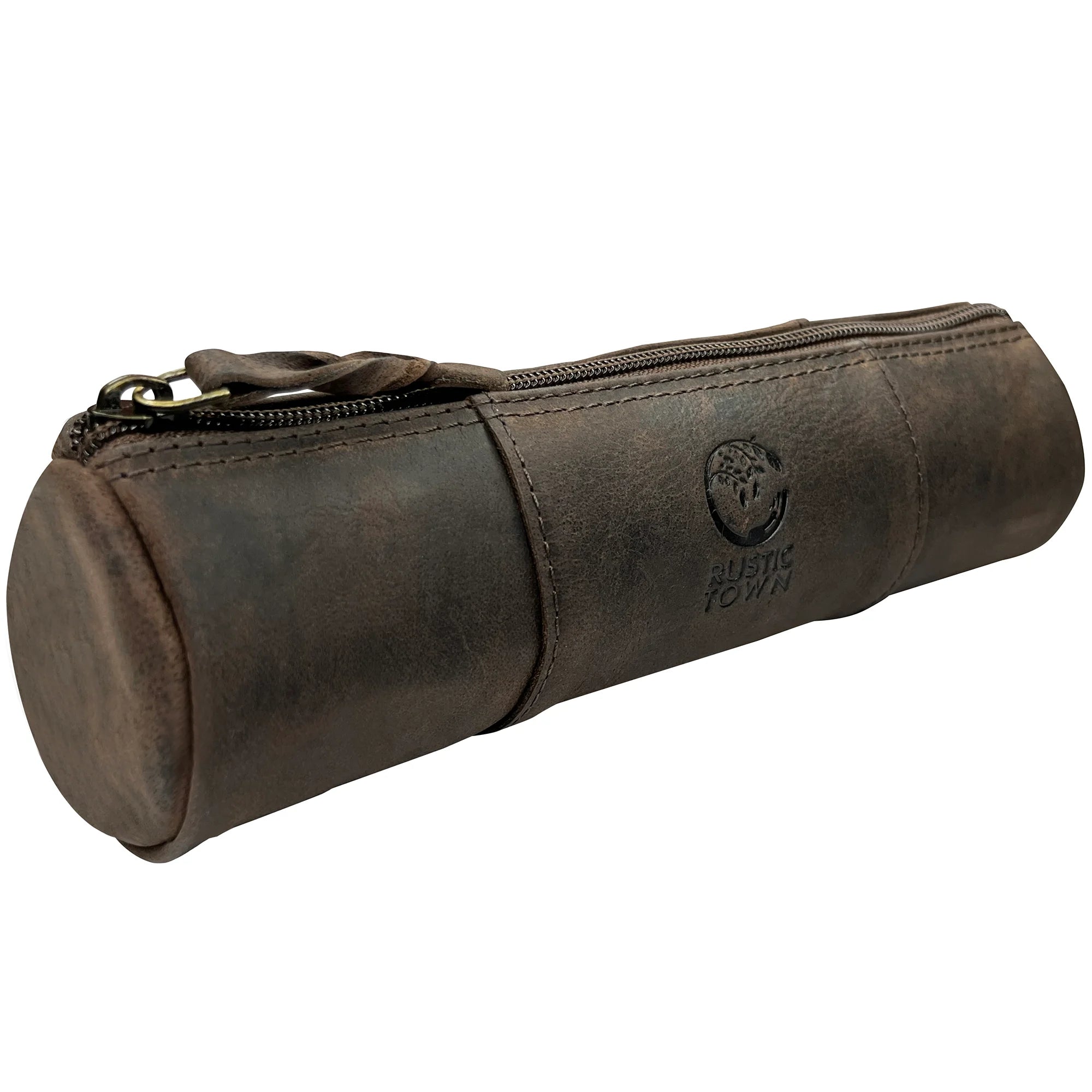
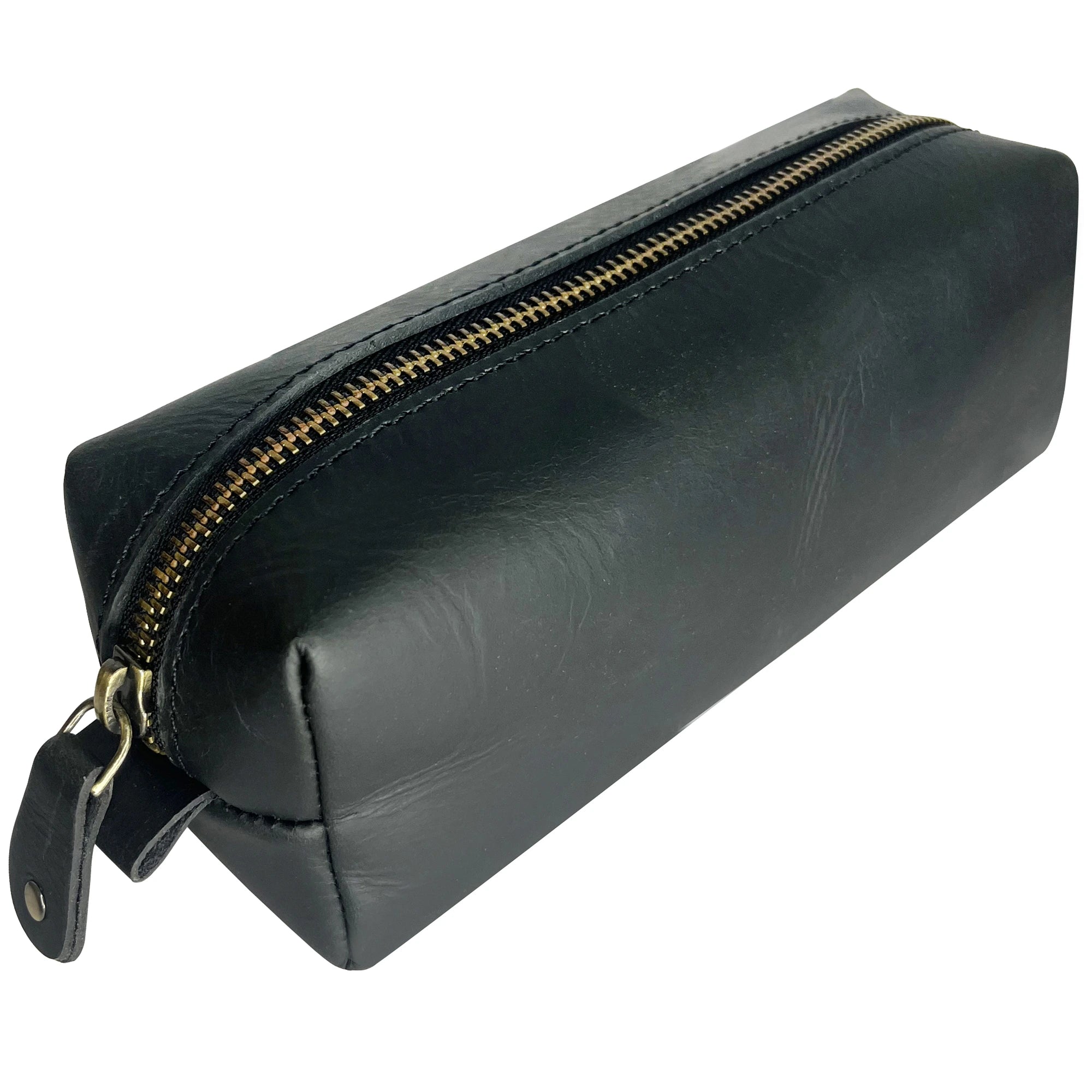
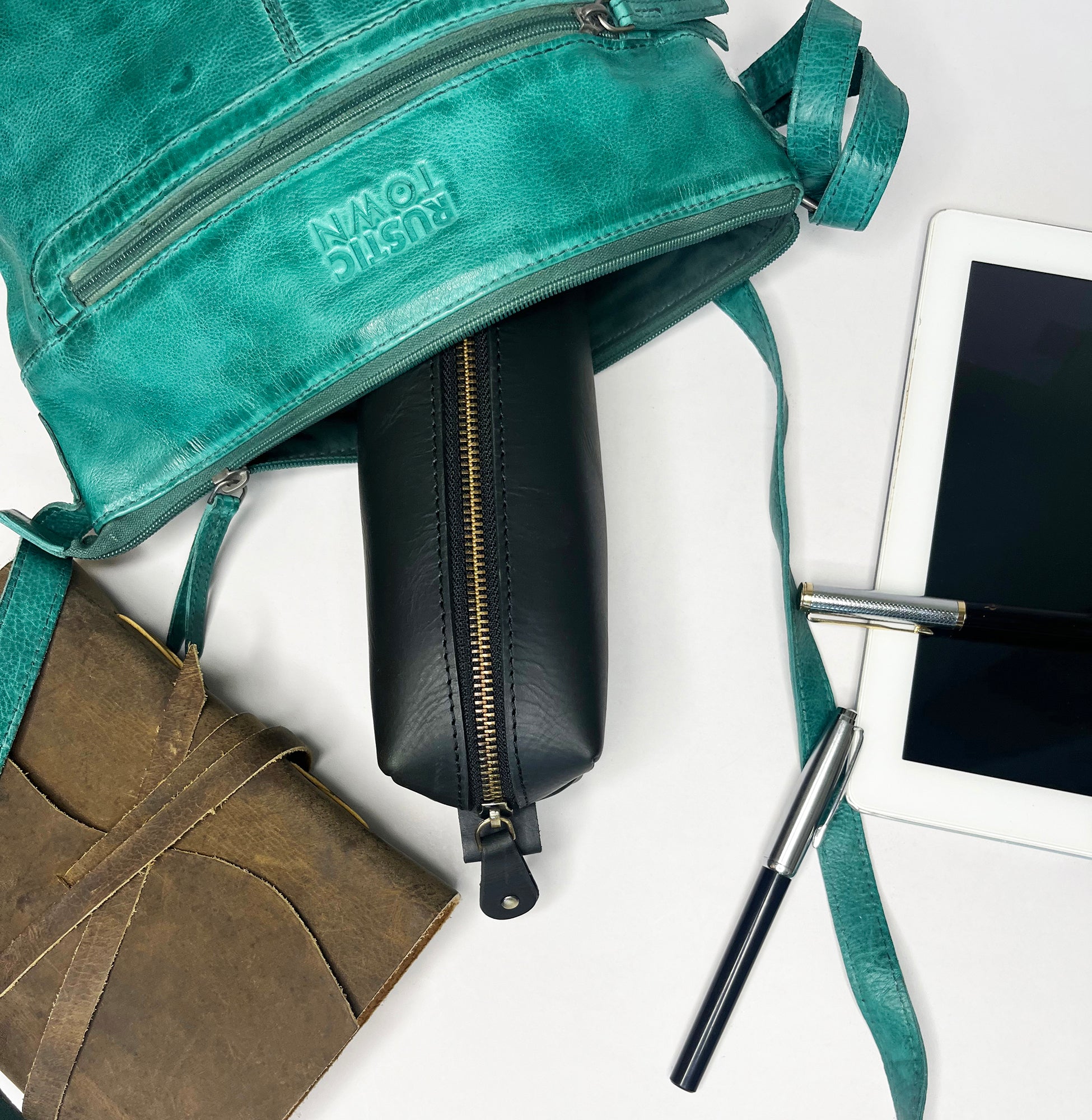
A leather pencil case is a handcrafted pouch that holds and protects pens, pencils, and stationery, made from full-grain leather to last for years where a fabric or plastic case wears out. This collection of 18 cases covers zippered pouches and roll-up styles for students, artists, and professionals - a simple everyday object made beautifully, and built to outlast every disposable case it replaces.
What Is a Leather Pencil Case?
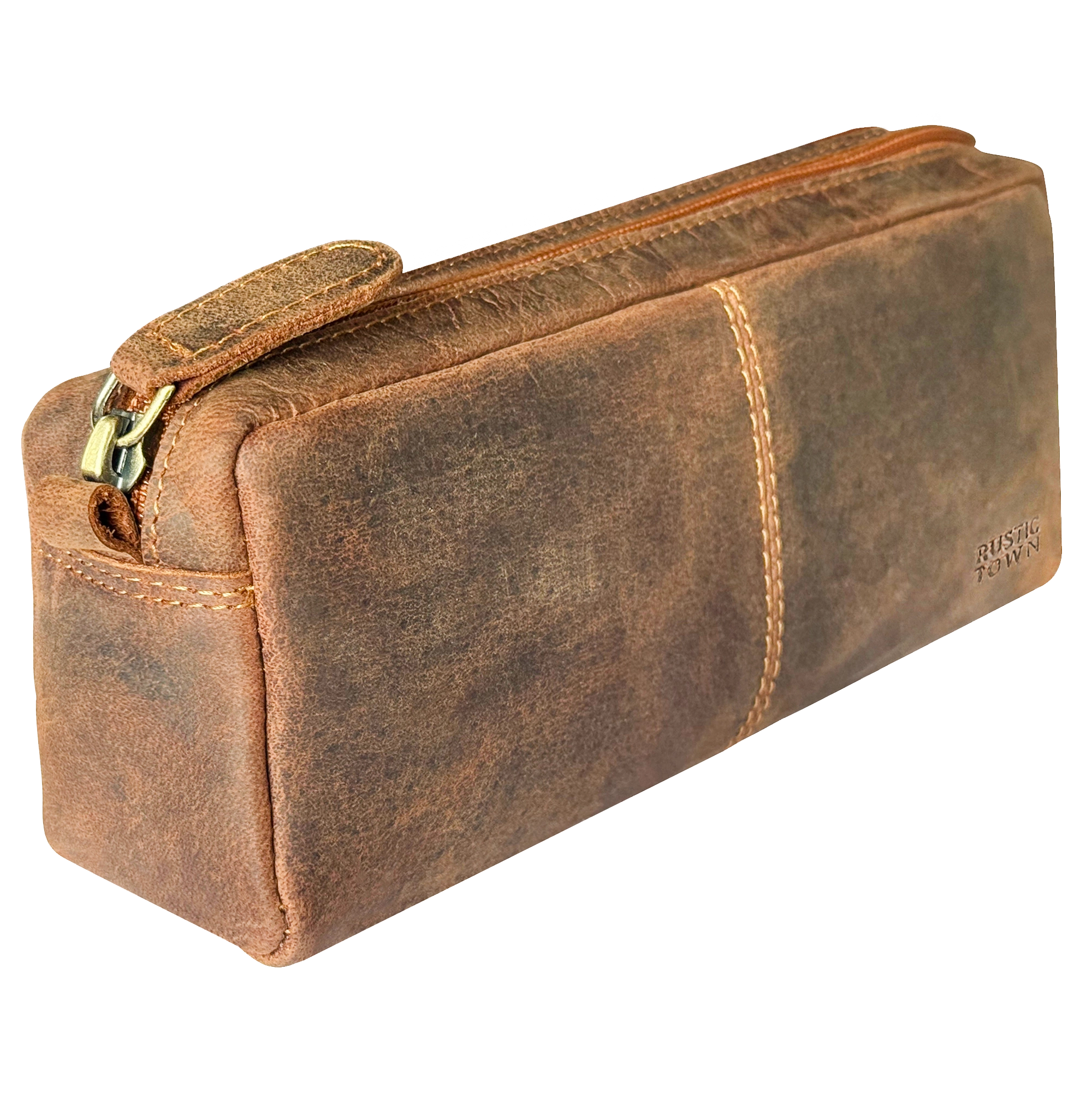
A leather pencil case is a small pouch designed to carry pens, pencils, and stationery in a bag or on a desk, keeping them together, protected, and easy to find. It does the everyday job a loose handful of pens never can: nothing rolls to the bottom of a bag, nothing leaks onto your notebook, and your favourite pen is always where you left it. The leather version simply does that job for decades instead of a school year, softening into a patina rather than splitting at the seams.
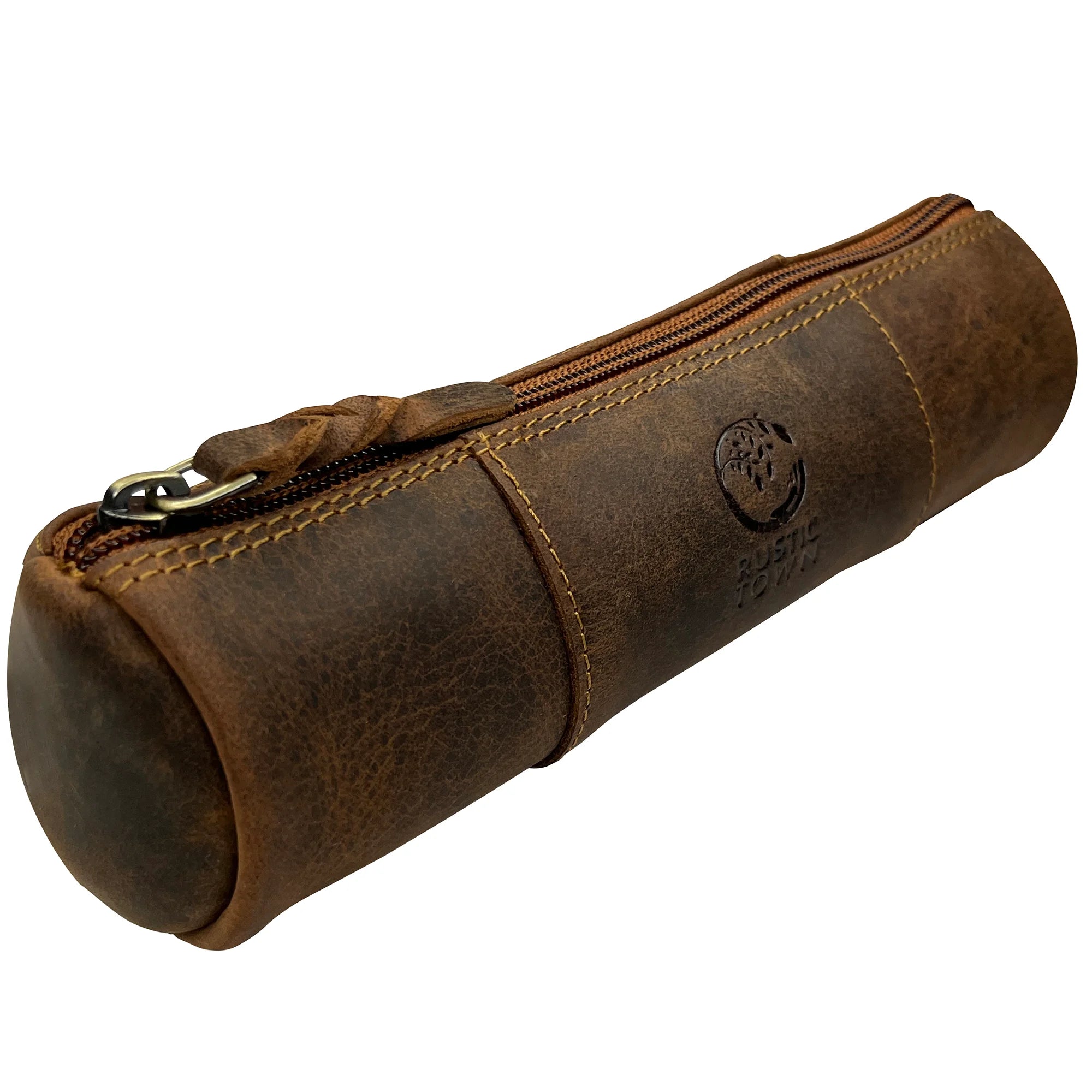
This collection covers two main styles - zippered pouches that hold everything securely behind a closed zip, and roll-up cases that lay tools out flat and roll closed - across full-grain leather in warm brown tones. At $19.99 for most styles, it is one of the most affordable ways to own a genuine full-grain leather everyday item.
Which Leather Pencil Case Should I Choose?
The headline picks, each linked to its product page, with prices verified from the live collection:
The one-rule version: choose a zippered pouch like the Leo or Tom if you want everything sealed in for a bag, and a roll-up case like the Archie if you are an artist who wants tools laid out and visible. At $19.99 across the range, the choice is purely about style and use, not budget.
Zippered Pouch or Roll-Up Case - Which Style Should I Choose?
The format changes how you access your tools, so match it to how you work:
- Zippered pouch (Leo, Winnie, Tom, Charlie) - Everything sealed behind a zip; nothing falls out in a bag, quick to open and close, the all-purpose everyday choice
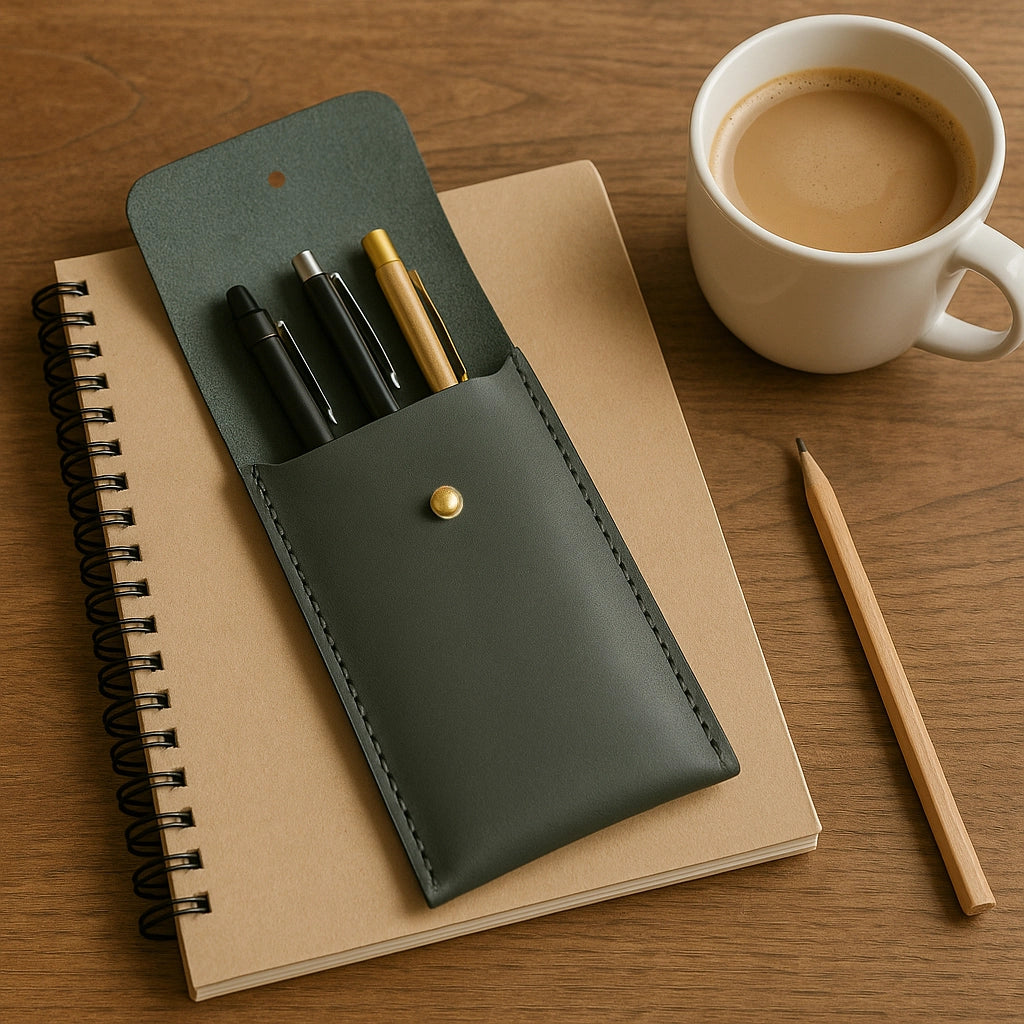
- Roll-up case (Archie) - Tools held in individual slots and rolled closed; lays flat and open so you see every pen at once, favoured by artists and anyone with a curated set
Choose the zippered pouch for school, the office, and general carry, where security and simplicity matter most. Choose the roll-up if you are an artist or illustrator who wants each pen, brush, or tool in its own place and visible at a glance. The roll-up also protects fine-tipped tools from knocking together, which matters for quality art pens.
Who Are Leather Pencil Cases For?
This simple object suits three very different people, which is why it endures:
- Students - A durable case that survives years of backpack life, from school through university, and looks more grown-up than a cartoon plastic case
- Artists - A roll-up or organiser that protects and displays fine pens, brushes, and drawing tools, keeping a curated kit in order
- Professionals - A discreet, handsome pouch that keeps quality pens together in a bag or desk drawer, a quiet upgrade from a loose pen rattling in a laptop bag
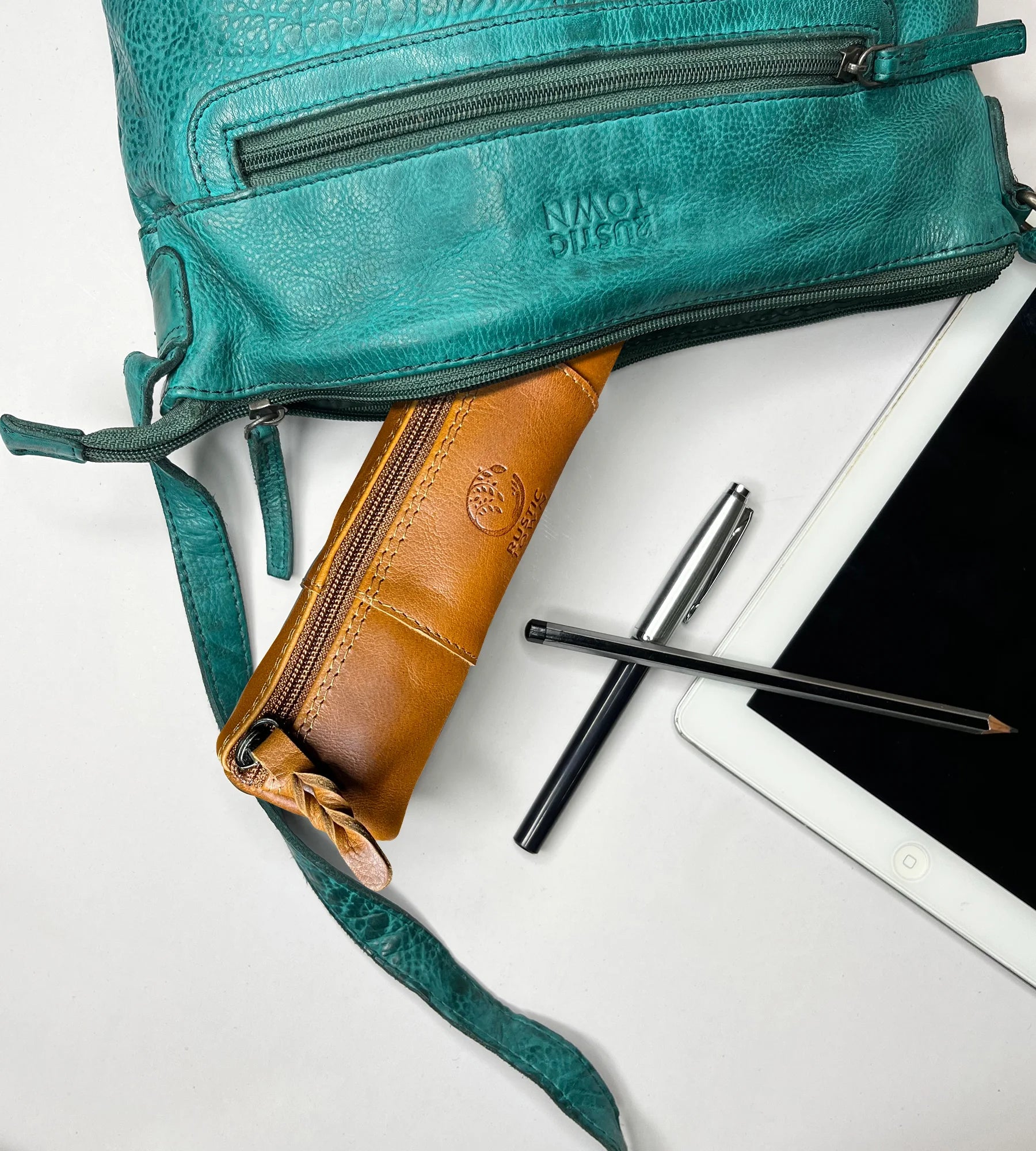
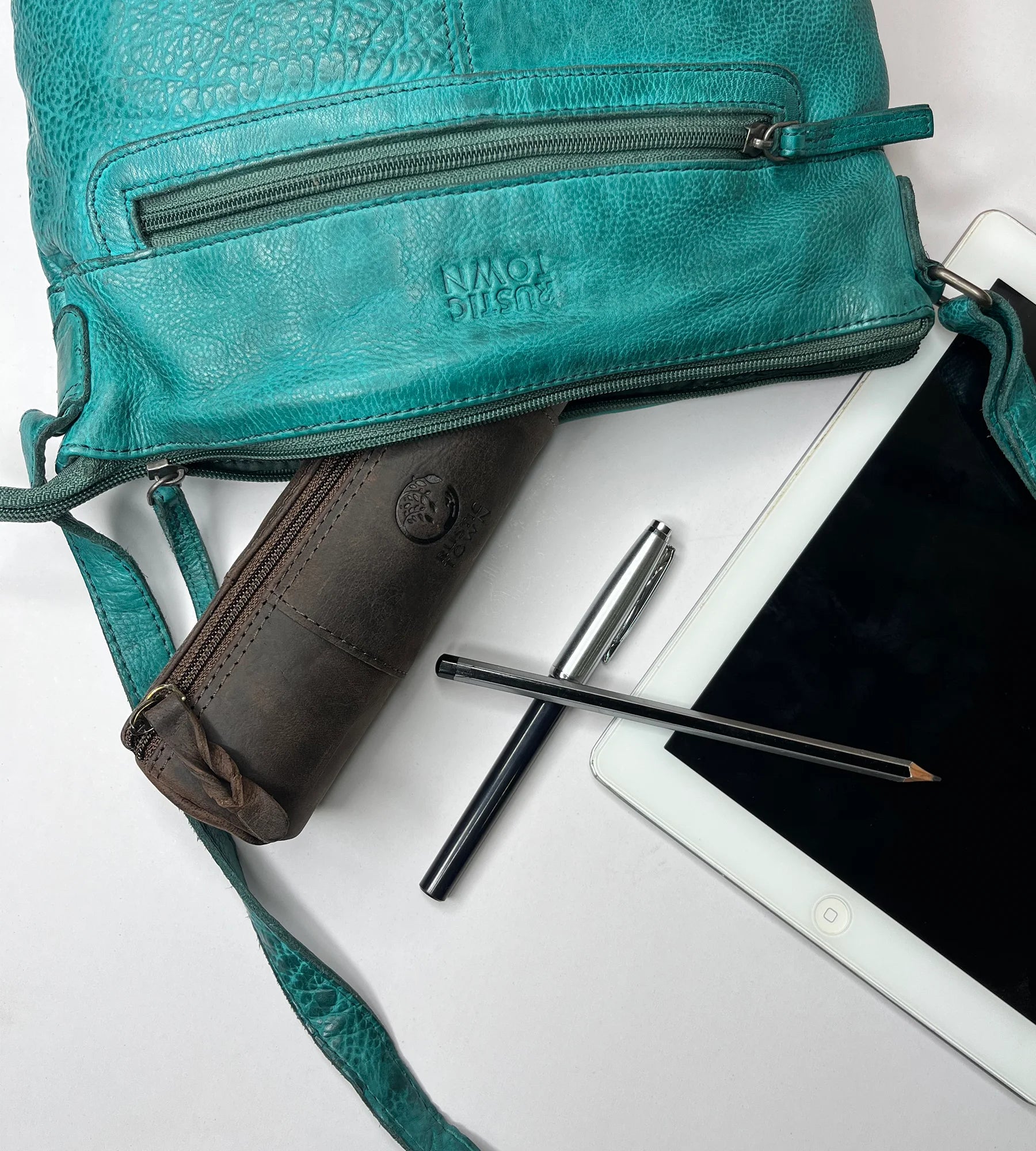
The same case also works beyond stationery - many owners use these pouches for cables and tech accessories, makeup brushes, or small travel items. A full-grain leather pouch is simply a beautiful small organiser, and what you put in it is up to you.
What Makes a Quality Leather Pencil Case?
For an item this small and inexpensive, three details still separate one that lasts a decade from one that fails in a term.
Full-grain leather. The strongest outer layer of the hide, which resists daily abrasion in a bag and develops a patina instead of cracking. A pencil case takes constant handling, so the grade matters even here - lower grades scuff and peel at the corners. Our guide to the types of leather explains the difference.
The zipper. On a zippered pouch, the zip is the part used most and the part that fails first on cheap cases. Quality pouches use sturdy metal zippers that survive thousands of openings.
The stitching. A pencil case is stuffed, zipped, and tossed in a bag daily, so tight, even stitching at the seams is what keeps it from splitting. Handcrafted construction means each case is finished individually rather than rushed.
How Do I Care for a Leather Pencil Case?
A pencil case needs almost no care to last for years:
- Wipe occasionally with a soft dry cloth, and clean ink marks promptly before they set
- Condition once or twice a year with a leather balm to keep it supple
- Avoid overstuffing so the zip and seams are not strained past their limit
- Keep it dry and away from direct heat
The full routine is in our guide on how to care for leather bags, and the deep-dive on whether water ruins leather covers spills. Handled simply, a leather pencil case becomes a small, well-worn companion that ages alongside your notebooks.
Is a Leather Pencil Case a Good Gift?
At $19.99, a leather pencil case is one of the most affordable meaningful gifts - a genuine full-grain leather item at a price that suits any budget, and engraving makes it personal. The whole collection sits comfortably under gifts under $50.
It is an ideal small gift for students heading back to school or off to university, for artists building their kit, and as a stocking-filler or add-on to a larger gift. It pairs naturally with a leather journal for a writer, a leather portfolio for a professional, or a leather backpack for a student, to make a complete set. As a graduation gift add-on, it rounds out a thoughtful bundle.
Who Is a Leather Pencil Case NOT For?
Honest guidance. If you carry only one pen, a simple pen loop on a notebook or bag does the job without a case. If you need to carry a very large set of art supplies, a dedicated art bag or tote holds more than a pouch. And if your case will be soaked or covered in paint daily, a wipe-clean synthetic survives that abuse better than leather. For students, artists, and professionals who want a durable, handsome home for their everyday pens and tools, a leather pencil case is a small upgrade that lasts for years.
How Do You Organise a Pencil Case?
A little order turns a pouch of pens into a working kit. The simple system most people settle on: keep daily-use pens at the front or top where you reach first, group similar tools together so pencils, pens, and highlighters do not have to be hunted for, and keep one or two backups rather than ten pens you never use. A pencil case stays useful when it holds what you actually reach for, not everything you own.
For artists, a roll-up case earns its keep here - each pen or brush sits in its own slot in a fixed order, so you learn where every tool is by feel and nothing rattles loose. For students and professionals, a zippered pouch with everything visible when opened flat works best. The discipline is the same as any good organiser: edit regularly. Empty the case occasionally, remove the dried-out pens and stray receipts, and it stays light and genuinely useful rather than becoming a junk drawer in pouch form.
Why Full-Grain Leather for Something as Small as a Pencil Case?
It is a fair question - why pay for full-grain leather on a $19.99 pouch when plastic costs less? The answer is the same reason it matters on a wallet: a pencil case is handled constantly, opened and closed daily, and carried in the rough environment of a bag, so the material decides whether it lasts a school term or a decade. A plastic case cracks and a fabric one frays, both within a year or two of real use. Full-grain leather instead softens, darkens, and develops a patina, looking better the longer it is carried.
There is a quieter value too. A small leather object is one of the most affordable ways to bring a bit of craft and permanence into an everyday routine - a handsome pouch on a desk or pulled from a bag is a small daily pleasure a disposable case never provides. For students it survives the years it needs to; for artists it protects tools that cost far more than the case; for professionals it is a discreet upgrade. At $19.99, full-grain leather turns the most ordinary item on the desk into one worth keeping. Pair it with a men's leather wallet and the everyday-carry leather kit is complete.