


The difference between suede leather and full grain leather comes down to which layer of the hide each material comes from: full-grain leather is cut from the outermost, densest layer of the hide with the natural grain surface completely intact, giving it the highest durability, water resistance, and patina-developing properties of any type of leather; while suede is cut from the inner split layer of the hide, with the surface buffed to create a soft napped finish that is more supple and velvety to the touch but significantly less durable, less water-resistant, and less suitable for daily carry bags and accessories than full-grain. Understanding the different types of leather - and where suede sits in that hierarchy - is the knowledge that changes every leather purchase decision you make.
If you have ever held a suede handbag and a full-grain leather bag side by side, the immediate sensory difference is obvious. Suede is softer, lighter, and has that distinctive velvety nap that feels luxurious under the hand. Full-grain leather is firmer, denser, and has a smooth surface that feels substantial and structured. Both are genuine leather products. Both come from the same animal hide. But they come from different layers of that hide, and those different layers have fundamentally different properties that make each material appropriate for completely different uses.
Most people who ask about the difference between suede leather and full grain leather are asking because they are about to buy a bag, a pair of shoes, or a garment and want to know which material is the better choice. This guide answers that question completely - covering where each material comes from, how they perform under real-world conditions, how they age, how to care for them, and which types of leather are right for which specific uses. By the end you will know exactly what you are looking at when a product description names a leather type - and why some different types of leather are worth the investment while others are marketing language for a material that will disappoint.

Rustic Town's leather goods are made exclusively from full grain leather - vegetable-tanned, handcrafted in Rajasthan, built to outlast every other leather type available at any price point.
Where Does Each Type of Leather Come From? Understanding the Hide Layers
To understand the difference between suede leather and full grain leather, you need to understand how a raw animal hide is structured and how it is processed into the different types of leather available in the market. This is the foundational knowledge that makes every other leather comparison make sense.
What Is the Structure of a Leather Hide?
An animal hide - typically cattle, goat, or sheep - has two distinct layers that are separated during leather production. The outer layer, called the grain layer, is the denser, tighter-fibred section that was the animal's skin surface. The inner layer, called the split or corium layer, is the looser, more fibrous section beneath the grain that gave the hide its bulk and thickness.
The grain layer is the source of the premium types of leather: full grain leather (grain layer completely intact and unmodified) and top-grain leather (grain layer lightly sanded for uniformity). The split layer is the source of suede leather and split leather - the softer, less durable materials that come from the inner hide. The same hide produces both material types. What determines the quality and performance of the final leather product is which layer it comes from and how much processing it undergoes before it reaches the finished product.
What Exactly Is Full-Grain Leather?
Full grain leather is the complete outer grain layer of the hide with the natural surface completely intact. Nothing has been sanded, buffed, or corrected. The natural variation in the grain surface - the slight tonal differences, the character marks, the individual texture of each hide - is preserved in its entirety. The result is the densest, strongest, most tightly fibred type of leather available. The natural grain surface contains the highest concentration of the hide's structural fibres and natural oils, giving full grain leather its characteristic durability, moisture resistance, and ability to develop a personal patina through use.
The natural variation on full grain leather is a quality indicator, not a defect. A perfectly uniform, flawless leather surface is a red flag in the different types of leather market - it indicates the surface has been heavily processed to remove natural variation, which compromises the structural properties that make full grain leather worth buying.
What Exactly Is Suede Leather?
Suede leather is produced from the inner split layer of the hide - the corium - after the grain layer has been removed for premium leather production. The split surface is then buffed or abraded to raise a soft nap of fibres, creating the characteristic velvety texture that makes suede leather immediately recognisable. The buffing process can be applied to the flesh side of full-grain leather as well, though most commercial suede leather products use split leather rather than the more expensive full-grain.
The fibres in the inner split layer are longer, looser, and less tightly packed than those in the grain layer. This looser fibre structure is what gives suede leather its softness and suppleness - and it is also what gives it its limitations. Loose fibres absorb moisture readily, hold stains, and wear through surface contact faster than the tight, dense grain surface of full grain leather.
|
Property |
Full-Grain Leather |
Suede Leather |
Top-Grain Leather |
Nubuck Leather |
|
Hide layer |
Outer grain layer - intact |
Inner split layer |
Outer grain layer - lightly sanded |
Outer grain layer - buffed to nap |
|
Surface character |
Smooth, natural grain variation |
Velvety nap - soft and fibrous |
Smooth, uniform pigmented surface |
Fine velvety nap - like fine suede |
|
Durability |
Highest of all leather types |
Low - fibres wear and mat under use |
Good to very good |
Moderate - surface nap wears |
|
Water resistance |
Good - natural grain oils |
Poor - fibres absorb moisture readily |
Good - surface coating helps |
Poor - nap absorbs moisture like suede |
|
Patina development |
Excellent - deepens with use |
None - fades and mats |
Moderate - limited by surface coating |
None - nap degrades rather than patinas |
|
Lifespan in bags |
15-20+ years |
3-7 years of careful use |
8-12 years |
5-8 years of careful use |
|
Best use |
Bags, belts, wallets, accessories |
Shoes, garments, occasional-use items |
Bags, upholstery, mid-range goods |
Shoes, fine gloves, premium garments |

How Do Suede and Full-Grain Leather Perform Differently in Real-World Use?
The hide layer origin of suede leather versus full grain leather translates directly into performance differences that are immediately apparent in daily use. These are not marginal differences - they are categorical differences that determine whether a material is appropriate for a specific product and use context.
How Does Each Leather Type Handle Moisture and Rain?
This is the most practically significant performance difference between suede leather and full grain leather for anyone who carries a bag in an environment where rain is possible - which is most environments most of the time.
Full grain leather has natural moisture resistance from the dense grain structure and the natural oils within it. A light rain shower on a full grain leather bag leaves surface water droplets that bead and can be blotted away without marking. The grain oils at the surface prevent rapid water penetration into the leather body. Extended exposure or sustained heavy rain will mark the surface, but a conditioned full grain leather bag handles the typical weather exposure of daily carry without incident.
Suede leather has essentially no natural moisture resistance. The loose fibres of the inner split layer absorb water immediately on contact. Rain on a suede leather bag darkens the surface within seconds, and as the water dries it leaves a tide mark at the boundary between wet and dry areas. Repeated moisture exposure causes the nap fibres to mat and collapse - the process that turns a soft velvety suede leather surface into a flat, patchy, dull one within a season or two of regular carry in mixed weather conditions.
How Does Each Type of Leather Age Under Daily Use?
The ageing trajectory is perhaps the most fundamental difference between these types of leather for anyone buying a bag intended to last.
Full grain leather ages by developing patina - a progressive deepening of the surface tone and a developing complexity of the grain character that makes the material more beautiful and more personal with every year of use. The handle areas of a full grain leather bag darken first from hand-contact oils and heat. The body panels deepen in tone across the full surface. By year five a full grain leather bag has a surface character that is entirely specific to its owner's carrying pattern, climate, and daily life. It looks better than the day it was bought, not worse.
Suede leather ages by degrading. The nap fibres mat under surface contact and abrasion - the areas where the bag contacts clothing, where it is set on surfaces, where it is handled repeatedly flatten first. The velvety texture that made the suede leather appealing when new becomes uneven and patchy as different areas of the surface accumulate different levels of fibre compression. Stains, moisture marks, and surface abrasion accumulate without the self-repair mechanism of the grain structure that protects full grain leather. A suede leather bag at year three of daily carry looks significantly worse than the day it was bought.
How Does Each Material Handle Scratches and Surface Contact?
Light surface scuffs on full grain leather are often self-resolving. The dense grain structure means shallow surface abrasion sits in the topmost fibres of the grain rather than penetrating deeply. Rubbing a fingertip over a light scuff on full grain leather - applying the warmth and natural oils of the hand to the scuffed area - frequently removes or reduces the mark entirely. The same mark on suede leather pulls fibres in the direction of the scuff and leaves a directional mark in the nap that is difficult to reverse without a dedicated suede brush.
What Are All the Different Types of Leather - And Where Do They Rank?
The different types of leather available in the market represent a full spectrum from the highest quality material that lasts decades to processed alternatives that use the word leather in their description while delivering a fundamentally inferior product. Understanding the full hierarchy of types of leather is the knowledge that makes every bag, shoe, and accessory purchase decision clearer.
What Is the Full Leather Grade Hierarchy?
1. Full-grain leather - the highest grade.
The outer grain layer, completely intact. No sanding, no correction, no surface treatment that modifies the natural grain. The highest fibre density, the best durability, the only grade that develops patina. The only type of leather that justifies the investment for any daily-use bag or accessory intended to last 15-20 years.
2. Top-grain leather - the second tier.
The outer grain layer, lightly sanded to remove natural blemishes and irregularities, then pigmented to a uniform tone. The sanding compromises the surface fibre density, reducing durability and patina development compared to full grain leather. A legitimate quality option for mid-range bags and accessories at an 8-12 year lifespan, but not the investment grade of full-grain.
3. Corrected-grain leather - the third tier.
The outer grain layer, heavily processed to remove surface irregularities, then embossed with an artificial grain pattern to restore a leather appearance. The processing significantly weakens the surface structure. Found in mid-range to budget leather goods. Lifespan of 4-7 years under daily use. One of the most confusing different types of leather for consumers because the embossed surface can look identical to full grain leather in a product photograph.
4. Suede - from the split layer.
Inner hide split layer buffed to a nap. Genuine leather material but from the weaker, looser-fibred inner layer. Appropriate for footwear and garments where its softness and drape are advantages. Inappropriate for daily carry bags and accessories where moisture resistance, abrasion resistance, and lifespan under sustained daily use are requirements. Suede leather is not an inferior material in the wrong application - it is a different material applied incorrectly.
5. Nubuck - buffed outer grain.
Similar in appearance to suede leather but produced from the outer grain layer buffed to create a fine nap rather than a smooth surface. More durable than split suede leather because it comes from the stronger grain layer, but the nap surface shares suede's susceptibility to moisture and staining. The premium option within the nap-finish types of leather.
6. Genuine leather - the lowest grade.
The marketing term that confuses more buyers than any other in the different types of leather vocabulary. Genuine leather is not a quality assurance - it is the lowest commercial leather grade. Compressed leather fibre scraps from the lowest hide layers, bonded with adhesive onto a backing and given a surface coating. Genuine leather looks like full grain leather in a product photograph, feels like leather when new, and peels, cracks, and delaminated within 18-36 months of regular use. Any product described only as genuine leather without specifying a higher grade is not worth buying for regular daily use.
7. Bonded leather - not really leather.
The lowest rung. Leather dust and scraps mixed with polyurethane binder to create a sheet material. Negligible leather content, zero durability under daily use, deteriorates rapidly. Not a leather product in any meaningful material sense.
|
Grade |
Source |
Durability |
Patina |
Water Resistance |
Lifespan Daily Use |
Buy for Bags? |
|
Full-grain |
Outer grain layer - intact |
Highest |
Excellent |
Good |
15-20+ years |
Yes - only grade worth it |
|
Top-grain |
Outer grain - lightly sanded |
Very good |
Moderate |
Good - coating helps |
8-12 years |
Yes - acceptable mid-range |
|
Corrected-grain |
Outer grain - heavily processed |
Good |
Minimal |
Moderate |
4-7 years |
Acceptable at lower price points |
|
Nubuck |
Outer grain - buffed to nap |
Moderate |
None - nap degrades |
Poor |
5-8 years |
Not for daily carry |
|
Suede |
Inner split layer - nap finish |
Low |
None - fades and mats |
Poor |
3-7 years |
Not for daily carry bags |
|
Genuine leather |
Compressed lower layers |
Poor - peels within 2-3 years |
None |
Poor |
1-3 years |
No |
|
Bonded leather |
Scraps and binder |
Very poor - deteriorates rapidly |
None |
Very poor |
Under 2 years |
No |
Rustic Town uses exclusively full grain leather across the entire product range - the only grade that justifies a long-term investment in a bag, accessory, or carry piece.
How Do You Identify Suede Leather Versus Full-Grain Leather by Touch and Sight?
Knowing the different types of leather in theory is useful. Being able to identify them in a shop, at a market, or from a product page photograph is practical. Here is the specific identification guide for distinguishing suede leather from full grain leather and from every other type of leather in the grade hierarchy.
How to Identify Full-Grain Leather
Step 1. Check the surface texture under light.
Hold the item under a light source at a low angle. Full grain leather shows natural grain variation - slight tonal differences across the surface, subtle texture variation between sections, the organic irregularity of a natural material. Perfect uniformity across the entire surface is a red flag for a corrected or coated leather.
Step 2. Smell the material.
Full grain leather - especially vegetable-tanned - has a warm, earthy, distinctly natural smell. The natural oils and the tanning chemistry of quality full-grain hides produce a smell that is immediately recognisable as quality leather. Synthetic, coated, or bonded materials often smell of chemicals, plastic, or an artificially applied leather fragrance. Suede leather has its own natural smell but without the same richness as full-grain.
Step 3. Examine the cut edges.
On a bag or accessory with visible cut edges - inside seams, the edge of a strap, the top of a pocket - look at the edge cross-section. Full grain leather has a clean fibrous edge that shows the consistent natural fibre structure across the full thickness. Genuine and bonded leather shows a layered structure at the edge - the backing material visible beneath a thin surface coating.
Step 4. Check the back surface where visible.
The back (flesh) side of full grain leather is slightly suede-like - the natural fibres of the inner hide visible without the smooth grain surface. If the interior of a bag is lined in the same material as the exterior and the lining surface has a fine nap texture, this is consistent with full-grain leather construction where the hide's inner surface is used for the interior. Suede leather has the same nap on both surfaces - the characteristic that distinguishes it from the smooth-grain surface of full grain leather.
Step 5. Verify the product description explicitly.
The most reliable identification method is the product description. Full grain leather stated explicitly in the product description is the strongest single indicator. "Genuine leather", "premium leather", or "quality leather" without specifying full-grain should be treated as genuine leather until proven otherwise. The grade vocabulary of different types of leather is specific - any product description using vague language around the grade is either using a lower grade or the brand does not know their own material well enough to specify it.

How to Identify Suede Leather
Suede leather identification is simpler than full grain leather because its surface character is immediately distinctive. The nap texture - the directional softness of the buffed fibres - is the unmistakable identifier. Running a finger across suede leather in different directions produces a visible directional change in the nap - it darkens slightly in one direction and lightens in the other as the fibres are pushed in different orientations. No other type of leather does this.
What Are Suede and Full-Grain Leather Each Best Used For?
Neither suede leather nor full grain leather is the universally superior material. Each is the correct material for specific applications and the wrong material for others. The performance limitations of suede leather that make it inappropriate for daily carry bags make it an excellent material for products where its softness, drape, and fine texture are the primary requirements.
What Is Suede Leather Best Used For?
Footwear - particularly dress shoes and casual shoes.
Suede leather shoes - Chelsea boots, loafers, desert boots - are among the most established and most appropriate applications of the material. The softness of suede leather allows it to conform to the foot more readily than full grain leather, and the nap surface accepts protective sprays that extend its water resistance to a level adequate for occasional light rain. A suede leather shoe treated with a quality suede protector and brushed after each wear is a long-lasting, beautiful product that uses the material's properties appropriately.
Garments and outerwear.
Suede leather jackets, waistcoats, and skirts use the material's drape and softness as direct advantages - qualities that full grain leather in garment weight cannot replicate. The suppleness of suede leather at garment weights makes it the preferred material for leather clothing where movement and softness are the primary requirements.
Gloves.
Suede leather and nubuck leather are the standard materials for fine dress gloves because the softness and thinness achievable in suede leather at glove weight is not possible in full grain leather without producing a glove too stiff for practical use.
Occasional-use accessories.
A suede leather clutch bag or evening bag used for formal occasions - not daily carry - can be a long-lasting, beautiful accessory because the use frequency is low enough that the durability limitations of suede leather are not exposed in the same way they would be under daily carry conditions.
What Is Full-Grain Leather Best Used For?
Daily carry bags - totes, backpacks, crossbodies, briefcases.
Any bag carried daily is in an environment where full grain leathers durability, moisture resistance, and abrasion resistance are directly tested. This is the application that full grain leather was developed for and that suede leather fails under within a few years of regular daily use.
Belts, wallets, and accessories under sustained daily use.
A belt worn daily for 15 years. A wallet opened and closed 5 times a day for 20 years. A watch strap worn against the skin in every weather condition for a decade. These are applications where full grain leather delivers and every other type of leather falls short.
Travel goods.
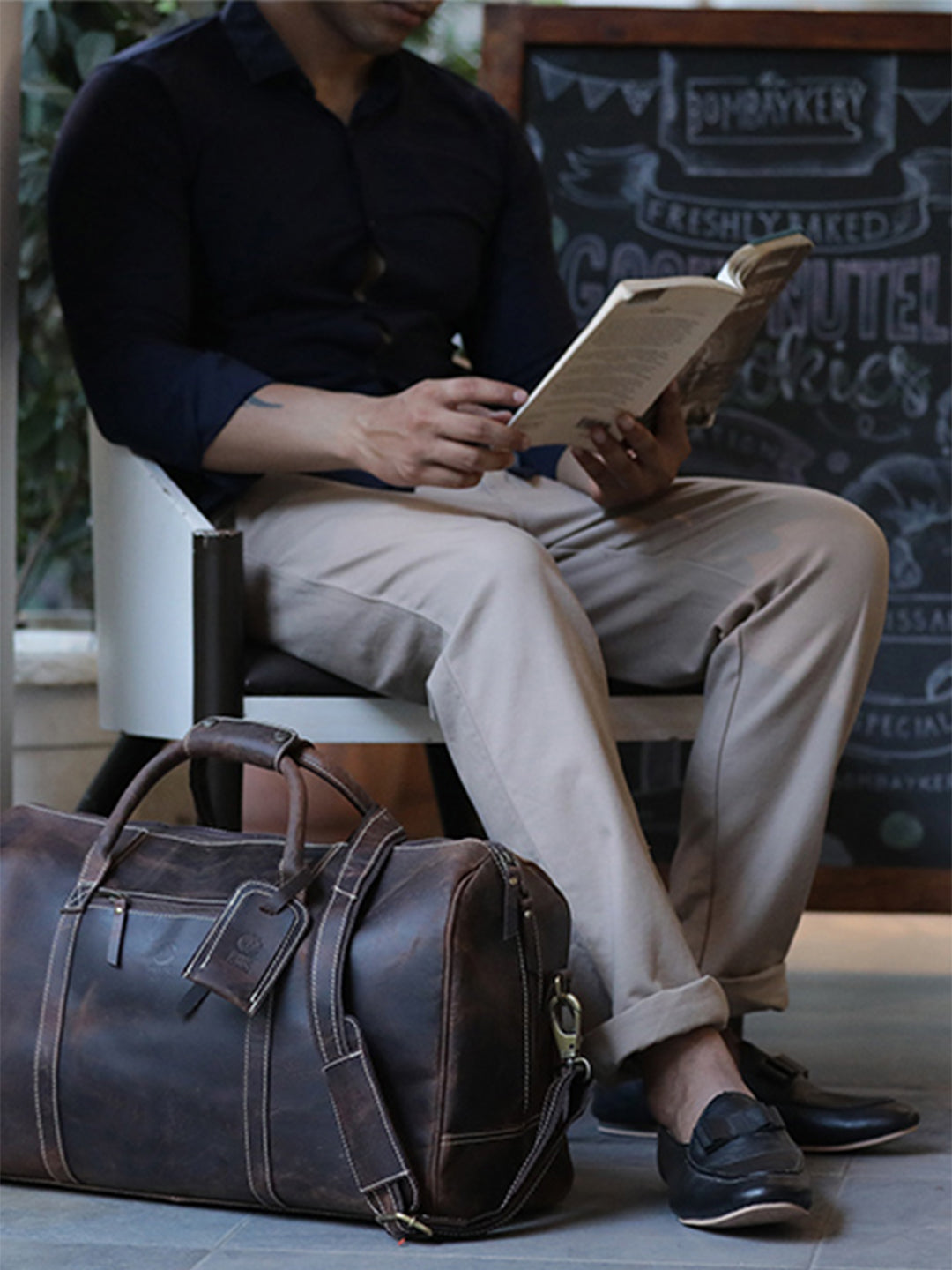
Duffle bags, travel backpacks, and luggage accessories that go through airports, car boots, and overhead bins need the structural integrity and surface resilience of full grain leather. Suede leather travel goods exist and look beautiful in a product photograph - and show the damage of three trips within a year of purchase.
|
Product |
Best Leather Type |
Why |
Worst Choice |
Why It Fails |
|
Daily carry handbag |
Full-grain leather |
Durability, moisture resistance, patina development |
Suede leather |
Moisture absorption, fibre matting, staining under daily use |
|
Dress shoes |
Suede or full-grain |
Both appropriate - suede for softness, full-grain for longevity |
Genuine leather |
Peels at crease points within months of regular wear |
|
Leather belt |
Full-grain leather |
Withstands daily flex and buckle stress for 10-15 years |
Genuine leather |
Cracks at buckle point within 2 years |
|
Evening clutch (occasional) |
Suede or full-grain |
Low frequency use means suede's durability limits are not reached |
Genuine leather |
Even low-use genuine leather deteriorates from storage |
|
Leather jacket |
Suede or nappa (soft full-grain) |
Drape and movement are requirements - stiff full-grain inappropriate |
Genuine leather |
Peels at flex points within one season |
|
Laptop bag / briefcase |
Full-grain leather |
Daily loading, transit, and surface contact require grain layer strength |
Suede leather |
Surface damage from transit contact within weeks |
|
Winter gloves |
Suede or nubuck |
Thinness and softness required - full-grain too stiff at glove weight |
Full-grain |
Too stiff for glove construction at functional thicknesses |
Shop Rustic Town's types of leather goods - every product built from full-grain leather, the only grade appropriate for a bag used daily for years.

How Do You Care for Suede Leather Versus Full-Grain Leather?
The care routines for suede leather and full grain leather are different in almost every respect because the material structures they are maintaining are different. What works for one actively damages the other.
How Do You Care for Suede Leather?
Use a suede brush after every wear.
The most important suede leather maintenance tool is a suede brush - a brush with brass or rubber bristles that restores the nap direction and removes surface debris without damaging the fibres. Brushing after every wear prevents the progressive matting that turns suede leather flat and dull. Brush in one direction with the nap for a consistent finish.
Apply suede protector spray before first use.
A quality silicone or fluorocarbon suede leather protector spray applied before the item is first used provides a baseline water and stain resistance that the material does not have naturally. Reapply every 3-6 months or after any suede cleaning treatment. This is the single most impactful maintenance step for suede leather used in any environment where moisture exposure is possible.
Treat stains with a suede eraser.
A suede leather eraser - a natural rubber block - removes many dry stains and surface marks by abrading the top fibres of the nap without damaging the underlying structure. For liquid stains, blot immediately - never rub - and allow to dry before using the eraser. Never use water directly on suede leather stains.
Never use leather conditioner or water on suede.
The conditioning products that maintain full grain leather - beeswax, lanolin, neatsfoot oil - damage suede leather by saturating the fibres and causing them to mat permanently. Suede leather and full grain leather care products are not interchangeable.
How Do You Care for Full-Grain Leather?
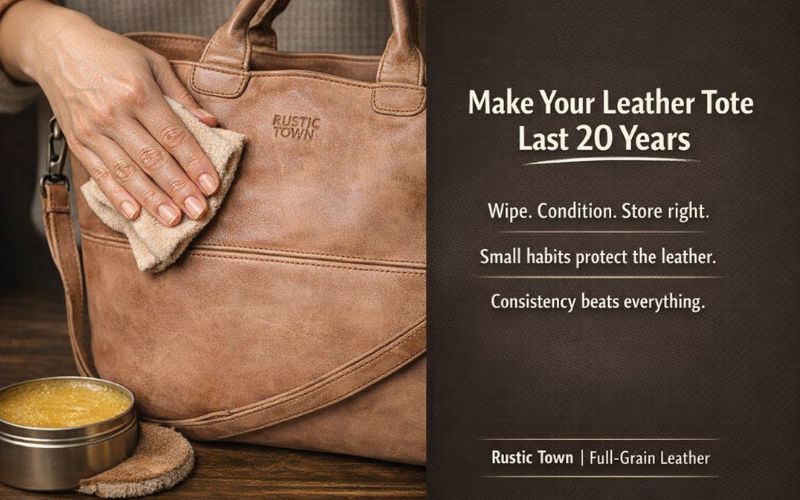
The full grain leather care routine is covered in depth in Rustic Town's leather care guides, but the summary for this comparison: wipe with a dry cloth after use, damp cloth monthly, beeswax or lanolin conditioner every 6 months, blot water exposure immediately and air dry at room temperature. Never use suede brushes, suede erasers, or suede protector sprays on full grain leather.
|
Care Action |
Full-Grain Leather |
Suede Leather |
Notes |
|
Regular cleaning |
Damp cloth wipe monthly |
Suede brush after every use |
Different tools entirely - not interchangeable |
|
Conditioning |
Beeswax or lanolin every 6 months |
Never use oil-based conditioners |
Oil saturates suede nap permanently - irreversible damage |
|
Water protection |
Natural grain oils - supplement with wax conditioner |
Suede protector spray before first use and every 3-6 months |
Suede needs active waterproofing - full-grain has natural baseline resistance |
|
Stain treatment |
Blot - cornstarch for oil - leather cleaner for set stains |
Suede eraser for dry stains - blot liquid immediately |
Suede erasers damage full-grain surface - leather conditioners damage suede |
|
Drying after moisture |
Blot and room-temperature air dry - no heat |
Blot, air dry, then brush nap back to correct direction |
Heat damages both - never use for drying either material |
|
Storage |
Upright or hanging in dust bag |
Stuffed and upright - away from light - dust bag essential |
Both benefit from breathable fabric storage - never plastic |
Frequently Asked Questions: Suede vs Full-Grain Leather
Q: What is the main difference between suede and full-grain leather?
A: They come from different layers of the same hide. Full-grain leather comes from the outer grain layer with the natural surface intact - the densest, most durable leather available. Suede comes from the inner split layer, buffed to a soft nap - softer and more supple but significantly less durable, less water-resistant, and less appropriate for daily carry bags and accessories.
Q: Is suede real leather?
A: Yes - suede is genuine leather, produced from the inner split layer of an animal hide. It is a real leather product with a legitimate place in footwear and garments. It is not appropriate for daily carry bags and accessories where the durability and moisture resistance of the grain layer are required.
Q: What are the different types of leather in order of quality?
A: From highest to lowest: full-grain leather (outer grain, intact), top-grain leather (outer grain, lightly sanded), corrected-grain leather (outer grain, heavily processed and embossed), nubuck leather (outer grain, buffed to nap), suede (inner split layer, buffed to nap), genuine leather (compressed lower layers - lowest grade of real leather), bonded leather (scraps and binder - not meaningfully leather).
Q: Can suede leather bags get wet?
A: Suede leather has very poor natural water resistance. Rain darkens the nap surface immediately and dries to a tide mark. Regular moisture exposure mats and flattens the nap fibres progressively. A suede protector spray applied before first use and refreshed regularly provides moderate water resistance but not the natural baseline protection of full-grain leather's grain oils.
Q: Which is more expensive - suede or full-grain leather?
A: Full-grain leather commands a higher price than suede because it comes from the premium outer grain layer of the hide - the layer that determines the quality of the finished leather. Suede, from the split inner layer, is typically less expensive per square metre to produce. However, a full-grain leather bag at a higher price point represents a better long-term investment than a suede bag at any price, given the lifespan difference under daily carry conditions.
Q: How do you tell if a bag is suede or full-grain leather?
A: Run a finger across the surface in different directions. Suede shows a directional nap change - it darkens in one direction and lightens in the other as the fibres are pushed. Full-grain leather has a smooth, consistent surface in all directions. Full-grain leather also smells richer and more natural than suede, and the product description should explicitly state the leather grade.
Q: Is nubuck the same as suede?
A: No - nubuck and suede are both nap-finish leathers but from different hide layers. Nubuck comes from the outer grain layer buffed to a fine nap - more durable than suede and with a finer, silkier texture. Suede comes from the inner split layer buffed to a coarser nap. Both are susceptible to moisture and staining, and both require the same suede brush and protector spray care routine.
Q: What is genuine leather and is it the same as full-grain?
A: Genuine leather and full-grain leather are not the same. Genuine leather is the lowest commercial leather grade - compressed lower hide layers bonded with adhesive and given a surface coating. Full-grain leather is the highest grade - the outer grain layer with the natural surface intact. The word genuine in genuine leather is not a quality assurance. It simply means the product contains some real leather content, which genuine leather does at the minimum level.
The Short Answer: Which Should You Choose - Suede or Full-Grain Leather?
The choice between suede leather and full grain leather is not a quality debate - it is an application question. Suede leather is the correct material for shoes where softness and drape are the primary requirements, for garments where movement and suppleness matter, and for occasional-use accessories where daily durability is not tested. It is a beautiful material in the right application.
Full grain leather is the correct material for any bag, belt, wallet, or accessory used daily for years. It handles moisture, abrasion, surface contact, and sustained daily mechanical stress in a way that suede leather cannot. It develops a personal patina through use that makes it more beautiful over time. And it lasts 15-20 years of daily carry while suede leather in the same application is replaced within three to five years.
When you see a product described only as different types of leather without specifying the grade, or as suede leather in a context where daily durability is required, or as genuine leather without specifying full-grain - now you know exactly what you are looking at. The types of leather vocabulary is the most important knowledge a leather buyer can have, and the difference between suede leather and full grain leather is the clearest illustration of why it matters.
Browse Rustic Town's leather bag collection - every product in different types of leather made from full-grain only, the grade that earns its cost across 15-20 years of daily use.
Find Rustic Town's full range of suede leather alternatives - full-grain leather bags, accessories, and travel goods built to last longer than any other material available.