


A leather backpack for work is a two-shoulder carry bag made from full-grain or top-grain leather with padded shoulder straps, a dedicated leather laptop backpack compartment, organised internal sections for documents and daily essentials, and a structured body that holds its shape under a full professional load - built to distribute carrying weight evenly across both shoulders while communicating professional authority in client-facing and office environments where a nylon bag simply does not deliver the same signal. A leather backpack for work is not just a better-looking version of a nylon bag. It is a functionally superior carry that improves with every year of daily professional use.
The nylon backpack has dominated office carry for 20 years on the strength of two arguments: it is cheap and it is light. Both arguments are true. Neither of them holds up under honest scrutiny when the full ownership period is the comparison basis, when professional appearance in a client-facing context is a factor, and when the daily ergonomic experience of a properly constructed leather backpack versus a sagging, shapeless nylon pack is placed side by side.
This guide answers the comparison question completely - not just on material longevity, which is the obvious argument for leather backpacks, but on every dimension that matters to a professional who carries a bag to work every day: ergonomics, organisation, professional signal, cost over time, and the specific features that make a leather laptop backpack the better choice for the modern professional.
Rustic Town's leather backpack collection - full-grain leather, handcrafted in Rajasthan, padded laptop sleeve, solid brass hardware from under $100.

What Are the Real Differences Between a Leather Backpack and a Nylon Backpack for Work?
Most people frame the comparison between a leather backpack and a nylon backpack as a price comparison. That framing is wrong - or at least incomplete. Price is the entry point of the comparison. Material behaviour over time, structural performance under daily load, professional appearance in a work context, and the daily carrying experience across a full working career are the dimensions that actually determine which bag is the better choice for going to work every single day.
How Does Leather Perform Structurally Compared to Nylon in a Work Backpack?
A full grain leather backpack at 1.5-2mm panel thickness holds its shape under load. The structured body panels maintain their silhouette whether the bag is half-full or completely packed. When you set a leather work bag on the floor beside a desk or on a table in a client meeting, it sits upright, presenting the same structured profile that it had when you left home. A nylon backpack under the same load sags, bulges where the content pushes against the fabric, and collapses on its side when set down unless a rigid internal frame keeps it upright.
This structural difference is not just aesthetic. A backpack that collapses when set down requires two hands to manage every time it is placed and retrieved. A laptop inside a collapsed nylon bag sits at whatever angle gravity puts it at rather than in the protected vertical position in the padded sleeve. Documents inside a sagging bag crease at the fold points where the bag body compresses them. A structured leather backpack eliminates all three of these minor daily frustrations simultaneously.
What Is the Professional Signal Difference Between Leather and Nylon in a Work Backpack?
This is the dimension most buyers acknowledge privately but rarely articulate directly. A leather backpack for work in a professional environment - a law firm, a consulting office, a client-facing corporate role, a business meeting - communicates investment, consideration, and professional seriousness in a way that a nylon backpack cannot. Both bags may carry identical contents. The leather bag signals that the person carrying it made a considered quality choice. The nylon bag signals that carrying capacity was the primary decision criterion.
Whether this signal matters depends entirely on the professional context. In a tech startup where informality is a deliberate cultural signal, a leather backpack is no advantage over nylon and might even read as over-formal. In a client-facing professional role where first impressions carry commercial weight, the bag that reads as a considered quality object rather than a utility item contributes to the overall professional presentation in a way that compounds across years of client interactions.
|
Comparison Factor |
Full-Grain Leather Backpack |
Quality Nylon Backpack |
Budget Nylon Backpack |
|
Structural integrity |
Holds shape under any load - self-supporting |
Holds shape with internal frame only |
Sags and collapses under full load |
|
Professional appearance |
Excellent - reads as quality and consideration |
Functional - reads as practical |
Poor - reads as commodity carry |
|
Lifespan daily use |
15-20 years |
6-10 years |
2-4 years |
|
Patina development |
Excellent - personal character builds with use |
None - fades toward failure |
None - deteriorates from day one |
|
Weight (empty bag) |
1.2-1.8kg depending on size |
0.5-0.8kg |
0.4-0.7kg |
|
Water resistance |
Good - natural grain oils |
Very good - nylon repels water |
Moderate - cheap coatings degrade |
|
Cost per year (15yr period) |
$6-10 |
$8-14 |
$15-25 |
Why Does Full-Grain Leather Specifically Make a Better Work Backpack Than Any Other Material?
Not all leather is equal in a leather backpack for work. The grade hierarchy determines whether a leather backpack lives up to the investment or deteriorates toward replacement on a timeline only slightly better than the nylon it was supposed to replace. Understanding the grade differences is the single most important knowledge a buyer needs before purchasing any leather laptop backpack at any price.
What Is Full-Grain Leather and Why Does It Matter in a Work Backpack?
Full-grain leather is the outermost layer of the hide with the natural grain surface completely intact and unmodified. No sanding to remove blemishes, no embossing to create a uniform pattern, no correction to eliminate natural variation. The result is the highest fibre density, the best natural abrasion and moisture resistance, and - uniquely - a surface that develops a personal patina through use rather than degrading toward failure. A full grain leather backpack at year five of daily professional use has a surface character that is specific to the person who has carried it - the darkened areas at the shoulder strap contact points, the body panel depth that reflects five years of professional daily carry. This is not wear. It is ownership.

What Happens to Genuine Leather in a Daily Work Backpack?
Genuine leather is the lowest commercial grade - compressed leather fibre scraps bonded onto a backing with adhesive and given a surface coating. It looks identical to full-grain leather in a product photograph. Under the sustained mechanical stress of daily use as a leather work bag - opened and closed 500 times a year, loaded to 8-10kg and carried through commutes, set on office floors and meeting tables - genuine leather begins to crack and peel within 18 to 36 months. The surface coating separates from the backing. The bag that seemed like a reasonable leather backpack at $60 is in a bin within two years of purchase.
This is why full-grain stated explicitly in the product description is the first thing to check before buying any leather backpack. Not premium leather. Not genuine leather. Not quality leather. Full-grain leather. Those three words are the only ones that indicate the grade that handles 15-20 years of daily use without surface failure.
|
Leather Grade |
Surface Condition |
Daily Use Lifespan |
Patina |
Professional Signal |
Cost Per Year |
|
Full-grain |
Natural grain - completely intact |
15-20+ years |
Excellent |
Highest - surface tells a story |
$6-10 |
|
Top-grain |
Lightly sanded and pigmented - uniform |
8-12 years |
Moderate |
Good - reads as quality leather |
$12-18 |
|
Corrected-grain |
Heavily processed - embossed uniform pattern |
4-7 years |
Minimal |
Moderate |
$15-25 |
|
Genuine / bonded |
Compressed scraps - surface coating only |
1-3 years |
None - peels and cracks |
Low - deteriorates visibly |
$25-50 |
What Features Make the Best Leather Laptop Backpack for Work?
A leather laptop backpack used for daily professional work has requirements that go beyond looking good in a product photo. The features that determine whether a leather backpack for work genuinely serves the professional daily carry routine are specific, verifiable before purchase, and worth examining carefully before spending $80-$150 on a bag intended to last a professional career.
What Laptop Compartment Specification Does a Leather Work Backpack Need?
The laptop compartment is the most critical functional element of any leather laptop backpack. It needs to: hold your specific laptop without the device sliding or shifting during transit - measure your laptop's actual physical dimensions and verify them against the compartment spec, not just the nominal screen size. A 15-inch MacBook Pro has different physical dimensions from a 15-inch Windows laptop. It needs to be padded on at least three sides - base, back panel, and one lateral side - with the compartment positioned against the back panel of the leather backpack where the laptop sits closest to the wearer's centre of gravity and is most stable during movement. And the laptop access zip should be independent from the main compartment so the laptop can be retrieved for security screening without unpacking everything else.
What Ergonomic Features Does a Leather Backpack for Work Need?
Padded shoulder straps with width appropriate to the load.
The shoulder straps of a leather work bag carry the entire daily professional load - laptop, documents, accessories, lunch - across both shoulders for the full duration of the commute and any transit during the working day. Straps need padding sufficient to prevent strap edge pressure on the shoulder and trapezius under a fully loaded bag, adjustability across a range that covers different torso lengths, and a surface material that prevents strap migration off the shoulder during active movement. Thin flat leather straps without padding are inadequate for a leather laptop backpack carrying 8-10kg daily.
Sternum strap.
A sternum strap - the horizontal clip connecting the two shoulder straps across the chest - prevents strap migration during active commuting: cycling, running for a train, navigating stairs with the bag loaded. On a leather backpack for work used for a cycling or running commute, the sternum strap is not optional. It is the feature that keeps the bag centred and stable rather than shifting with every stride.
Back panel padding and ventilation.
The back panel of a full grain leather backpack contacts the wearer's back for the full duration of every commute and working day carry. Adequate padding distributes the pressure of the bag contents across the full back panel rather than concentrating it at the edges of the laptop compartment. A ventilated channel between the back panel sections reduces the heat build-up that makes carrying a close-contact bag uncomfortable in warm weather - an ergonomic consideration that most leather backpack buyers overlook until their first summer commute.
What Internal Organisation Does a Leather Work Backpack Need?
A leather laptop backpack used as a true daily work carry needs organisation beyond the laptop compartment. Specifically: a main compartment large enough for a 15-inch laptop, A4 documents flat, and daily essentials without requiring items to be crammed in sideways. A front organisational compartment with pen loops, card slots, and a zip pocket for small items that would otherwise be lost at the base of the main compartment. At least one exterior quick-access pocket for phone, transit card, and the items needed without opening the main bag. And interior zip pockets for valuables - earphones, cards, keys - that need to be separate from the main carry contents.
|
Feature |
Quality Specification |
Poor Specification |
Daily Use Impact |
|
Laptop compartment |
Padded 3 sides - back panel position - independent access zip |
Single padded sleeve - shared main compartment zip |
Shared zip requires full bag opening for laptop - no security screening efficiency |
|
Shoulder straps |
Padded, adjustable, non-slip surface, sternum strap included |
Thin flat leather - no padding - no sternum strap |
Shoulder and trapezius strain under full load across full commute |
|
Back panel |
Padded + ventilated channel |
Flat leather or thin foam only |
Heat build-up on summer commutes - discomfort under sustained carry |
|
Leather grade |
Full-grain stated explicitly |
Genuine or unspecified leather |
Peeling and cracking within 2-3 years of daily use |
|
Hardware |
Solid brass zips and D-rings |
Zinc alloy - unspecified metal |
Tarnishing and structural failure within 3-5 years |
|
Front organiser |
Pen loops, card slots, zip pocket |
Single open front pocket |
No organisation means daily search for small items |
Rustic Town's leather laptop backpack includes a padded back panel, independent laptop access, solid brass hardware, and front organiser - the full specification for daily professional carry.

How to Pack a Leather Backpack for Work: The Right Way Every Time
Most professionals pack their leather backpack for work the same disorganised way they packed their nylon bag - everything in together, find it when you need it. A leather work bag with a properly organised interior is wasted when packed this way. The packing sequence below takes 90 seconds and makes the bag work correctly throughout the day.
Step 1. Laptop first - into the dedicated compartment, back panel position.
The laptop goes into the dedicated padded compartment first, before anything else. This positions the laptop against the back panel - the most stable and most impact-protected position in the bag - and ensures the laptop compartment zip closes cleanly without competing with other bag contents. If your leather laptop backpack has an independent laptop compartment zip, use it. The laptop should be fully seated in the padded sleeve before the main compartment is touched.
Step 2. Documents and folders flat in the main compartment.
A4 documents, folders, notebooks, and anything flat goes into the main compartment immediately behind the laptop compartment. Standing vertically if the main compartment has document dividers, flat if not. Documents packed diagonally or crammed in sideways crease at the fold points and emerge at the destination looking unprofessional. A leather backpack for work with a properly sized main compartment handles A4 documents flat without requiring them to be angled.
Step 3. Heavy items centre and low in the main compartment.
Books, chargers, a power bank, a water bottle - these go in the main compartment low and centred. Heavy items positioned high in a backpack shift the bag's centre of gravity backward, pulling the shoulder straps and creating the hunched posture that makes backpack carry uncomfortable across a full commute. Low and centred keeps the load close to the back and balanced across the shoulder straps.
Step 4. Use the front organiser compartment for small daily items.
Phone charger cable, pens, business cards, earphones, small accessories - these go in the front organiser compartment, not in the main compartment where they disappear at the base under heavier items. A well-organised leather backpack for work has pen loops, card slots, and a zip pocket in the front compartment specifically for this purpose. Using the organiser means every small daily item is in a consistent, findable position throughout the working day.
Step 5. Valuables in the interior zip pocket - never loose in the main compartment.
Keys, wallet, cards, and any valuables that cannot be in the main compartment with loose items go in the interior zip pocket of the full grain leather backpack. This pocket needs to be used consistently - not just when you remember - because the alternative is the daily key search at the bottom of the main compartment that compounds into a significant time waste across a working year.
Step 6. Water bottle in the exterior side pocket - never in the main compartment.
A water bottle in the main compartment of a leather work bag is a leak waiting to happen. The exterior side pocket is specifically designed for a water bottle, an umbrella, or any item that needs quick access or that poses a moisture risk to the bag contents if it leaks. Use it every time.
Step 7. Phone and transit card in the quick-access exterior pocket.
The phone and transit card go in the exterior quick-access pocket - the front or top zip pocket accessible without opening the main bag. On any commute involving public transit, having the phone and transit card extractable without opening the main compartment saves time at every gate and turnstile. This single packing habit changes the transit experience from bag-juggling to smooth single-hand access.
Step 8. Adjust shoulder straps before leaving - every time.
The shoulder straps on a leather laptop backpack need to be adjusted to position the bag correctly against the back with the base of the bag sitting at the natural waist - not lower, where the bag swings with every stride, and not higher, where it rides up into the neck. Two minutes spent adjusting the straps correctly eliminates the strap-migration and posture-compensation that makes poorly fitted backpack carry uncomfortable across a full commute. Adjust every time. Do not assume yesterday's setting is still correct.
How Does a Leather Backpack Handle the Full Working Week?
The argument for a leather backpack for work over nylon is not just about the commute. It is about how the bag performs across the full range of contexts a professional encounters in a working week - the commute, the client meeting, the business lunch, the airport transit for a Wednesday afternoon site visit, the after-work social occasion. A leather work bag that handles all of these without requiring the professional to think about whether their bag is appropriate for the context is doing exactly what a good work bag should do.
How Does a Leather Backpack Perform in a Client-Facing Professional Context?
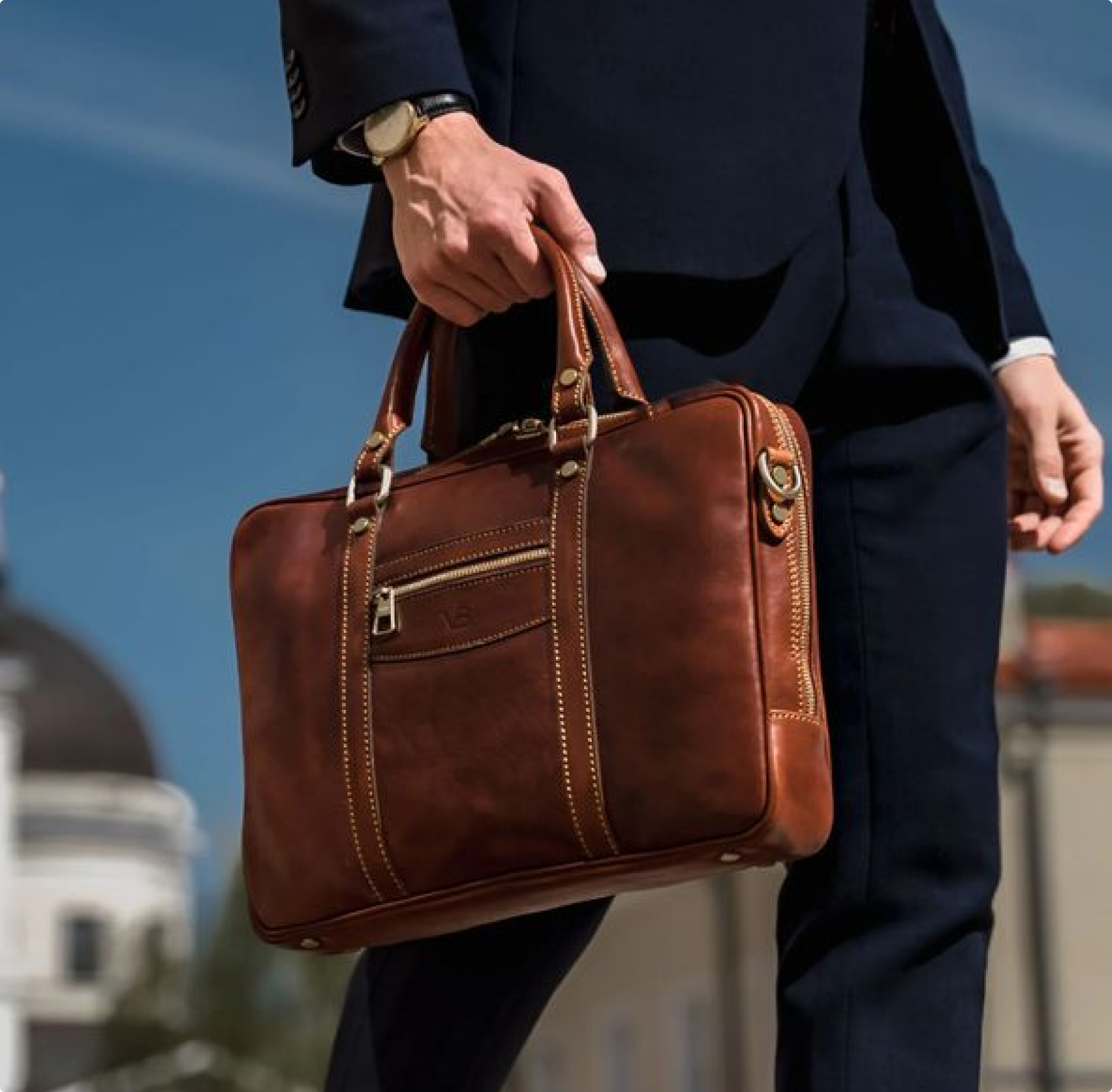
A leather backpack for men or women in a client meeting, a boardroom presentation, or a professional networking event performs a specific function beyond carrying things - it contributes to the professional impression made before the meeting begins. A full grain leather backpack in dark brown or black, set beside the chair or placed on a meeting table, reads as a considered quality object. A nylon backpack in the same context reads as something the person happened to be carrying. Both bags may contain identical professional materials. The leather bag signals that the professional took the same care with their carry as they presumably take with their work.
How Does a Leather Work Bag Handle Business Travel?
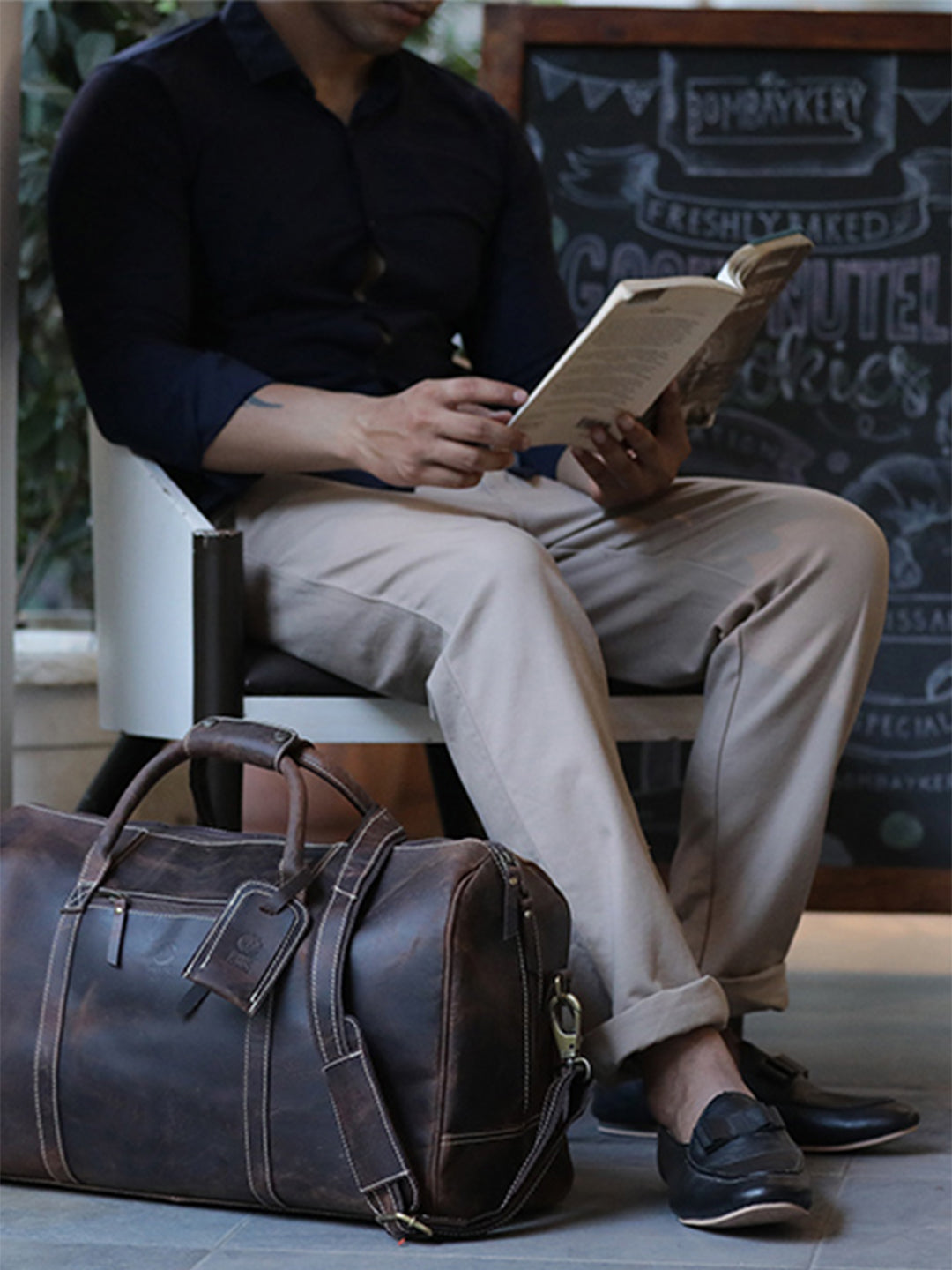
A leather backpack sized at 25-35 litres functions as carry-on personal item luggage on any commercial flight - fitting under the seat in front or in the overhead bin, carrying a laptop, documents, and an overnight change of clothes for a one to two night business trip without checked luggage. This eliminates the checked baggage fee, the baggage claim wait, and the risk of delayed luggage on every business trip the leather laptop backpack takes across its 15-20 year professional life. Across 20 business trips per year, the carry-on capable leather work bag pays back its purchase cost in saved baggage fees within the first year of ownership.
|
Work Context |
Leather Backpack Performance |
Nylon Backpack Performance |
Advantage |
|
Morning commute (cycling or transit) |
Structured, stable, hands-free, professional on arrival |
Functional - same ergonomic advantage |
Equal ergonomics - leather wins on arrival appearance |
|
Office environment |
Sits upright, structured profile, professional presence |
Sags, requires propping, casual appearance |
Leather - structural integrity and professional signal |
|
Client meeting or boardroom |
Reads as quality object - contributes to professional impression |
Reads as utility carry - neutral to negative signal |
Leather - professional signal matters in this context |
|
Business travel (carry-on) |
35L fits as personal item - laptop and overnight essentials |
Same carry-on capability |
Equal function - leather wins on hotel arrival appearance |
|
After-work social occasion |
Transitions naturally - leather reads as personal style |
Reads as still in work mode - functional only |
Leather - transitions professional to personal naturally |
|
Weekend use |
Doubles as casual daypack - leather reads as considered choice |
Fine for casual use - no aesthetic contribution |
Leather - adds to weekend carry as well as work |
Browse Rustic Town's leather backpack for work range - structured full-grain leather, organised interiors, padded laptop compartments from under $100.
What Is the True Cost Comparison Between a Leather Backpack and Nylon Over a Professional Career?
The sticker price comparison between a full grain leather backpack at $99 and a quality nylon backpack at $55 looks like a $44 gap. Across a realistic professional ownership period, this comparison completely inverts. Here is the honest arithmetic.
|
Bag Type |
Purchase Price |
Expected Lifespan |
Replacements (15 yrs) |
Total 15-Yr Cost |
Cost Per Year |
|
Full-grain leather backpack |
$99 |
15-20 years |
0 |
$99 |
$6.60 |
|
Top-grain leather backpack |
$130 |
10-12 years |
1 |
$260 |
$17.33 |
|
Genuine leather backpack |
$70 |
2-3 years |
5-7 |
$350-$490 |
$23-$33 |
|
Quality nylon backpack (branded) |
$80 |
6-8 years |
1-2 |
$160-$240 |
$11-$16 |
|
Mid-range nylon backpack |
$55 |
4-5 years |
3 |
$165-$220 |
$11-$15 |
|
Budget nylon backpack |
$30 |
2-3 years |
5-7 |
$150-$210 |
$10-$14 |
The genuine leather backpack row is the most revealing. A bag at $70 described as genuine leather costs $350-$490 across 15 years of replacement while delivering a progressively deteriorating carrying experience at every stage of the comparison. The full grain leather backpack at $99 is not only the most economical choice per year - it is the only option that looks better and performs better at year 10 than year 1. Every other option on this table is on a decline trajectory from the day it is first used.
The weight argument for nylon deserves a direct answer too, since it is the most commonly cited reason for not choosing a leather work bag. A full-grain leather backpack weighs approximately 1.2-1.8kg empty compared to 0.5-0.8kg for a nylon backpack of equivalent size. The difference is 700g to 1kg of empty bag weight. Loaded with a 1.5kg laptop, charger, documents, and daily essentials, the total carry weight of the leather laptop backpack is 6-8kg versus 5.5-7.5kg for the nylon equivalent. This 500g-700g difference is imperceptible across a normal commute for any healthy adult and is completely eliminated by the ergonomic advantage of properly adjusted shoulder straps distributing the load correctly across both shoulders.
How Do You Care for a Leather Backpack Used for Work Every Day?
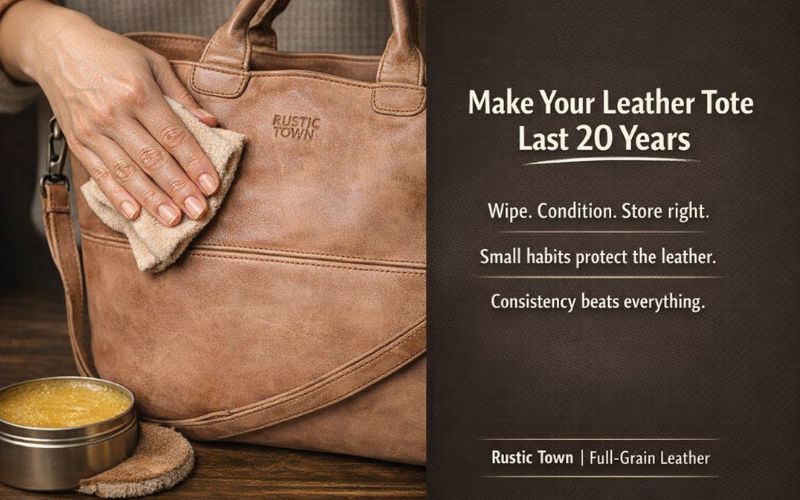
A leather backpack for work maintained correctly lasts 15-20 years of daily professional use without structural failure or surface degradation. The maintenance routine is minimal - the natural oils in the full-grain hide do most of the work - but the regular attention keeps the leather supple, the patina developing correctly, and the hardware functioning throughout the bag's professional life.
|
Frequency |
Action |
Method |
Time |
Why |
|
Daily |
Wipe shoulder straps with dry cloth |
Remove sweat and skin oil from contact areas |
20 seconds |
Strap contact areas are highest-use leather - daily wipe prevents oil build-up that stains |
|
Weekly |
Wipe full exterior with dry cloth |
Remove surface dust and light office environment contact residue |
1 minute |
Weekly wipe prevents accumulation before it penetrates the grain surface |
|
Monthly |
Wipe with slightly damp cloth - air dry fully |
All exterior leather panels - do not saturate |
3 minutes |
Removes contact grease and commute environment residue from main body panels |
|
Every 6 months |
Apply beeswax or lanolin conditioner |
All exterior leather - allow 15 min absorption - buff lightly |
10 minutes |
Replenishes grain oils depleted by daily use - maintains suppleness and patina depth |
|
Annually |
Inspect seams and hardware |
Handle attachment stitching, shoulder strap hardware, main compartment zip |
5 minutes |
Catches early wear at highest-stress points before it becomes structural failure |
|
Water exposure |
Blot immediately - air dry at room temperature |
Never rub - blot only - no heat drying |
Immediate |
Heat drying accelerates grain oil depletion - causes surface cracking at flex points |
How Do You Maintain the Shoulder Straps on a Leather Work Backpack Specifically?
The shoulder straps on a leather backpack for work are the highest-use component in the entire bag - in contact with clothing and skin for every minute of the commute, adjusted and readjusted daily, and flexing constantly with every movement. The strap contact areas need more frequent conditioning than the main body panels because the combination of body heat, clothing friction, and daily flex accelerates grain oil depletion at these specific points. Include the shoulder straps in every conditioning cycle and add a dedicated strap wipe-down after any particularly warm commute or active transit. A leather work bag with supple, well-maintained straps is measurably more comfortable to carry across a full commute than the same bag with dried-out straps that have lost their natural flexibility.
Is a Leather Backpack a Good Professional Gift?
A leather backpack for work is one of the strongest professional gifts available for any man or woman in a role that involves a daily commute, regular travel, or client-facing professional work. Most professionals own the backpack they bought when function and price were the only decision criteria. Most professionals have been thinking about upgrading for years and have not prioritised it. A quality leather laptop backpack as a gift makes the decision for them - and the first working week they carry it, the difference from what they were using before is immediately and permanently obvious.
|
Recipient |
Best Choice |
Why |
Occasion |
|
New professional starting career |
Compact leather laptop backpack |
First quality professional bag - sets the standard for the career |
Graduation, first job |
|
Established professional upgrading |
Full-size full-grain leather work backpack |
Replaces the nylon bag they have been meaning to replace for years |
Milestone birthday, promotion |
|
Frequent business traveller |
35L full-grain leather backpack - carry-on optimised |
Eliminates checked baggage on every short business trip |
Work anniversary, significant birthday |
|
Professional student (MBA etc.) |
Medium leather laptop backpack |
Bridges academic and professional context in one bag |
Course start, graduation |
|
Corporate gifting |
Full-grain leather backpack with embossed logo option |
Professional, memorable, used daily, improves over years |
Client gifting, team recognition |
Rustic Town's leather backpack for men and women's range - full-grain leather in multiple sizes, professional formats for every working context.
Frequently Asked Questions: Leather Backpack vs Nylon for Work
Q: Is a leather backpack really better than nylon for work?
A: For most professional work contexts - yes, across every dimension except initial cost and empty bag weight. Full-grain leather holds its shape structurally, develops personal patina rather than deteriorating, costs less per year of use over a 15-year ownership period, and communicates professional quality in client-facing contexts that nylon cannot match. The 700g-1kg weight difference in the empty bag is imperceptible under a normal work load.
Q: What leather grade is best for a work backpack?
A: Full-grain leather stated explicitly - the only grade that handles 15-20 years of daily professional use without surface failure and the only grade that develops the personal patina that makes a leather backpack more characterful over time. Genuine leather and bonded leather deteriorate within 2-3 years. Top-grain is acceptable at mid-range prices. Full-grain is the only grade worth the investment for daily work carry.
Q: How heavy is a full-grain leather laptop backpack compared to nylon?
A: A medium full-grain leather backpack weighs approximately 1.2-1.8kg empty versus 0.5-0.8kg for a nylon equivalent. Loaded with daily work essentials, the difference is 500g-700g total - imperceptible across a normal commute for any healthy adult and eliminated by the ergonomic advantage of correctly adjusted padded shoulder straps distributing the load properly.
Q: What size leather backpack is best for work?
A: 25-35 litres for most professional daily carry - accommodating a 15-inch laptop, A4 documents flat, daily essentials, and extras without excess volume that encourages over-packing. This size range also qualifies as carry-on personal item luggage on most airlines, eliminating checked baggage requirements on short business trips.
Q: How do you care for a leather work backpack?
A: Daily dry cloth wipe of the shoulder straps. Weekly dry cloth wipe of the full exterior. Monthly damp cloth wipe followed by full air drying. Beeswax or lanolin conditioner applied every 6 months across all exterior leather surfaces. Annual inspection of seam integrity at handle and strap attachment points. Never use heat to dry leather after water exposure.
Q: Can a leather backpack be used for gym and travel as well as work?
A: Yes - a medium full-grain leather backpack at 30-35 litres handles the work commute, gym sessions with a dedicated wet section, and overnight business travel as carry-on luggage in the same bag. This multi-context versatility is one of the primary arguments for investing in a quality leather backpack over a single-purpose nylon work bag.
Q: Is a leather backpack appropriate for a professional woman?
A: Absolutely - a full-grain leather backpack in a compact to medium size with a refined silhouette reads as a deliberate, quality professional choice for women in any modern professional environment. The ergonomic advantage of two-shoulder carry over a single-shoulder tote or handbag is equally applicable regardless of gender.
Q: What colour leather backpack is best for work?
A: Dark brown is the most professionally versatile - pairs with navy, grey, charcoal, and earth tones simultaneously and develops the richest visible patina over years of daily carry. Black is the most formally neutral and appropriate across the widest range of professional dress codes. Tan works well in creative and mixed-casual professional environments.
The Short Answer: What Makes a Leather Backpack Better Than Nylon for Work
The leather backpack wins the comparison with nylon on every dimension except initial purchase price and empty bag weight - and the initial price advantage for nylon disappears within the first ownership cycle when the leather bag is still in daily use and the nylon bag has been replaced once already.
A full grain leather backpack at $99 costs $6.60 per year across 15 years of daily professional use. It holds its shape on every office floor and meeting table. It signals professional quality in every client-facing context. It develops a surface character through your specific working life that no nylon bag at any price replicates. And it earns a sternum strap adjustment every morning that a properly worn leather laptop backpack carries more comfortably across a full commute than any sagging nylon pack ever will.
The nylon backpack is cheaper on day one. The leather work bag is better on every day after that. That is what makes the leather backpack the right choice for work.
Find Rustic Town's full grain leather backpack for work - every size, every format, in full-grain leather built for the professional daily carry from under $100.