

Why a Leather Duffel Bag Gets Better With Every Trip You Take
There's a moment every traveler knows. You're standing at the baggage carousel, watching identical black suitcases circle past like a procession of forgettable strangers. Then you spot it — your
leather duffel bag, rich and warm, bearing the marks of every journey you've taken together. It doesn't just carry your belongings; it carries your story.
Most bags depreciate the moment you buy them. A leather duffel does the opposite. It appreciates — not just in character, but in beauty. Every scratch becomes a chapter. Every scuff, a memory.
This isn't marketing poetry. It's material science meeting human experience. And once you understand why leather behaves this way, you'll never look at a disposable bag the same way again.
Let me show you what I mean.

The Science of Getting Better: Understanding Patina
Patina is a word leather lovers use with reverence. It describes the gradual transformation of leather's surface through use, exposure to light, and the natural oils from your hands. But here's what makes it remarkable — this isn't deterioration. It's evolution.
When you buy a quality leather travel bag, especially one made from full grain leather, you're buying something alive in a material sense. The leather contains natural oils, fibers, and a surface that responds to its environment. Unlike synthetic materials that simply break down, leather develops character.
The process works like this: exposure to sunlight gradually deepens the color. The friction of handling smooths and polishes high-contact areas. Natural oils from your skin condition the leather while creating subtle variations in tone. Minor scratches blend into the surface, adding depth rather than damage.
A brand new vintage leather duffel might look beautiful in photographs. But give it five years of honest use, and it becomes something photographs can't capture — a texture that tells time, a color that speaks of places traveled.
At Rustic Town, we've watched thousands of bags transform in the hands of their owners. The leather we use is selected specifically for its patina potential — because we're not just selling you a bag for today. We're giving you a companion for decades.
The Investment Mindset: Why Cheap Bags Cost More
Let's do some uncomfortable math.
A typical synthetic travel bag costs around fifty to eighty dollars. Seems reasonable. But here's what happens in real life: the zippers fail within two years. The fabric tears at stress points. The handles fray. The wheels — if it has them — wobble and stick. Within three to five years, you're buying another one.
Over twenty years — a reasonable lifespan for a frequent traveler — you'll cycle through four to seven bags. That's two hundred to five hundred dollars spent on things you'll throw away. And here's the part that hurts: each replacement looks worse than the last. Synthetic materials don't age; they just decay.
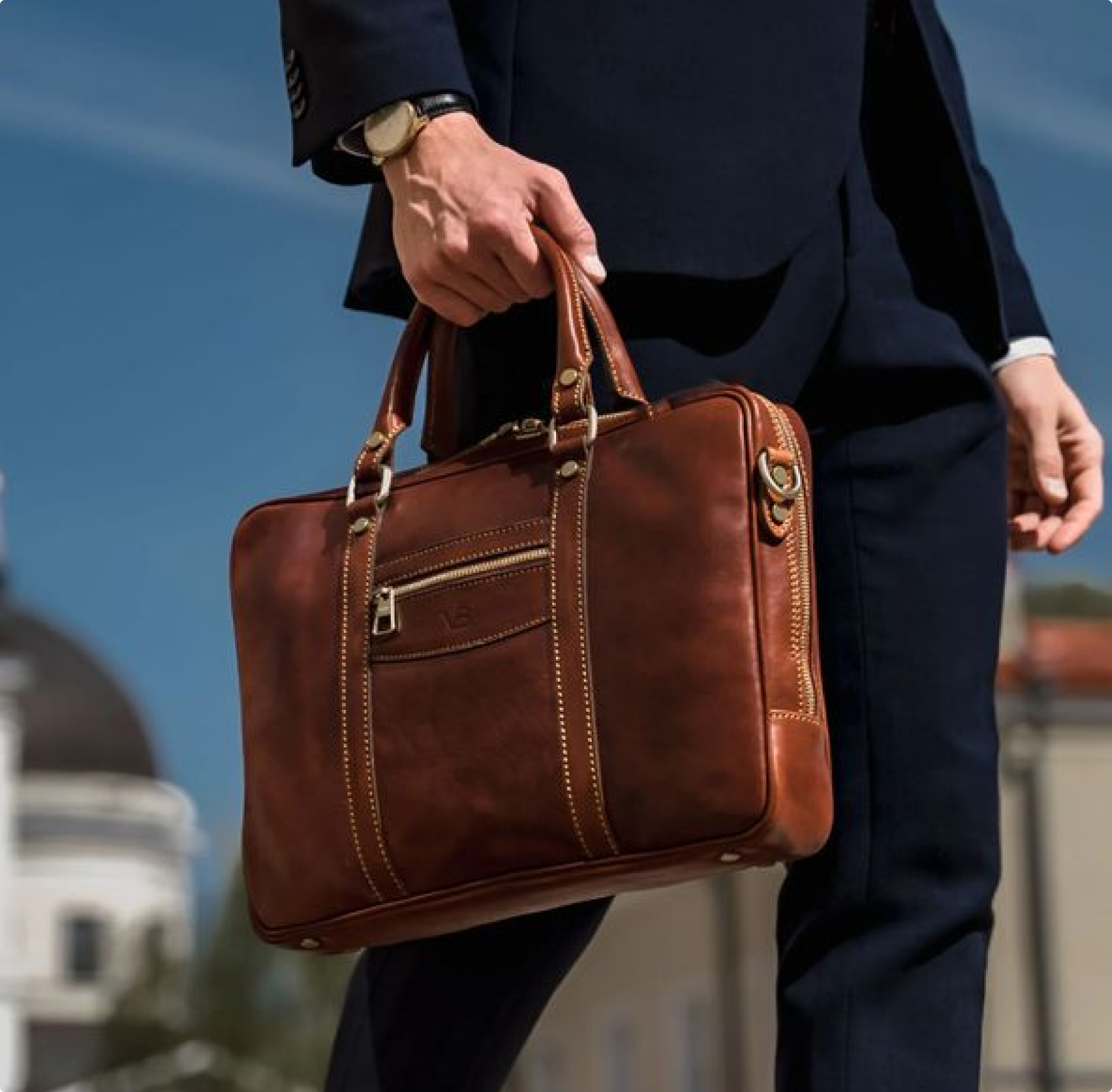
Now consider a quality leather duffel bag. Yes, the upfront cost is higher — typically one hundred fifty to four hundred dollars for genuine craftsmanship. But that same bag, properly cared for, will outlast you. Twenty years is conservative. Thirty, forty years? Absolutely achievable.
More importantly, your twentieth trip with that bag will be better than your first. The leather will be softer. The color, richer. The brass hardware will have developed that distinctive darkened glow. You won't be looking for a replacement — you'll be hoping your kids want to inherit it.
This is the investment mindset. It's not about spending more money. It's about understanding where money actually goes.

The Emotional Weight of Objects: Why Your Bag Matters
Here's something the minimalists won't tell you: some objects deserve to accumulate meaning.
Your leather weekender bag isn't just storage. It's the thing you grabbed when you got the call that your father was in the hospital. It's what you packed for the trip where you proposed. It's the bag sitting beside you in the cab on your first morning in a new city, a new job, a new chapter.
Disposable bags don't carry these associations. They're transactional objects — here today, landfill tomorrow. But a leather duffel becomes what the Japanese call "mono no aware" — an object that holds the gentle sadness of impermanence while simultaneously defying it.
The scratch on the corner? That's from the cobblestones in Lisbon. The dark patch on the handle? That's from your hands, your oils, your grip during a hundred nervous departures and excited arrivals. The overall tone — darker, warmer, more complex than the day you bought it — that's simply time made visible.
There's a reason vintage leather goods command premium prices. It's not just scarcity. It's because they carry proof of life lived.
Full Grain vs. The Imitators: What You're Actually Buying
Not all leather is created equal. Understanding the difference will save you from expensive disappointments.
Full grain leather represents the complete, unaltered surface of the hide — all the natural grain, the tiny imperfections that prove authenticity, the dense fiber structure that gives leather its strength. This is what develops that coveted patina. This is what lasts generations.
Top grain leather has been sanded and treated to remove imperfections. It looks more "perfect" initially but sacrifices much of the natural character and durability. Corrected grain goes further, artificially stamping a uniform pattern onto the surface. Bonded leather is essentially leather-scented plastic — ground leather fibers mixed with synthetic materials.
When shopping for a full grain leather bag, look for these indicators: natural variations in color and texture across the surface, visible pores when examined closely, a rich leather smell that's earthy rather than chemical, and flexibility that feels substantial rather than flimsy.
A genuine full grain leather carry on bag will feel different in your hands. There's a weight to quality — not excessive, but present. A density that promises durability. And a surface that practically invites touch.

The First Year: What to Expect From Your New Companion
Buying a quality leather duffel is the beginning of a relationship. Here's how that first year typically unfolds.
Month one: Your bag arrives stiff and somewhat formal. The leather is lighter in color, the surface smooth and unmarked. It smells incredible — that distinctive new leather scent that speaks of craft and possibility. Resist the urge to over-condition it. The leather needs time to breathe and begin its natural aging process.
Months two through four: You'll notice the first changes. Areas you touch frequently — handles, zipper pulls, corners you grip when lifting — start to darken slightly. The leather begins relaxing, conforming to how you pack and carry. Small scratches appear. Don't panic. Watch them soften and blend over the coming weeks.
Months five through eight: Now you're entering the sweet spot. The overall color deepens noticeably. High-wear areas develop a subtle polish. The bag feels different — softer, more pliable, somehow more yours. Friends start commenting on your "great old bag." You smile, knowing it's not even a year old.
Months nine through twelve: By your first anniversary together, the transformation is undeniable. Comparing photos from day one reveals just how much character has developed. The bag has become uniquely yours — no two leather duffels age exactly alike. Your usage patterns, your climate, your body chemistry all contribute to a patina that's essentially your signature.
Care Without Obsession: The Minimalist Approach to Leather Maintenance
Good leather doesn't require a chemistry degree or an elaborate care routine. In fact, over-maintenance is one of the most common mistakes new leather owners make.
The foundation of leather care is simple: keep it clean and occasionally conditioned. For cleaning, a slightly damp cloth handles most surface dirt. For conditioning, a quality leather conditioner applied two to three times per year keeps the fibers supple and prevents cracking. That's genuinely it for regular maintenance.
Storage matters more than most people realize. When your leather travel bag isn't in use, stuff it lightly with clean paper or cloth to maintain its shape. Store it in a breathable dust bag — never plastic, which traps moisture. Keep it away from direct sunlight and heat sources, which can dry the leather unevenly.
Water exposure isn't the disaster many fear. Full grain leather handles occasional moisture well. If your bag gets wet, let it dry naturally at room temperature. Never use heat — no hair dryers, no radiators, no direct sunlight. Once dry, apply conditioner to restore any lost oils.
The philosophy here is benign neglect. Use your bag. Live with it. Let it develop character naturally. Intervene only when genuinely necessary. The leather knows what it's doing.
The Stories Leather Tells: Generations of Travel
I want to tell you about a bag we received in our workshop last year.
A customer brought in her grandfather's leather duffel for restoration. The bag was purchased in 1967 — over fifty years of continuous use. The hardware needed replacing. Some stitching had worn through. The leather itself? Absolutely magnificent.
It had developed a color impossible to manufacture — a deep amber brown with undertones of burgundy in the creases. The surface held a polish that came only from decades of handling. And the smell. Somehow, after half a century, it still smelled like leather. Not musty. Not degraded. Leather.
The granddaughter knew some of its history. It had traveled to Vietnam with her grandfather during his service. It had carried her grandmother's things on their honeymoon. It had been the hospital bag when her mother was born. By the time it reached her, it held three generations of memories.
We restored what needed restoring and preserved everything else. When she picked it up, she ran her hand across the surface — the same gesture, we imagined, her grandfather had made thousands of times before her.
This is what you're buying when you invest in quality leather. Not just a bag for your trips. A bag for your children's trips. A physical object that connects past to future in ways digital memories never can.
Choosing Your Companion: What to Look For
When selecting a leather duffel bag that will serve you for decades, certain details matter more than others.
Leather quality: Full grain is non-negotiable for longevity. Look for natural variations and a firm but flexible feel. Avoid anything that seems plasticky or overly uniform.
Construction: Examine the stitching closely. Double-stitched seams with waxed thread indicate serious craftsmanship. Stitches should be even, tight, and slightly recessed into the leather. Check where handles attach — this is a common failure point. Quality bags use riveted reinforcement, not just stitching.
Hardware: Solid brass or high-grade metal hardware outlasts plated alternatives significantly. Test zippers — they should glide smoothly without catching. Buckles and clasps should feel substantial, not hollow.
Lining: Interior lining should be durable canvas or quality fabric. Cheap synthetic linings tear and peel. Some premium bags use leather lining — beautiful but adds weight.
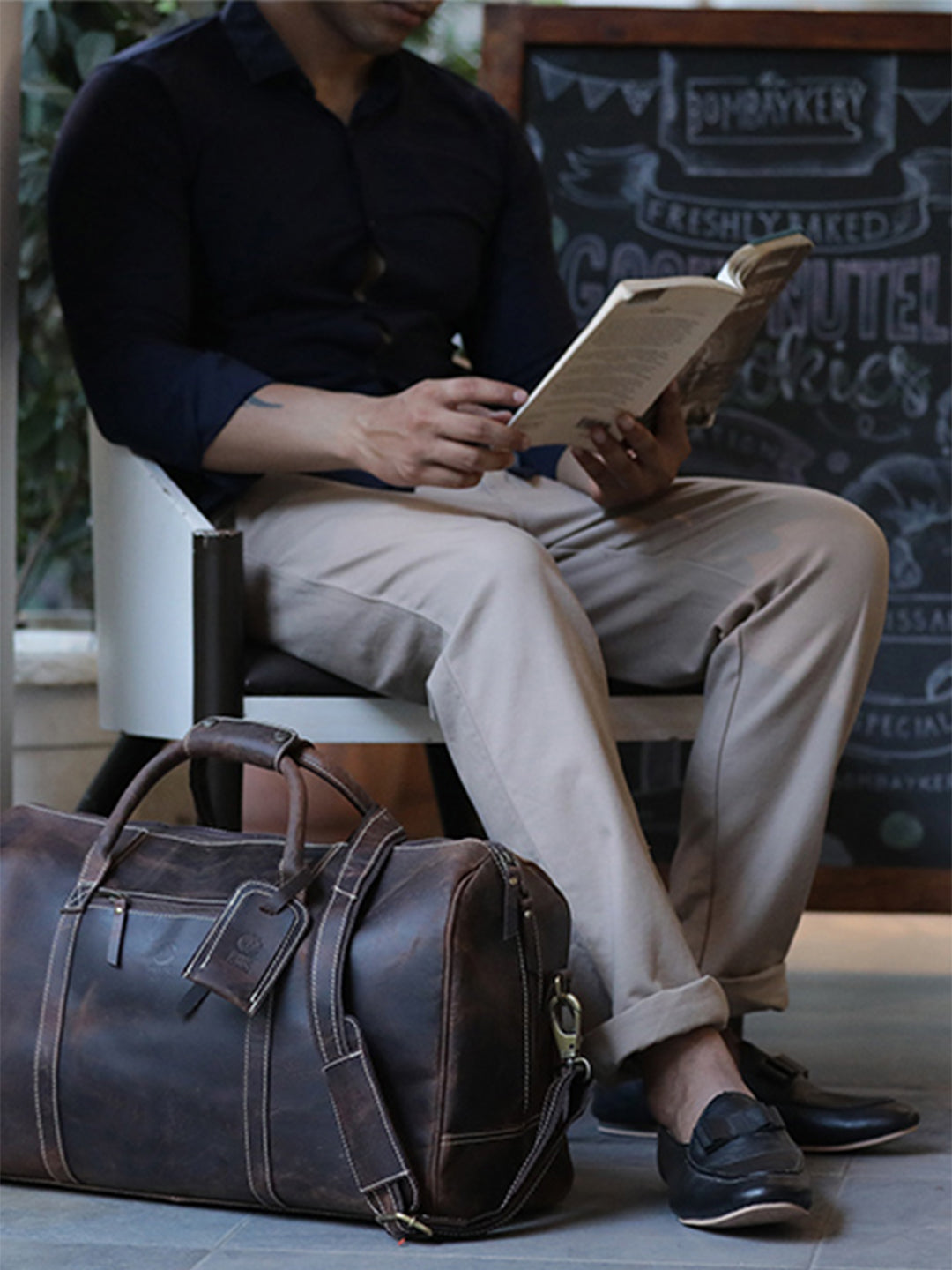
Size and proportion: Consider how you actually travel. A leather weekender bag typically holds enough for three to four days. Larger duffels accommodate extended trips but become heavy when full. The best choice matches your most common journey length.
The Sustainable Choice: Leather's Environmental Reality
Sustainability conversations around leather are complicated. But the full picture often surprises people.
Yes, leather production has environmental impacts. Tanning processes, particularly those using chrome, require careful management. Cattle raising contributes to agricultural concerns. These are real considerations that responsible manufacturers address through ethical sourcing and sustainable practices.
But here's the counterweight: longevity. A leather bag used for thirty years displaces perhaps ten synthetic alternatives. Those synthetic bags — made from petroleum-derived plastics — create microplastic pollution, contribute to fossil fuel dependency, and sit in landfills for centuries.
Leather is biodegradable. At the end of its remarkably long life, it returns to the earth. Synthetic materials fragment but never truly disappear. They persist, creating long-term environmental burden.
The most sustainable product is often the one you don't have to replace. A quality leather carry on bag represents consumption that acknowledges time — buying once with intention rather than repeatedly with resignation.
Your Next Trip Starts Now
There's a particular feeling that comes with owning something genuinely well-made. It's confidence, partly. Pride, certainly. But also something quieter — a sense of alignment between your values and your choices.
A leather duffel bag isn't for everyone. If you want the lightest possible luggage, carbon fiber wins. If you want the cheapest, synthetic mass production wins. If you want wheels, well, leather duffels traditionally don't have them.
But if you want something that rewards your investment with increasing beauty? If you want an object that absorbs your life story and displays it proudly? If you want to pack for a trip twenty years from now with the same bag you're buying today, only infinitely more characterful?
Then leather is your answer. And the right leather duffel will prove it every single journey.
At Rustic Town, we make bags designed for exactly this transformation. Full grain leather selected for patina potential. Traditional construction methods that have proven themselves across centuries. Hardware built to outlast trends and seasons.
We don't sell you a bag. We introduce you to a traveling companion.
The rest of the story? That's for the two of you to write together, one trip at a time.