


Why the Leather Messenger Bag Refuses to Go Out of Style
The Humble Beginnings: Courier Culture and Urban Necessity
The messenger bag's story begins not in fashion houses but on the busy streets of late 19th century cities. As urban centers grew and communication networks expanded, a new profession emerged: the bicycle courier. These messengers needed bags that could carry documents, packages, and telegrams while keeping both hands free for navigating traffic and controlling their bicycles through crowded streets.
Early courier bags were purely functional - sturdy canvas or leather satchels with simple flap closures and long straps. The cross-body wearing style wasn't a fashion statement but an engineering solution. Unlike shoulder bags that slip and shift, cross-body bags stay secure against your body during physical activity. The flap closure allowed quick access to contents without removing the bag, essential when making multiple rapid deliveries.

New York's messenger services in the 1890s and early 1900s established the template that would endure. Young men on bicycles became fixtures of urban life, their bags as much a part of their uniform as their caps and badges. These original messenger bags were built to withstand daily punishment—rain, impacts, constant opening and closing, and the general wear of city life. Durability wasn't optional; it was survival.
The profession created a subculture with its own codes and style. Messengers took pride in their bags, often customizing them with patches, pins, and personal touches. The bag became identity—a symbol of independence, mobility, and urban savvy. This cultural significance would prove more enduring than anyone imagined.
From Function to Fashion: The Mid-Century Evolution
For decades, messenger bags remained largely associated with their namesake profession. Regular commuters and professionals stuck with briefcases, luggage, and handbags designed specifically for business contexts. The messenger bag was working-class equipment, not a fashion accessory.
The transformation began gradually in the 1950s and 1960s as counterculture movements embraced utilitarian style. Military surplus, work wear, and functional gear gained cachet among young people rejecting formal business culture. The messenger bag fit perfectly into this aesthetic shift—it was authentic, functional, and carried associations with urban working life rather than corporate offices.
Photographers and journalists particularly embraced messenger bags. The quick-access design suited professionals who needed to grab equipment rapidly. The cross-body carry left hands free for cameras and notepads. The casual appearance fit the creative professional identity that distinguished them from business executives carrying briefcases. By the 1970s, camera bags and messenger bags had become virtually synonymous for photojournalists.
European designers began noticing the style in the 1980s. What Americans saw as purely functional workwear, European fashion houses recognized as effortlessly cool. The messenger bag embodied a distinctly American aesthetic—practical, unpretentious, and urban. Designers began creating elevated versions in premium leather with refined hardware while maintaining the essential form.
This was crucial to the messenger bag's longevity: even as it entered fashion consciousness, it never abandoned its functional roots. Unlike many items that become parodies of themselves when elevated to fashion status, quality leather messenger bags remained genuinely useful. They weren't costume pieces referencing working culture—they were refined versions that worked better while honoring the original spirit.

The 1990s: Urban Revival and Subcultural Adoption
The 1990s marked the messenger bag's breakthrough into mainstream consciousness, driven by several converging cultural forces. Bicycle messenger culture experienced a renaissance in major cities as traffic congestion made bike delivery competitive again. Films, music videos, and television shows featuring urban life prominently displayed messenger bags, associating them with youth, energy, and metropolitan sophistication.
The decade's casual fashion revolution helped tremendously. As business casual replaced formal business wear in many industries, the gulf between "work appropriate" and "casual style" narrowed. Messenger bags fit perfectly into this new professional landscape—more polished than backpacks but less formal than briefcases. Young professionals, particularly in creative industries, embraced them enthusiastically.
Technology played a role too. As laptops became portable and professionals needed to transport computers safely, messenger bags adapted. Unlike briefcases designed for documents, messenger bags could accommodate early bulky laptops while maintaining their characteristic style. Padding could be added to bag interiors without changing the external appearance. The messenger bag proved surprisingly well-suited to the digital age.
Skateboarding culture and streetwear fashion elevated the messenger bag to icon status. Brands like Chrome Industries and Timbuk2, originally making bags for bicycle messengers, gained cult followings among skaters and urban youth. The bags' durability, functionality, and association with alternative urban culture made them status symbols in certain circles. A well-worn messenger bag signaled authenticity and street credibility.
This subcultural adoption created interesting dynamics. Corporate professionals might carry leather messenger bags from traditional makers like Rustic Town to project relaxed professionalism, while college students carried canvas versions covered in patches to signal creative independence. The same basic design served radically different social functions, proving its remarkable versatility.

Design Elements That Create Timelessness
Understanding why the leather messenger bag endures requires examining the design elements that make it fundamentally satisfying. Several features combine to create a nearly perfect functional object.
The Cross-Body Carry
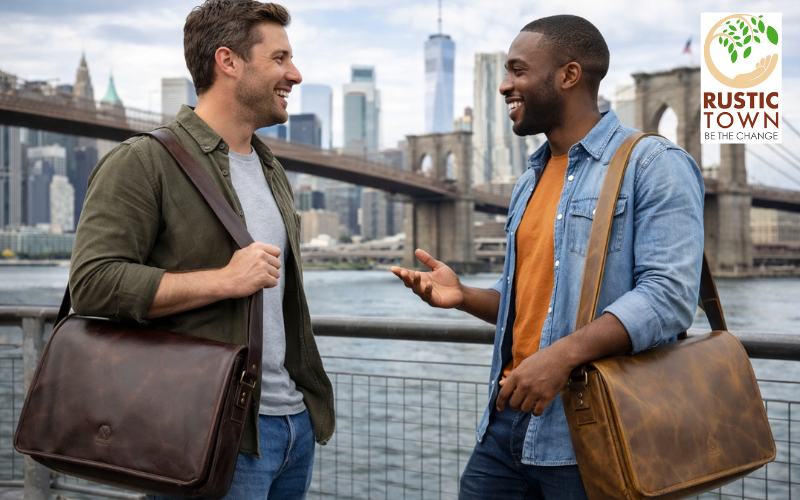
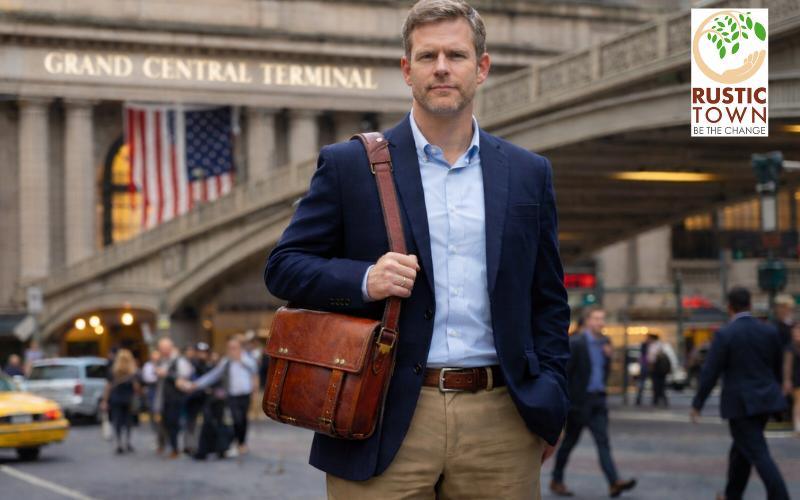
The defining feature—wearing the bag across your torso with the strap over one shoulder—provides unmatched stability and comfort for active use. The weight distributes across your shoulder and back rather than hanging from one point. The bag rests against your hip or lower back, staying secure during movement. Most importantly, both hands remain completely free.
This carrying method connects to our physical nature in ways that feel natural. Human beings evolved carrying things against our bodies—children, tools, food—not dangling from one hand or perched on one shoulder. The cross-body carry taps into this instinctive comfort. It's not trendy or novel; it's fundamentally human.
The cross-body position also offers practical security in urban environments. The bag sits where you can see and protect it, unlike backpacks behind you or shoulder bags that drift out of view. On crowded public transit, you can swing the bag from back to front without removing it. This urban practicality keeps the design relevant as cities grow denser.
The Flap Closure
The messenger bag's characteristic flap with buckle or clasp closure strikes an ideal balance between security and accessibility. Unlike zippered bags requiring two-handed operation, flaps open quickly with one hand. You can reach essential items—phone, wallet, keys—without setting the bag down or using both hands.
The flap closure also creates the messenger bag's distinctive silhouette. It's immediately recognizable from across a room. The hardware—whether brass buckles on traditional bags or magnetic closures on modern versions—provides visual interest and tactile satisfaction. Quality closures from makers like Rustic Town last decades, developing patina that enhances character.
The flap protects contents from weather far better than top-opening bags. Rain rolls off rather than entering the bag. This practical advantage, born from the courier days of outdoor delivery work, remains valuable for modern commuters.
The Soft-Sided Construction
Unlike structured briefcases maintaining rigid shapes, messenger bags feature soft construction that conforms to contents. Empty, they fold flat or compress down. Full, they expand to accommodate items. This flexibility makes them far more versatile than rigid bags.
The soft construction also contributes to comfort. Hard-edged bags dig into your body during extended wear. Soft leather messenger bags mold to your form, distributing pressure naturally. Over time, quality leather develops memory, conforming to your specific body shape and carrying patterns. Your bag becomes uniquely yours through use.
This adaptability extends to storage and travel. Messenger bags compress to fit under airplane seats, in crowded lockers, or tight spaces. When not in use, they don't demand dedicated storage room like structured bags. This practicality matters increasingly in urban apartments where space comes at a premium.
The Single Compartment Philosophy
While modern messenger bags often include organizational pockets, the traditional design emphasizes a single large compartment. This simplicity encourages intentional packing—you think about what you actually need rather than filling available space. The minimalism appeals to people overwhelmed by clutter and over-organization.
The single compartment also makes finding things easier than it might seem. Items layer naturally by size and weight. Frequently accessed items stay near the flap. Everything remains visible when you open the bag rather than hiding in separate compartments. Many messenger bag devotees find this more practical than heavily compartmentalized alternatives.
This design philosophy reflects broader cultural values that keep resurfacing. Each generation rediscovers the appeal of simplicity, essentialism, and intentional living. The messenger bag's minimalist approach aligns with these cyclical movements toward simpler, more mindful lifestyles.

Cultural Significance Across Decades
The leather messenger bag's persistence stems partly from its remarkable ability to carry different cultural meanings while maintaining consistent form. Different groups and eras have projected varied significance onto the same basic design.
Symbol of Independence and Self-Sufficiency
From its courier origins, the messenger bag has always symbolized independence. Bicycle messengers were freelance hustlers navigating cities on their own terms, not corporate employees following schedules. This association with autonomous work and self-directed life persists.
Freelancers, consultants, and creative professionals often prefer messenger bags over traditional briefcases precisely because of this symbolism. The bag signals independence rather than corporate affiliation. It suggests flexibility and mobility rather than desk-bound routine. In an era when more professionals work independently, this resonance grows stronger.
The bag's durability reinforces self-sufficiency themes. A quality leather messenger bag requires minimal maintenance and lasts decades. You invest once rather than replacing frequently. This appeals to people valuing sustainability, quality over quantity, and reduced consumption. The bag becomes a long-term companion rather than disposable fashion.
Bridge Between Casual and Professional
The messenger bag occupies a unique position in the professional wardrobe spectrum. It's more polished than backpacks but less formal than briefcases. This middle position has become increasingly valuable as workplace dress codes have evolved.
A leather messenger bag allows professionals to maintain credibility in business meetings while not feeling out of place in casual environments. You can carry one to corporate presentations, client meetings, coffee shop work sessions, and after-work social activities without seeming inappropriately dressed for any setting. Few accessories offer this versatility.
This bridging function matters particularly for younger professionals navigating ambiguous dress codes. When you're unsure whether an environment calls for formal or casual, a quality leather messenger bag usually works. It's a safe choice that offends no one while maintaining individual style.
Expression of Urban Identity
The messenger bag remains powerfully associated with city life. It signals comfort navigating urban environments—public transit, crowded sidewalks, bike lanes, and pedestrian spaces. Choosing a messenger bag suggests affinity for urban culture and lifestyle.
This urban association carries positive connotations. Cities represent opportunity, diversity, culture, and progress. Urban professionals take pride in city identity. A messenger bag expresses this identity subtly but clearly. It says you're part of the metropolitan conversation, engaged with urban rhythms and energy.
The bag also communicates environmental consciousness. Cross-body bags suit walking, cycling, and public transit—sustainable transportation methods. In an era of growing climate awareness, choosing bags designed for car-free urban mobility aligns with values many professionals embrace.
Material Choices: Why Leather Endures
While canvas and synthetic messenger bags have their place, leather versions carry special significance that explains their enduring appeal. Leather offers unique properties that align perfectly with the messenger bag's heritage and purpose.
Aging as Asset Rather Than Liability
Quality leather improves with age, developing rich patina and character through use. Scratches and scuffs don't damage leather messenger bags—they enhance them. This stands in stark contrast to most modern goods that deteriorate from new condition. A ten-year-old leather bag often looks better than a new one, telling stories through its worn surfaces.
This aging quality connects to deeper desires for authenticity and permanence. In a throwaway culture of planned obsolescence, leather goods represent alternative values. They're designed to last, improve over time, and become more personally meaningful through years of use. Each mark represents experiences shared—commutes completed, meetings attended, travels undertaken.
The patina development also makes each leather messenger bag unique. Two identical bags diverge over time based on individual use patterns, environments, and care. Your bag becomes one-of-a-kind through natural processes. This personalization without customization appeals to people wanting individual style without obvious effort.
Professional Appearance Without Stuffiness
Leather carries inherent professional credibility while avoiding the stuffiness of formal business accessories. A leather messenger bag looks polished enough for important meetings without seeming corporate or conservative. The material elevates the casual messenger design to professional appropriateness.
Different leather types offer varying aesthetics. Smooth, finished leather presents formal elegance. Distressed leather suggests rugged character. Natural, vegetable-tanned leather develops distinctive patina. This variety lets people choose leather messenger bags matching their professional identity while maintaining the style's essential character.
Leather also signals investment and quality consciousness. Choosing leather over synthetic materials suggests you value craftsmanship, sustainability, and lasting quality. These signals matter in professional contexts where judgment and decision-making abilities are evaluated constantly.
Practical Durability for Daily Use
Beyond aesthetics, leather offers practical advantages for daily carry. Quality leather resists water better than canvas, protecting contents from sudden rain. It withstands abrasion from daily handling and environmental contact. It maintains structure without requiring rigid frames, combining flexibility with durability.
Leather also handles wear patterns better than synthetic materials. Stress points like strap attachments and closure areas endure thousands of use cycles without deterioration. When leather finally wears through, it can be professionally repaired, extending life further. This repairability reduces long-term cost and environmental impact.
The sensory experience of leather matters too. It feels substantial in hand, smells distinctively pleasant, and develops familiar textures through handling. These tactile qualities create emotional connections to objects. Your leather messenger bag becomes a trusted daily companion rather than merely functional equipment.
Modern Adaptations While Preserving Heritage
Contemporary leather messenger bags honor their heritage while incorporating modern needs. This balance between tradition and innovation explains why the style stays relevant rather than becoming nostalgic costume.
Technology Integration
Modern messenger bags accommodate laptops, tablets, chargers, and accessories that didn't exist in the courier era. Quality designs include padded sleeves protecting electronics while maintaining the bag's external character. Interior organization pockets keep cables untangled and accessories accessible without adding external bulk.
This technological adaptation never compromises the fundamental design. The cross-body carry, flap closure, and soft construction remain unchanged. Technology fits into the messenger bag design rather than the design warping around technology. This priority preservation of core features maintains the style's timeless appeal.
Smart features like hidden security pockets, RFID-blocking compartments, and water-resistant zippers enhance functionality without advertising their presence. Modern threats like digital pickpocketing and identity theft are addressed while keeping bags looking like classic messengers, not tactical gear.
Sustainable Manufacturing
Growing environmental consciousness has influenced how leather messenger bags are made. Vegetable-tanned leather using natural materials rather than harsh chemicals appeals to eco-conscious consumers. Small-batch production from makers like Rustic Town reduces waste and energy consumption compared to mass manufacturing.
The emphasis on durability and repairability itself represents sustainability. A leather bag lasting twenty years replaces dozens of cheaper alternatives ending in landfills. This longevity aligns with movements toward conscious consumption, minimalism, and quality over quantity. Choosing a leather messenger bag becomes an environmental statement as much as a style choice.
Transparent sourcing and ethical labor practices matter increasingly to consumers. Companies providing visibility into their supply chains, paying fair wages, and supporting artisan communities differentiate themselves. Heritage becomes linked to responsibility—honoring craftsmanship traditions while ensuring sustainable futures.
Size and Style Variations
While maintaining essential characteristics, modern messenger bags come in diverse sizes serving different needs. Compact versions perfect for essentials appeal to minimalists and casual users. Medium sizes accommodate laptops and daily necessities for most professionals. Large versions serve photographers, students, or anyone carrying substantial gear.
This size flexibility helps the style remain relevant across lifestyles and life stages. A college student might start with a large canvas messenger, transition to a medium leather version as a young professional, and maintain that choice through career progression. The style grows with you rather than becoming age-inappropriate.
Color and finish options beyond traditional browns and blacks allow personal expression while maintaining classic profiles. Olive, navy, gray, and even burgundy leather messengers offer variety without abandoning the style's essential character. Hardware choices from brass to gunmetal let people match bags to other accessories.
Why This Matters: Design Lessons for a Disposable Age
The leather messenger bag's century-plus endurance offers valuable lessons about design, consumption, and what we truly value. In an era of rapid trend cycles and planned obsolescence, understanding why certain designs persist becomes increasingly important.
Form Following Function Creates Timelessness
The messenger bag endures because its form directly serves its function without unnecessary elaboration. Every feature—cross-body strap, flap closure, soft construction—exists for practical reasons. This purity protects against obsolescence. Fashion trends affect surface details but cannot improve fundamentally sound design.
When form genuinely follows function, style becomes secondary to utility. The messenger bag looks good because it works well, not through applied decoration or trendy details. This creates aesthetics that age gracefully rather than dating quickly. Future generations will appreciate good function as much as current ones.
Versatility Outlasts Specialization
The messenger bag's ability to serve varied purposes across contexts contributes enormously to its longevity. It works for bicycle messengers and business consultants, students and photographers, urban commuters and weekend travelers. This versatility means the design stays relevant even as individual users' needs evolve.
Highly specialized designs become obsolete when circumstances change. The messenger bag's generalist approach protects against this. You don't outgrow it or find it unsuitable for new contexts. It adapts to your life rather than demanding your life adapt to it.
Quality Justifies Investment
The leather messenger bag demonstrates how quality goods, while expensive initially, prove economical long-term. A $400 leather bag lasting fifteen years costs less than four $100 bags replaced every few years. More importantly, the superior experience—comfort, durability, beauty—provides value beyond mere functionality.
This investment approach contradicts consumer culture emphasizing immediate gratification and low prices. But growing numbers of people recognize the false economy of cheap goods. They prefer owning fewer, better things that serve them well for years. The messenger bag embodies this philosophy perfectly.
Heritage Connects Us to Human Stories
Finally, the messenger bag's endurance stems partly from its rich human history. Knowing your bag shares design DNA with those carried by 1890s bicycle couriers creates meaningful connection. You participate in a tradition spanning generations and cultures. The bag becomes more than an accessory—it's a link to collective human experience.
In an increasingly digital, disconnected world, physical objects carrying genuine heritage offer grounding. They remind us that good design emerges from real human needs and persists through genuine utility. They connect us to craftspeople, traditions, and values predating contemporary commercial culture.
The Future of a Classic
As we move deeper into the 21st century, the leather messenger bag shows no signs of obsolescence. If anything, cultural trends suggest strengthening relevance. Remote work and flexible schedules mean more professionals working from various locations—exactly the mobility messenger bags support. Environmental consciousness favors durable leather goods over disposable alternatives. Economic uncertainty encourages investment in lasting quality rather than trendy replacements.
The messenger bag also benefits from its association with analog experience in an increasingly digital world. While the bag accommodates technology, it remains fundamentally a physical object connecting you to material reality. In an age when much of life occurs through screens, the tactile experience of quality leather and solid hardware offers satisfying tangibility.
Younger generations discovering messenger bags experience the same appeal their grandparents did—functional design that works beautifully without trying too hard. The style speaks to perennial human values: independence, practicality, quality, and authenticity. These don't change with technological advancement or cultural shifts.
Conclusion: Timeless by Design
The leather messenger bag refuses to go out of style because it never depended on style in the first place. It emerged from genuine functional need, developed through practical use, and persisted through sheer utility. Fashion discovered the messenger bag rather than inventing it. This foundation in real-world function provides immunity against fashion's whims.
The bag's cultural flexibility allows different generations and groups to claim it as their own while maintaining the essential design. Bicycle couriers, war correspondents, creative directors, and college students all find the messenger bag speaks to their needs and identities. This universality paradoxically enables individuality—you can make the style your own precisely because it doesn't insist on particular associations.
Most importantly, the leather messenger bag represents design achieving near-perfection. When form, function, and materials align this well, the result transcends trends. The bag becomes an archetype—a pattern so fundamentally right that it requires no improvement, only faithful execution.
Makers like Rustic Town who honor this archetype while using quality materials and skilled craftsmanship ensure new generations discover the same satisfaction countless users have experienced for over a century. The leather messenger bag will endure as long as people value authentic design that works beautifully, ages gracefully, and connects us to rich human heritage.