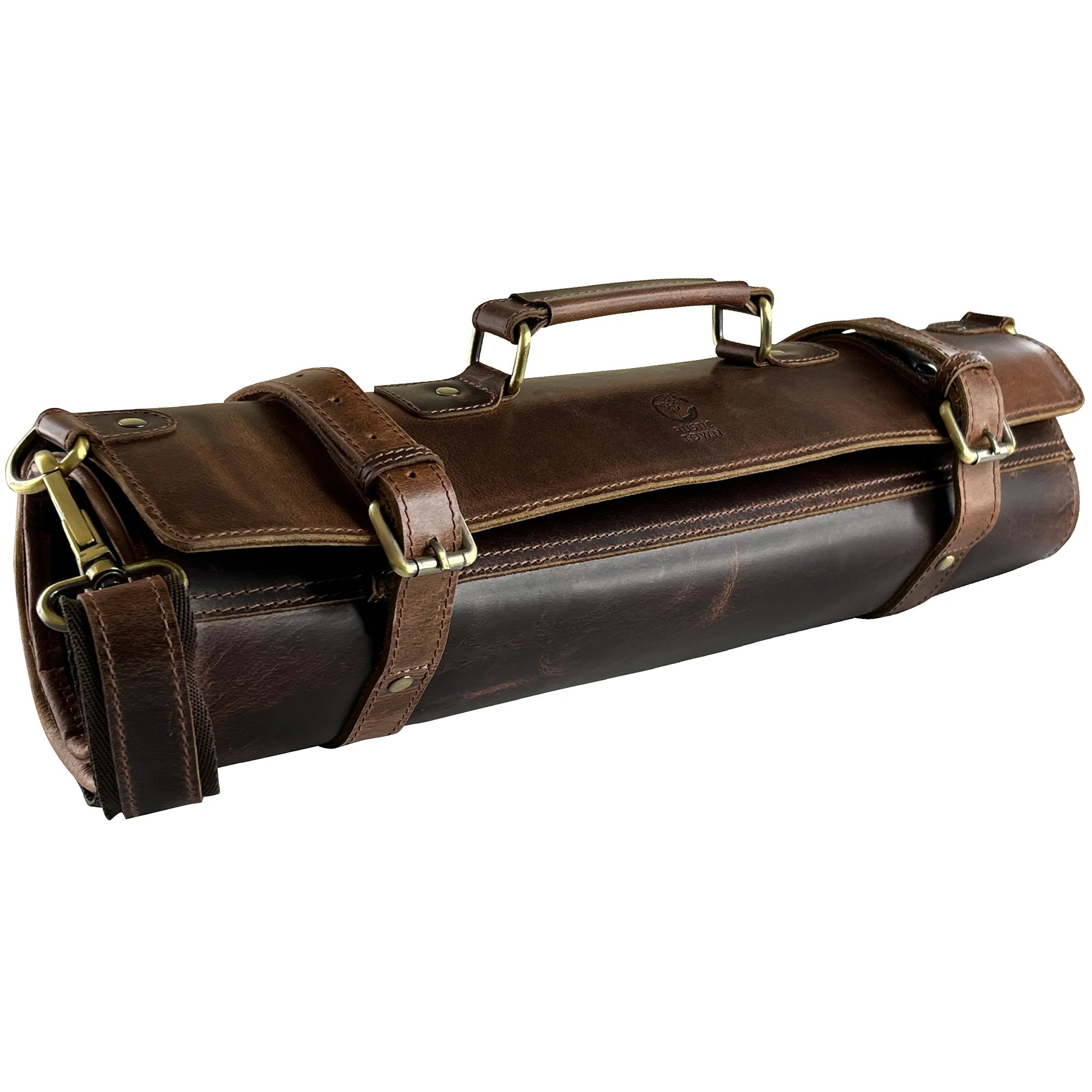
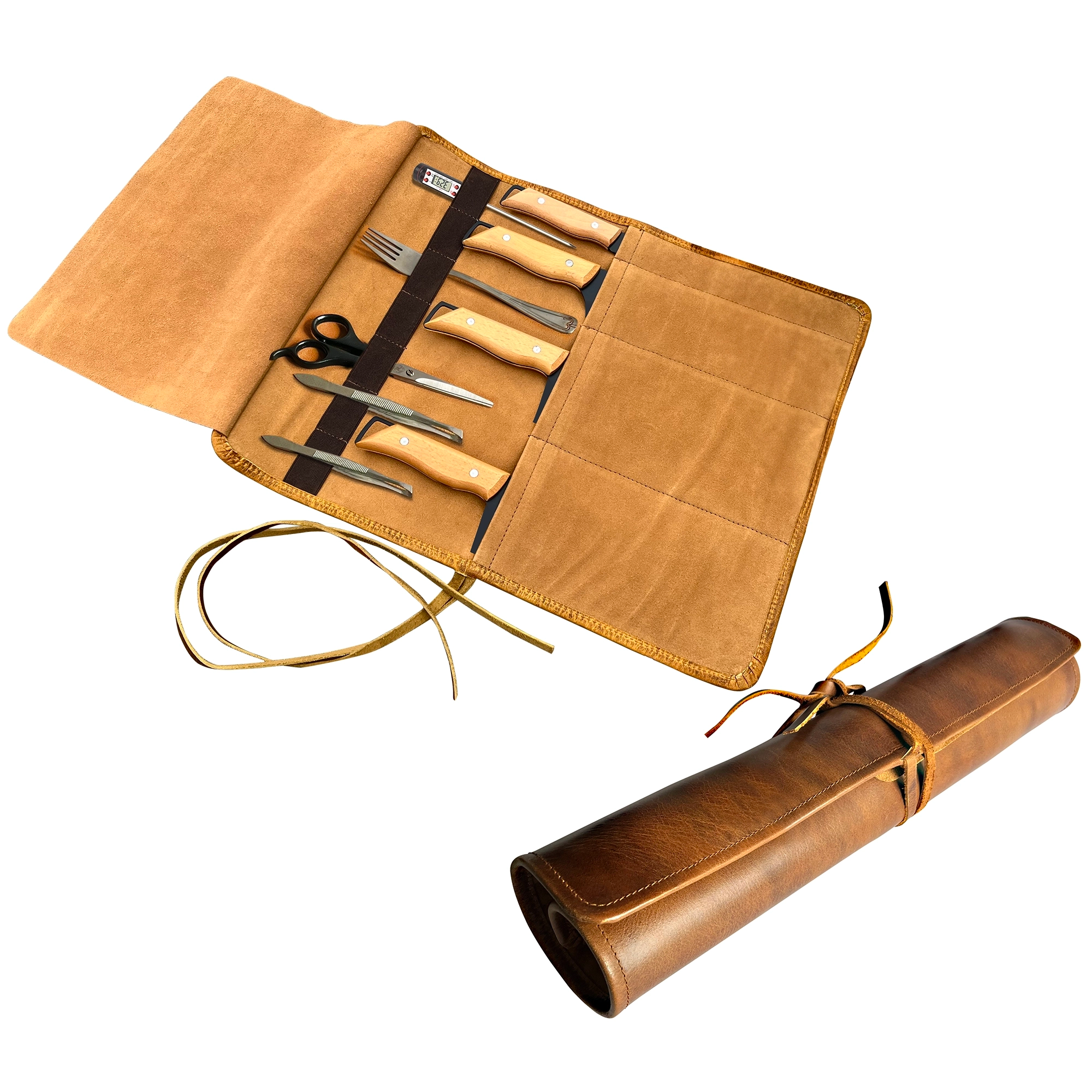
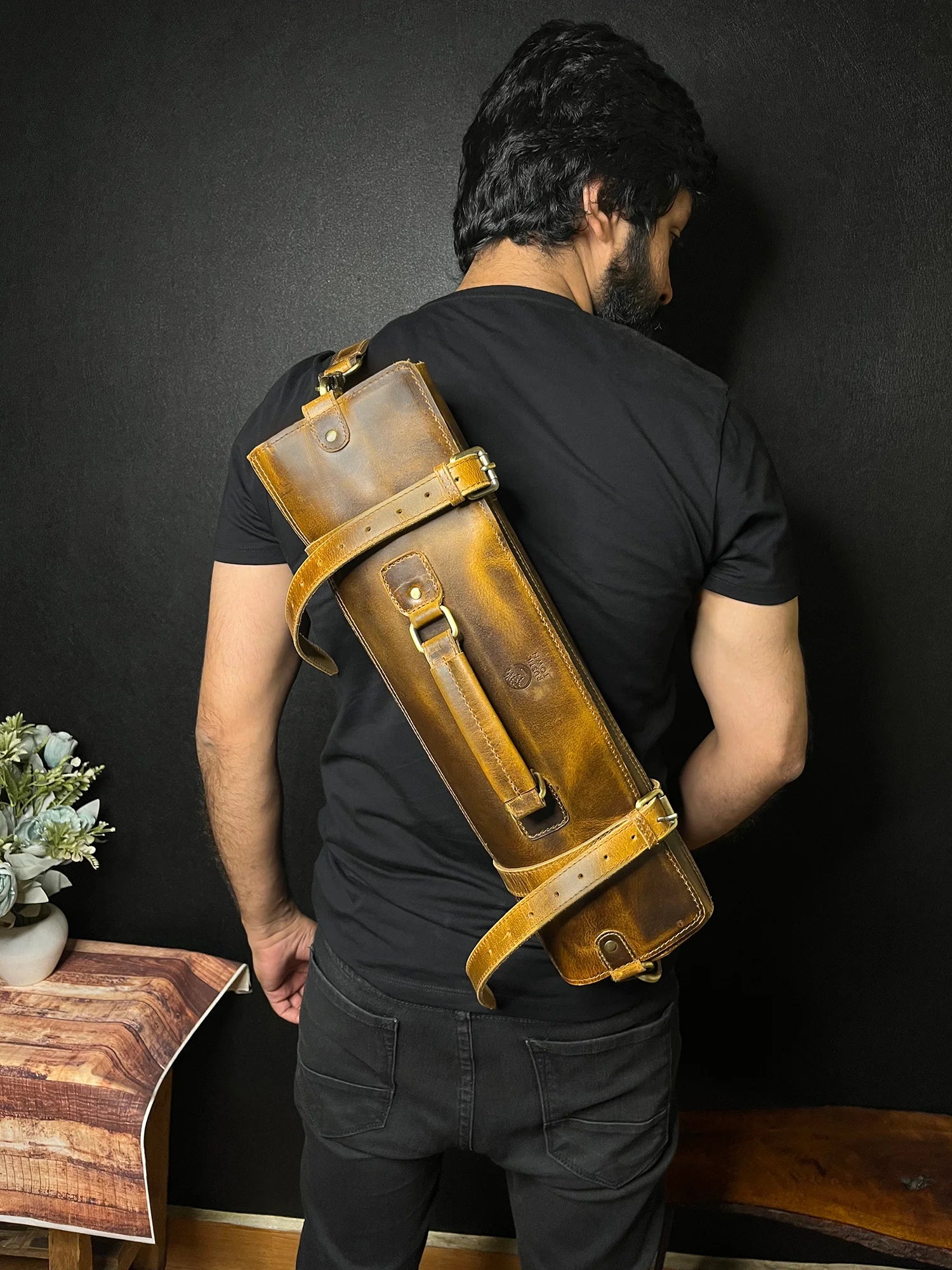
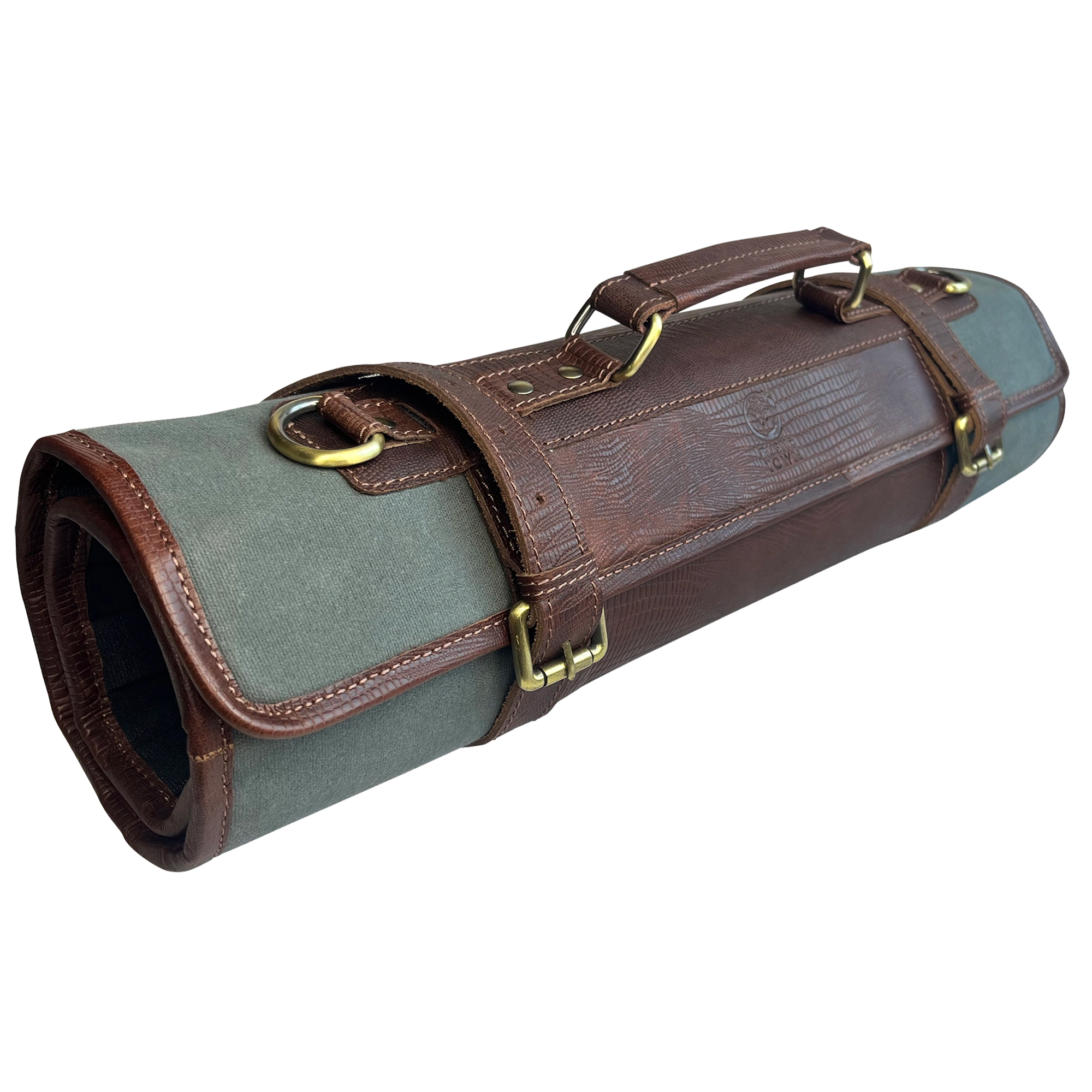
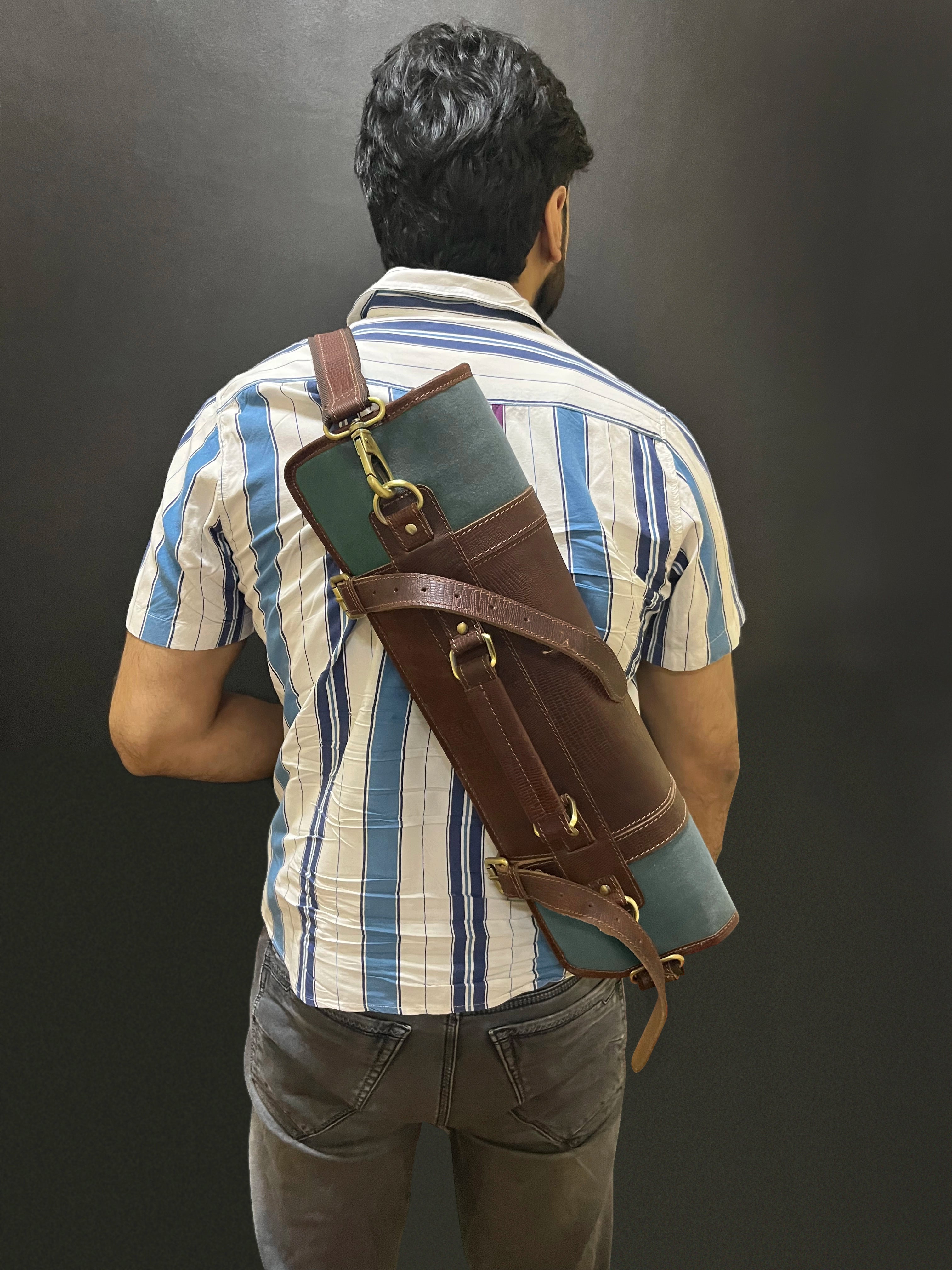
A leather knife roll is a protective case that holds a chef's knives in individual slots and rolls up for safe, organised transport between kitchens. Every knife roll in this collection is handcrafted from durable leather with secure ties and tool slots - built to protect the blades a chef relies on, carry them safely, and look the part in a professional kitchen.
What Is a Leather Knife Roll?
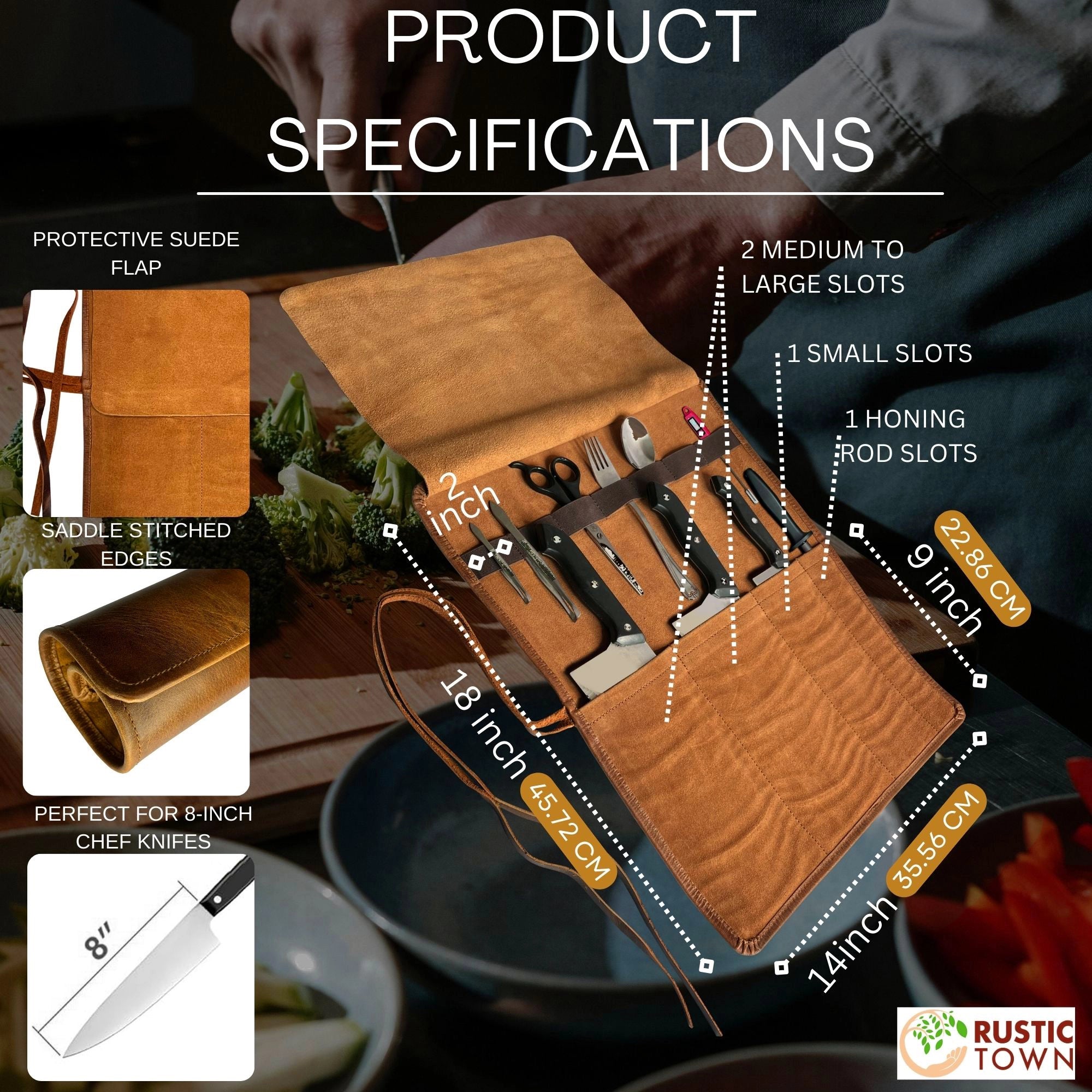
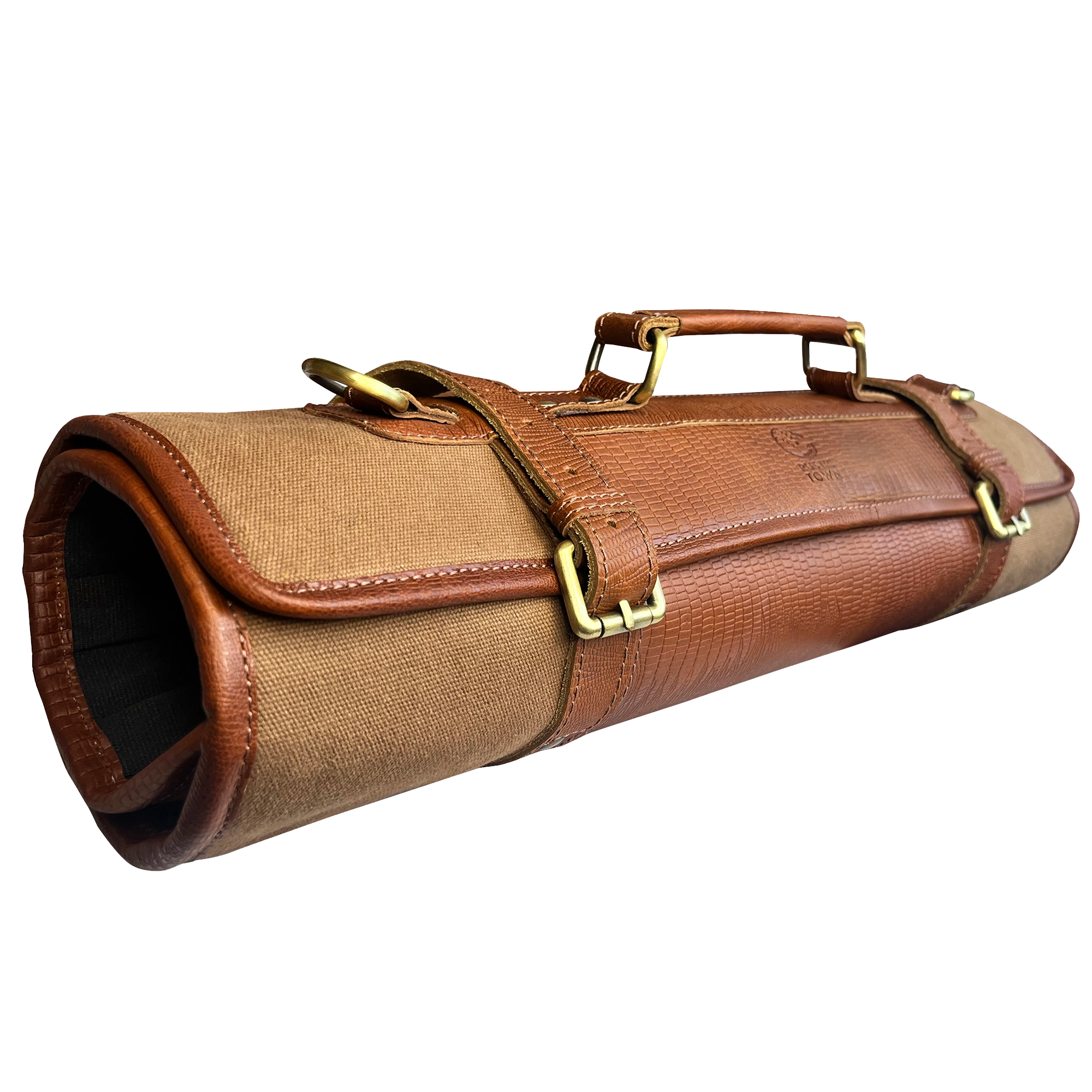
A leather knife roll, also called a chef knife bag or knife case, is a flat case with individual fabric or leather slots that each hold a knife, which then rolls closed and ties shut for transport. It is how working chefs carry their own knives - to a job, to culinary school, to a friend's kitchen - without dulling the edges or risking injury from loose blades in a bag. The roll keeps each knife separated so blades do not knock together and chip, protects the edges that a chef spends real money keeping sharp, and makes a kit easy to carry and quick to lay out on arrival.
This collection runs 7 styles, from a compact 2-slot case at $29.99 to full multi-slot professional rolls at $99.99, in full-grain leather and leather-canvas designs. Whether you are a culinary student building a first kit, a line cook moving between kitchens, or a chef who wants a roll worthy of the knives inside, the right case is here.
Which Leather Knife Roll Should I Choose?
The headline picks, each linked to its product page, with prices verified from the live collection:
The one-rule version: choose a full roll like the Koch ($99.99) or the canvas roll ($79.99) if you carry a complete kit of knives, the mid-size case ($39.99) for a working set, and the compact 2-slot case ($29.99) if you carry just a chef's knife and a paring knife. Match the count of slots to the knives you actually transport.
How Many Knife Slots Do I Need?
Match the roll to the size of your kit:
- 2 slots - A chef's knife and a paring knife, or two everyday blades; ideal for home cooks and minimal carry
- Mid-size (several slots) - A working set - chef's knife, paring, utility, bread, and a steel - for line cooks and students
- Full roll - A complete professional kit with room for specialty knives and tools; for working chefs
A practical note: buy for the kit you carry, with one or two spare slots for tools like a peeler, steel, or thermometer. A roll that is too large carries half-empty and lets knives shift; one that is too small leaves blades loose. Most working chefs are best served by a mid-size to full roll, while home cooks and those carrying just a knife or two suit the compact case.
What Should You Look for in a Chef Knife Roll?
A knife roll protects expensive, sharp tools, so the construction matters more than on most accessories.
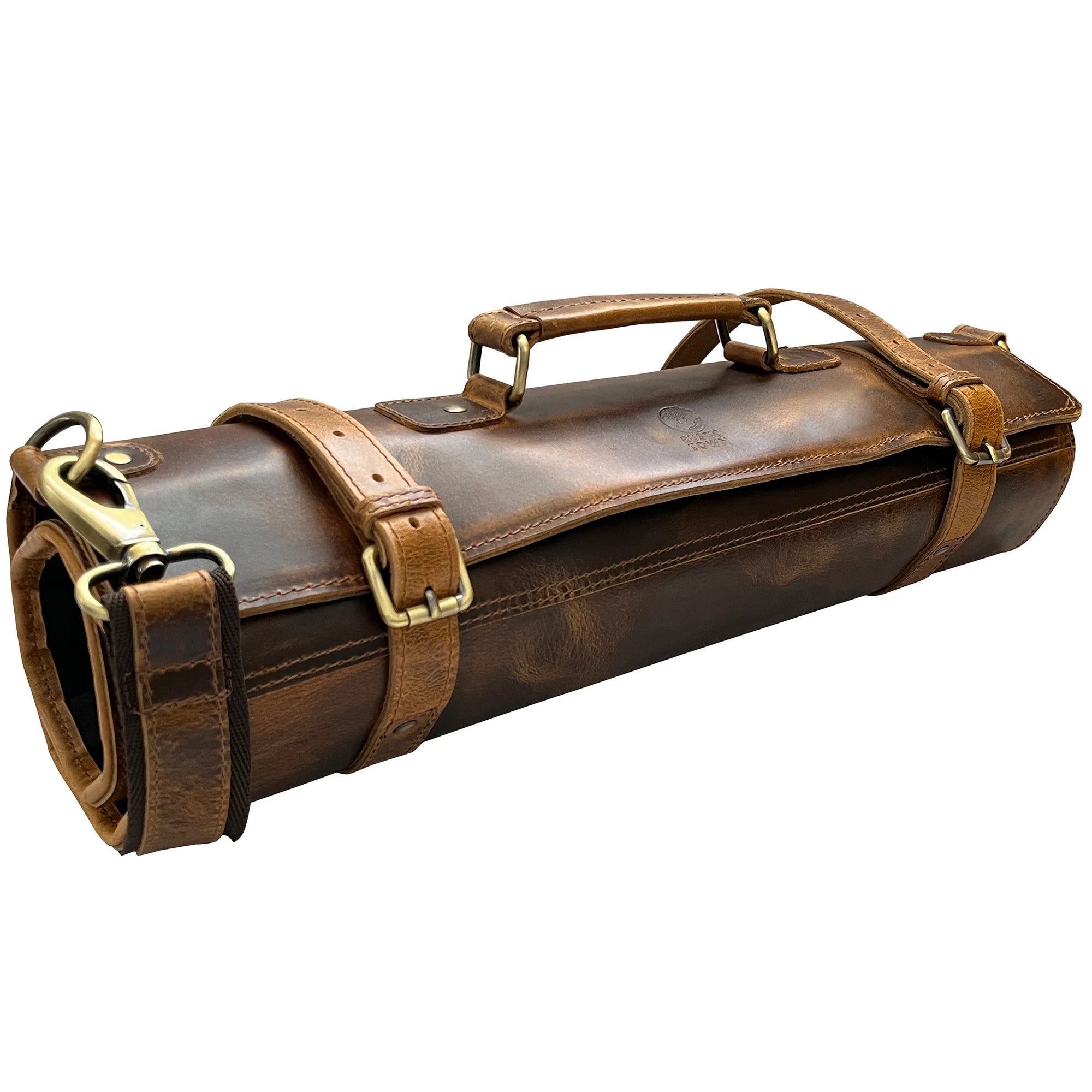
Durable leather. A roll lives in hot, busy, sometimes wet kitchen environments and gets carried daily, so it needs leather that withstands hard use. Full-grain leather resists abrasion and ages with character, while the leather-canvas designs offer a lighter option for a large kit. Our guide to the types of leather explains the grades.
Secure individual slots. Each knife needs its own snug slot so blades are separated and held firm - this is what protects the edges from chipping against each other and keeps the kit organised. Slots should fit a range of blade sizes without letting knives slide.
A secure closure. The roll must tie or strap shut firmly so it cannot unroll in transit, keeping blades safely contained. A flap over the blade tips adds protection so points do not poke through.
Reinforced stitching. A roll loaded with heavy steel knives puts real weight on the seams, so reinforced stitching is what keeps it intact through years of daily carry.
How Do You Use and Pack a Knife Roll?
Packing a roll well protects both the knives and the chef. Lay the roll open and place each knife in its own slot, heaviest and longest blades toward the centre or the most protected slots, with edges facing consistently so you know which way they sit. Fold over any blade-tip flap, then roll from one end firmly so the knives are wrapped snugly without room to shift, and tie the closure tight.
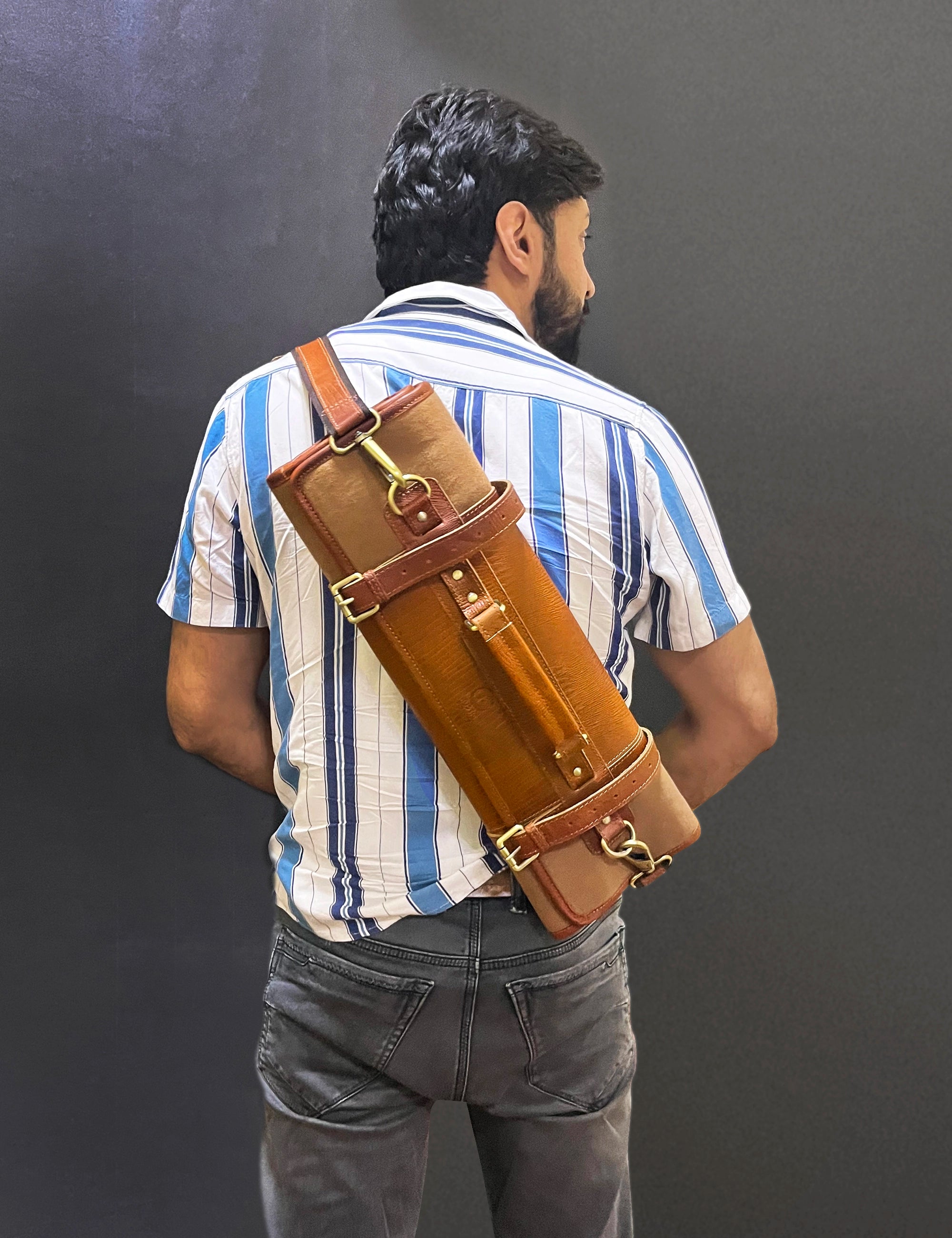
When carrying, keep the roll horizontal or with handles up so knives do not slide toward the opening, and never carry loose knives outside the roll. On arrival, unroll it flat on a clean surface and your kit is laid out and ready. Two habits extend the life of both roll and blades: make sure knives are clean and fully dry before rolling them, since trapped moisture damages both steel and leather, and store the roll unrolled or loosely rolled when not in use so the leather keeps its shape.
How Do I Care for a Leather Knife Roll?
A kitchen is hard on leather, so a little care goes a long way:
- Keep it dry - wipe the roll down after use and never roll damp knives, as moisture harms both leather and blades
- Wipe clean with a dry or barely damp cloth; clean food and grease promptly before they set into the leather
- Condition every few months with a leather balm to keep the roll supple despite kitchen heat and handling
- Store unrolled or loosely rolled, away from direct heat, so the leather holds its shape
The full routine is in our guide on how to care for leather bags, and the deep-dive on whether water ruins leather is especially relevant for a tool that lives near sinks and steam. Cared for, a leather knife roll ages into a patinated piece that looks the part of a serious kitchen.
Is a Leather Knife Roll a Good Gift?
A knife roll is one of the most meaningful gifts for anyone who cooks seriously, because it protects the tools they value most and marks them as a real chef - and engraving makes it personal. It is the standout gift for a culinary school graduate, a newly qualified chef, or a passionate home cook.
The natural occasions: a culinary graduation gift, a new chef job, a milestone birthday, and the third wedding anniversary, where leather is traditional - browse 3rd anniversary gifts. Pieces span gifts under $50 through gifts $100-$200. Pair a knife roll with a leather apron for a complete chef's gift set, the two pieces that define a serious kitchen kit.
Who Is a Leather Knife Roll NOT For?
Honest guidance. If you never transport your knives and they live in a block on the counter, a knife roll is more than you need - a block or in-drawer guard suits stationary storage. If you work in an environment where your kit is constantly soaked or hosed down, a fully wipeable synthetic case handles relentless wet better than leather. And if you carry a very large specialist kit beyond a standard roll's capacity, a dedicated knife case or bag may hold more. For chefs, students, and home cooks who carry their knives and want them protected in a case worthy of the blades, a leather knife roll is the classic choice.
Why Does a Chef's Knife Roll Matter?
To a working chef, knives are the most personal and valuable tools of the trade - often built up over years, sharpened to a precise edge, and trusted like nothing else in the kitchen. How those knives are carried is not a small detail. Loose blades in a bag knock together and chip, lose their edge against hard objects, and pose a genuine injury risk to whoever reaches in. A knife roll solves all of that, which is why a proper roll is regarded as a mark of a serious chef rather than a mere accessory.
There is a professional signal in it too. Arriving at a kitchen, a stage, or a competition with a handsome leather roll and laying out a clean, organised kit says something before a single dish is cooked - it shows respect for the craft and the tools. A leather roll specifically, ageing into a patina over years of service, becomes part of a chef's identity in a way a nylon case never does. For culinary students, the roll is often the first real investment in a career; for established chefs, it is the case worthy of the blades it carries. Either way, protecting good knives in a good roll is simply what taking cooking seriously looks like.
How Do You Build a Chef's Kit?
A knife roll is the foundation of a working chef's kit, and the pieces around it complete the picture. The blades come first - typically a chef's knife, a paring knife, a utility or boning knife, a serrated bread knife, and a honing steel form the core of most kits, with specialty knives added over time. The roll is sized to hold this set with room to grow.
Beyond the knives, a few tools earn a permanent place in the spare slots: a sharpening steel, a peeler, a thermometer, and perhaps a set of plating tools. And the second defining piece of a chef's kit is the apron - a leather apron pairs naturally with a knife roll as the two items that mark out a serious cook, and the two together make the definitive culinary gift. Building the kit around quality, lasting pieces means a student's first investment serves through an entire career, the leather softening and patinating alongside the skills.